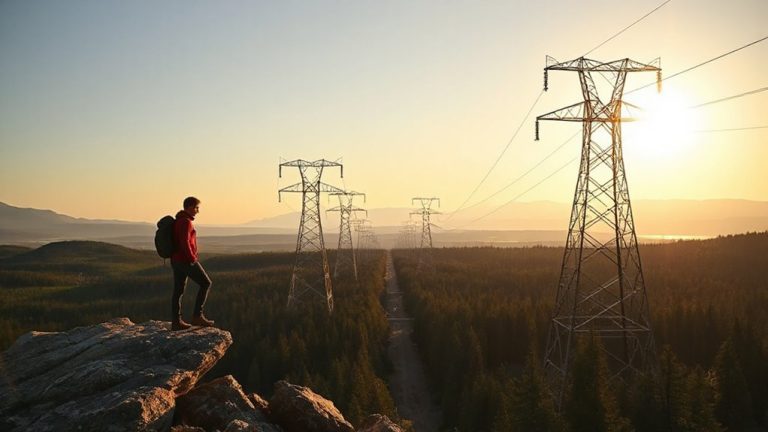
How to Evaluate Your Home’s Vulnerability to Storm Surge Erosion
Check your home’s elevation using topographic maps or LIDAR-just 1–2 feet can decide if floodwaters hit your foundation. If you’re within 300 feet of the shore, especially under 200 feet, storm surge and erosion risks rise fast. Sandy soil? It erodes easily. Crack in your seawall? That’s a weak point. Know your surge zone-Zone 1 starts at 5 feet, but Zones 4 and 5 face 16+ feet. Past erosion means future trouble. Up next, you’ll see how each factor shapes your home’s real risk.
Notable Insights
- Determine your home’s elevation using topographic maps or FEMA flood zone tools to assess floodwater reach risks.
- Measure proximity to the shoreline, as homes within 300 feet face higher storm surge and erosion threats.
- Analyze soil composition-sandy or silty soils increase erosion risk during stormwater flow and wave action.
- Inspect seawall condition every two years for cracks, leaning, or corrosion to ensure structural effectiveness.
- Review storm surge risk zones and historical aerial data to understand long-term erosion and flooding trends.
Check Your Home’s Elevation Relative to Sea Level
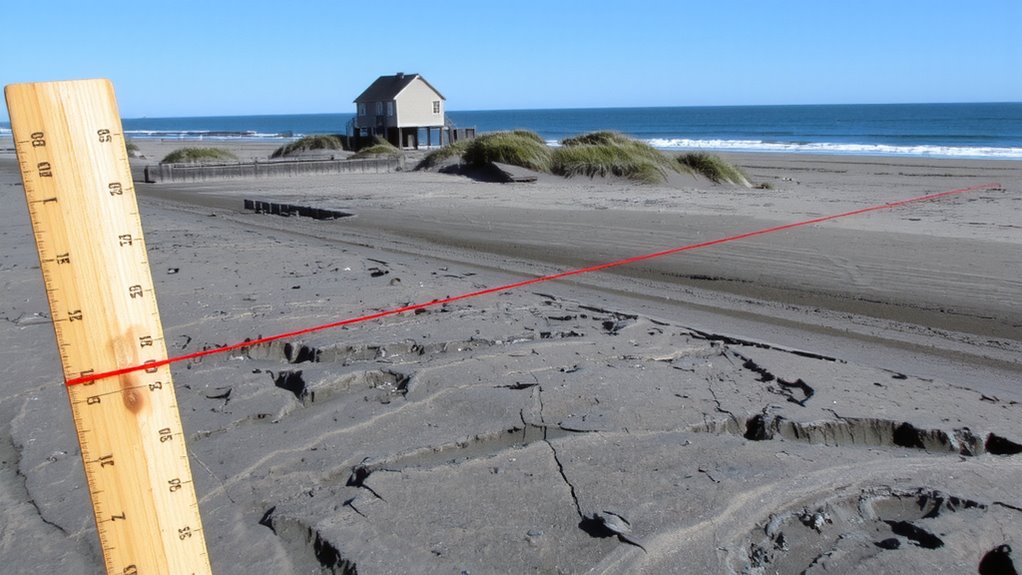
You’ll want to start by finding your home’s elevation above sea level, since even a few feet can make a big difference when storm surge hits. Use topographic maps or LIDAR data for elevation accuracy-don’t rely on visual estimates. Local government databases or flood zone tools like FEMA’s provide reliable benchmarks. A difference of 1–2 feet may determine whether floodwaters reach your foundation. Knowing your exact elevation helps assess risk realistically and guides decisions on floodproofing options. Sealed concrete walls, waterproof coatings, and elevated utilities are basic measures; for lower elevations, consider permanent barriers or raising the structure. Elevation accuracy also affects insurance requirements and retrofitting costs. These steps won’t stop a storm, but they reduce likely damage. Choose solutions matching your elevation zone. Not every option suits every home-effectiveness depends on how high you sit and how fast water rises.
How Close Is Too Close to the Shoreline?
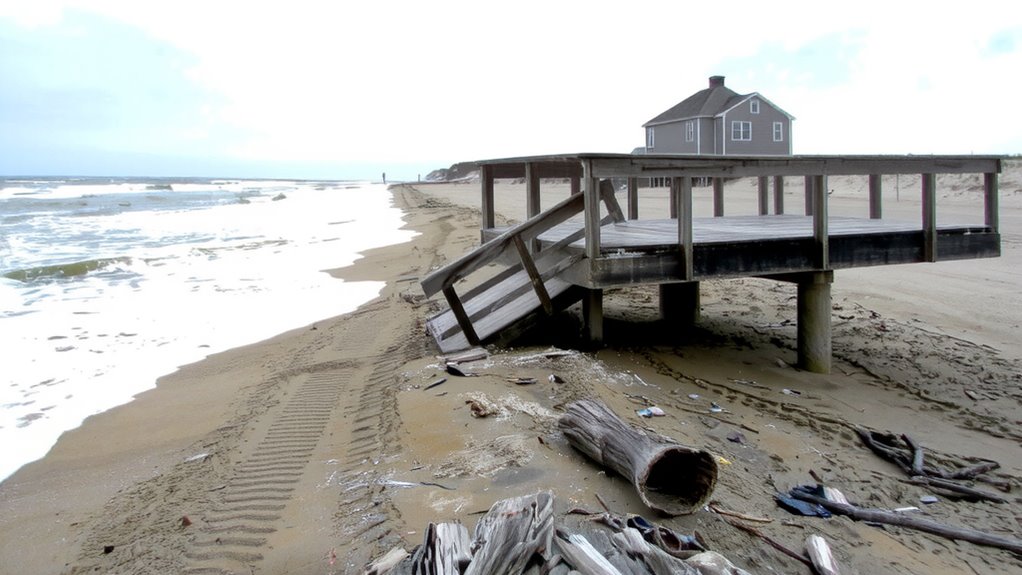
A home within 300 feet of the shoreline faces considerably higher risk during storm surge events, as proximity alone can amplify erosion and wave impact. You should consider beach proximity carefully-homes this close often experience accelerated shoreline retreat, especially in areas with weak coastal stability. Even minor storms can shift sand and undermine foundations if the buffer between your property and the water is shrinking. Coastal stability isn’t guaranteed; it depends on natural defenses like dunes and vegetation, which you can assess visually. If those features are degraded or absent, your risk increases. Structures within 200 feet are especially vulnerable, with limited time to respond when surges hit. Setback distances matter: the closer you are, the more frequently maintenance, reinforcements, or relocation may become necessary. Evaluate historical shoreline movement-properties shifting more than a foot per year face long-term unsustainability.
Know Your Soil’s Erosion Risk
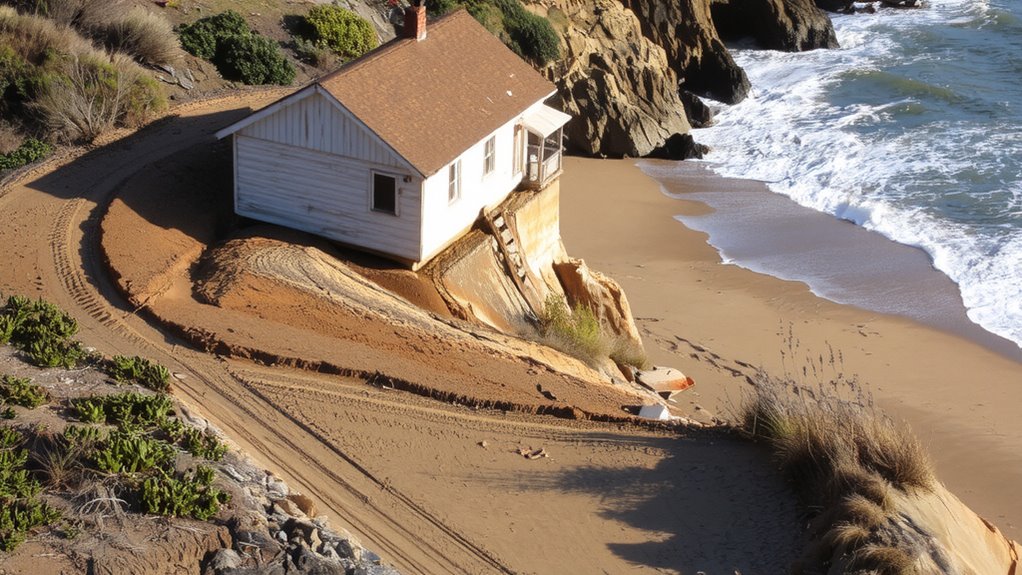
Loose sand, compact clay, or silty loam-your soil type directly influences how well your property resists erosion during storm surge events. Your soil composition determines its strength and stability when saturated. Sandy soils shift easily, offering little resistance, while clay holds firm but may crack when dry. Silty loam sits in the middle-moderately stable but prone to washing away under prolonged flow. The permeability rate matters, too. High permeability means water sinks quickly, reducing surface pooling but increasing subsurface erosion risk. Low permeability leads to runoff, which can strip topsoil fast. You can assess your soil by observing how fast rainwater soaks in and whether slopes show signs of slumping. Knowing your soil’s erosion risk helps determine if natural buffers or structural changes are necessary. It won’t stop a storm, but it gives you a clearer picture of your home’s actual vulnerability.
Are Your Seawalls Ready for Storm Surge?
If your seawall hasn’t been inspected in the past two years, it’s likely not ready to handle a major storm surge. Structural integrity degrades over time, especially if cracks, leaning, or foundation settling go unchecked. You need to verify that the wall can withstand lateral pressure from water and debris. Material durability matters just as much-concrete, steel, and vinyl each wear differently under saltwater exposure and wave action. A concrete wall might last 40 years, but only if properly maintained. Steel sheet piles resist impact well but can corrode within 15–25 years without protective coating. Inspect for spalling, rust, or gaps at joints-these weaken performance. Repairs should match original specs to maintain strength. Don’t assume age means failure, but don’t ignore visible damage. An unaddressed flaw now could become a breach during storm surge. Regular assessment guarantees your seawall functions when it’s needed most.
Check Your Area’s Storm Surge Risk Zone
Your seawall’s strength won’t matter much if you don’t know how high the water could rise around it. Checking your storm surge risk zone gives you real numbers to work with, based on flood mapping and climate modeling. These tools combine historical data and future projections to estimate surge levels. Ignoring them leaves your property exposed to unexpected flooding.
| Zone | Estimated Surge Height (ft) |
|---|---|
| 1 | 5–8 |
| 2 | 8–12 |
| 3 | 12–16 |
| 4 | 16–20 |
| 5 | 20+ |
Higher zones mean faster, deeper water during storms. Climate modeling suggests zones may shift over time due to sea level rise. Flood mapping helps you assess current risk, but updated models should inform long-term plans. Know your zone now-before the storm does.
Did Past Storm Surges Erode Your Land?
Storm damage records tell a clear story: if your property sits near the coast, past storm surges have likely nibbled away at your land. You can’t ignore historical flooding patterns-they reveal where water has repeatedly pushed inland and caused measurable land loss. Check local government maps or aerial photos from past decades; they often show visible shoreline retreat. If your backyard was larger ten years ago, erosion is already happening. Coastal properties in low-elevation zones are especially prone to this kind of gradual damage. Even storms that didn’t flood your home may have undercut nearby banks or dunes. You’re not just dealing with one event but cumulative impact over time. Historical flooding data, paired with satellite imagery, gives you real evidence of erosion trends. If your area shows consistent land loss, your foundation, driveway, or landscaping may already be at greater risk. Pay attention to where vegetation has died back or soil has thinned-those are signs the ground beneath you is shrinking.
Get a Pro to Assess Your Home’s Vulnerability
While you can spot warning signs on your own, getting a professional assessment gives you a clear, accurate picture of your home’s risk. A licensed engineer or qualified inspector evaluates your property with tools and expertise you likely don’t have. They check your home’s structural integrity, looking for cracks, warping, or weaknesses in load-bearing walls and connections. They also assess foundation stability, especially if you’re near shifting soil or eroded ground. These pros measure elevation relative to flood zones, examine drainage patterns, and review local erosion trends. Their report highlights specific vulnerabilities and offers actionable steps. Ignoring this step might mean overlooking hidden flaws that could fail during the next storm surge. Paying for an inspection isn’t an expense-it’s a way to test your home’s real-world performance under pressure and decide what upgrades actually matter.
On a final note
You know your home’s elevation, distance from shore, soil stability, and seawall condition. You’ve checked storm surge zones and past erosion. A pro assessment confirms what you can’t see. These facts-not guesses-determine your risk. No single factor decides it; all work together. Protecting your home means addressing weaknesses with clear, proven fixes. Assumptions don’t hold up when the water rises.