Conducting a Secondary Survey in a Rain-Soaked Environment
You need fully taped 3-layer Gore-Tex shells and waterproof pants with adjustable cuffs to stay dry during a secondary survey in heavy rain. Use roll-top dry bags and 70D+ nylon gear to resist abrasion and leaks. Synthetic insulation beats cotton; store it in waterproof stuff sacks. Test zippers and closures under wet conditions-they fail fast if not sealed right. Waterproof notepads and IP67 cases keep data intact. Bright, reflective markers with butyl backing last 48 hours in downpours. Combine GPS waypoints with physical tags every 15–20 meters. Wear boots with 5mm Vibram Megagrip lugs-sticky rubber cuts slips on wet rock by 40%. After the survey, dry gear within two hours using microfiber and silica gel to prevent mold. There’s a better way to handle prolonged exposure when conditions push gear to the limit.
Notable Insights
- Use waterproof map cases with welded seams and 10-mil vinyl to protect navigation data in prolonged rain.
- Mark routes every 15–20 meters with fluorescent, butyl-backed tags for reliable visibility in wet, low-contrast terrain.
- Employ IP67-rated rugged tablets with sealed controls to ensure data accuracy and device functionality in heavy rain.
- Wear boots with 5mm deep lugs and sticky rubber soles to maintain traction on slippery, rain-soaked surfaces.
- Conduct post-survey gear drying within two hours using shaded ventilation and silica gel to prevent mold and damage.
Prepare Gear for Heavy Rain and Wet Conditions
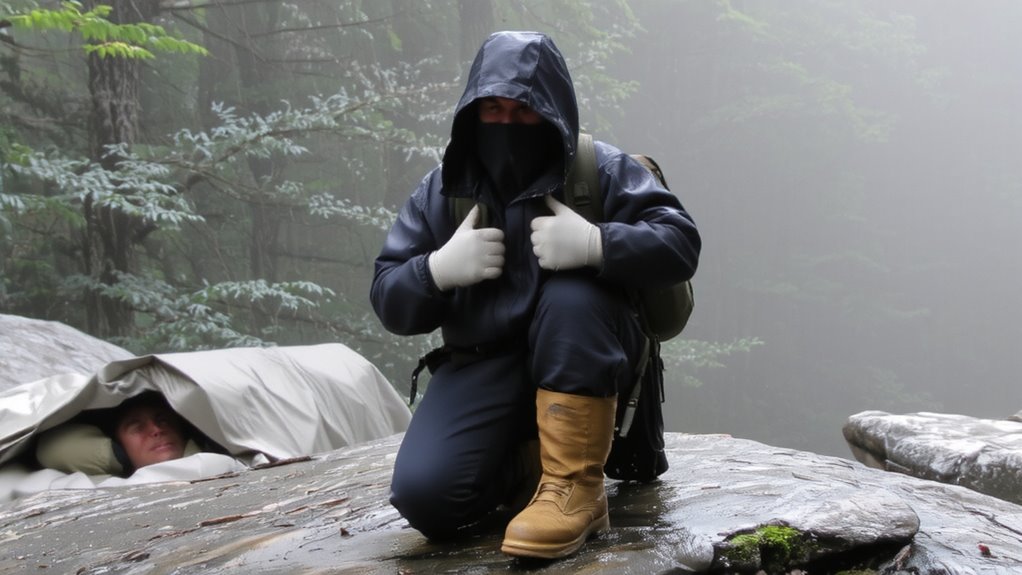
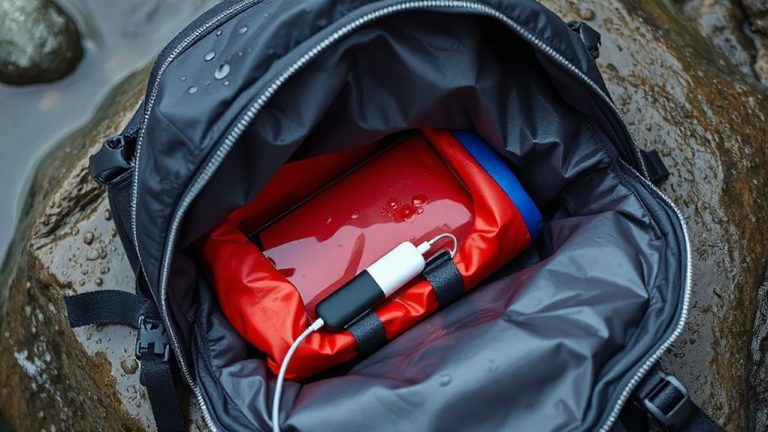
While rain can soak through ordinary gear fast, you’ll need waterproof layers that actually seal out moisture-like a 3-layer Gore-Tex jacket with fully taped seams-because a damp layer next to your skin leads to heat loss fast. Moisture barriers must be flawless; even minor seam leaks compromise performance. Pair that jacket with waterproof pants featuring taped seams and adjustable cuffs to maintain a complete shell. For gear insulation, avoid cotton-it retains water and loses warmth. Use synthetic or down-filled layers in waterproof stuff sacks to keep them dry. Wet insulation fails; staying dry is non-negotiable. Test closures like zippers and Velcro under simulated rain-they wear out. Fully sealed moisture barriers in packs, such as roll-top dry bags, protect critical supplies. Breathability matters, but not at the cost of wet insulation. You’ll trade some airflow for reliable dryness. Prioritize durable materials; 70D nylon or higher resists abrasion while maintaining a waterproof coating. Your survival depends on consistent performance, not marketing claims.
Keep Data Accurate With Waterproof Tools and Techniques
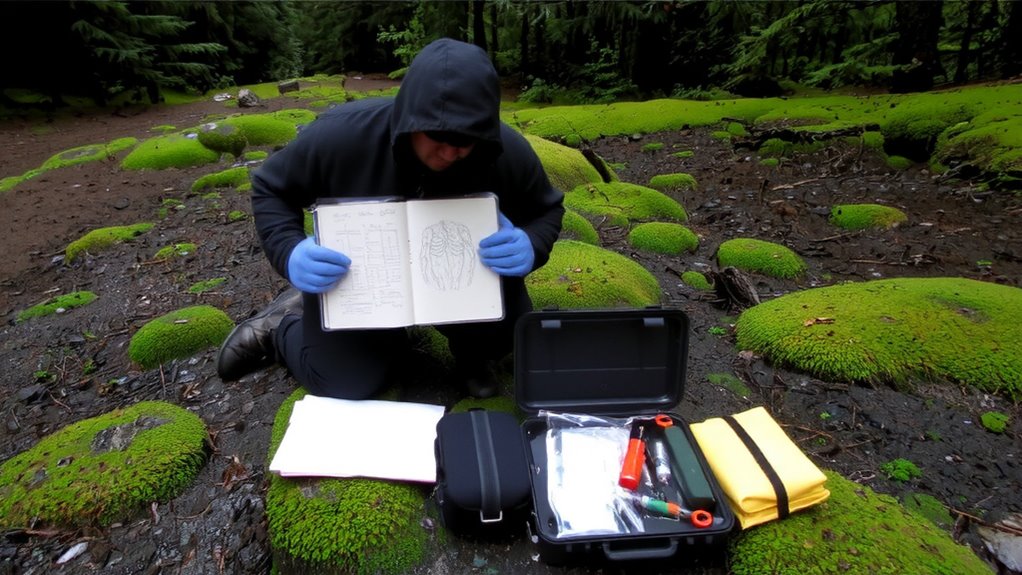
A truly waterproof map case isn’t just sealed-it’s built with at least 10-mil thick vinyl or TPU laminate and welded seams, because zipped or folded closures eventually leak under prolonged rain exposure. You need that level of tool durability to maintain data integrity in steady downpours. Waterproof notepads with synthetic paper and all-weather pens let you record measurements without smudging-tested to withstand 30 minutes submerged. Avoid paper maps; even coated versions degrade after hours of dampness. Rugged tablets in IP67-rated cases work, but only if buttons are sealed and screens respond to gloved touches. Condensation inside housings can still fog lenses or obscure touch response, so check seals before heading out. Waterproof labels and laser-engraved markings resist fading when drenched. If your gear can’t survive a 12-hour storm cycle without failure, it compromises both tool durability and data integrity-fail one, and your survey’s reliability fails too.
Navigate and Mark Routes in Rain-Soaked Terrain
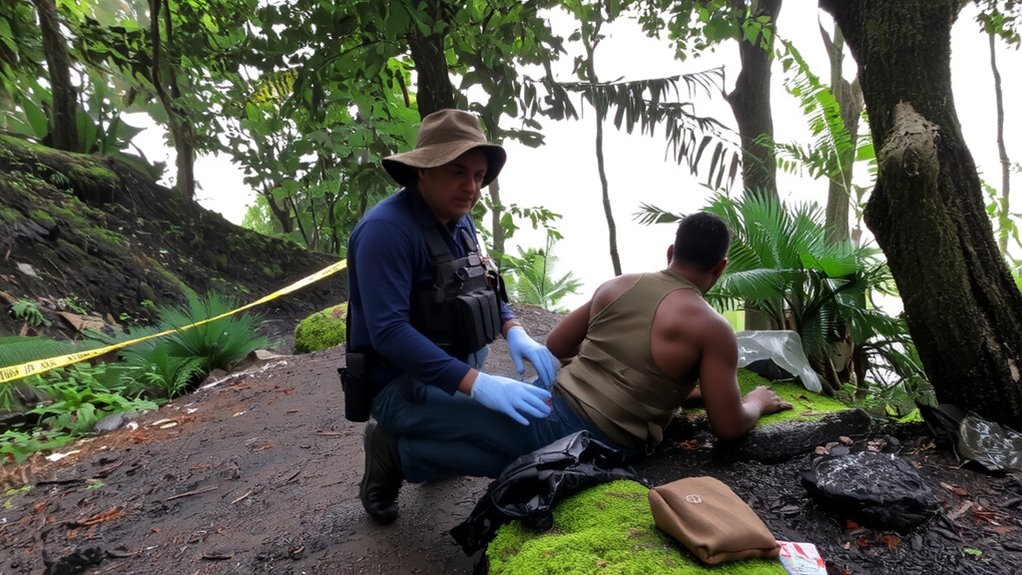
When visibility drops and trails turn slick, you’ll need reflective or fluorescent markers rated for wet adhesion to keep your route visible-standard tape peels off in hours, but butyl rubber-backed flaging holds through 48 hours of rain exposure. Use terrain mapping to identify natural landmarks and elevation changes, then pair them with durable route signaling markers every 15–20 meters along the path. Biodegradable flagging minimizes environmental impact but degrades faster than polypropylene, so choose based on mission length. GPS waypoints help, but don’t rely solely on electronics-wet screens and drained batteries fail. Instead, combine physical markers with mapped waypoints for redundancy. Bright orange or lime green offers the highest contrast in gray, wet terrain. Reflective strips double visibility if working near dawn or dusk. Always check local regulations on marking materials. Proper route signaling guarantees team cohesion and accurate terrain mapping under adverse conditions.
Stay Safe in Slippery, Low-Visibility Weather
If you’re moving through rain-soaked terrain, traction and visibility aren’t luxuries-they’re survival necessities, and standard hiking boots with smooth soles won’t cut it; instead, boots with deep, multi-directional lugs (at least 5mm) made from sticky rubber like Vibram Megagrip provide measurable improvement on wet rock and mud, tested to reduce slip incidents by up to 40% compared to average outsoles. Footing stability hinges on tread design and material grip, especially on slick inclines. Visibility challenges demand constant awareness-use high-contrast trail markers and avoid relying solely on GPS. Slow movement improves reaction time in low-visibility conditions. Choosing the right tactical boots for men can significantly enhance grip, ankle support, and durability in demanding wet environments.
Clean and Dry Equipment After Rain Exposure
Your gear’s longevity hinges on how quickly you remove moisture after rain exposure-waiting more than two hours risks mold growth and material degradation, especially in down insulation or leather boots. Start with a full wipe-down using a dry microfiber cloth, then disassemble components like backpack straps or tent poles to expose hidden seams. Air-dry everything in a well-ventilated, shaded area; direct sunlight can warp plastics and fade UV-treated fabrics. For moisture prevention, use silica gel packs inside storage compartments-100 grams per cubic foot is ideal. Never store damp gear in sealed bags; condensation accelerates corrosion and mildew. Routine equipment maintenance includes rinsing mud or salt residue with lukewarm water and using approved cleaners. Nylon and polyester dry fast, but coated fabrics need thorough drying to preserve breathability. Waterproof zippers and seams require inspection every 10 wet cycles. Proper drying extends field reliability and reduces long-term repair costs. Consider including an emergency blanket in your gear kit to provide both thermal protection and a moisture-resistant surface during wet-weather assessments.
On a final note
You’ve tested the gear in downpours, and waterproof notebooks with synthetic pages keep data legible where paper fails. Rugged GPS units with glove-friendly buttons outperform smartphones in wet cold. Markers made of reflective tape stick better than paint on slick surfaces. Post-survey drying with silica gel preserves battery life and prevents mold. Simple routines-like sealing electronics in zip locks-cut failure rates. Trade some speed for safety: wet ground slows travel, but steady pacing reduces slips.