Assessing Risk of Food Allergen Cross-Contact in Shared Rations
You’re at risk when shared rations are handled with the same tools or surfaces without proper cleaning-peanut residue on a spoon or cutting board can transfer without being seen. Packaging with weak seals or permeable materials won’t fully protect allergen-free items. Poor hygiene and mixed storage increase contamination chances. High-risk individuals like children or those with severe allergies react to trace amounts. Clear labeling, separation, and strict protocols reduce danger-see how specific strategies cut exposure in real-world settings.
Notable Insights
- Shared utensils and surfaces in field kitchens can transfer allergens like peanut butter to other foods.
- Airborne particles from dry ingredients may contaminate rations even without direct contact.
- Damaged or permeable packaging increases the risk of allergen exposure during storage and transport.
- Poor hygiene, such as reusing gloves or cutting boards, enables invisible allergen cross-contact.
- High-risk individuals, including children and immunocompromised personnel, are more vulnerable to trace allergens in group rations.
How Allergens Spread in Shared Ration Settings
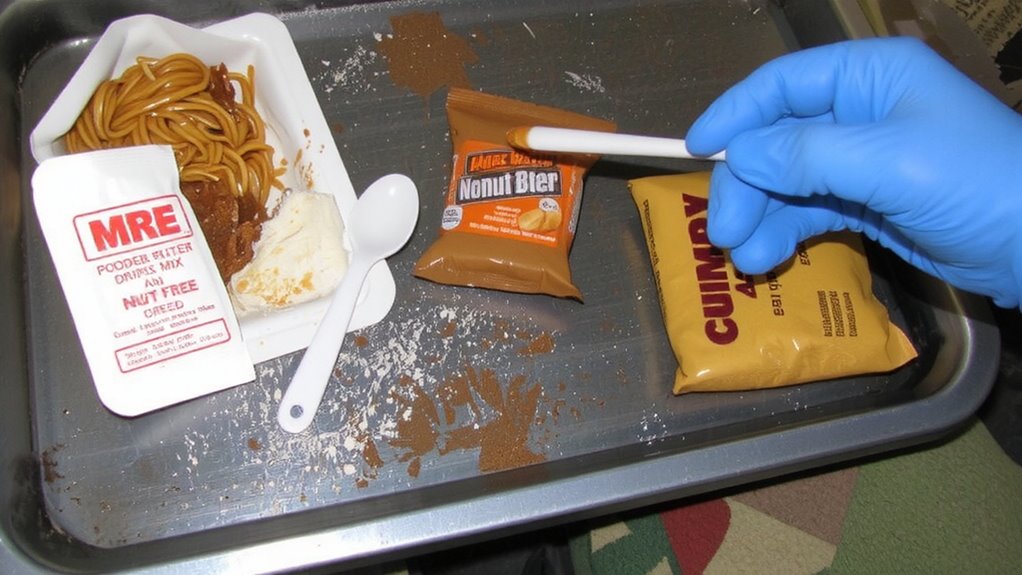
How do allergens end up where they shouldn’t? You’re often spreading them without realizing it. Allergen transfer happens when shared utensils, cutting boards, or prep surfaces carry traces from one food to another. Even a spoon used in peanut butter and then in jelly causes cross-contact. Airborne particles are less common but still risky-especially when dry ingredients like flour or spice blends are shaken near allergic individuals. You can’t see these particles, but they settle on food, gear, or hands. In tight ration settings-like field kitchens or group messes-space is limited, so contamination spreads fast. Wiping surfaces isn’t enough; full cleaning is required. You must assume transfer is possible every time shared equipment is used. Simple habits-like labeling, segregating, and cleaning-cut risk substantially. There’s no perfect barrier, but awareness reduces exposure.
How Packaging Affects Allergen Cross-Contact
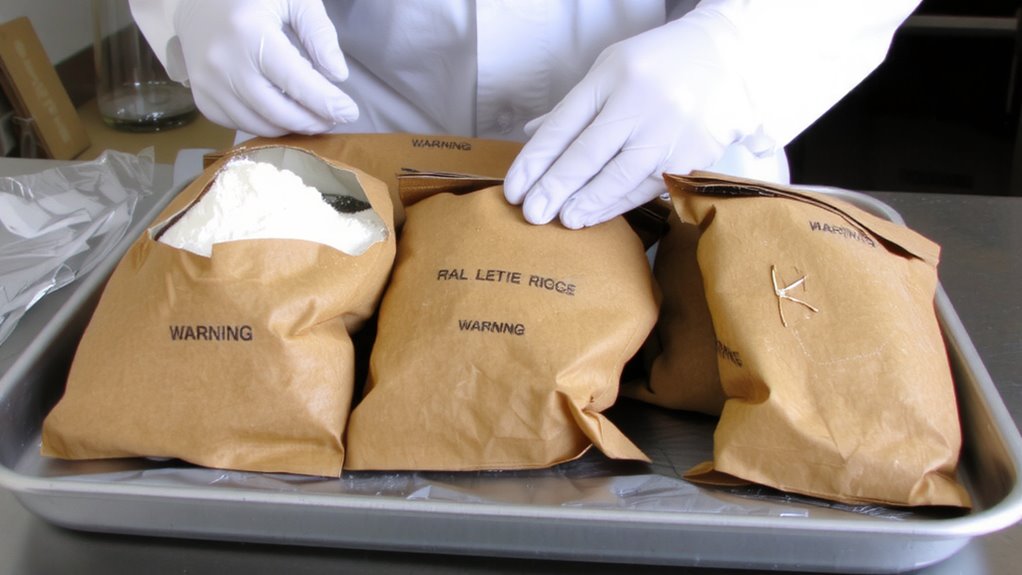
A torn label or compromised seal is all it takes for allergens to invade. You rely on packaging to protect food, but material permeability varies-some films let airborne particles through over time, especially in humid or warm conditions. If the packaging material isn’t specifically designed for barrier protection, allergenic proteins can migrate inward. Seal integrity is just as critical: a weak or improperly closed seal creates an entry point, even if the material itself is sound. Vacuum-sealed and laminated films typically perform better, limiting both permeability and potential breach. You can’t assume all wrappers offer equal defense-check for certified allergen-safe packaging specs. In shared rations, where meals are stored close, flaws in seal integrity or poor material choice increase cross-contact risk. Always inspect packaging before use; visible damage means protection is already lost.
Common Handling Mistakes That Cause Contamination
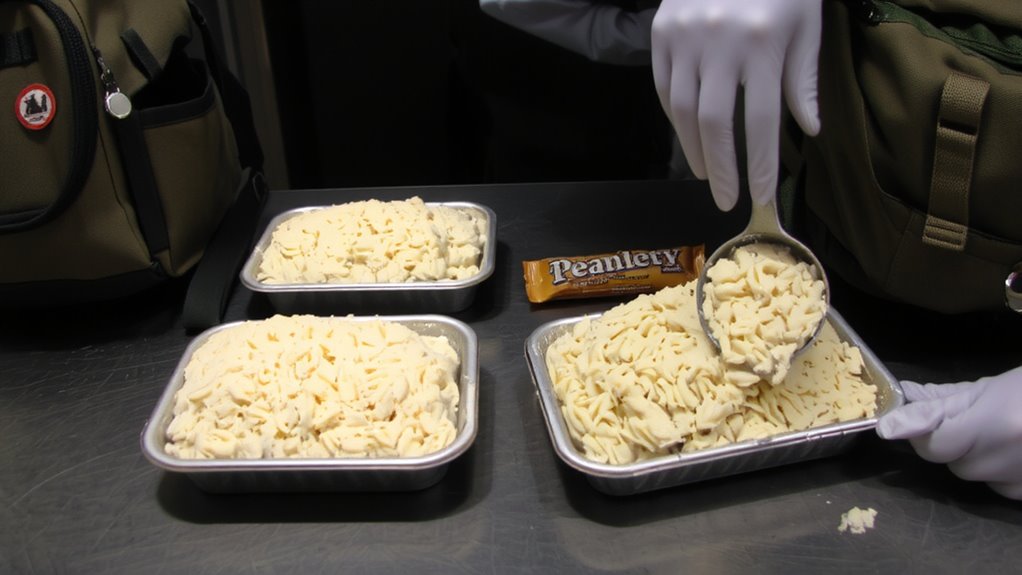
You can have the best packaging in place, but if handling practices are off, allergen cross-contact still happens. Poor hygiene is a leading cause-failing to wash hands, reusing gloves, or touching allergens then other foods spreads risk fast. You might not see residue, but trace proteins transfer easily. Surfaces and utensils contaminated during rushed preparation double the danger. When speed overrides safety, allergens from one meal spread to another, even if ingredients seem safe. Using the same cutting board for nuts and vegetables without cleaning enables cross-contact. You need clear protocols: separate tools, step-by-step sanitation, and designated allergen-free zones. Training matters-staff must recognize risks in real time. No packaging fix compensates for sloppy habits. Consistent hygiene and deliberate pacing reduce exposure. You’re not just avoiding illness-you’re ensuring every ration performs as intended under real conditions.
Who Is Most at Risk in Group Feeding?
Why do some people face greater danger when meals are served in groups? Because individual susceptibility varies, and in shared settings, your risk rises if you have strict dietary restrictions. You’re more vulnerable if you’re allergic to common allergens like peanuts, dairy, or gluten. Cross-contact happens easily when food is prepared or served in bulk, and mistakes go unnoticed until symptoms appear. Children, older adults, and those with compromised immune systems often react more severely. Your condition may not be visible, but the consequences are real. Even trace amounts can trigger reactions due to heightened individual susceptibility. Group feeding doesn’t always account for personal dietary restrictions, especially when oversight is limited. You must rely on others’ awareness, which isn’t always sufficient. Knowing your risk level helps you take precautions. Assume shared food isn’t safe unless you’ve verified every step.
Effective Labeling and Separation Methods
Clear labeling and physical separation are essential to prevent allergen cross-contact in group feeding environments. You must guarantee label accuracy so anyone can quickly identify allergens present in rations. Inaccurate or vague labels increase risk, especially when multiple products are stored together. Use standardized, bold allergen statements-regulatory compliance isn’t enough if the info isn’t immediately clear. Implement strict storage protocols: assign dedicated, color-coded shelves for allergen-free items and store them above common allergens to prevent drips or spills. Seal containers tightly to reduce contamination during transport or handling. You’ll also need routine audits to verify labels match contents and storage follows protocol. Even minor lapses compromise safety. Effective separation isn’t just spatial-it’s procedural. When done right, these measures reduce exposure risk without slowing distribution. Relying on memory or goodwill isn’t acceptable; systems and consistency are what protect lives.
Training Teams to Prevent Allergen Exposure
Labeling and separation only work if everyone handling food understands the risks and follows the rules. You need consistent allergen awareness and team accountability to reduce cross-contact. Training must be ongoing, not a one-time session. Everyone, from cooks to servers, plays a role. Mistakes can lead to serious reactions-even death. The table below shows real outcomes when protocols fail:
| Scenario | Result | Preventable With |
|---|---|---|
| Unwashed utensil used | Anaphylaxis | Proper cleaning procedures |
| Mislabeling container | Hospitalization | Accurate labeling |
| No glove change | Severe reaction | Hand hygiene |
| Shared prep surface | EpiPen used | Separation zones |
| Lack of training | Near-fatal case | Allergen awareness |
Your actions directly impact safety. Assume responsibility every time.
On a final note
You can’t eliminate allergen cross-contact in shared rations, but you can reduce it with strict handling and clear labels. Separate storage and utensils cut risk, while training guarantees consistency. Packaging with allergen-safe barriers helps, but damaged wraps fail. High-risk individuals-like those with peanut or dairy allergies-face the most danger. No method’s 100% effective, so always assess ingredient lists and prep practices. Your safety depends on vigilance, not guarantees.