Starting a Fire With a Bow Drill Made From Hardwood and Cordage
Use seasoned hardwood like willow, cottonwood, or aspen for the spindle-6–8 inches long and 5/8 inch thick-to balance friction and durability. Pair it with a slightly curved bow made from resilient wood and strong, low-stretch cordage for steady tension. Carve a fireboard from dry sapwood with a notched depression to catch dust. Apply firm, smooth strokes while maintaining downward pressure to generate an ember. Alignment, material pairing, and consistent technique are critical. The right setup improves efficiency, and small adjustments make success more likely next time.
Notable Insights
- Use seasoned willow, cottonwood, or aspen for the spindle and fireboard to ensure proper friction and heat transfer.
- Shape the spindle to 6–8 inches long and 5/8 inch thick with tapered ends for smooth, efficient rotation.
- Carve a 1/4- to 3/8-inch-deep notch in the fireboard’s edge to collect dust and allow airflow for ember formation.
- Use a resilient hardwood bow stave with taut, durable cordage to maintain steady spindle rotation without slippage.
- Apply firm downward pressure and consistent bow strokes until a glowing ember forms, then transfer it immediately.
Choose the Right Hardwood for a Bow Drill
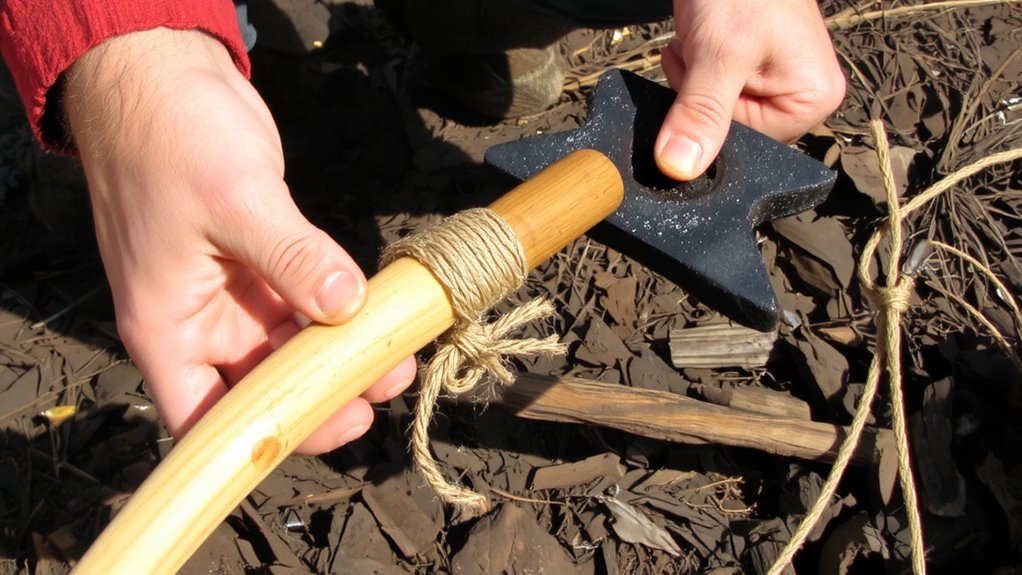
You’ll want a hardwood that’s seasoned but not too dense for your bow drill, since balance matters-softwoods burn too fast, and overly dense hardwoods like hickory or oak create excessive friction without consistent ember formation. Your wood selection directly affects ignition speed and ember quality. Ideal options include willow, cottonwood, or aspen-lightweight with straight, even grain density. These woods allow efficient powder formation and retain heat well. Avoid warped or knotted pieces; consistent grain density reduces binding and boosts transfer of rotational energy. You’re not just picking any hardwood-you’re matching material properties to friction needs. A spindle 6–8 inches long and 5/8 inch thick works best. Test by rubbing: if it gums up, the grain’s too tight. Practical experience shows medium-density hardwoods yield embers faster in dry conditions. It’s not tradition-it’s physics. Get it right, and ignition takes under 90 seconds.
Build a Bow That Maintains Tension
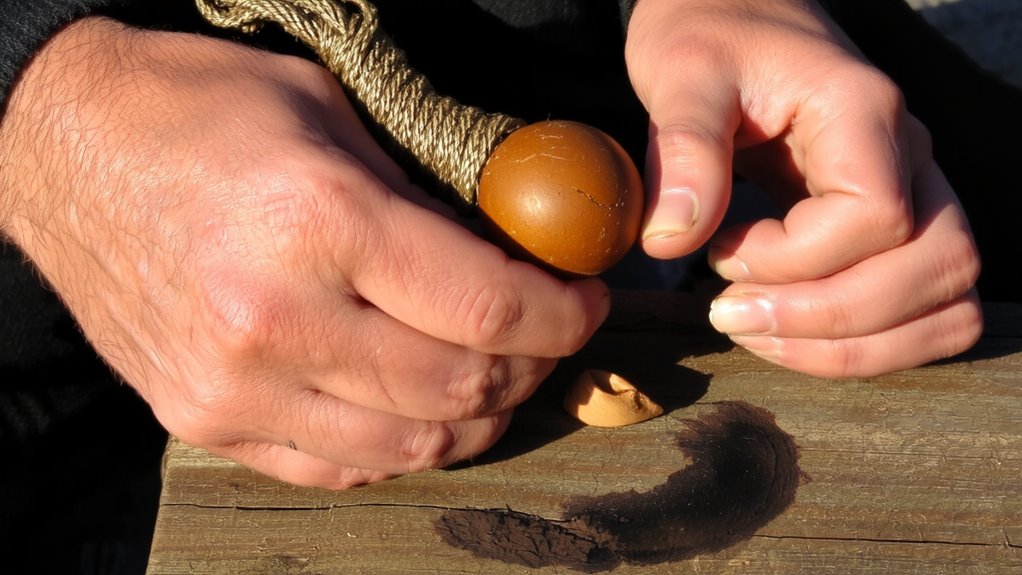
A reliable bow’s tension keeps the spindle spinning smoothly without slipping or binding. You need consistent bow tension to maintain rotation, so choose a resilient hardwood stave that won’t flex excessively. A slight natural curve is ideal-about 1.5 to 2 inches of deflection when braced-enough to hold pressure but not strain the cord. Use a cord made from durable natural fiber or synthetic line to guarantee cord durability under repeated use. The cord should be taut but not over-tightened; too much tension risks breaking the cord or bending the spindle, while too little causes slippage. Test the setup by rotating the spindle-if it hums steadily, the bow tension is correct. Adjust loop length or stave curve as needed. Reliable performance depends as much on bow tension and cord durability as on technique. A well-tuned bow reduces fatigue and increases success.
Shape Your Spindle and Fireboard for Friction
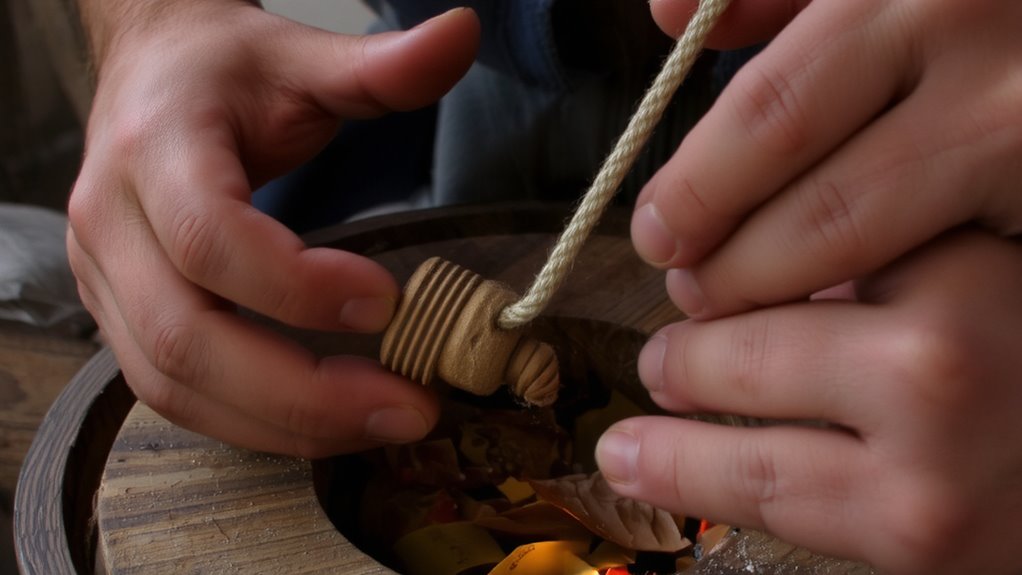
While the bow generates motion, it’s the spindle and fireboard that turn effort into heat, so shaping them correctly matters. You need spindle symmetry to guarantee even wear and consistent friction-any warp or imbalance steals efficiency. A straight, smoothly sanded spindle between 9–12 inches long and 5/8 inch thick works best in most hardwoods. Taper the ends slightly to reduce surface contact and concentrate pressure. For the fireboard, cut a sapwood plank about 1 inch thick and shape a depression near the edge using a knife or socket stone. Drill depth is critical-aim for 1/4 to 3/8 inch deep so the spindle bites without collapsing the wall. The notch must align cleanly with the hearth’s edge, allowing charred dust to exit. Fireboard depth affects ember formation; too shallow and it won’t collect powder, too deep and it chokes airflow. Both pieces must be dry and free of resin.
Use the Bow Drill to Create an Ember
Getting an ember with the bow drill takes coordination, not just strength, and it’s easy to misstep if your setup’s off. Your spindle must spin smoothly, the bow tension stay firm, and downward pressure remain steady. Use smooth, consistent strokes-too fast and you burn out the material; too slow and ember formation won’t start. Focus on maintaining rhythm between your bow hand and top hand pressure. As friction builds, fine, smoke-laden dust collects in the notch of the fireboard. That dust is where ignition technique matters: keep the charred material contained and compress it slightly as it heats. When you see a glowing orange spot forming, don’t stop. A successful ember formation happens when that spot deepens in color and begins to smolder. This isn’t flame yet, but a viable coal. Proper technique guarantees the heat builds efficiently, avoiding wasted motion. Transfer the ember quickly-any delay risks cooling.
Fix Common Bow Drill Failures
If your bow drill isn’t producing an ember, check the spindle’s alignment first-tilted pressure or a loose bearing block shifts force off-center, killing rotation efficiency. Proper spindle alignment guarantees consistent friction and heat buildup. Misalignment often results from uneven hand positioning, which destabilizes downward pressure and rotation. Keep your hand steady and directly above the spindle to maintain vertical force. If the spindle wobbles, reseat it straight in the socket of the bearing block. Use a small notch in the block to hold it centered. Adjust hand positioning so your wrist locks against your shin, improving control and reducing slippage. If the spindle spins too fast without catching, apply more downward pressure while maintaining rhythm. Soft cordage reduces torque-use a strong, non-stretch plant fiber or sinew. Hardwood spindles paired with softer fireboard material generate embers more reliably. Check for smooth spindle alignment and consistent hand positioning every 30 seconds during use.
On a final note
You’ve got the basic tools, but success depends on correct material pairing and consistent pressure. Hardwood works if perfectly dry and finely shaped; softwood in the fireboard catches dust better. Your cordage must hold tension without stretching. Most failures come from poor alignment or rushed motion. Adjust spindle angle or swap fireboard wood if no smoke appears. Practical testing shows 15–20 minutes of steady drilling yields results in dry conditions.