Using Sandbags Strategically to Divert Flash Flooding Away From Foundations
You can stop flash flood damage by placing sandbags not just at doors, but where water first gathers near your foundation. Use low spots and natural flow paths to build angled divert channels that steer water away. Stack bags tightly, 6–12 inches above expected levels, and pair them with graded soil for better results. Reuse undamaged bags later, and combine with sump pumps for faster water removal-there’s a smarter way to protect your home.
Notable Insights
- Position sandbags at 45-degree angles from the foundation to create divert channels that steer water away.
- Stack sandbags in overlapping, staggered layers to build a stable, gap-free barrier against flash flooding.
- Place the barrier 6–12 inches above anticipated water levels to ensure effective foundation protection.
- Use sandbags to redirect runoff toward lawns or ditches, preventing pooling near vulnerable foundation areas.
- Test the sandbag setup before storms to verify water is channeled safely away from the structure.
Identify Your Home’s Flood Hotspots
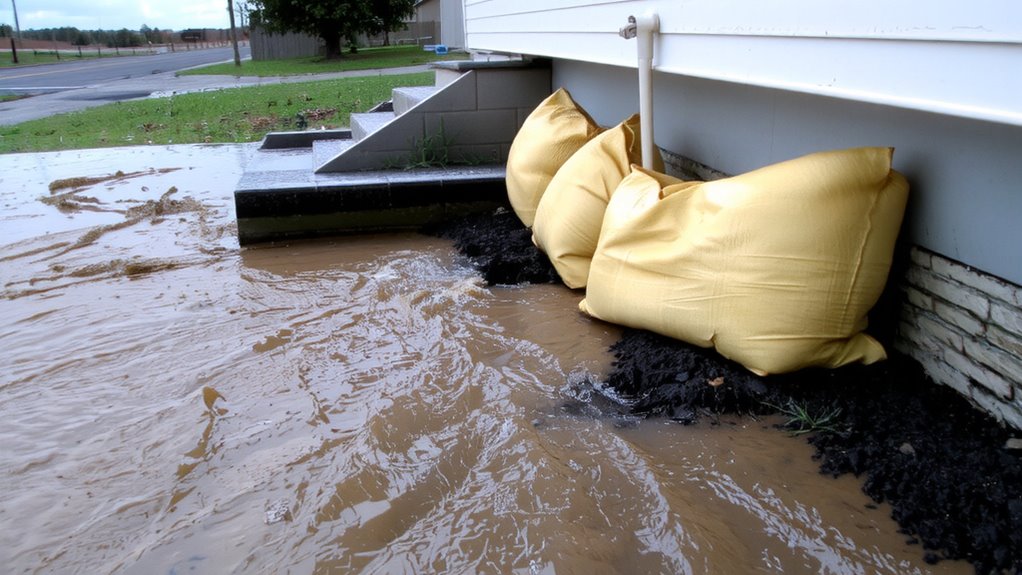
Where does water usually pool when it rains hard? You’ll see it collecting near your foundation, especially in low spots along your yard or beside steps. These are your flood hotspots, and spotting them early matters. Check your drainage patterns: water should flow away from the house, but poor grading or blocked paths can reverse that. Over time, repeated pooling leads to soil erosion, undermining stability and increasing flood risk. Follow the water’s path during a storm-note where it slows or spills over. These areas need attention before a flash flood hits. You can’t change the rain, but you can redirect flow with proper prep. Identifying weak zones now prevents foundation damage later. It’s not about guessing-it’s about observing real behavior. Know your yard’s weaknesses, and you’ll know exactly where to act. For added protection, consider pairing sandbags with temporary flood barriers designed for rapid deployment.
Stack Sandbags to Block Water at Entry Points
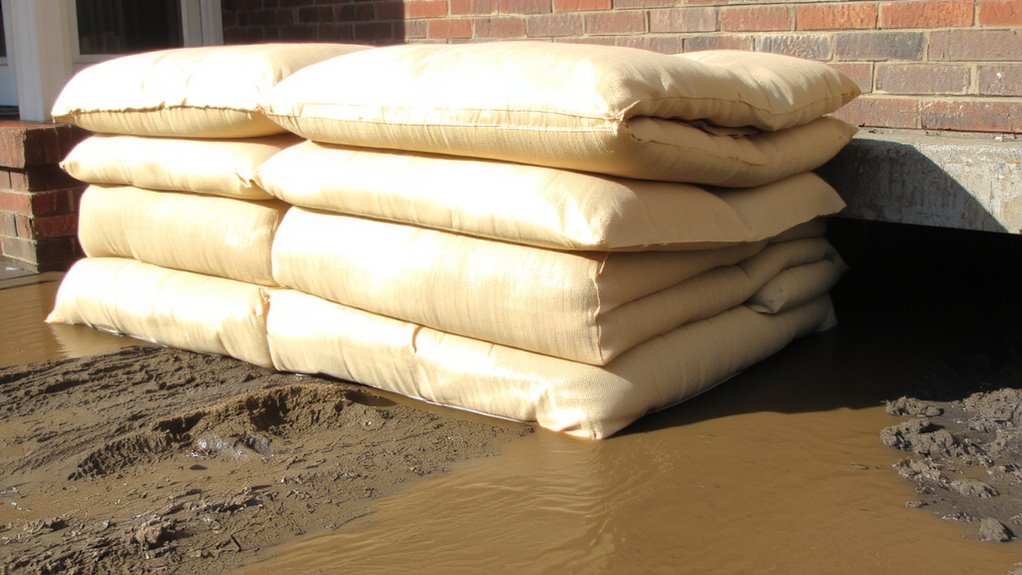
Sandbags are your first line of defense when floodwaters threaten entry points. You’ll need to stack them tightly at doors, garage openings, and basement access to create a barrier. Start by placing the first layer flat and overlapping, like bricks, then stagger the next layer for stability. Use filled sandbags that weigh about 35–40 pounds each-they’re heavy enough to resist water pressure but still manageable. The stacked wall must rise at least 6–12 inches above expected water levels. A proper seal reduces hydrostatic force against entry points, helping preserve structural integrity. Don’t leave gaps-water exploits even small openings. Secure stacking matters: a poorly built wall can collapse under pressure. This method won’t stop rising water for days, but it does offer hours of protection during flash events. Test fit your stack before flooding occurs.
Channel Floodwaters Away With Sandbag Diverts
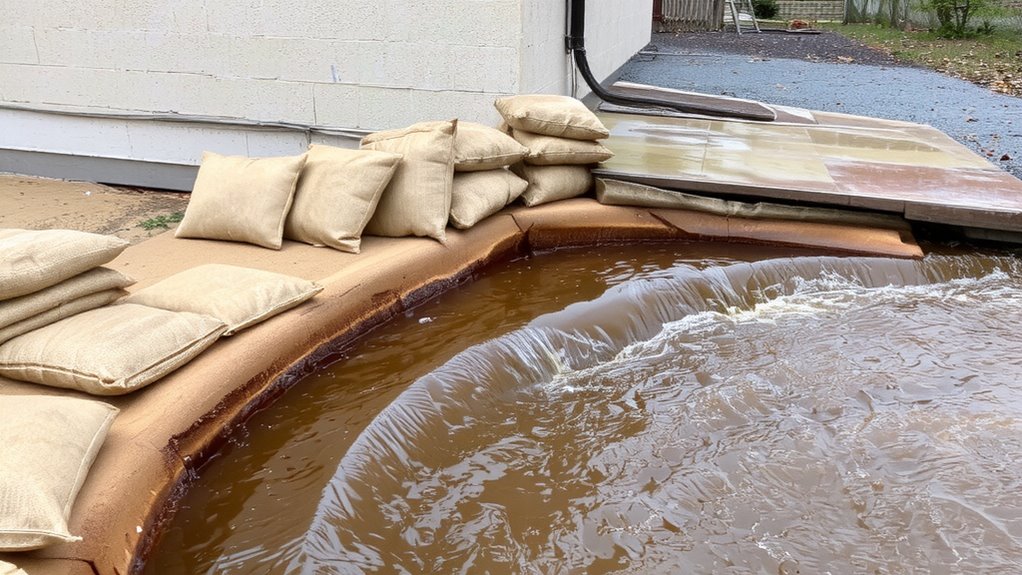
You’ve already stacked sandbags to block water at entry points, but if floodwater starts pooling around your property, redirecting the flow becomes just as important. Arrange sandbags at a 45-degree angle from the foundation to guide water flow away, creating a divert channel. This helps steer runoff toward lawns or drainage ditches, reducing pressure on structures. Proper placement improves erosion control by minimizing concentrated runoff that cuts into soil. Use tightly packed, overlapping bags to maintain stability under flow. Keep the divert slope gradual-too steep and the bags may shift. Test the setup during light runoff to observe effectiveness. Adjust spacing if water breaches or pools. Diverts work best when combined with graded terrain but offer immediate results in flat areas. They’re temporary but practical when seconds count. Evaluate performance by flow direction and soil movement, not appearance.
Seal Doors and Windows From Rising Water
If floodwaters are rising toward entry points, sealing doors and windows with sandbags can slow or stop water intrusion-but only if done correctly. For effective door sealing, stack sandbags tightly against the threshold and up the frame, creating a continuous barrier that rises at least 6 inches above expected water levels. Use plastic sheeting underneath for added resistance. Window protection requires sealing the sill and surrounding areas before water reaches the glass-once water presses against the pane, the risk of breakage increases. Place sandbags in a U-shape around vulnerable windows, ensuring contact with the foundation. Don’t rely on sandbags alone for long-term defense; they work best when combined with other flood barriers. Proper placement matters more than quantity. A well-sealed entry point can delay flooding by hours, giving you critical time. Consider pairing sandbags with top flood barriers for enhanced protection during severe flash flooding.
Maintain and Safely Remove Sandbags After Flooding
Once floodwaters recede, it’s important to assess your sandbags before removing them, since prolonged exposure to moisture and debris can compromise both the bags and the ground beneath. Check for signs of mold, erosion, or structural weakening-these affect sandbag maintenance and safety during handling. If the bags stayed dry inside, you can reuse them after airing out completely. Wet or contaminated bags must be disposed of properly to prevent health risks. Follow local guidelines for sandbag disposal, as some areas require separating sand from bags or treating it as hazardous waste. Wear gloves and a mask when handling used bags to avoid exposure to contaminants. Remove bags in reverse order of placement to minimize strain and prevent slips. Store reusable burlap bags in a dry, ventilated space. Plastic bags should be discarded if torn. Good sandbag maintenance extends usability, but safe disposal protects your property and community long after the flood.
Use Sandbags With Sump Pumps and Flood Barriers
After cleaning up and properly storing or disposing of used sandbags, you can turn attention to improving flood defenses for future events by integrating them with active and passive systems like sump pumps and flood barriers. Sandbag reinforcement around flood barriers boosts their stability and seals gaps that water might exploit. When paired with a sump pump, sandbags help keep water directed toward the pump’s intake, improving efficiency. Sump coordination means positioning sandbags to prevent runoff from overwhelming the pump, extending its effective range. A properly graded sandbag barrier gives the sump more time to cycle water out before levels rise too high. Used together, these systems reduce strain on mechanical parts and lower failure risk during heavy events. Sandbags aren’t a standalone fix, but with smart sump coordination and barrier integration, they add measurable resilience. Test the setup during light rains to verify water flow and pump response. For even greater protection, consider investing in best flood barriers for home to complement traditional methods like sandbagging.
How Sandbags Stop Flash Flood Damage
While flash floods strike fast and hit hard, sandbags can slow advancing water when stacked properly, buying critical time to protect property. You fill them with sand or soil, which adds weight and improves stability. The fabric absorbs some moisture, but don’t rely on sandbags to stop large volumes long-term-they’re best for redirecting flow and reducing speed. When placed around doorways and foundations, they act as a physical barrier, working alongside flood absorption techniques like gravel trenches or absorbent barriers. Their real value shows when combined with emergency evacuation planning; they give you extra minutes to act. They’re low-cost and deployable with minimal tools, but require labor to fill and stack correctly. Performance depends on placement, seal integrity, and water depth. Use them as a temporary defense, not a permanent fix.
On a final note
You can rely on sandbags to redirect flash floodwater when placed correctly. They work well at entry points and around foundations, especially when combined with sump pumps or barriers. Heavy-duty polypropylene bags hold up better than woven ones in prolonged exposure. Sandbags aren’t permanent, but they reduce immediate water intrusion. After use, dispose of or clean them promptly to avoid mold. Their low cost and simplicity make them practical for short-term defense.