Identifying Wild Burnet for Vitamin K and Iron
You’ll recognize wild burnet by its ruffled, dull-green leaflets with fine teeth and a faint cucumber scent when crushed. It grows in sunny, dry areas, not wet or shady spots, and has compact pink to burgundy flower clusters. The leaves are rich in vitamin K and iron due to natural soil uptake. Harvest sustainably-take only a third of the foliage-to keep the plant healthy and productive. There’s more to using it well.
Notable Insights
- Wild Burnet has pinnately compound leaves with 7–11 oval, ruffled leaflets and a faint cucumber scent when crushed.
- It produces dense clusters of small pink to reddish florets that mature into burgundy-colored flower heads.
- Found in sunny, well-drained habitats like meadows and roadsides, not in wetlands or deep shade.
- High in vitamin K and iron due to natural adaptation to mineral-rich, disturbed soils.
- Harvest sustainably by cutting no more than one-third of foliage per plant, using clean scissors above leaf nodes.
Identify Wild Burnet by Its Ruffled Leaves and Pink Flowers
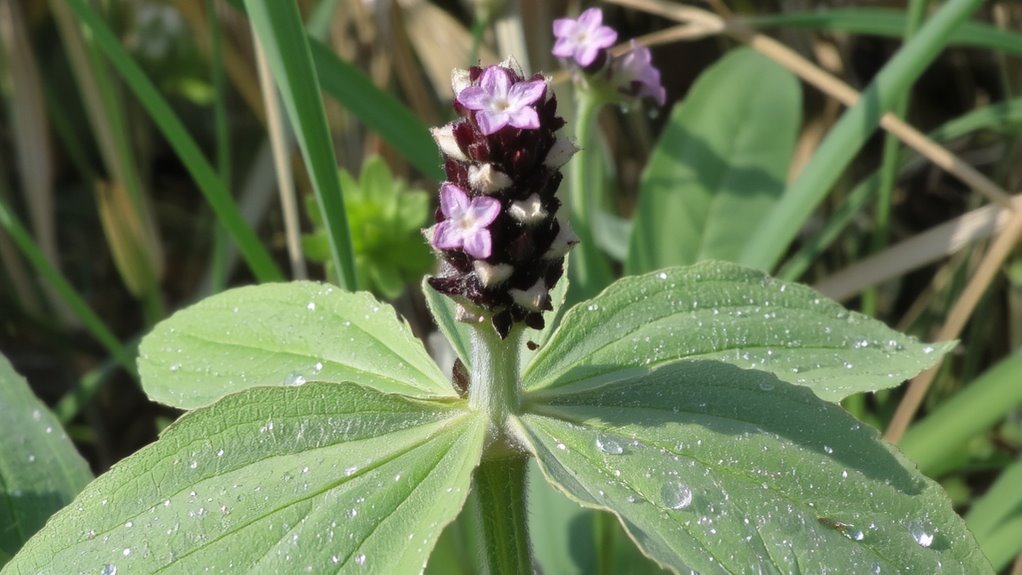
Look at the leaves first-your best clue when spotting wild burnet. They’re pinnately compound, with 7 to 11 oval leaflets that have a distinctly ruffled edge and a matte, slightly rough leaf texture. The surface feels soft but not sticky, and the color is a dull green, not glossy. Run your finger along the edge-you’ll notice fine teeth, not sharp, but enough to distinguish it from look-alikes. Now check the flower arrangement: dense, oval-shaped clusters at the stem tips, made up of tiny pink to reddish florets. They bloom progressively from the center outward, giving a layered look. Each cluster stays compact, rarely spreading wide. This combination-ruffled leaves with that specific leaf texture and tight, pink flower arrangement-is consistent across mature plants. It’s reliable, visible, and repeatable in field ID. Use both traits together. One alone isn’t enough.
Where and When to Find Wild Burnet in the Wild
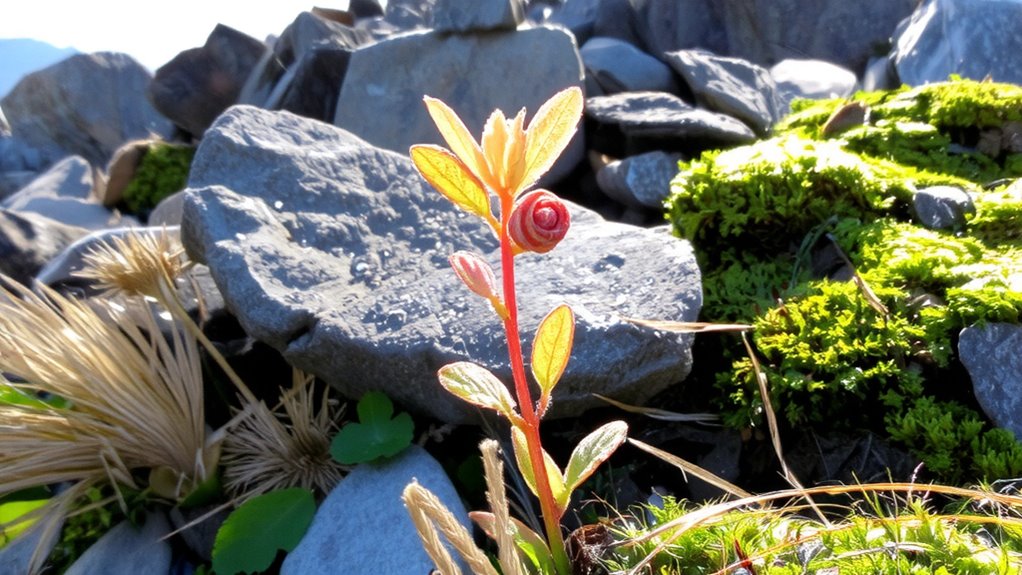
Where might you expect to run into wild burnet in the wild? You’ll find it in open, sunny regional habitats like meadows, roadsides, and grassy hillsides, often where the soil is well-drained. It thrives across Europe and parts of North America, especially in temperate zones. Look for it from late spring to mid-summer, as its seasonal availability peaks during these months. Plants usually emerge in May, flower by June, and begin to fade by August. You won’t find it in dense shade or wetlands. It prefers disturbed ground and can tolerate poor soil, making it common along trails and field edges. Check south-facing slopes first-they warm up early and boost growth. Since burnet doesn’t grow year-round, timing matters. Knowing your local climate helps pinpoint its window. Mark your calendar and scout locations early-you’ll have a better shot at prime specimens before they wither or seed out.
Burnet vs. Look-Alikes: How to Forage Safely
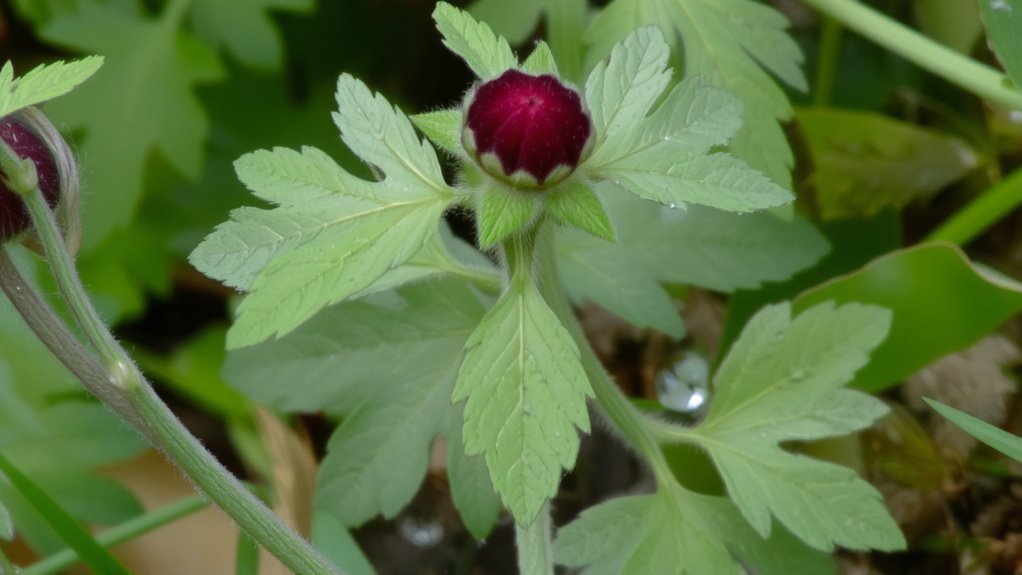
You’ve found a promising patch of burnet where the ground slopes south and the sun hits early, but before you clip a leaf, you need to be absolutely sure it’s not one of its toxic look alikes. Safe handling starts with accurate ID. Burnet has slender, pinnate leaves with 5–9 pairs of leaflets that are oval and toothed. When crushed, they emit a faint cucumber scent. Below are key traits to compare:
| Feature | Burnet | Look-Alike (e.g., Agrimony) |
|---|---|---|
| Leaf shape | Oval, toothed | Narrower, less toothed |
| Scent | Cucumber-like | None or bitter |
| Stem | Smooth, grooved | Hairy |
| Flower cluster | Compact, burgundy | Loose, yellow |
| Habitat | Dry, sunny slopes | Damp, shaded areas |
Mistaking species risks illness. Confirm every trait. Practice safe handling-always verify before consuming.
How to Harvest Wild Burnet Without Harming the Plant
A small harvest done right can sustain a patch for years, so take only what you need-typically one or two stems per plant, no more than a third of its foliage at a time. This approach supports sustainable harvesting by allowing the plant to photosynthesize and regrow efficiently. Use clean, sharp scissors to make a precise cut just above a leaf node, reducing damage and promoting healthy regrowth. Avoid uprooting unless necessary, as wild burnet regenerates best when the root system stays intact. Rotating harvest sites every season helps prevent overuse and supports long-term plant conservation. Patches with fewer than five plants shouldn’t be harvested at all-let them establish first. Harvesting in the morning after the dew dries preserves leaf quality. You’ll get reliable yields year after year when you balance use with care, ensuring wild burnet remains abundant for future foragers.
Why Wild Burnet Is High in Iron and Vitamin K
Iron and vitamin K levels in wild burnet aren’t random-they’re survival traits shaped by the plant’s environment. You’ll find high nutrient density in wild burnet because it grows in mineral-rich soils where strong root systems enhance soil absorption. The plant pulls iron efficiently, supporting its own metabolic functions in tough conditions. Vitamin K production increases as part of its natural defense and growth cycle, aiding in electron transport and photosynthesis. These aren’t lab-boosted levels-they’re developed through years of adaptation. Wild burnet doesn’t rely on fertilizers; it thrives on natural soil composition and root efficiency. When you consume it, you’re getting compounds formed through real environmental stress, not artificial enhancement. The iron content supports oxygen transport in your body, while vitamin K aids blood clotting and bone metabolism. It’s not flashy, but it’s reliable-like any wild plant worth its salt. Nutrient density comes from necessity, not design.
3 Easy Ways to Use Wild Burnet in Cooking
Wild burnet’s mild, slightly tangy flavor makes it a practical addition to everyday meals. You can use it raw in salads, where its subtle zest complements greens like spinach or arugula-ideal for flavor pairing without overpowering. Its leaves hold up well in light cooking techniques such as sautéing or steaming, retaining nutrients while softening texture. Add chopped burnet to soups or omelets near the end of cooking to preserve its vitamin content. When substituting for herbs like parsley or chives, use it in equal amounts. The plant integrates easily into dishes without altering structure, making it adaptable across recipes. It pairs well with lemon, garlic, and olive oil, enhancing bioavailability of iron and vitamin K. Cooking techniques that use low heat help maintain its nutritional value. You won’t need special tools or methods-simple prep delivers measurable dietary benefits. Wild burnet works reliably where flavor pairing and nutrient retention matter most.
Make a Simple Wild Burnet Tea in Minutes
You’ve already used wild burnet in salads, soups, and omelets-now try it in hot water. This tea preparation takes minutes and delivers a consistent flavor profile: mildly astringent, slightly grassy, with a faint cucumber note. Use fresh or dried leaves; both work. Here’s how they compare:
| Form | Steep Time (min) | Flavor Profile |
|---|---|---|
| Fresh leaves | 5 | Light, crisp |
| Dried leaves | 7 | Deeper, earthier |
| Chopped | 4 | More concentrated |
| Whole fresh | 6 | Balanced |
| Crushed | 5 | Stronger aroma |
Boil water, add 1–2 tsp per cup, and steep per the table. Strain and drink. No added benefits over other methods, but it’s portable and simple. You’re not gaining extra nutrients, but the taste holds up well in field conditions. Adjust steep time based on preferred intensity.
On a final note
You can rely on wild burnet for measurable vitamin K and iron content, especially when leaves are young. It grows reliably in open, well-drained soils and regenerates after careful harvesting. The plant’s ruffled leaves and pink flowers make ID straightforward, reducing misidentification risk. While flavor fades with age, even older leaves retain nutrients. Steeping leaves in tea extracts usable iron, though cooking boosts vitamin K absorption. Test leaf bitterness first-mild specimens work better raw.