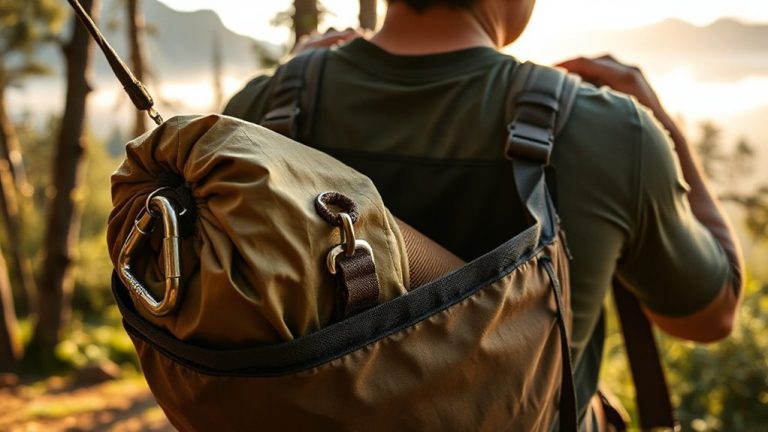
Building a Hammock Shelter With Bug Net and Rain Fly
You’ll want a 400-lb hammock made of ripstop nylon or parachute fabric-it’s light, strong, and durable. Pair it with a no-see-um bug net using a Y-zip for easy access and full coverage. Use a low-profile rain fly in silnylon or Dyneema pitched at 30–45 degrees to shed wind and rain. Anchor from solid 6-inch hardwood trees 12–15 feet apart, aiming for a 30-degree sag with adjustable slings. Keep the fly off the net to reduce condensation and guarantee seams are sealed. Better setups balance weight, weather resistance, and ease of use-there’s more to get right with smart tweaks.
Notable Insights
- Choose a durable, lightweight hammock with a fully enclosed bug net to protect against insects and ensure comfort.
- Use a low-profile rain fly with a 30–45 degree pitch to shed water and reduce wind strain effectively.
- Anchor your hammock between healthy, living trees 12–15 feet apart and at least 6 inches in diameter.
- Set up the hammock with a 30-degree sag for optimal comfort and to minimize stress on suspension components.
- Maintain a gap between the rain fly and bug net to prevent condensation and ensure proper ventilation.
Choose the Right Hammock and Bug Net
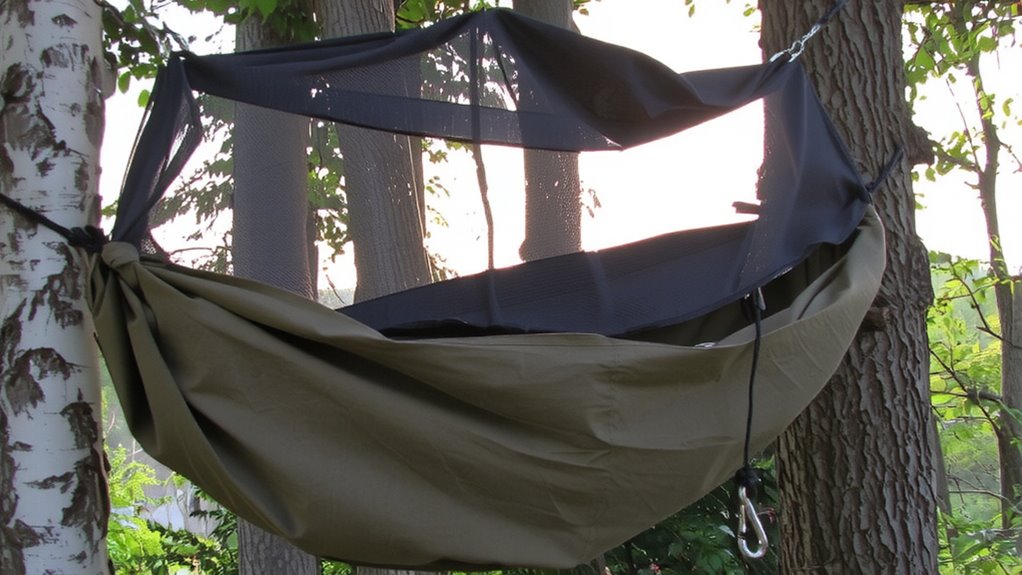
A good hammock and bug net combo starts with a durable, lightweight hammock made from ripstop nylon or parachute fabric-these materials strike a balance between strength and packability, typically supporting 400+ pounds while weighing under 20 ounces. You’ll want Hammock materials that resist UV degradation and tearing after extended use. Pair it with a bug net that fully encloses you without touching the sides; a barrel or conical bug net shape works best, minimizing contact and improving airflow. Some nets use finer mesh to block no-see-ums, but they can reduce ventilation. A zippered closure should be Y-shaped or dual, allowing easy entry without snagging. Integrated nets add convenience but increase packed size. If you prioritize weight, go for a separate net you can omit in bug-free zones. Test setup in the field-poor bug net shape leads to gaps or snags. Your comfort and protection depend on both components working together, not just their individual specs.
Pick a Rain Fly That Sheds Water in Wind
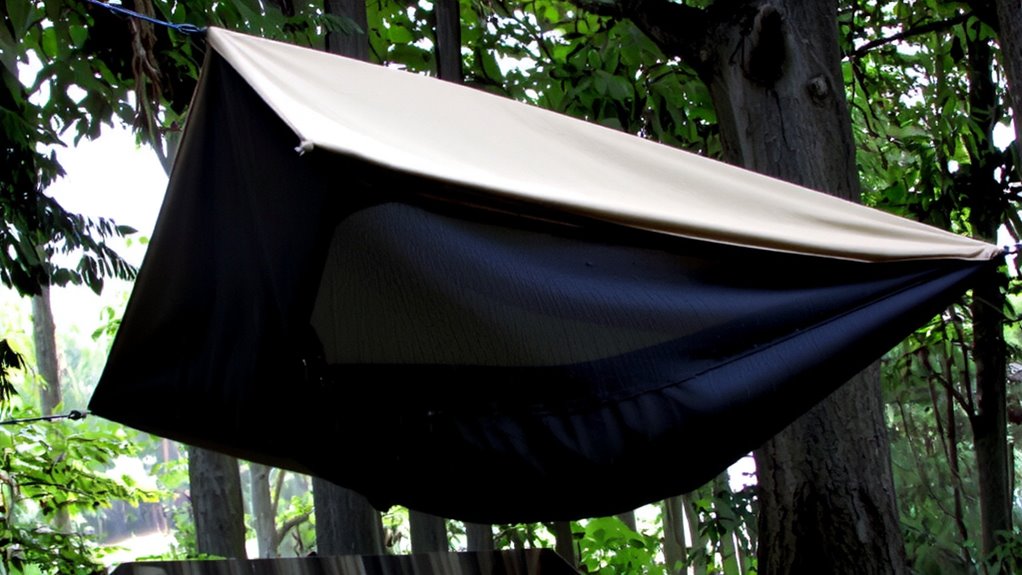
When winds pick up, your rain fly needs to shed water and stay put, so look for one with a low-profile shape like a diamond or asymmetrical tarp that cuts through gusts instead of catching them. A flat or high-arching fly traps wind, increasing strain on anchor points and reducing stability-opt for designs that prioritize wind resistance through sloped edges and tensioned ridgelines. A 30- to 45-degree pitch helps shed water runoff efficiently while minimizing flapping. Silnylon or Dyneema fabrics work well, but Dyneema offers better wind resistance and less stretch when wet, though it costs more. Guarantee the fly extends at least 12 inches beyond your hammock on all sides to keep rain out without compromising airflow. Poor water runoff leads to pooling, which adds weight and increases failure risk. Choose a fly tested in real weather, not just lab specs. For reliable performance, consider models featured in the best tarp shelters roundup, which highlights top designs proven in diverse conditions.
Find Solid Trees for a Safe Hammock Hang
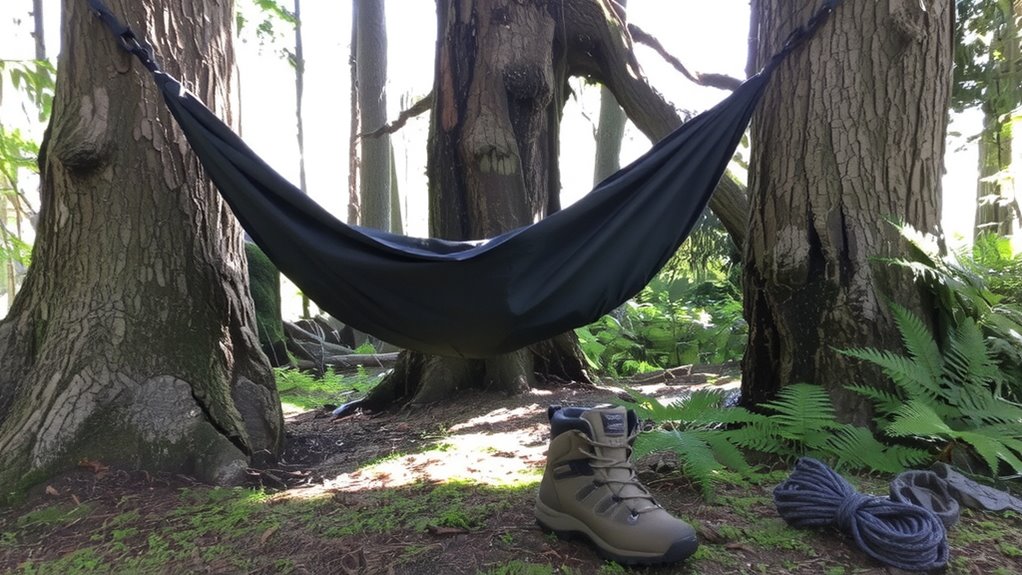
That tree might look strong, but not all trunks can handle your weight over time-choose ones at least 6 inches in diameter and free of cracks, soft spots, or peeling bark to reduce the risk of failure. Tree selection directly affects safety and stability. Weak or rotten trees can shift or break under load, especially in wind or after rain. You need reliable anchor points, evenly spaced and 12 to 15 feet apart, to support both your hammock and rain fly. Avoid dead trees or those with visible fungus, as they degrade internally. Living hardwoods like oak or maple typically offer stronger support. Test stability by gently shaking each trunk-minimal movement means solid roots. Poor anchor points lead to sagging, slipping, or collapse. Good tree selection takes 5 minutes but prevents accidents all night. Your shelter’s integrity starts here-don’t cut corners.
Hang Your Hammock With the Right Sag
If you want a comfortable and safe night’s sleep, hang your hammock with about 30 degrees of sag-this angle lets the fabric support your body evenly without stressing the anchors. Too tight, and you’ll lie diagonally with back strain; too loose, and you risk rolling out. Use adjustable suspension knots like the trucker’s hitch or whoopie sling for precise tension adjustment. These knots let you fine-tune height and stability after initial setup, adapting to tree spacing or terrain. Most tested systems support 400+ lbs when properly secured, but performance depends on knot integrity and tree health. Avoid over-tightening-gradual tension adjustment prevents sling damage and anchor failure. Knots must hold under shifting weight but still release easily when wet or loaded. Practice tying them under real conditions to guarantee reliability. Proper sag with reliable suspension knots improves comfort, balance, and safety across varied environments, making setup faster and more repeatable in the field.
Seal the Bug Net to Keep Pests Out
Once you’ve got your hammock pitched with the right sag, focus shifts to staying bite-free through the night-starting with how well your bug net seals. A secure zip closure is essential; it should close fully without gaps, even under light tension. Some zippers catch fabric easily, so test yours before relying on it in the field. Over time, wear can compromise the seal, so inspect it regularly. Seam sealing matters just as much-microscopic holes in stitched seams let in mosquitoes and no-see-ums. Factory-sealed seams are reliable, but if yours aren’t, apply seam sealer tape or liquid sealant along stress points. Even a well-made net fails if not tucked or closed properly. Guarantee the net doesn’t rest against your body, or bugs will bite through. A fully sealed bug net with durable zip closure and properly sealed seams gives consistent protection in high-bug environments. It’s not luxury-it’s baseline functionality. Top-rated models often include integrated features for easy setup and maximum coverage, making best camping hammock mosquito nets a smart investment for serious backpackers.
Cover Up With a Waterproof Rain Fly
While a tight hammock sag helps with comfort, it’s the rain fly that keeps you dry when storms roll in. A properly pitched rain fly delivers essential rain protection, shedding water before it reaches your hammock. Look for materials like 30D siliconized nylon or 70D polyester-they offer strong weather resistance without excess weight. A 10′ x 10′ tarp provides reliable coverage, but wider 12′ or asymmetrical models improve side coverage in wind-driven rain. Angle the fly so one end extends 12–18 inches past your feet, which increases runoff distance. Use guy lines with 300-pound tensile strength and secure them at 45–60 degrees for stability. Darker flies absorb heat but show mold; lighter ones reflect sun but may degrade faster. Condensation can form under any fly, so leave a small gap between it and your bug net. Effective weather resistance depends more on pitch than material alone-slope matters.
Fix Common Shelter Problems in Minutes
Though rain flies keep you dry, poor setup can still leave you damp-so addressing common shelter issues quickly is key to staying comfortable. Adjusting tension or repositioning stakes improves weather resistance and prevents pooling. Poor gear organization leads to clutter and moisture exposure; use quick-access pockets or hang storage loops. Recheck knots after wind gusts to maintain fly stability. These small fixes enhance reliability.
| Problem | Quick Fix | Benefit |
|---|---|---|
| Sagging rain fly | Tighten suspension line | Improves weather resistance |
| Wet gear | Relocate to dry zone | Enhances gear organization |
| Condensation buildup | Ventilate fly ends | Reduces interior moisture |
| Flapping fabric | Add or adjust stake tension | Stabilizes shelter in wind |
On a final note
You’ve got a shelter that keeps bugs out and rain off, but only if everything’s tight and properly aligned. A droopy rain fly or gap in the net means wetness or bites. Test the sag, seal every opening, and confirm the fly extends past the hammock ends. Lightweight gear works only when set up right-no slack. It’s not about the brand, but how well you pitch it.