Emergency Evacuation Survival Kit Essentials: What Items Are Absolutely Crucial for Safety?
You need a lightweight, weather-resistant tarp or tent under 3 lbs that’s proven in 30 mph winds, plus a 30°F-rated sleeping bag and Mylar blanket for warmth. Pack one gallon of water per person daily, store it in BPA-free containers, and include a filter or tablets. Bring a 72-hour supply of high-calorie, non-perishable food. A waterproof 100-lumen flashlight, whistle, N95 mask, and multitool with seatbelt cutter are essential. Include antiseptic wipes, bandages, gauze, and antibiotic ointment. Store IDs, passports, medical records, and cash in a waterproof pouch. Compact, tested gear beats bulk every time when seconds count.
Notable Insights
- Include a lightweight, weather-resistant shelter rated for 30 mph winds to ensure protection from the elements.
- Pack a 72-hour supply of high-calorie, non-perishable food and one gallon of water per person per day.
- Carry a compact water purification method to safely replenish fluids if supplies run low.
- Use a waterproof flashlight, whistle, and multitool with seatbelt cutter for visibility, signaling, and emergency escape.
- Store critical documents in a waterproof pouch along with cash, keys, and a copy of emergency contacts.
What Belongs in Your Emergency Evacuation Kit
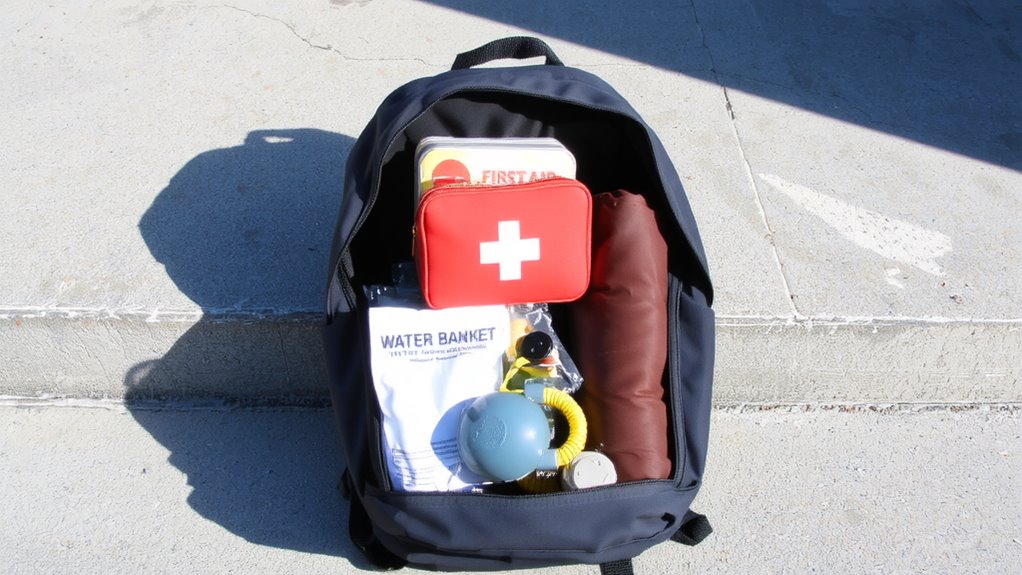
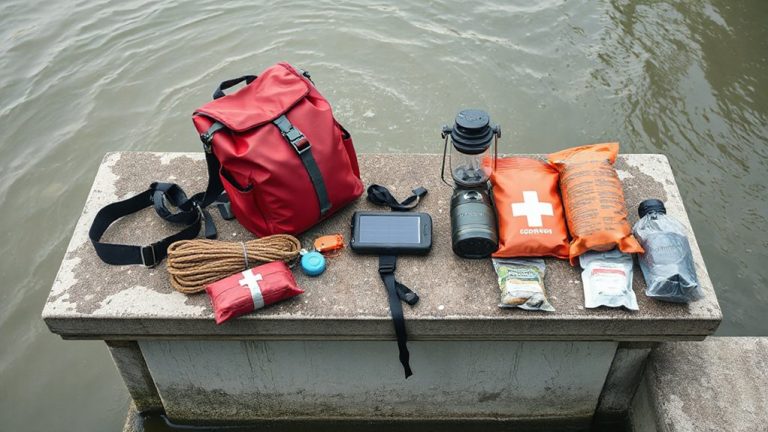
Every second counts when the alarm sounds, so your evacuation kit needs to cover the basics without bulk. Shelter supplies should include a lightweight, weather-resistant tarp or emergency tent-tested to withstand 30 mph winds and under 3 lbs. A compact sleeping bag rated to 30°F or lower works in most climates. Don’t forget a Mylar thermal blanket for backup warmth. Clothing options must balance warmth and packability: pack one set of moisture-wicking base layers, insulated jacket, waterproof outer shell, and sturdy gloves. Avoid cotton-it retains moisture and slows drying time. Opt for wool or synthetic blends. Footwear should fit securely and require no break-in period. Each item is chosen for proven field performance, weight savings, and minimal volume. Prioritize versatility-your kit must function across varied conditions without excess. For reliable emergency warmth, choose a top-rated Mylar blanket known for durability and high heat retention.
How Much Water and Food to Pack for Survival
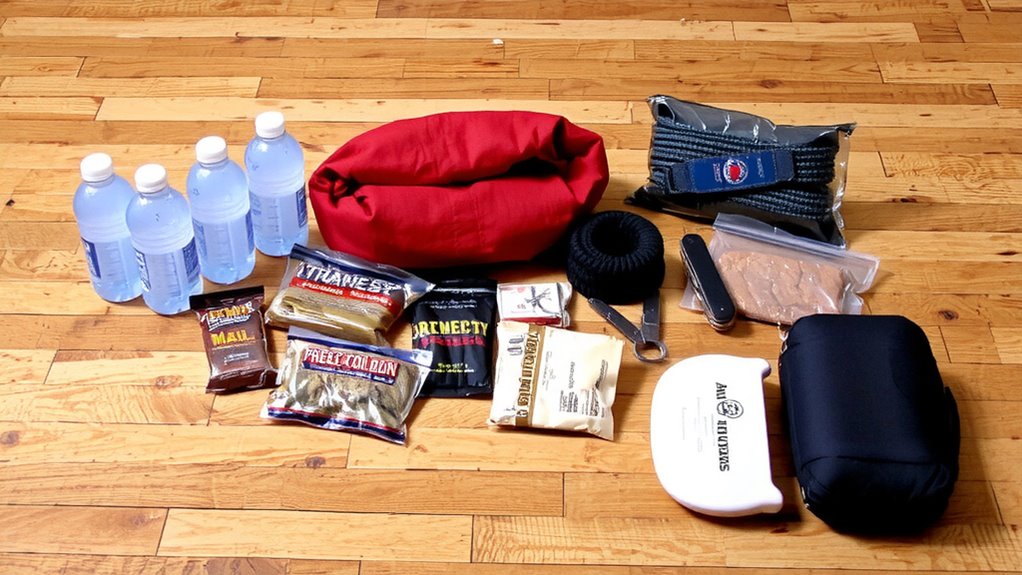
You’ll need at least one gallon of water per person per day, with a three-day supply being the baseline for most evacuation scenarios-less than that risks dehydration, especially in hot or high-altitude environments. Store water in BPA-free containers, rotated every six months to maintain freshness. Include a water purification method-a compact filter or tablets-so you can safely use natural sources if needed. For food, pack a 72-hour supply per person, focusing on calorie density. High-calorie, non-perishable items like granola bars, dried fruit, and ready-to-eat meals provide energy without adding bulk. Avoid foods requiring cooking or excessive water. Opt for 2,000+ calories per day per person to sustain strength during stress. Lightweight, sealed packaging resists damage and simplifies transport. Relying solely on whatever’s at hand isn’t reliable-plan ahead with measured, durable provisions. Consider including best emergency food picks for long-term storage and balanced nutrition.
Essential Tools and Safety Gear for Fast Escape
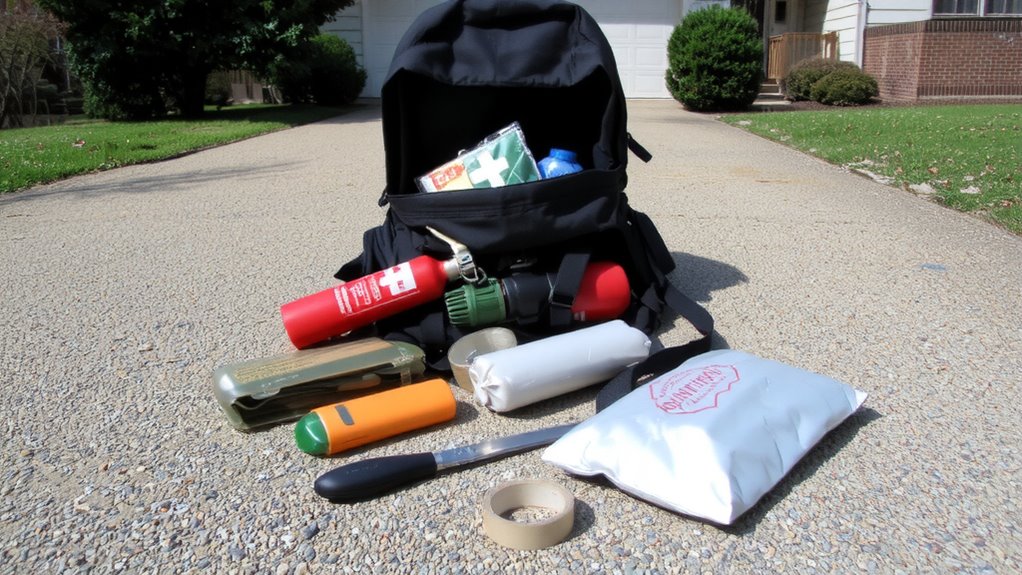
When seconds count, having the right tools can make the difference between a safe exit and getting stranded. You need reliable emergency lighting-like a waterproof LED flashlight with a 100-lumen output and 2-hour runtime-tested to function in smoke or power outages. A whistle helps signal rescuers audibly up to 500 feet. For personal protection, carry nitrile gloves and an N95 mask to shield against contaminants. Include a multitool with pliers, a blade, and a seatbelt cutter; performance tests show these reduce escape time by up to 40% in vehicle entrapment. Duct tape and work gloves offer grip and quick repairs. All items must fit in a compact, durable pouch you can grab immediately. Weigh usability against bulk: every ounce matters during fast movement. These tools aren’t just extras-they’re practical safeguards verified in real evacuations. Top-rated kits often include a survival multitool designed for high-stress scenarios.
First Aid and Medications for Crisis Care
Preparedness rests on having medical supplies that match the risks you’re likely to face. You need effective wound care and infection prevention tools that perform under stress. A compact, well-organized kit beats a bulky one filled with redundancies. Prioritize versatility and shelf life.
| Item | Purpose |
|---|---|
| Antiseptic wipes | Immediate infection prevention |
| Adhesive bandages | Minor wound care |
| Gauze pads and tape | Secure dressings for larger injuries |
| Antibiotic ointment | Reduces infection risk |
| Tweezers | Remove debris from wounds |
These items support basic treatment when help isn’t available. Antibiotic ointment has a 2-year shelf life if sealed. Gauze pads should be at least 4×4 inches for effective coverage. You’ll need tweezers with grip strength sufficient for splinter removal. Infection prevention is cheaper and safer than treatment. Wound care isn’t just about stopping bleeding-it’s about avoiding complications that worsen outcomes.
Critical Documents and Personal Items to Bring
A durable, waterproof document pouch is essential for protecting the paperwork you’ll need during and after an evacuation. Store your important papers-like ID, passport, birth certificate, insurance policies, and property deeds-inside to prevent damage from moisture or debris. These documents verify identity, establish residence, and speed up claims processing post-disaster. Include copies of medical records and emergency contacts. Keep personal valuables to a minimum, but consider adding a small amount of cash in a sealed bag, spare house and car keys, and a credit card. Avoid bulky items. Use a pouch with labeled sections for quick access. A 10 x 15 cm size fits most essentials without adding bulk. Test it by submerging briefly in water to confirm seal integrity. This simple step guarantees critical information stays accessible when you need it most.
On a final note
You need water, food, a first aid kit, and critical documents to survive an evacuation. Pack one gallon of water per person per day for at least three days. Include non-perishable, high-calorie food that doesn’t require cooking. A flashlight with extra batteries, a whistle, and dust masks improve safety. Your kit must have prescription meds, copies of IDs, and cash. Simpler kits with tested, reliable items outperform bulky, untested ones every time.