Paradoxical Breathing in Flail Chest: How to Identify It
You’ll see paradoxical breathing when a chest segment moves inward during inhalation and bulges out during exhalation, out of sync with the rest of the chest. It happens with flail chest-usually from two or more fractures in three adjacent ribs. Check for this motion in ribs 4 to 10, especially with trauma. Use palpation if it’s not visible. Low oxygen, rapid breaths, or cyanosis mean trouble. Oxygen and pain control come first-your next steps depend on what you find.
Notable Insights
- Look for inward movement of a chest segment during inspiration and outward bulging during expiration.
- Confirm at least three adjacent ribs are fractured in two or more places to suspect flail chest.
- Observe the chest wall under good lighting for asymmetrical or paradoxical motion over several breath cycles.
- Palpate both sides of the chest to detect subtle seesaw motion indicative of paradoxical breathing.
- Differentiate from labored breathing by noting mechanical mismatch rather than just increased respiratory effort.
Why Paradoxical Breathing Happens in Flail Chest?
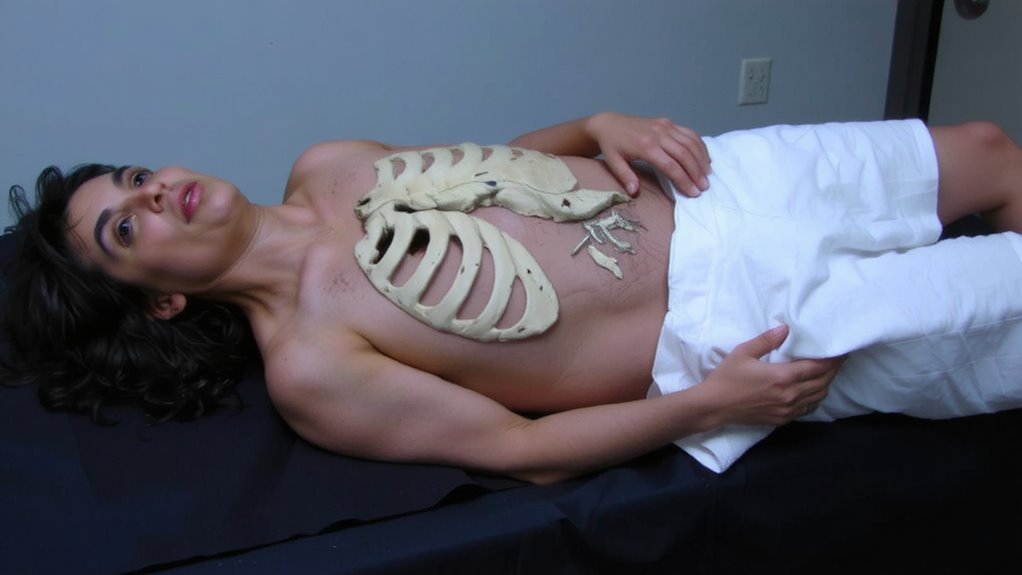
A flail chest throws your breathing out of sync because part of the rib cage moves independently from the rest. This segment, detached due to multiple rib fractures, creates biomechanical instability. When you inhale, negative pressure pulls the flail segment inward while the rest of the chest expands-your lungs get less air. On exhalation, the reverse happens: the unstable area bulges outward as pressure differentials push it free. That paradoxical motion isn’t just abnormal-it’s inefficient. Your diaphragm and accessory muscles must work harder to compensate. The result? Increased work of breathing and reduced oxygenation. You can see this motion during assessment, especially if the patient is struggling. It’s not subtle. The flail section flops opposite to normal chest movement. Recognizing this tells you ventilation mechanics are compromised. Immediate support is needed to stabilize breathing until structural repair starts.
Recognize Rib Injury Patterns That Suggest Flail Chest
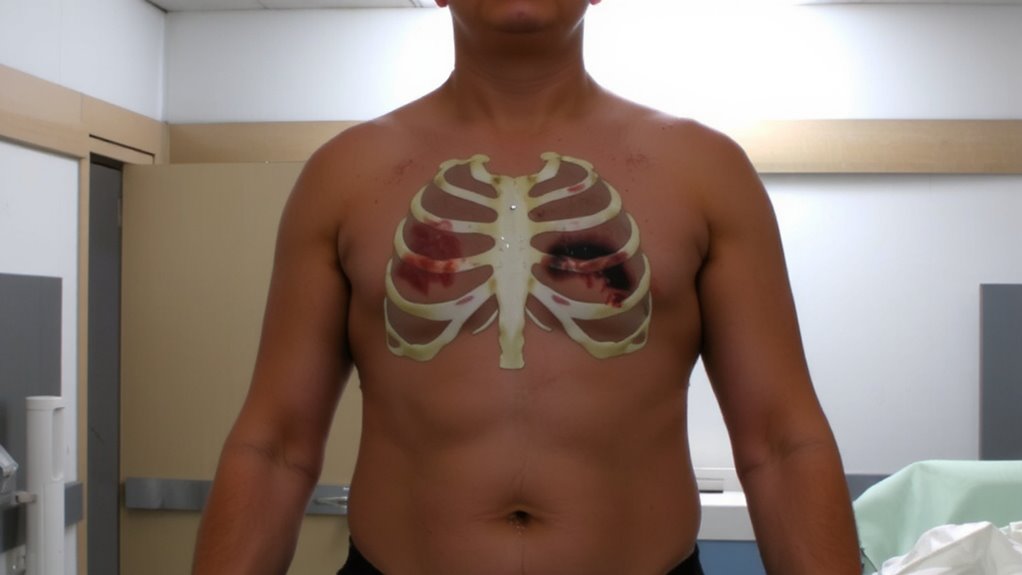
Three or more adjacent ribs fractured in two or more places is the hallmark of a flail chest, and you need to spot this pattern fast. This specific rib fracture distribution creates a segment of the chest wall that moves independently, leading to chest wall instability. You’re not just looking for isolated breaks-you’re evaluating for multiple fractures across neighboring ribs that compromise structural integrity. Identifying the pattern early improves intervention speed and accuracy.
| Rib Number | Fracture Sites | Involved Segments |
|---|---|---|
| 4–6 | 2+ fractures | Anterior |
| 5–7 | 2+ fractures | Lateral |
| 6–8 | 2+ fractures | Anterolateral |
| 7–9 | 2+ fractures | Lateral |
| 8–10 | 2+ fractures | Posterolateral |
This distribution helps you predict where instability is most likely.
Spot Visible Signs of Paradoxical Chest Movement
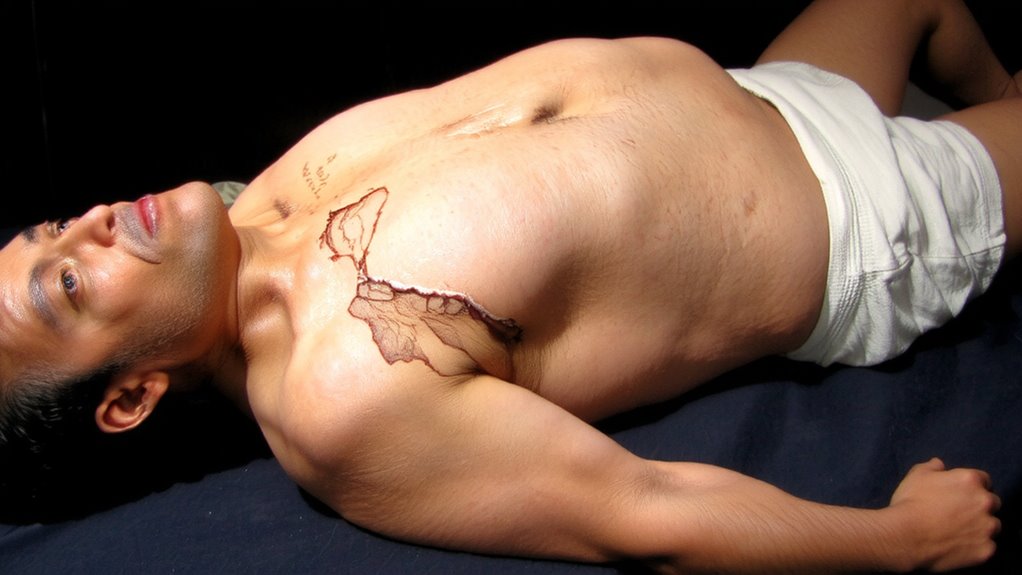
What gives flail chest its danger is the unstable segment moving opposite to the rest of the chest wall-watch for that. You’ll see the injured area sink inward during inhalation while the rest of the chest expands, then bulge outward during exhalation. This paradoxical motion breaks chest symmetry, a key visual clue. Don’t rely on intuition-assess systematically. Position the patient under good lighting and expose the full chest. Compare left and right sides as they breathe. Note any lag or reverse movement. A high respiratory rate can make the motion harder to catch, so observe over several cycles. Rapid breathing compresses the time between movements, masking subtle asymmetries. Slow, shallow breaths might make the paradox more visible. You’re not looking for effort or strain yet-just motion. Clear visualization takes focus, especially with torso hair or obesity obscuring landmarks.
Tell Apart Paradoxical and Labored Breathing
How do you know if what you’re seeing is true paradoxical motion or just labored breathing? Labored breathing shows increased effort-like nasal flaring or accessory muscle use-but chest and abdominal movements stay coordinated. Paradoxical breathing disrupts this rhythm. You’ll notice abnormal tidal patterns, where the injured chest segment moves inward during inspiration while the rest expands. This isn’t just fast or deep breathing; it’s a mechanical mismatch. Labored breathers may pant or sweat, but their abdominal motion stays even. With paradoxical breathing, you often see uneven abdominal motion due to compensatory effort or diaphragmatic fatigue. Don’t mistake heavy breathing for true paradox. Observe multiple breaths. Consistent inward movement of a chest segment on inspiration confirms it. If the timing or direction shifts erratically, it’s likely not true paradox. Look for consistency in the abnormal pattern, not just effort.
Confirm Paradoxical Movement at the Bedside
You’ve already learned to distinguish paradoxical breathing from general labored efforts by watching for consistent inward motion of a chest segment during inspiration. Now confirm it at the bedside by observing breathing symmetry with the patient supine and shirtless. Place your hands lightly on each side of the chest to compare movement; you’ll feel the unstable segment sink in during inhalation while the rest expands. This counters normal chest stability and creates a seesaw motion. Avoid relying solely on sight-subtle paradoxical movement can be missed visually, especially in obese or heavily muscled patients. Use palpation to verify the lack of coordinated wall motion. Breathing symmetry should be consistent; any opposing movement confirms instability. Don’t mistake voluntary breath-holding or coughing for paradox. True paradox persists across regular breaths. This hands-on check takes seconds but delivers reliable confirmation.
Watch for Red Flags of Respiratory Distress
Why wait until breathing becomes visibly labored before acting? You need to catch respiratory distress early, especially with flail chest. Look for cyanotic lips-they signal low oxygen and mean the body’s struggling. Rapid shallow breaths are another key sign; they indicate inefficient ventilation as the patient tries to compensate. You might also notice increased respiratory rate, nasal flaring, or use of accessory muscles. These aren’t subtle hints-they’re urgent cues that oxygen exchange is failing. Don’t dismiss mild agitation or confusion; they can stem from rising CO2 levels. If you see these red flags, act fast. Delaying assessment risks progression to full respiratory failure. Monitoring essential signs continuously helps, but visual cues are immediate and reliable. Recognizing cyanotic lips and rapid shallow breaths early gives you time to intervene before the situation deteriorates. Stay alert-small changes can mean big problems.
Start Immediate Management for Flail Chest
Stability comes first when managing flail chest-your immediate priority is to control pain and support breathing. Start oxygen therapy right away to maintain saturation above 90%, using a non-rebreather mask if available. Inadequate ventilation worsens quickly without it. Pain control is critical; without sufficient relief, you can’t breathe deeply or cough effectively, increasing pneumonia risk. Use parenteral analgesics like morphine or fentanyl, titrating to effect while monitoring respiratory depression. Avoid oversedation-it compromises already unstable chest mechanics. If paradoxical motion impairs ventilation, consider non-invasive positive pressure ventilation, but be ready to intubate if failure occurs. Rib belts aren’t recommended early-they restrict breathing. Your goal isn’t to immobilize the segment but to support physiology. Monitor continuously; deterioration can be sudden. Immediate management hinges on oxygen therapy and pain control-everything else builds from there.
On a final note
You’ll spot paradoxical breathing when the injured chest segment moves in during inhalation and out during exhalation, opposite to normal motion. It happens due to rib instability in flail chest. Check for this sign along with pain, bruising, and respiratory effort. Don’t confuse it with general labored breathing. Confirm at bedside with direct observation; imaging follows. Treat promptly-supportive care and pain control improve outcomes. Watch for distress-low O2, tachypnea-since complications escalate fast.