Grid-Down Scenarios: How to Adapt Your Daily Routine in a Powerless World
You’ll boil water for one minute to kill pathogens, then filter it through a 0.2-micron ceramic or hollow fiber filter to remove bacteria and protozoa. Store food in a root cellar at 32–40°F with high humidity, or preserve it via fermentation, curing, or canning. Wear wool layers to retain heat and use passive solar gain through south-facing windows. Rely on walkie-talkies, hand-crank radios, and community check-ins. Reinforced locks and gravel paths boost security. When the grid dies, water pumps fail in hours-having a plan means you’re ready for what comes next.
Notable Insights
- Purify water by boiling for one minute and using a 0.2-micron filter to remove pathogens and debris safely.
- Preserve food in a root cellar or through fermentation, canning, and salt-curing to extend shelf life without refrigeration.
- Regulate body temperature with layered clothing in winter and breathable fabrics with shading in summer.
- Maintain communication using walkie-talkies, hand-crank radios, and prearranged meetups during extended power outages.
- Secure your home with reinforced locks, noise-making barriers, and guard dogs while storing water and food proactively.
Purify Water Without Electricity
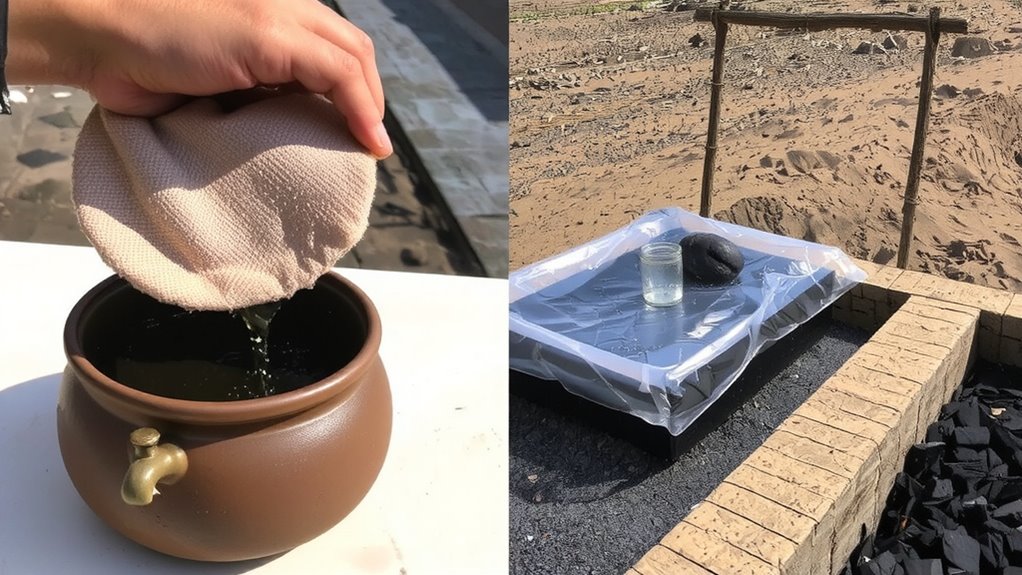
If you’re cut off from power, your usual water filters won’t do you much good-so relying on non-electric purification methods becomes critical. You can boil water to kill pathogens; a rolling boil for one minute is enough to make it safe, even at high altitudes. Boiling doesn’t remove debris, so pair it with a physical filter for best results. Many portable ceramic or hollow fiber filters remove bacteria and protozoa but not viruses-check pore size, ideally 0.2 microns or smaller. Some models handle up to 1,000 liters before needing replacement. Gravity filters let you process large volumes hands-free, while pump types give faster output but require effort. If you use a basic cloth or coffee filter, it only removes sediment-don’t rely on it for microbes. Combining boil and filter guarantees both biological and particulate safety, giving you reliable water access when the grid’s down. For reliable options, consider the best water filters for survival based on performance and durability in extreme conditions.
Preserve Food Without Power
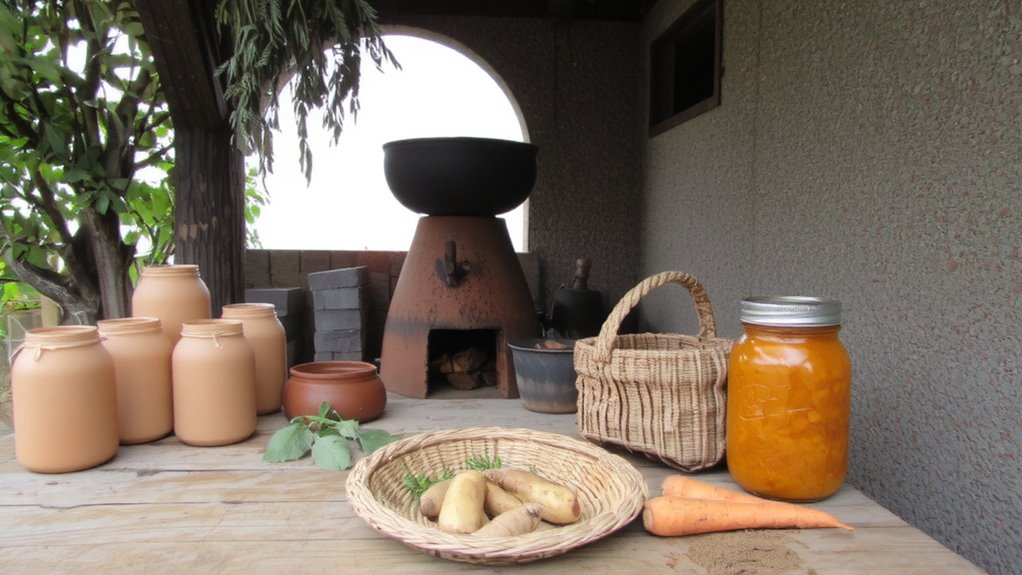
You’ve secured clean water without electricity-now keep your food from spoiling when the power’s out. Use root cellar storage for potatoes, carrots, and apples; it maintains 32–40°F with 85–95% humidity, slowing decay for months. Insulate the space well and guarantee airflow to prevent mold. For perishables, fermentation techniques preserve nutrients and add shelf life-sauerkraut lasts six months at room temperature, and fermented salsa stays safe for months. Salt-cure meats or use vinegar brines where refrigeration isn’t an option. Canning works but requires fuel. Smoking adds flavor and mild preservation but isn’t sufficient alone. Root cellar storage beats burial in soil, which risks rot and pests. Fermentation techniques beat chemical preservatives when supplies run low. Neither method needs power, and both are proven over decades. Use them together to extend variety and food safety during long outages.
Stay Warm and Cool Without HVAC
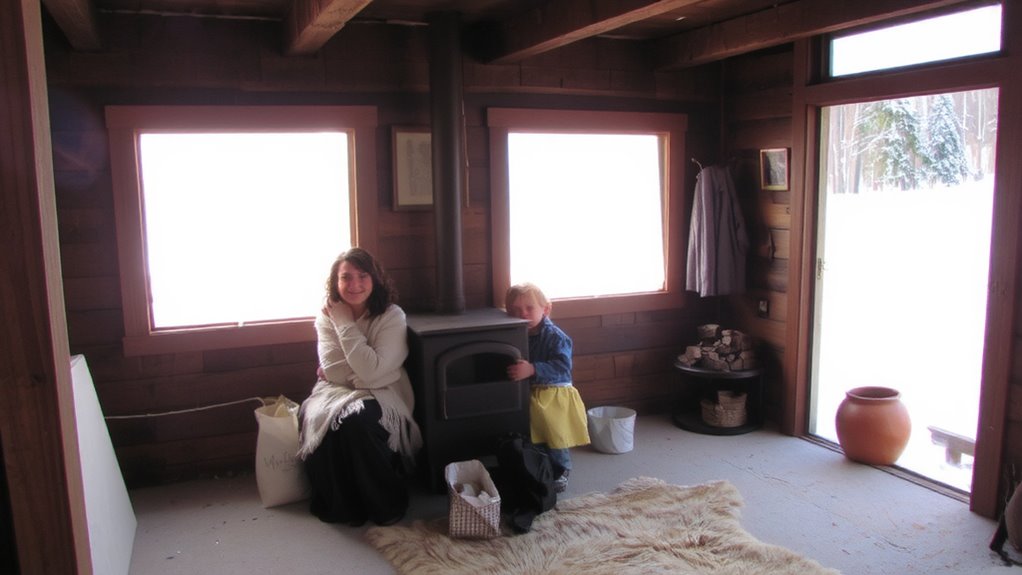
How do you maintain a safe body temperature when the thermostat’s useless? You rely on insulated clothing and passive heating to manage extremes. Layering with wool or thermal gear retains heat efficiently, reducing dependence on external sources. In summer, light, breathable fabrics and strategic shading keep you cool. Passive heating-like sunlight through south-facing windows-raises indoor temps during the day; closing blinds at night traps that warmth. Avoid drafts with door sweeps and window insulation kits.
| Method | Season Used | Effectiveness (1–5) |
|---|---|---|
| Insulated clothing | Both | 5 |
| Thermal curtains | Winter | 3 |
| Cross-ventilation | Summer | 4 |
| Reflective foil | Winter | 2 |
| Room sealing | Both | 4 |
These tested solutions offer measurable resilience without power.
Talk to Others When the Grid’s Down
What good is a plan if you can’t communicate it when cell towers are dark and the internet’s gone? You’ll need face-to-face coordination. Walkie-talkies with 2–5 mile range work best; they’re affordable and reliable if charged beforehand. Signal range drops in cities due to obstructions, but open terrain gives full performance. A hand-crank radio lets you receive emergency broadcasts and relay info. Establish meeting points and check-in times with neighbors-consistency builds trust. This is where community support starts: sharing updates, watching for threats, helping the vulnerable. Skill sharing spreads fast when done in person-someone who knows first aid or water purification can train others in minutes. These aren’t luxuries; they’re force multipliers. Reliable communication isn’t about gear alone-it’s about building coordination that outlasts the outage. For dependable performance, consider the best hiking walkie-talkies based on range, battery life, and durability in rugged conditions.
Build a Life Without Electricity
When the power’s out for weeks or longer, how well you adapt depends on whether you’ve tested your gear and systems before the crisis hits. You’ll need reliable cooking methods-camp stoves with propane work fast but need fuel stockpiling; wood stoves offer sustainability but demand ventilation and effort. Solar ovens are slow but require no fuel, ideal in sunny climates. For lighting alternatives, LED lanterns powered by hand-crank dynamos last years with zero consumables, though brightness is low. Solar-charged LED lights provide better output but depend on daylight. Candles are accessible but dim and pose fire risks. Battery-powered lights work short-term if you’ve stored spares. Prioritize devices tested under real conditions-durability and efficiency matter most. Adaptation isn’t about comfort; it’s about function. Your choices must balance energy use, safety, and maintenance to sustain daily routines when the grid stays down. Consider starting with one of the top-rated models, like the best emergency cooking stoves, to ensure dependable performance during prolonged outages.
Protect Your Home Without Alarms
Why rely on electric alarms when they’ll fail the moment the grid does? You need reliable, non-electric methods to protect your home. Reinforced locks are essential-solid deadbolts with at least a 1-inch throw resist forced entry better than basic models. Pair them with sturdy strike plates secured by 3-inch screws into wall studs. Motion sensors that depend on batteries or electricity won’t last. Instead, use natural indicators like gravel paths that make noise underfoot or DIY chimes on windows. Dogs also serve as effective, mobile motion sensors. The table below compares methods by durability, cost, and setup effort:
| Method | Durability (Years) | Cost ($) |
|---|---|---|
| Reinforced locks | 10+ | 50 |
| Gravel barriers | 5 | 20 |
| Window chimes | 3 | 15 |
| Guard dogs | 8–12 | 300+ |
Identify What Fails First in a Blackout
A blackout reveals weaknesses fast-your refrigerator stops cooling within hours, leaving perishables at risk. Without power, water pumps fail, cutting off tap water for drinking and sanitation; stored water becomes critical within the first 24 hours. You’ll need at least one gallon per person daily. Traffic lights go dark, increasing road hazards and congestion-expect delays and rely on hand signals or alternative routes. Elevators stop, stranding people on higher floors. Medical devices dependent on electricity become useless unless backed by batteries or generators. Fuel stations can’t pump gas without power, limiting vehicle refueling. Communications degrade as cell towers lose backup power after a few hours. You’ll lose internet and phone service quickly. Identify these immediate failures now so you can plan accordingly. Prioritize water storage, non-perishable food, and manual tools. Know your neighborhood’s layout to avoid gridlocked intersections. Prepare for the cascade.
On a final note
You’ll adapt by focusing on what works when the power’s out. Non-electric water filters remove 99.9% of pathogens reliably. Battery-free coolers keep food safe 24–48 hours. Thermal layers outperform heaters in cold. Hand-crank radios connect when networks fail. Manual tools beat electric ones during extended outages. Security locks beat smart systems without power. Simplicity wins-tested gear with clear limits performs best. Prepare using real-world metrics, not promises.