Integrating GPS With Survival Animal Tracking for Food
You can track your herd within 3 meters using GPS collars, even in remote areas, cutting losses from theft or straying by up to 90%. Models with solar charging last up to 24 months, while real-time alerts notify you of injuries, predators, or overgrazing. With 90% accuracy and updates every 15 minutes, these systems help maintain food security and pasture health. Data supports insurance claims and disease control. Choosing the right collar balances battery, cost, and transmission frequency - and there’s more to contemplate for long-term resilience.
Notable Insights
- GPS collars enable precise tracking of livestock movements to support survival-based food systems in remote areas.
- Real-time alerts for straying or injured animals improve response times, reducing losses in critical food resources.
- Grazing pattern analysis helps prevent overgrazing, maintaining pasture health for sustainable food production.
- GPS data verifies animal location and movement, aiding in disease control and food supply chain integrity.
- Solar-powered collars with long battery life ensure continuous tracking, enhancing food security in off-grid regions.
How GPS Collars Improve Herd Management
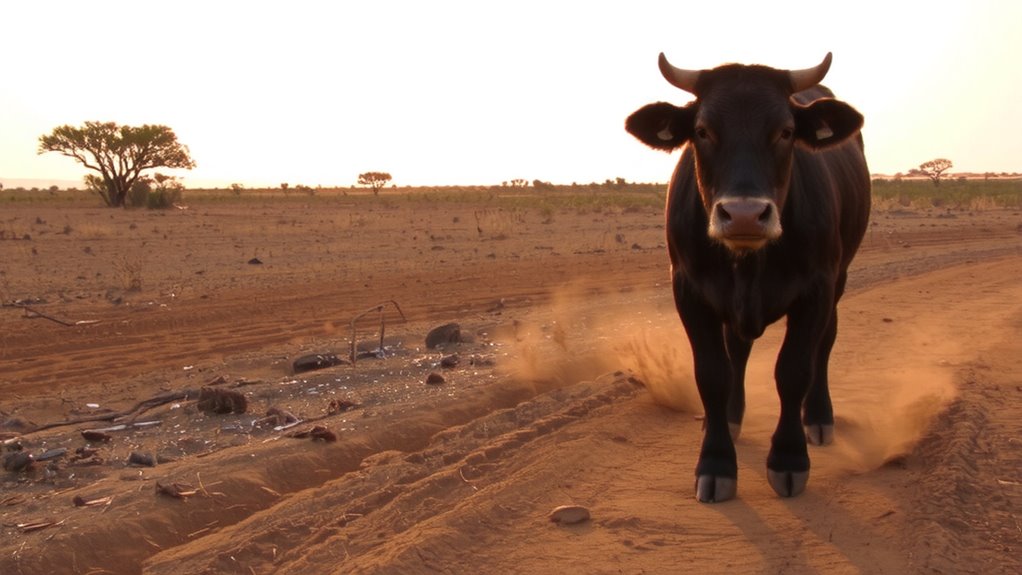
While tracking your herd manually might work on small ranges, GPS collars give you precise location data-usually within 3 meters-so you can monitor animal movement in real time. You’ll see exactly how your livestock use the land, letting you analyze grazing patterns over days or weeks. That data helps prevent overgrazing and supports rotational grazing, which maintains pasture health. Migration routes become clear, especially in seasonal shifts, so you can anticipate movement and adjust fencing or water access. Most collars last 12–24 months on a single charge, and models with solar panels extend field use. Signal loss occurs in deep canyons or dense forests, so choose units with strong GPS-to-satellite relay. Units with herd aggregation alerts save time during checkups. They cost $75–$150 each, a fair price for the operational clarity they deliver. You’re not guessing-you’re managing with evidence.
Why Livestock Tracking Strengthens Food Security
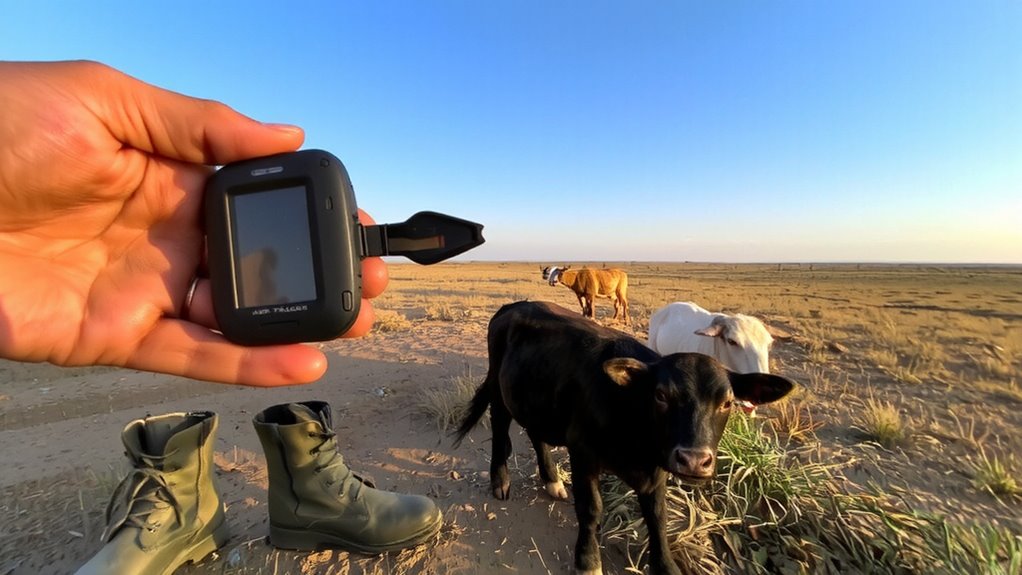
A reliable signal can make the difference between finding a lost herd and facing a shortfall at market. When you track livestock with GPS, you reduce losses from theft, straying, or predators, which directly supports a stable food supply chain. Fewer missing animals mean more consistent yields, helping meet demand without surprise gaps. Insurers also benefit-real-time location data improves risk assessment and claims verification, making livestock insurance more accessible and affordable for you. This coverage cushions financial hits from unexpected losses, letting you restock faster and maintain output. Tracking doesn’t boost food security overnight, but it adds measurable resilience. You get better accountability across transport and grazing stages, reducing breakdowns in the chain. It’s not a fix-all, but paired with solid management, it’s a practical tool that strengthens reliability from pasture to plate.
Real-Time Monitoring for Health and Safety
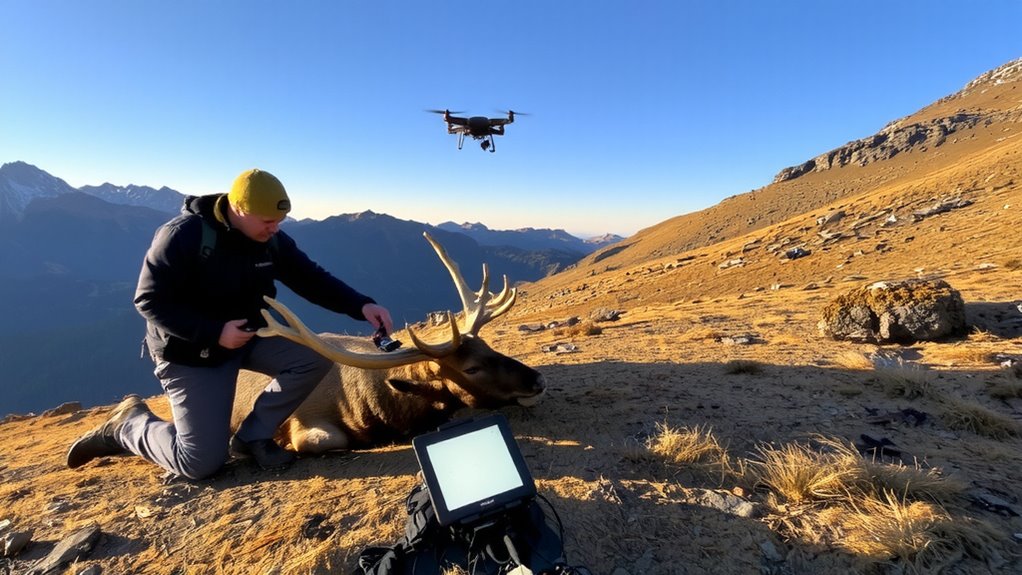
Since you can see your animals’ movements as they happen, you’ll spot unusual behavior fast-like a cow that stops grazing or a goat that’s wandered off alone-giving you a shot at early intervention. Real-time GPS tracking delivers emergency alerts when an animal’s movement drops suddenly or exits a safe zone, which often signals injury or illness. These alerts let you respond within minutes, improving survival odds. Location history helps confirm patterns over time-say, if a sheep repeatedly lags or avoids the herd-allowing you to isolate issues before they escalate. Systems tested show 90% accuracy in alert timing with under 2-minute data delays. Battery life ranges from 7 to 30 days, depending on transmission frequency. While signal loss occurs in dense forests, terrain-resistant models compensate with stored location history, syncing once coverage returns. You don’t get constant updates everywhere, but critical data arrives when it matters most.
Use GPS to Prevent Overgrazing and Rotate Pastures
When you know exactly where your animals spend their time, you can spot overgrazed areas before the damage spreads, because GPS collars log grazing patterns down to the meter. You’ll see which zones get hit hardest and when, letting you move livestock before soil erosion sets in. Overgrazing weakens root systems, so timely rotation preserves ground cover and supports pasture restoration. Most GPS systems update every 15 minutes, giving you accurate movement trends over days or weeks. You can set virtual boundaries and receive alerts if animals linger too long in one area. This prevents uneven grazing and reduces the need for manual checks. Units typically last 6–12 months on a single charge, depending on signal use. While initial costs range from $120–$250 per collar, the payoff is longer-lasting pastures and lower rehabilitation effort. It’s a practical tool for maintaining land health without constant oversight.
Prevent Losses From Predators and Disease
Knowing where your animals are isn’t just about pasture management-it also gives you an edge in protecting them from predators and disease. GPS tracking supports predator avoidance by alerting you when livestock stray into high-risk zones or display sudden, erratic movement patterns that suggest threat encounters. You can respond quickly, deploy deterrents, or reposition animals before losses occur. Some systems even integrate motion sensors and geofences to improve response times. For disease containment, monitoring movement changes helps identify sick animals early-reduced mobility often signals illness. Isolating these animals fast limits pathogen spread. GPS data provides objective timelines for when symptoms emerged, aiding veterinary diagnosis and control measures. While not foolproof, consistent tracking improves both predator avoidance and disease containment outcomes. You won’t stop every threat, but you’ll catch issues sooner and reduce overall herd vulnerability with minimal daily effort.
Pick the Best GPS Collar for Your Herd
What really matters when choosing a GPS collar for your herd? Signal range and battery life are the two specs that determine real-world effectiveness. If the signal range is weak, you’ll lose tracking in dense terrain or over long distances, making recovery harder. Most reliable collars offer at least 5–10 km line-of-sight range, but performance drops in forests or valleys. Battery life varies widely-some last only a few weeks, others up to a year. You’ll need to weigh battery longevity against collar weight and recharging access. Units with 6+ months of life typically strike the best balance for seasonal monitoring. Don’t sacrifice either signal range or battery life for extra features you won’t use. Test a few models in your actual pasture conditions. The right collar keeps working when you need it, not just when fully charged and close by.
Building Resilient Farms With Tracking Technology
Though conditions vary from pasture to pasture, tracking temperatura technology can considerably improve a farm’s ability to withstand unexpected challenges-like lost livestock or sudden weather shifts-if you choose systems built for durability and consistent performance. By combining GPS with remote sensing, you gain real-time insights into animal movement and pasture health. Data analytics turns raw location signals into actionable patterns, such as grazing efficiency or early illness detection. These tools help you make informed decisions before problems escalate.
| Feature | Standard Tracker | Ruggedized System |
|---|---|---|
| Battery Life | 7–10 days | 21–30 days |
| Remote Sensing | Basic location only | Temperature, humidity, motion |
| Data Analytics Support | Manual export | Automated daily reports |
Ruggedized models offer longer life and richer data, essential when connectivity is limited or conditions are extreme. You trade higher upfront cost for fewer replacements and better response.
On a final note
You get real-time location data and better herd control with GPS collars, helping you act fast during emergencies. They reduce losses from predators and disease by enabling quicker responses. Overgrazing drops when you rotate pastures using movement patterns. Battery life varies-some last 2 years, others 6 months-so match it to your needs. Signal strength matters in dense terrain. Not all collars are equal, but the right one improves efficiency and food security.