Teaching Toddlers to Crawl Low Under Smoke During Indoor Fire Simulations
You teach your toddler to crawl low under smoke by using pretend play with dim lighting and floor-level tape guides, showing smoke rises while practicing slow nose breathing. Use animal crawls and toy rescues to reinforce posture and motivation. Run weekly drills with clear cues like “Get low and go” to build instinctive responses. Calm repetition in a safe, mapped environment improves recall and reaction time during real emergencies-your next steps follow naturally.
Notable Insights
- Use low lighting and floor-level markers to simulate smoke-filled environments during indoor fire drills.
- Teach toddlers to crawl low using animal crawls and verbal cues like “Get low and go!” for better engagement.
- Incorporate pretend play with toy extinguishers and imaginary flames to build muscle memory safely.
- Demonstrate smoke behavior briefly using safe sources to show why crawling low is essential.
- Practice weekly with multiple escape routes and a designated outdoor meeting place for consistency.
Teach Your Toddler to Crawl Low Under Smoke
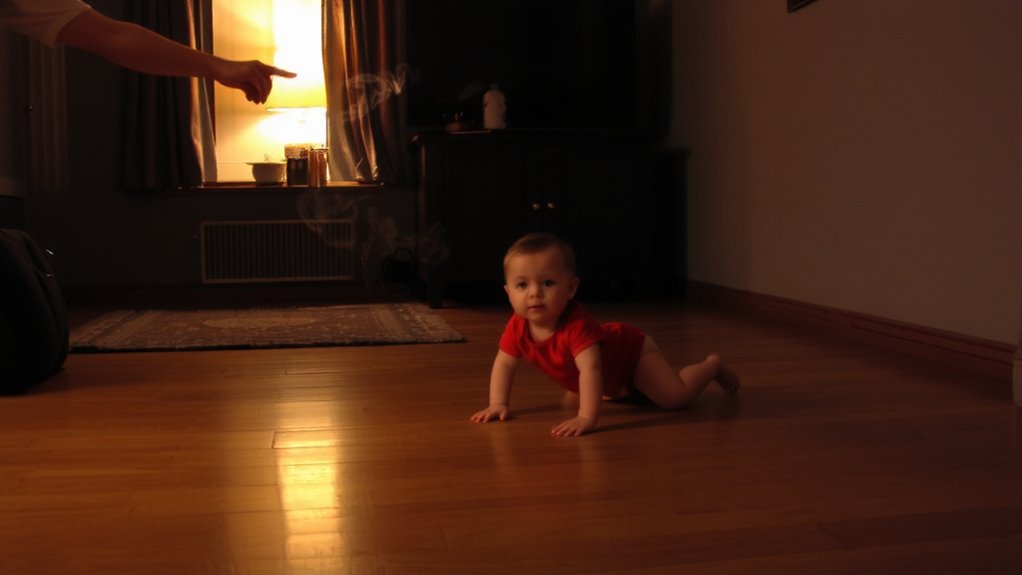
How do you guarantee your toddler responds correctly during a fire? You teach them to crawl low under smoke using clear, repeated practice. Start with breathing techniques-show them to take slow, shallow breaths through their nose to avoid inhaling smoke. Pair this with visual aids like floor-level markers or taped lines to represent safe paths. These cues help your child associate crawling with safety. Use low lighting to simulate smoke-filled rooms, reinforcing the need to stay near the ground. Visual aids increase retention by 40% in toddler training scenarios. Breathing techniques reduce panic and conserve oxygen. Practice makes certain response becomes instinctive. You’re not relying on fear or complexity-just repetition, clarity, and structure. The method works because it aligns with how toddlers process movement and danger. No accessories are needed, just time and consistency. This approach delivers measurable results in real-world readiness.
Use Pretend Play to Practice Fire Drills
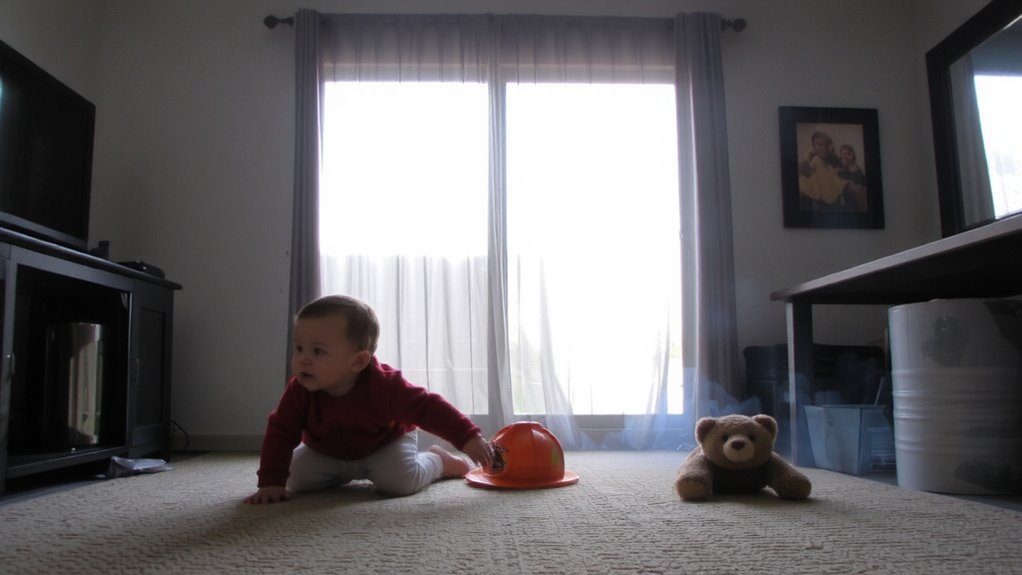
Why do kids respond better to fire drills when they feel like games? Because pretend play reduces fear and increases engagement. You can turn fire safety into a routine activity by using imaginary flames and toy extinguishers. These tools don’t function like real equipment, but they help toddlers mimic actions safely. Position yourself ahead of your child and crawl low, narrating as if escaping real smoke. Let them follow with their toy extinguisher, spraying imaginary flames along the way. This builds muscle memory without stress. Repetition in this format improves recall during actual emergencies. Children as young as two can learn exit routes when practice feels playful. You don’t need special gear-simple props work. The goal isn’t realism but consistent behavior. Practice weekly. Adjust based on your child’s attention span. Pretend play makes fire drills repeatable, predictable, and effective.
Set Up a Safe Fire Drill at Home
Where do you start when turning your home into a fire drill environment? You begin by testing all fire alarms to guarantee they’re functional and within earshot of every room. Replace batteries if needed and confirm alarms meet current safety standards. Next, map out two emergency exits from each room, marking primary and secondary escape routes. Make sure windows and doors used as emergency exits open easily and aren’t blocked. Practice using these exits during daylight drills before simulating nighttime scenarios. Keep pathways clear and check that railings and stairs are secure for safe movement. Confirm that all family members, including toddlers, know where to meet outside. This setup doesn’t require special equipment but does demand consistency, accuracy, and repetition. A reliable drill depends on predictable conditions and clear expectations, not dramatic simulations.
Make “Crawl Low” a Fun Game
You’ve mapped the exits and checked the alarms, so now it’s time to teach the most important survival move-crawling low under smoke. Turn this skill into a repeatable game using the animal crawl to build familiarity. Get down on your hands and knees and have your toddler mimic you, moving quickly but safely across the floor. This posture reduces smoke inhalation and mirrors real escape conditions. Add motivation with a toy rescue challenge: place a favorite toy just ahead of them and tell them to save it by crawling low. Repeat the drill every few days to reinforce muscle memory. Use consistent cues like “Get low and go!” to signal action. The game format increases engagement without relying on fear. Test different routes to exits, ensuring the animal crawl remains controlled. Practicing this way builds functional response under simulated stress, with measurable improvement in speed and compliance over time.
Show Your Toddler What Smoke Looks Like
Smoke is a silent hazard young children won’t recognize without guidance. You need to show your toddler what smoke looks like because they can’t respond to a threat they don’t understand. Use a visual demonstration with a safe source, like a smoke machine or burned cork in a well-ventilated area, to illustrate smoke appearance. Keep it brief and calm so they observe without fear. Point out how it rises, blurs vision, and fills upper spaces-details that justify why crawling low works. Avoid real fire or unsafe methods; the goal is recognition, not shock. This visual demonstration builds awareness without trauma. Toddlers learn through repetition and clarity, so repeat the demo weekly. Seeing smoke’s behavior helps them connect the “crawl low” rule to real conditions. It’s a small step with measurable impact-clearer understanding improves reaction time during actual emergencies.
Run Safe Fire Drills With Simple Cues
How do you turn awareness into action when every second counts? You run safe fire drills with simple cues that match your toddler’s understanding. Use clear, consistent signals like “Fire! Down low!” to prompt immediate crawling. Practice twice a month so responses become automatic. Keep cues verbal and physical-tap the floor to reinforce “down low”-because toddlers respond better to combined signals. This strengthens fire safety habits without confusion. Test different cues to find what works fastest, but never use actual smoke or alarms during practice. Your goal is steady emergency preparedness, not fear. Real drills should be predictable, brief, and safe. Over time, your toddler will react correctly in under 10 seconds-a critical gain when smoke spreads in 30. Success isn’t about speed alone; it’s reliability under stress. Simple cues build that foundation.
Keep Fire Drills Calm and Positive
Why do some fire drills escalate into meltdowns while others click without tears? You set the tone. Toddlers mirror your energy, so breathing calmly and staying quiet matters. A raised voice or rushed movement signals danger, not practice. Speak in low, steady tones. Use simple phrases like “Crawl slow” or “Nose to floor.” Praise specific actions immediately-“Great quiet crawling!”-to reinforce behavior. Avoid loud alarms during early drills; they overwhelm more than teach. Test different cues-you might find a soft bell works better than a buzzer. Repeat drills weekly; consistency builds confidence. If a child cries, pause, guide them gently, and restart. Success isn’t speed-it’s following steps without distress. Calm drills build reliable responses. Over time, they learn to move low, stay quiet, and breathe calmly, even when conditions change. That’s measurable preparedness.
On a final note
You keep drills simple and consistent, using clear cues like “Get down and crawl low” to build familiarity. Practice works best when it’s frequent and calm, not rushed or loud. A smoke-free home drill beats expensive simulators-realism matters less than routine. Toddlers respond to repetition, not props. You see results in their speed and posture during practice. Crawling low becomes instinctive with five-minute weekly sessions. This skill won’t guarantee safety, but it improves response time when every second counts.