Early Warning Signs of Looming Drought Conditions: Understanding How to Adapt Your Water Usage Practices in Advance
You’re seeing cracked soil, dust storms, and wilting plants-early signs your area’s water supply is thinning. Dropping well levels mean groundwater’s dropping; if your pump runs longer or spits air, you’re already feeling the strain. A $20 rain gauge helps track deficits-two below-average months signal trouble. Fix leaks fast, install WaterSense fixtures (save 20%), and switch to drip irrigation (cut outdoor use by 30%). Smart controllers pay off in dry spells. There’s more to match to your situation.
Notable Insights
- Cracked, dry soil and increased dust storms signal early drought onset due to reduced moisture and erosion.
- Dropping well water levels indicate groundwater depletion, often revealed by sputtering taps or longer pump runtimes.
- Plants show stress through wilting, brittle grass, and stunted growth, requiring deeper, less frequent watering.
- Monitoring rainfall with simple gauges helps detect below-average trends over consecutive months.
- Proactive conservation, like fixing leaks and using efficient fixtures, reduces water use by up to 30%.
Watch for These Early Drought Warning Signs
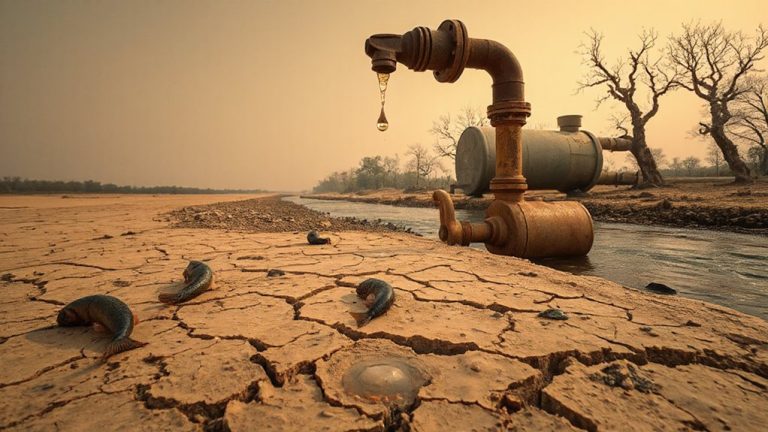
Dry soil, cracked earth, and wilting plants-these aren’t just signs of a hot day, they’re likely the first indicators you’re in the early stages of a drought. You’ll notice the ground hardening, forming wide fissures as moisture disappears. Cracked earth means soil can’t retain water, reducing infiltration and increasing runoff when rain finally comes. Dust storms become more frequent as dry topsoil loosens and lifts in the wind. These storms reduce visibility, damage crops, and degrade air quality. You won’t need advanced tools to spot these signs-just regular observation. Reduced streamflow and lower humidity support the diagnosis. Early detection gives you time to adjust irrigation, conserve water, and protect your garden or livestock. Ignoring these signals increases risk. You’re better off acting early, using proven conservation methods than waiting for extreme shortages. Simple changes now improve resilience. Watch closely-conditions worsen silently.
Well Running Low? It’s a Drought Red Flag
Your well’s water level dropping is one of the clearest signals you’re experiencing drought stress, especially if you’ve already noticed dry soil and shrinking streamflow. When you see consistent well depth changes, it’s not just a temporary issue-it likely reflects broader groundwater depletion. Shallow wells are most vulnerable, but even deeper ones can show reduced output during prolonged dry periods. You might notice sputtering faucets, air in the lines, or longer pump run times. These aren’t mechanical flaws-they’re indicators of lower aquifer pressure. Groundwater levels recover slowly, so once depletion begins, it takes months or years to rebound, even after rain returns. Monitoring your well’s static water level monthly helps track changes objectively. If depth to water increases by more than a few feet over weeks, adjust usage now. Ignoring these changes risks well failure when you need water most. Consider installing a deep well hand pump as a reliable backup to maintain access during critical shortages.
Read the Signs in Soil and Plants
What do cracked earth and wilted leaves tell you? They’re clear signs you’re dealing with drought stress. Soil cracking happens when moisture drops below usable levels, leaving gaps that worsen erosion and reduce water retention. You’ll notice deep fissures, especially in clay-heavy areas. Plant wilting follows soon after-stems slump, leaves droop, and recovery overnight becomes rare. These aren’t temporary issues; they signal your plants are struggling to pull water from dry soil. Grass turns brittle, vegetables yield less, and young trees show stunted growth. Don’t wait for total collapse. Once you see consistent soil cracking and widespread plant wilting, it’s time to adjust irrigation. Prioritize deep, infrequent watering to encourage root depth. Mulch helps retain moisture. Monitor daily. Early response limits damage and preserves landscape health without overuse.
Track Rainfall Trends to Predict Dry Spells
While rainfall data won’t predict drought with 100% certainty, tracking weekly and monthly totals gives you a reliable baseline for spotting deviations. You can use simple rain gauges to collect accurate local measurements-cheap models under $20 perform well if placed away from trees or buildings. Consistently low readings over two or more months often signal dry spells ahead. Pair this data with regional climate patterns like El Niño or La Niña, which influence precipitation trends over seasons. When gauges show below-average totals and climate models point to warmer, drier conditions, the odds of drought increase. This combo lets you adjust irrigation or storage plans early. Relying only on forecasts isn’t enough; your own measurements add precision. Over time, the data helps you distinguish normal variation from concerning trends, so you’re not caught off guard.
Cut Water Waste Before Restrictions Hit
If you wait for mandatory restrictions to start conserving, you’re already behind-fixing leaks and upgrading inefficient fixtures now saves far more water than cutting back later can. You lose gallons daily from a dripping faucet or running toilet, wasting water before you even realize it. Addressing these issues immediately reduces unnecessary loss. Behavioral changes matter just as much. Shorter showers, turning off the tap while brushing, and only running full loads in dishwashers and washing machines adjust your usage patterns effectively. These adjustments require no equipment but deliver measurable savings. Monitoring your water bill over time reveals spikes that signal waste. Acting early shapes long-term habits and prevents shock when limits arrive. You don’t need incentives or new tech-just attention and consistency. Small, consistent efforts compound, reducing strain on supply before drought tightens its grip.
Upgrade Fixtures and Irrigation to Save Water
A typical household can cut indoor water use by 20% just by switching to low-flow fixtures, and the savings go further when you upgrade outdoors. Efficient fixtures like aerated faucets and low-flush toilets reduce flow without sacrificing performance-most meet EPA WaterSense standards at 1.5 gpm or less. You’ll notice no difference in pressure, but your meter will move slower. Outdoors, replacing old sprinklers with smart irrigation controls can trim outdoor use by up to 30%. These systems use local weather data and soil sensors to adjust watering in real time, preventing overuse. Timers with rain shutoffs are basic but effective; newer models allow remote control via smartphone. Drip lines deliver water directly to roots, cutting evaporation. Upgrading isn’t free-expect $100–$300 for smart controllers-but the payoff comes in lower bills and consistent plant health, especially as drought conditions tighten supply.
On a final note
You’ll need less water if you act early. Watch rainfall logs, soil dryness, and well levels-they’re reliable indicators. Upgrading to low-flow fixtures cuts indoor use by up to 30%, and efficient irrigation reduces outdoor waste fast. These changes pay off even before restrictions hit. Practical, measurable steps now mean better supply later. Adaptation isn’t emergency prep-it’s routine maintenance done right.