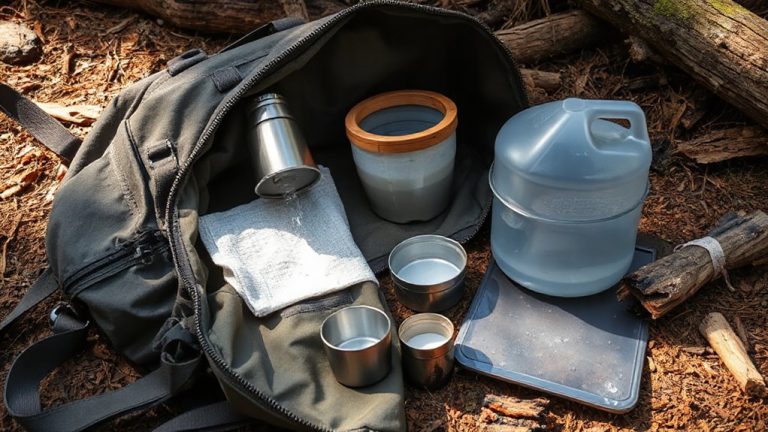
Pandemic Preparedness Checklists: Ensuring Your Family’s Safety in Quarantine and Beyond
You need a 30-day supply of water, shelf-stable food, and medications to keep your family safe during a pandemic. Store one gallon of water per person daily and rotate every six months. Use freeze-dried meals and canned goods for reliable calories. Set up a quarantine kit with masks, disinfectants, and a pulse oximeter. Track symptoms twice a day. Maintain communication with check-in signals and backup messaging. A structured routine reduces stress. Prepare for emergencies with a designated caregiver and clear response drills-knowing the next steps could make all the difference.
Notable Insights
- Stock a 30-day supply of water, shelf-stable food, and prescription medications for each family member to ensure sustenance during quarantine.
- Assemble a home isolation kit with masks, gloves, disinfectants, a pulse oximeter, and a symptom log for monitoring illness safely.
- Establish a no-contact communication plan using multiple reliable channels and daily check-in signals to maintain family connection.
- Maintain mental and physical health by following a structured daily routine with set times for sleep, meals, exercise, and chores.
- Prepare for medical emergencies by tracking symptoms, designating a caregiver, and conducting drills for safe 911 response and isolation.
Stock 30-Day Pandemic Supplies of Food, Water, Meds
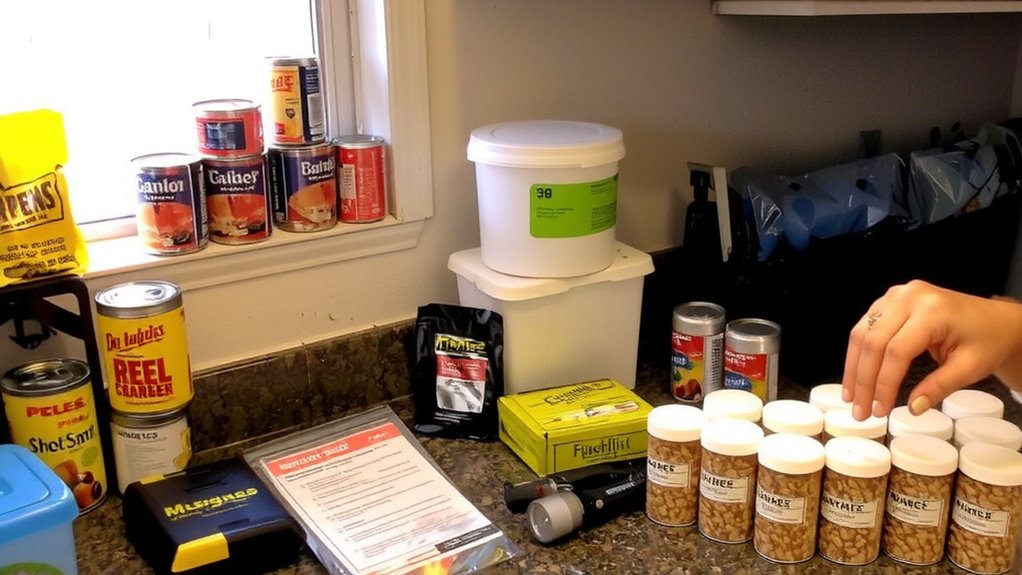
You’ll need at least a 30-day supply of food, water, and medications to get through a pandemic lockdown without relying on supply chains that may break down. Store one gallon of water per person per day in sealed, food-grade containers-replace every six months to maintain quality. For food, rely on shelf-stable emergency rations such as freeze-dried meals, canned goods, and bulk grains; they last longer and require minimal prep. Each person needs roughly 2,000 calories daily-plan quantities accordingly. Don’t forget prescription meds: keep a 30-day refill on hand and coordinate with your provider for early refills when possible. Use supply rotation: place newer items behind older ones to use up stock before expiration. Rotate water and perishable rations every six months. This system guarantees freshness and prevents waste. Label all items with purchase and expiration dates for easy tracking. Choose containers made from BPA-free materials designed for long-term food-grade water storage to ensure safety and durability.
Set Up a Home Quarantine Isolation Kit
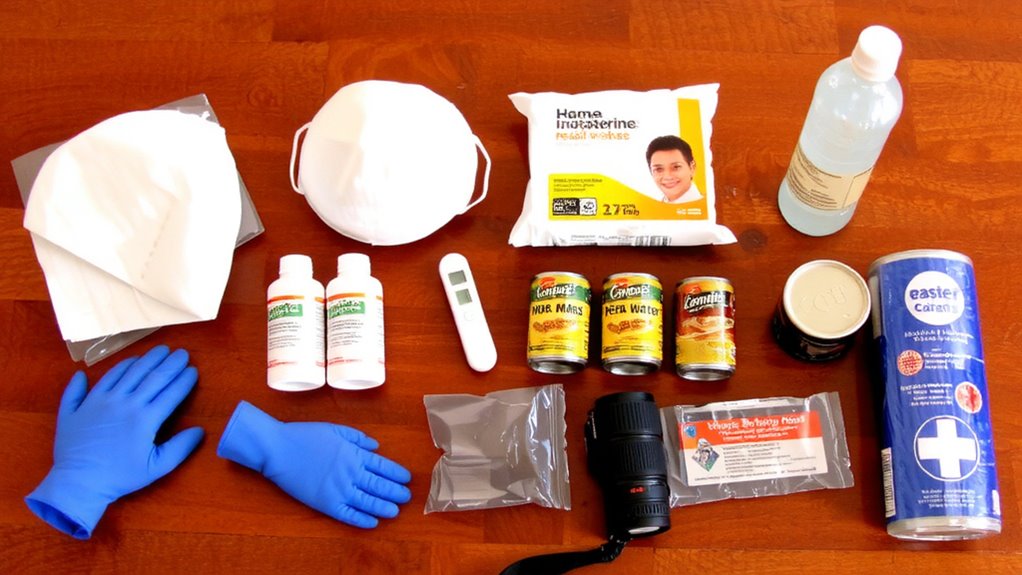
If someone in your household gets sick during a pandemic, having a dedicated isolation kit can prevent the spread and keep care organized. Store the kit in a sealed container near the isolation area. Include gloves, masks, disinfectant wipes, and disposable thermometers for isolation hygiene. Use a logbook for symptom monitoring-record fever, cough, and breathing difficulty twice daily. A digital thermometer with memory provides accurate tracking. Add a pulse oximeter to measure oxygen levels; readings below 95% warrant medical attention. Include trash bags for sealed waste disposal and hand sanitizer with at least 60% alcohol. Label all items clearly. Rotate perishables every three months. This kit won’t stop illness, but it limits transmission and supports timely care decisions based on objective data. Prepare it before anyone shows symptoms. Consider including basic wound care supplies and emergency trauma items, as preparedness overlaps with general safety needs, including those addressed in wilderness medicine-such as treating cuts or sprains-making a well-stocked wilderness first aid kit a valuable reference for comprehensive home preparedness.
Create a No-Contact Family Communication Plan
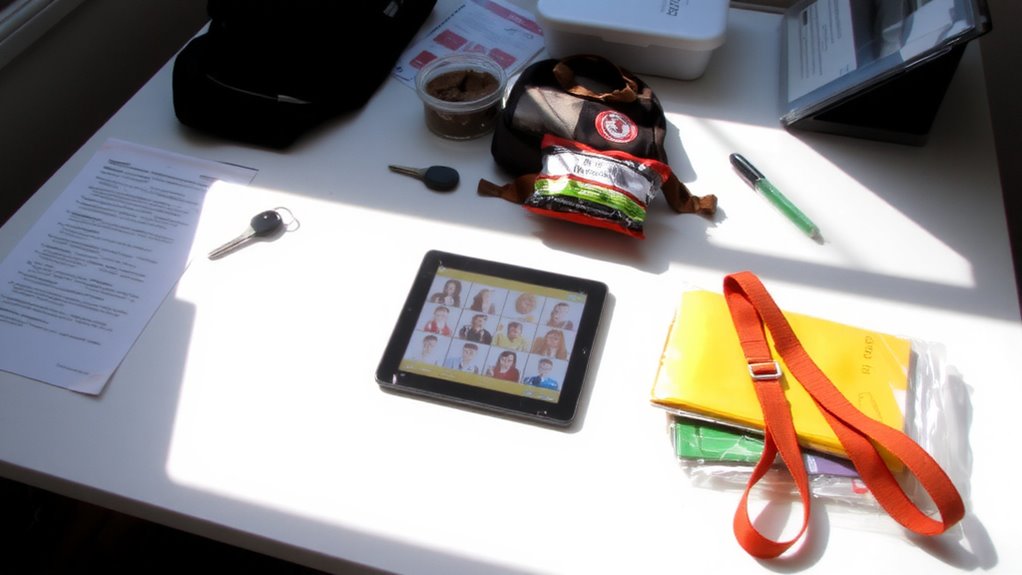
How do you stay connected when physical contact is off the table? You rely on a no-contact family communication plan built on clarity and redundancy. Choose two or more communication channels-like text, email, and a messaging app-so if one fails, others work. Assign family signals for daily check-ins, such as a shared photo or brief message at a set time. These confirm safety without needing a call. Establish emergency codes for urgent situations: a coded phrase or number sequence alerts others discreetly. Test these weekly. Use devices with long battery life and offline capabilities. Avoid overcomplicating; focus on reliability. This plan doesn’t replace contact-it guarantees you maintain it safely, consistently, and with minimal tech dependency. Practice keeps responses automatic when every second counts.
Establish a Routine to Survive Long-Term Quarantine
Sticking to a no-contact communication plan keeps your family linked, but without structure, isolation can wear down focus and morale over time. You need a daily routine that supports mental wellness and includes consistent physical activity. Start by setting fixed wake-up and bedtime hours-this regulates mood and energy. Schedule movement breaks: 30 minutes of walking, stretching, or bodyweight exercises improves circulation and reduces anxiety. Allocate time blocks for meals, chores, and downtime to prevent decision fatigue. Use alarms or a printed schedule to maintain consistency. Limit screen time outside essential tasks, as overuse harms sleep and focus. Routines don’t need to be rigid, but they must be repeatable. Families who maintain structured days report better emotional stability and task completion. Mental wellness improves when days have predictable shape. Physical activity, even in small doses, sustains cognitive function and reduces restlessness during long quarantine periods.
Prepare for Remote Work and School During a Pandemic
A reliable internet connection is non-negotiable when you’re working or learning from home during a pandemic-without it, video calls drop, assignments stall, and deadlines slip. Aim for at least 25 Mbps download speed to support multiple devices. Your work from home setup should include a dedicated workspace with an ergonomic chair, desk, and proper lighting to reduce strain. Use wired connections when possible for stability. For students, access to online learning tools like Google Classroom or Zoom is essential-test them regularly. Guarantee devices are charged and updated. Limit background bandwidth use during school or meetings. Consider a backup hotspot. Shared spaces require clear schedules to avoid conflicts. Noise-canceling headphones help maintain focus. Print key materials when screen time becomes excessive. A functional setup isn’t about luxury-it’s about consistency and reliability. Test your entire system weekly under real usage conditions.
Plan for Medical Emergencies in Quarantine
If you’re isolating at home with a contagious illness, having a plan for medical emergencies isn’t optional-it’s critical. Start with clear symptom monitoring: check temperature, oxygen levels, and breathing rate twice daily using a pulse oximeter and thermometer-devices that provide measurable data, not guesses. Keep a log to spot trends early. Designate one person as the caregiver to limit exposure. Stock a seven-day supply of prescribed meds and have emergency contacts written down. Practice emergency drills: map out how to call 911, alert household members, and safely move a sick person without spreading contamination. These drills reduce hesitation during real crises. Know when to seek care-difficulty breathing, confusion, or oxygen levels below 92% mean immediate action. Your plan must include how to transport someone while minimizing risk, like using a mask and rear car seat. Practical prep beats panic every time. Be sure to include a well-stocked first aid kit with essential supplies for wound care, burns, and minor injuries.
On a final note
You’ve got the basics: 30 days of food, water, and meds covers immediate survival. Your isolation kit reduces infection spread. A no-contact communication plan keeps everyone updated without risk. Routines maintain mental health. Remote work and school setups keep life moving. Emergency plans handle worst cases. These steps don’t guarantee safety, but they cut risks. They’re practical, tested, and adjustable. Follow them, and your family stands a better chance when quarantine hits.