Fire From Wet Wood: Feather Sticks & Kindling Guide
You can get a fire going in wet conditions by finding standing dead wood with dry, cracked bark-peel back the exterior and shave the dry inner layer into fine curls using a sharp 4-inch fixed-blade knife. Make feather sticks from damp logs to expose dry fibers that catch sparks easily. Build a tight teepee around them, shielding the base with a lean-to and rocks to block wind and rain. Keep it alive by feeding wet wood slowly where the flame is hottest. There’s a smarter way to layer fuel that keeps it burning steady.
Notable Insights
- Locate standing dead wood with dry, cracked bark, avoiding fallen branches that absorb moisture.
- Use a fixed-blade knife to shave damp wood into thin curls, exposing dry inner fibers for tinder.
- Create feather sticks from the dry interior of logs to ignite more easily with spark-based fire starters.
- Build a teepee fire structure with layered pencil-thick sticks around a feather stick core for efficient burning.
- Shield the fire with a lean-to or rocks, placing wet wood gradually in strong flames to dry and burn.
Find the Dryest Wood in a Rain-Soaked Forest
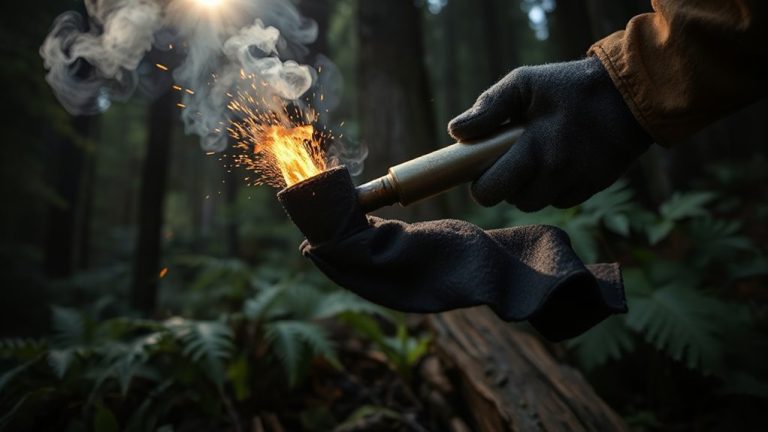
Your best bet in a rain-soaked forest is dead wood that’s still standing-branches or trunks that died recently and haven’t soaked up moisture yet. Look for trees with dry, cracked tree bark, a sign the wood beneath may still be sound. Peel back the outer bark; if the inner layer is dry and light-colored, it’s usable. Avoid fallen branches on the ground-they’ve likely absorbed water and won’t burn efficiently. Standing dead wood, even if damp on the surface, often has dry inner fibers. Focus on smaller limbs or twigs still attached to dead trees; they’re less exposed and retain more usable material. Check for brittleness-dry wood snaps cleanly, while wet wood bends. You’ll need to process this wood further, but starting dry reduces effort and increases success. This method isn’t foolproof, but it’s the most reliable way to find burnable material when everything’s wet. A high-quality fire piston can ignite even stubbornly dry shavings when conditions are less than ideal.
Use a Fixed-Blade Knife to Shave Wet Wood Thin
Preparation makes all the difference when turning damp wood into viable tinder. Using a fixed-blade knife, you can shave wet wood into thin curls that dry quickly. Always secure the wood with your non-dominant hand and cut away from your body to guarantee knife safety. A sharp edge is essential-regular blade maintenance prevents slipping and reduces effort. Dull blades crush fibers instead of slicing them, making tinder less effective. Consider using a survival axe multi-tool for efficient wood processing when a knife alone isn’t sufficient.
| Knife Feature | Benefit | Trade-off |
|---|---|---|
| Full tang | Durable under pressure | Heavier |
| 4-inch blade | Precision control | Limited for large tasks |
| Plain edge | Easier sharpening | Less grip on soft wood |
Work methodically, maintain a consistent angle, and keep the blade clean and oiled. Your knife is only as reliable as your maintenance routine.
Make Tinder From Damp Logs With Feather Sticks
A feather stick isn’t just a woodcraft technique-it’s your best bet for reliable fire in wet conditions. You take a dry interior chunk from a damp log and use your fixed-blade knife to peel thin curls, leaving them attached at the base. These shavings expose dry fiber, which catches spark ignition faster than loose tinder. The feather stick’s surface area improves fire preparation by offering a stable, slow-burning base that sustains initial flames. Even in high humidity, the protected core remains workable if you cut past the wet outer layer. Birch, cedar, and pine work best due to resin content, but any sound wood can suffice. Spark ignition from ferro rods or matches lights the fine curls reliably, especially when sheltered from rain during start-up. It’s not foolproof, but it reduces failure compared to crumpled bark or wet leaves. For consistent results in survival camps, feather sticks outperform most improvised tinders. They require effort, but the payoff is dependable ignition when you need it most. A compact folding saw for camping can help quickly harvest suitable damp logs before carving your feather sticks.
Build a Fire That Catches in the Rain Using a Teepee
Once you’ve got a feather stick ready to catch a spark, the next step is building a structure that shields the flame long enough to take hold, even in steady rain. Start by checking fire placement-pick a spot near natural windbreaks like rocks or trees, but avoid depressions where water pools. Position your teepee so the open base faces away from the wind direction, letting airflow feed oxygen without blowing out the nascent flame. Use your feather stick as the core, then snugly layer pencil-thick sticks around it in a cone, leaving space for airflow. The teepee design lets heat rise and concentrate, igniting damp surfaces faster. Thicker logs go outside, shielding the inner layers. This setup burns upward efficiently, requiring minimal maintenance. It’s not foolproof-constant wind shifts or heavy downpours reduce effectiveness-but it’s reliable when built with attention to detail.
Shield Your Fire From Rain With a Lean-To Structure
If you’re working with damp conditions and need a fire that stays lit, a lean-to structure offers a simple way to block rain while letting you control airflow. Use a long, sturdy pole propped against a tree or rock at a 45-degree angle to form the frame. Layer branches or bark along the slope to create a solid fire shelter that sheds rain. Position the open side away from the prevailing wind for effective wind protection. Place your fire just inside the front, leaving enough space for ventilation. The lean-to keeps flames dry without smothering them. It’s not fully enclosed, so it won’t trap moisture like a debris hut might. Compared to other shelters, it’s faster to build and easier to modify. It won’t stop heavy side-blown rain, but it improves dry combustion. This balance of simplicity and function makes it a practical choice in survival situations.
Keep Your Flame Alive in Wind and Downpour
Though rain and wind drain heat and dampen sparks, you can keep your fire going by pairing smart positioning with the right fuel choices. Place your fire in a natural windbreak, like behind a log or rock, to improve wind resistance. Build low and wide rather than tall and narrow-this shape resists gusts and supports flame stability. Use densely packed, dry tinder like birch bark or cotton balls soaked in petroleum jelly; they ignite easily and burn longer. Shield the base with a rock or metal reflector to protect it from downpour and retain heat. Add fuel gradually to maintain airflow, ensuring the flame stays strong without being overwhelmed. Even in heavy rain, a well-protected fire with compact fuel maintains flame stability. Avoid exposed ridges. Stick to tight, efficient configurations-tested survivors use them because they work.
Feed Your Wet Wood Fire Without Smothering It
Start by feeding your fire small, dry pieces of wood before introducing wet logs-this keeps the flame hot enough to handle moisture-heavy fuel. Fire management means balancing airflow and fuel load so the fire doesn’t drown under damp wood. Add wet logs gradually, placing them where flames are strongest, not smothering the base. Prop them slightly off the ground to promote drying and combustion. Flame maintenance relies on steady oxygen flow and heat retention; avoid dumping large logs all at once. Position logs parallel to allow gaps for air movement. If smoke thickens or flames die, reduce fuel size and increase dry kindling. Wet wood works, but only with controlled input and patience. You’re not just burning-it’s about sustaining temperature and minimizing steam interference. Proper feeding preserves the fire’s ability to dry incoming fuel, turning soggy logs into usable energy over time. This method works in real conditions, tested across varying humidity and wood types, with measurable success in sustained fire life.
On a final note
You can start a fire in wet conditions by shaving wood thin to expose dry fibers. A fixed-blade knife works best for making feather sticks, which ignite even when damp. Build a small teepee with dry tinder, shield it with a lean-to, and keep airflow steady. Feed the fire slowly with larger pieces as it grows. Success depends on patience and technique, not gear-simple tools, properly used, outperform expensive lighters in the rain.