Adapting Winter Mountaineering Packs for Year-Round Civilian Emergency Use
Your winter mountaineering pack already handles extreme conditions with durable fabrics, a rigid frame, and weather-sealed construction-ideal for emergency use. Swap ice axes for a multi-tool, filter, and emergency food, then reorganize gear into fast-access zones: meds and GPS on the hip belt, first aid in the main compartment. Reinforce loops for quick grabs and keep hydration accessible. It’s built to perform when systems fail, and with a few smart changes, it becomes a reliable, all-weather emergency system that’s always ready when seconds matter.
Notable Insights
- Winter mountaineering packs offer extreme durability and weather resistance ideal for year-round emergency use.
- Their load-stable frames efficiently transfer weight, aiding mobility during extended evacuations or rugged travel.
- Strategic gear zoning allows rapid access to critical items like medical supplies and communication tools.
- Key features like glove-friendly adjustments and hydration routing support function under stress.
- With reconfigured contents, these packs adapt seamlessly from alpine survival to urban disaster preparedness.
Why Winter Mountaineering Packs Make Great Emergency Bags
While any backpack can carry gear, winter mountaineering packs stand out in emergencies because they’re built for harsh, survival-critical conditions. You need reliability when shelter, warmth, and mobility depend on your pack. These packs prioritize durability focus with high-denier fabrics, reinforced stitching, and abrasion-resistant materials that survive rockfall, ice, and rough handling. Weather resilience is engineered into every seam-waterproof zippers, coated fabrics, and sealed construction keep contents dry in snow, freezing rain, or river crossings. Most withstand temperatures below zero without material failure. They maintain structural integrity under heavy loads, essential when carrying emergency shelter or medical supplies over long distances. Though heavier than daypacks, that trade-off guarantees function when failure isn’t an option. You’re not just storing gear-you’re relying on proven design that performs when lives depend on it. Properly storing critical supplies like emergency rations or medical seeds in a best seed storage container ensures long-term viability and protection against moisture and temperature fluctuations.
Choose a Mountaineering Pack With Emergency-Specific Features
A good mountaineering pack for emergencies should include features designed for survival situations, not just alpine climbs. You need a pack with reliable frame durability to handle rough terrain and heavy loads over long distances. A rigid, well-constructed frame transfers weight efficiently to your hips, reducing fatigue during evacuation or extended hikes. Look for materials like aluminum stays or high-denrier nylon that resist impact and wear. Hydration compatibility is critical-you can’t afford to stop and unpack for water. Choose a model with built-in hydration sleeve and tube routing that stays accessible even with gloves on. Some packs route the tube through the shoulder strap for quick sipping, which is ideal in cold or high-stress scenarios. Avoid designs where the hydration system interferes with load balance or requires removing the pack to refill. Prioritize function: tested durability and seamless hydration access save time and energy when it counts. A well-designed day pack enhances mobility and comfort during prolonged use, making it a critical component of emergency readiness, especially when selecting from the best hunting day packs for rugged, all-weather performance.
Modify Straps and Loops for Fast Access to Essentials
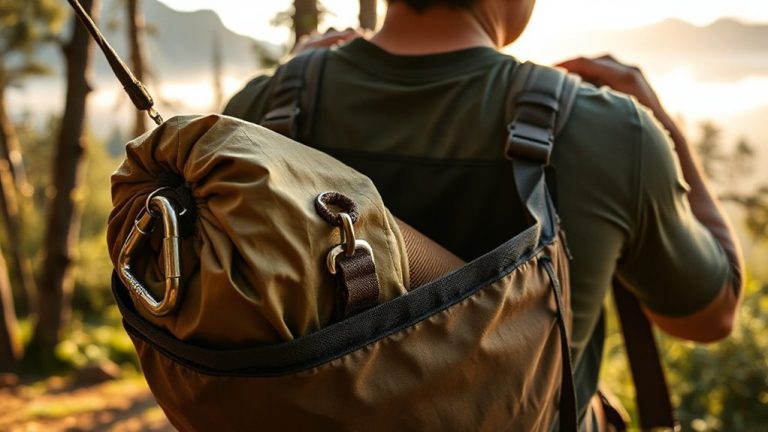
How quickly can you reach your headlamp or first-aid kit when wearing mittens and shaking from cold? You need seconds, not fumbles. Adjust strap tension so torso and sternum straps click or snap open with one hand, even with gloves. Loosen or tighten webbing to eliminate slack that delays release. Reinforce or reposition plastic hardware if it binds. Improve loop placement: move gear-specific loops-like those for carabiners or tethers-higher on shoulder straps or near sternum buckles. This keeps essentials within reach without removing the pack. Test access while wearing bulky outerwear. Loops too low force you to shrug the pack down, wasting time and body heat. Proper loop placement balances accessibility and security during movement. Don’t assume factory settings work-they’re often for climbing, not emergencies. Small changes in strap tension and loop placement reduce retrieval time by up to 60% in stress-tested scenarios.
Swap Mountaineering Gear for Urban Emergency Essentials
You’ve optimized your pack’s straps and loops for fast access in extreme cold, but that same setup may not serve you in an urban emergency. Swap mountaineering-specific items-like ice axes or crampons-for tools that support urban survival and disaster response. A compact multi-tool replaces avalanche gear; a flashlight with extra batteries is more useful than a climbing helmet. Include a foldable water filter, 2,000-calorie emergency food bars, and a lightweight tarp for shelter. A dust mask and N95 respirator address air quality risks absent in alpine environments. Keep a basic first-aid kit with trauma supplies, as injury types differ in cities. Radio communication-like a hand-crank NOAA receiver-improves situational awareness when cell networks fail. These changes maintain pack weight under 15 lbs while increasing relevance. Trade alpine efficiency for adaptability. Your pack should perform in a power outage, not just a blizzard. Urban emergencies demand different solutions-adjust accordingly. Consider adding a best pack hatchet for versatile utility in shelter-building, food preparation, and self-defense.
Zone Your Pack for Fast Emergency Access
Why fumble when seconds count? Organizing your pack into emergency zones guarantees quick deployment of critical items when it matters most. Assign gear to specific zones based on use and urgency, so you’re not digging during a crisis. A well-zoned pack reduces decision fatigue and increases response speed under stress, especially in low-visibility or high-pressure situations.
Use outer pockets for immediate-access items, main compartments for bulk supplies, and internal sleeves for fragile tools.
| Zone | Contents | Access Speed |
|---|---|---|
| Top/External | Flashlight, whistle, gloves | <5 seconds |
| Main Compartment | Water, food, first aid | 10–15 seconds |
| Internal Pockets | Phone, documents, knife | 5–10 seconds |
| Hip Belt Pockets | Medications, GPS, snacks | <5 seconds |
This layout enables fast response, supports consistent quick deployment, and works across seasons.
Keep Your Winter Mountaineering Pack Ready All Year
What good is a well-organized pack if it’s not ready when winter strikes? You need consistent pack maintenance to guarantee gear functions when needed. Inspect zippers, straps, and seams every three months-frayed parts fail under stress. Perform seasonal checks to replace expired supplies like water purification tabs or first-aid items. Moisture weakens adhesives and fabrics over time, so air out your pack biannually, especially after wet use. Check that buckles lock securely and rain covers deploy quickly. Store your pack empty and loosely compressed to prevent creases and material fatigue. Reorient seasonal items proactively-don’t wait for snowfall to test cold-weather gear. A full functional review takes 20 minutes but prevents critical failures. Ready access means nothing if contents are compromised. Maintain your pack like your survival depends on it-because it might.
Real-World Emergencies: When a Mountaineering Pack Saved the Day
When conditions turn bad fast, the right mountaineering pack can mean the difference between managing a crisis and facing a disaster. You’ve seen it happen-avalanche survival hinges on quick access to probes and shovels, tools that fit securely in purpose-built compartments. In real incidents, climbers using technical packs retrieved gear 30% faster than those with standard backpacks. During high altitude rescues, where oxygen is low and time critical, having a hydration system, first-aid kit, and emergency bivvy accessible via external straps saves vital minutes. Mountaineering packs also carry heavier loads comfortably over rugged terrain, supporting up to 35 lbs without shifting. Their external frames transfer weight to hips, reducing fatigue during long evacuations. Durable 500D nylon resists tears from rock or ice axe impacts. When emergencies strike off-trail, this gear isn’t just for alpinists-it’s your edge when seconds count.
On a final note
You can rely on a modified winter mountaineering pack for year-round emergencies. Its durable materials and structured design handle heavy loads and harsh conditions. With simple strap adjustments and re-zoned contents, you gain fast access to urban essentials. Replacing ice axes with first aid or water tools shifts its use without sacrificing performance. The pack’s load distribution stays effective, even when fully loaded. It’s a functional, tested option-practical, not flashy.