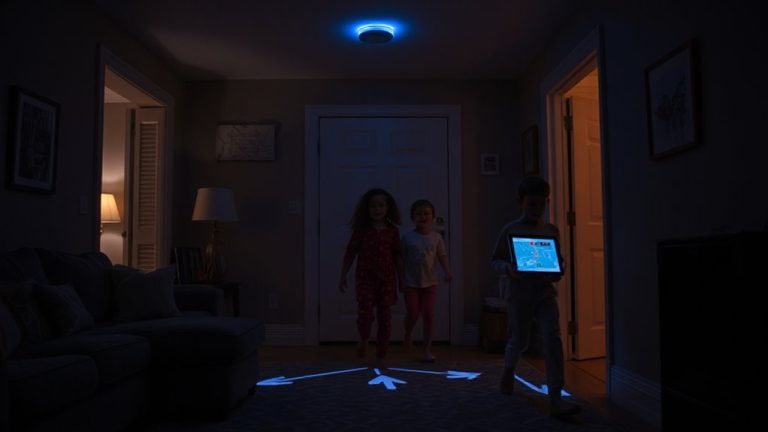
Developing a Code Word System for Family Members to Confirm Safety During Crises
You need a code word that’s easy to remember but hard to guess, like “Sparrow,” tied to a personal memory but not obvious to outsiders. Use it only during real emergencies-storms, blackouts, danger-when regular contact fails. Share it with immediate family and one trusted contact; test the system every six months with realistic drills. Keep it short, stress-tested, and private. Response times improve when roles are practiced under pressure. Setup takes under an hour, but it could save hours of panic later-there’s more to contemplate in planning for variable scenarios.
Notable Insights
- Choose a memorable, unique code word tied to personal associations but unknown to outsiders.
- Limit code word knowledge to immediate family and trusted contacts to prevent misuse.
- Activate the code word only during genuine emergencies like disasters or communication blackouts.
- Test the system regularly with realistic drills involving role rotation and communication barriers.
- Review and verify contacts every six months to ensure reliability and quick response during crises.
Why Your Family Needs an Emergency Code Word
How do you guarantee everyone stays calm and acts quickly when danger arises? You build a system rooted in family trust and emotional readiness. An emergency code word isn’t just a phrase-it’s a tested signal that cuts through confusion. When a storm hits or a threat emerges, panic can spread fast, but a preset word lets your family confirm safety without lengthy explanations. It’s small, measurable, and repeatable-like a drill. You practice it, you trust it. That consistency strengthens emotional readiness by reducing uncertainty. Family trust grows because each member knows the plan works. It’s not flashy, but reliable, like a smoke detector or seatbelt. Used correctly, the code word becomes a quiet cue to act-no hesitation, no debate. It doesn’t replace communication; it streamlines it under pressure, making response faster and decisions clearer across all ages.
Choose a Secure and Memorable Code Word
Clarity matters when seconds count, and your code word must strike a balance between secrecy and recall. You need something your family remembers under stress but outsiders won’t guess. Code word creativity isn’t about being clever-it’s about being effective. Avoid common words or personal names. Instead, use word association games to link the code word to safety without making it obvious. For example, “Sparrow” might relate to a childhood pet or a backyard bird, making it easy to remember yet discreet. Test it: say it aloud, simulate stress scenarios, and confirm everyone recalls it. If it fails under pressure, it won’t work in crisis. The best code words are short, pronounceable, and not tied to location or date. They survive urgency and emotion. Choose once, confirm understanding, and rehearse. A strong code word functions like a key-simple, essential, and reliable when every second counts.
Include the Right Family and Contacts
Your safety network starts with who you include-and not everyone needs a key to the system. Limit access to immediate family and trusted individuals who are likely to be reachable in a crisis. Consider your family hierarchy when assigning roles: parents, adult children, or guardians should hold primary responsibility. Avoid overloading the list-more contacts mean higher risk of miscommunication. Perform contact verification regularly to guarantee phone numbers, emails, and messaging apps are up to date. A contact not verified within six months may be unreliable when needed most. Include only those who understand the protocol and can respond quickly. Spouses, siblings, and emergency caregivers are typically sufficient. Extended relatives or friends can be informed later via secondary channels. Precision in selection improves response speed. A streamlined, verified list reduces errors and guarantees the code word retains its intended purpose-clear, fast confirmation of safety.
Activate the Code Word When a Crisis Hits
When should you trigger the code word? You activate it the moment you’re in danger or can’t be reached during a crisis. Code activation isn’t for minor issues-it’s for events like natural disasters, power outages, or threats to personal safety. Delaying reduces its effectiveness. A prompt crisis response guarantees everyone knows your status without needing direct contact. Use the code if you’re sheltering in place, evacuating, or losing cell service. It works only if used consistently and correctly. Family members should recognize the code as a signal to check in, not to panic. False alarms weaken trust in the system, so use it only when necessary. Overuse leads to confusion. The goal is reliable confirmation of safety, not constant updates. Code activation saves time and worry when seconds matter. Consider using a designated emergency communication device to ensure the code word is transmitted even when traditional networks fail.
Test the System With Realistic Family Drills
A code word only works if everyone knows how to respond, and that means running drills just like fire or earthquake practice. Schedule regular family drills using role playing scenarios that mimic real disruptions-power outages, phone lines down, or shelter-in-place orders. These exercises reveal how well your system functions under stress. Test communication barriers by limiting tools-no phones, or using only text in noisy conditions-to simulate realistic limitations. You’ll see who hesitates, who forgets the code, and where messages break down. Rotate roles so each person practices sending, receiving, and verifying the code word. Keep logs of response times and accuracy across drills. Performance improves with repetition, but expect minor delays during initial trials. Adjust timing expectations based on results. Realistic drills don’t guarantee perfect outcomes, but they expose flaws before a real crisis. Your system’s reliability depends on how often and how honestly you test it.
Adjust Your Code for Different Emergencies
While one code word might work in theory, different emergencies demand different signals because not every threat follows the same pattern. You need distinct codes to match the type of danger. For example, your earthquake signal should differ from your flood response to avoid confusion when seconds matter. Using separate phrases allows clear identification of the threat and speeds up reaction.
| Emergency Type | Code Word Example | Purpose |
|---|---|---|
| Earthquake | “Steady” | Signal immediate ground shaking response |
| Flood | “Riverwatch” | Alert for rising water or evacuation |
| Fire | “Blaze” | Indicate rapid exit needed |
| Power Outage | “Darkgrid” | Confirm utility failure |
| Medical | “Medalert” | Request urgent aid |
These distinctions improve response accuracy. A flood response requires moving to higher ground, while an earthquake signal means sheltering in place. Matching codes to scenarios eliminates guesswork.
Keep Your Family Code Word Private and Safe
Your family’s safety depends on keeping code words confidential-sharing them broadly increases the risk of confusion or misuse during critical moments. Limit access to immediate family or trusted individuals who need to know. Code word theft is a real threat; if someone learns your phrase, they could use it to falsely signal safety. Avoid writing it down in plain sight or saving it in unsecured digital notes. Digital exposure rises when you store the word in cloud apps, texts, or emails without encryption. Use a password manager to store it securely if needed. Change the code regularly-every three to six months-to reduce vulnerability. Verbal sharing during family meetings is safer than digital transmission. Test the system annually to confirm everyone remembers and respects the protocol. A compromised code word defeats the purpose, so treat it like a secure password-because it is one.
On a final note
You’ve set up a code word system that works. It’s simple, secure, and tested. Your family knows when and how to respond. Drills confirmed it functions under stress. Different codes for different crises reduce confusion. Privacy protects against misuse. Real-world use proves it’s reliable. It’s not foolproof, but it’s better than guessing. A clear, quiet signal beats frantic calls. You’ve built a tool that delivers-no hype, just results. Use it wisely. Stay safe.