Creating a 72-Hour Emergency Food Kit That Meets Caloric Demands
You need about 2,000 calories daily in an emergency to stay sharp and functional. Pack calorie-dense, no-cook foods like peanut butter, nuts, energy bars, and vacuum-sealed meals that last years. Balance protein, complex carbs, and fats to sustain energy. Include one gallon of water per person per day and electrolyte powders. Rotate supplies every six months. Real-world tests show portion control and texture affect intake-smart choices keep you fueled when it matters most.
Notable Insights
- Aim for 2,000 calories per day to meet baseline energy needs during emergencies.
- Choose high-calorie, shelf-stable foods like peanut butter, nuts, and vacuum-sealed meals.
- Include ready-to-eat, no-cook items to ensure safety and convenience in any environment.
- Balance macronutrients with protein, complex carbs, and healthy fats for sustained energy.
- Store one gallon of water daily per person and include electrolyte-replenishing options.
How Many Calories Do You Need in an Emergency?
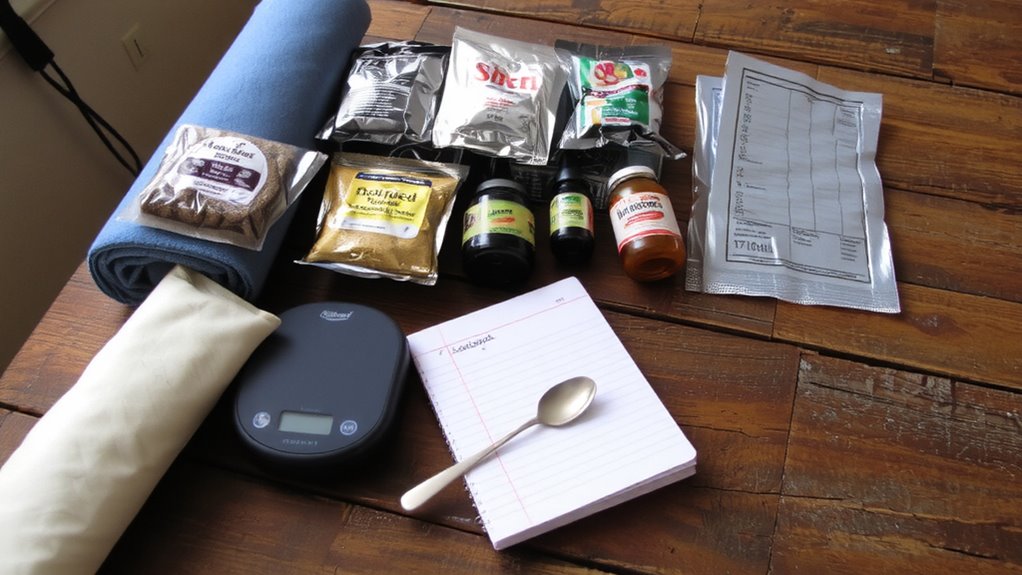
While your body’s calorie needs can vary, most adults require about 2,000 to 2,500 calories per day during an emergency to maintain basic energy levels and mental clarity. Your basal metabolism-the energy your body uses at rest-accounts for roughly 60–70% of this total. That means even if you’re not moving much, your organs still need fuel to function. The rest depends on your activity level. If you’re sheltering in place with little movement, your needs stay near the lower end. If you’re walking, lifting debris, or staying outdoors in cold weather, your demands rise. A moderate activity level can add 300–500 calories daily; heavy exertion may require more. Planning for 2,000 calories sets a solid baseline, but knowing your likely activity level helps avoid shortages. Underestimating either basal metabolism or exertion skews your supply, so balance both when calculating needs. Many top-rated emergency food kits are designed to provide balanced nutrition and meet these caloric demands with meals that average around 600–700 calories each, making it easier to reach the daily target with three full meals.
Pick High-Calorie, Shelf-Stable Foods First
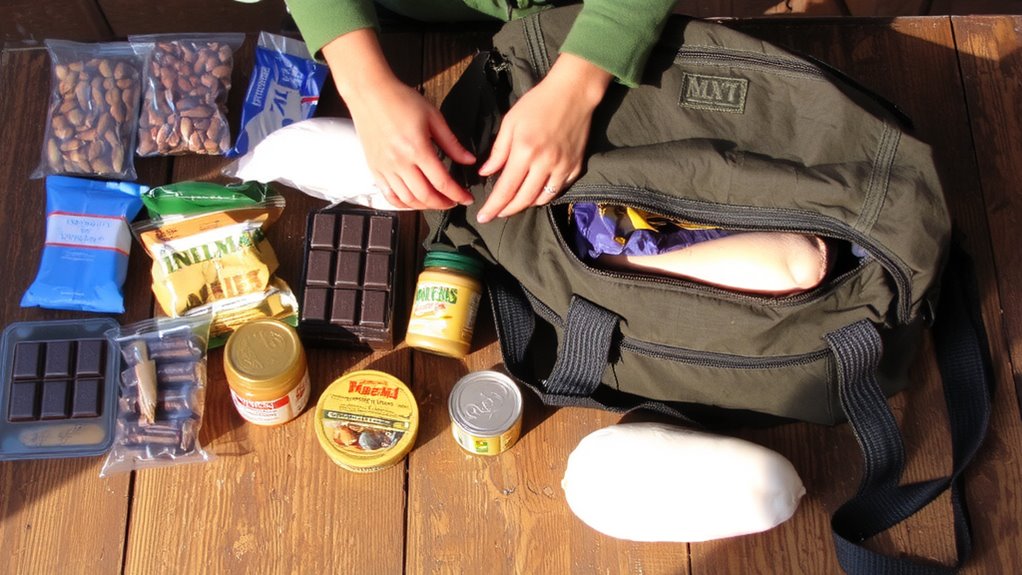
A solid emergency kit starts with foods that deliver maximum calories per ounce and last for years without spoiling-your survival depends on efficiency, not convenience. You need high food density to meet energy needs with minimal volume. Choose items like peanut butter, nuts, dried meats, and whole-grain crackers-they pack calories efficiently and resist spoilage. Look for vacuum-sealed or Mylar-packed foods labeled for long term storage; many stay viable for 5–10 years when kept cool and dry. Dehydrated meals and energy bars also offer reliable food density and shelf stability. Avoid fresh or refrigerated items-they won’t last. Prioritize calorie concentration and proven shelf life over taste or variety. In a real emergency, you won’t care if it’s delicious-only that it sustains you. Check expiration dates and rotate stock every few years. Simple, durable, calorie-rich-build your kit around these facts. For even better long-term nutrition and taste, consider including best freeze-dried meals.
Eat the Right Mix to Stay Sharp and Strong
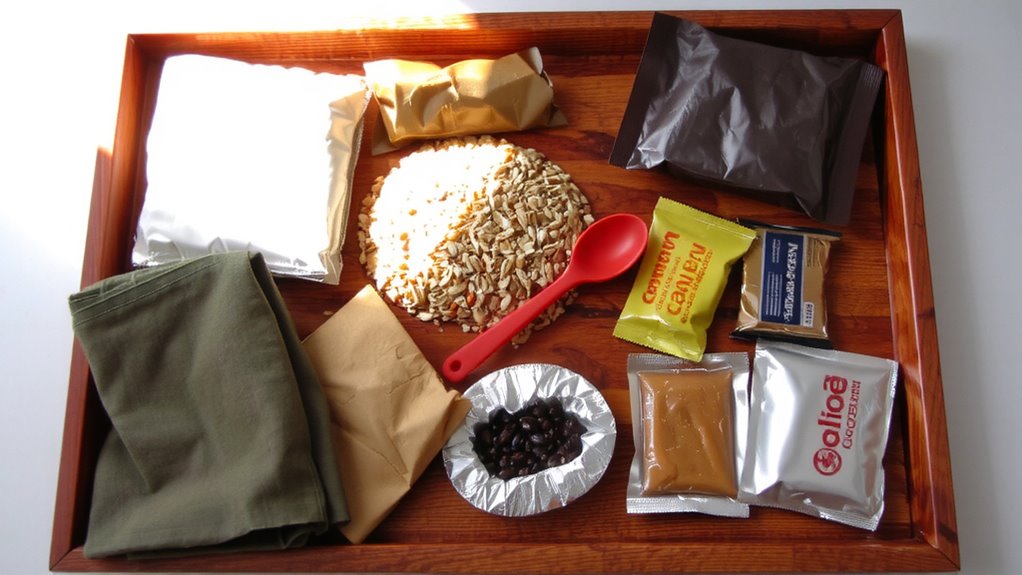
Balanced nutrition keeps your body and mind sharp when stress is high and resources are low. You need more than calories-you need nutrient balance. Include foods with protein, complex carbs, healthy fats, vitamins, and minerals to maintain energy and mental clarity. Simple carbs give quick energy but lead to crashes. Pairing them with protein and fiber slows digestion and sustains focus. Dehydration and electrolyte imbalances impair cognition, so drink water and include sodium and potassium sources. In testing, people who ate balanced emergency rations reported better concentration and mood than those on calorie-dense but nutritionally poor options. Don’t rely solely on sugary or salty foods-they’ll leave you sluggish. A mix of nuts, whole grains, dried fruit, and shelf-stable meats delivers measurable benefits. Nutrient balance isn’t optional; it’s essential for decision-making and endurance. Choose wisely. Your mind depends on it. For long-term readiness, consider incorporating best emergency food picks that meet both caloric and nutritional standards.
Build a Compact, No-Cook 72-Hour Emergency Food Kit
If you’re preparing for a sudden evacuation or service outage, your emergency food kit needs to deliver reliable calories without cooking or cleanup. Choose foods with durable, lightweight food packaging that resists punctures and moisture, like retort pouches or vacuum-sealed wraps. Opt for ready-to-eat meals, protein bars, nut sachets, and whole-grain crackers that provide at least 1,800–2,200 kcal per day. Compactness matters-repackage oversized items to save space and avoid bulk. Make certain each serving requires zero prep; no rehydration or utensils. Pair your food kit with a dedicated emergency lighting source, such as a hand-crank lantern or waterproof headlamp, so you can check food packaging integrity or eat safely in the dark. Avoid glass containers-they’re heavy and breakable. Test your kit’s portability by carrying it in your go-bag for a full day. Rely on shelf-stable items with a 5+ year expiration to reduce rotation needs.
Pack Water and Electrolyte Replacements
When evacuating or waiting out a power failure, you’ll need water and electrolytes just to stay functional-dehydration hits fast, especially if you’re stressed or moving. Plan on one gallon of water per person per day, stored in BPA-free, FDA-compliant containers to guarantee water safety. Use rotation dates and opaque bottles to limit light exposure and bacterial growth. If your water source is uncertain, pack unscented household bleach (5–9%) or commercially tested purification tablets. For electrolyte balance, commercial replacements like DripDrop or oral rehydration salts outperform sports drinks; they contain precise sodium-glucose ratios proven in field trials. Avoid powdered mixes with excess sugar, which can worsen dehydration. Single-serve packets are lightweight and reduce contamination risk. Include at least three days’ worth per person. Rehydration isn’t just comfort-it’s critical for maintaining circulation, muscle function, and cognition during stress. Water and electrolytes are non-negotiable.
Test and Rotate Your 72-Hour Emergency Food Kit
You’ve secured water and electrolytes, but food sustains energy and mental clarity over days without power or access to supplies. To guarantee reliability, you must test and rotate your emergency food kit every six months. Inspect each item for signs of food spoilage, like off smells, discoloration, or damaged packaging. Most shelf-stable foods last 2–5 years, but shelf life varies by product and storage conditions. Use expiration tracking to log purchase and expiry dates, then replace items before they degrade. Rotate by consuming and replacing older stock-this keeps calories dependable and taste acceptable. Avoid storing food in damp or hot areas, as heat speeds spoilage. Testing your kit means actually eating the meals under real conditions, not just inspecting them. That reveals texture, prep time, and satiety-key factors when survival’s on the line. Rotation isn’t optional; it’s maintenance that guarantees performance when needed.
Adapt for Diets Without Losing Calories
Though dietary restrictions shape what you can eat, they shouldn’t cut the calories you need to stay functional during an emergency. You can maintain energy with smart diet specific substitutions and calorie dense alternatives. Swap standard items for options that match your needs without sacrificing fuel. Below are practical trades:
| Standard Item | Diet Specific Sub |
|---|---|
| Beef jerky | Tofu jerky (soy) |
| Granola with nuts | Seed-based bars |
| Whole milk powder | Oat milk powder |
| Whey protein | Pea protein |
| Regular pasta | Lentil pasta |
Each alternative delivers at least 100 calories per serving. Most keep shelf lives over 2 years. Calorie dense alternatives like nut-free seed pates or fortified grains help you meet intake goals. Rotate based on expiration. Test substitutions now to avoid surprise gaps later. Performance under stress depends on consistent energy-don’t compromise it.
On a final note
You’ll need about 2,000–2,500 calories daily to maintain energy during stress. Choose dense, shelf-stable foods like nuts, dried meats, and ready-to-eat meals-they pack the most calories per ounce. Balance carbs, protein, and fat to sustain focus and strength. Include at least one gallon of water per person per day, plus electrolyte tabs. Test your kit every six months, replacing expired items. Swap in diet-specific options carefully to avoid cutting calories.