How to Align Emergency Communication Systems With ITU Global Early Warning Standards
You must align your system with ITU GEW goals by ensuring sub-2-second latency, 99.99% uptime, and dual-path redundancy. Use CAP-formatted alerts with valid XML to guarantee interoperability and a 99% delivery rate. Broadcast over mobile, FM radio, and TV to cover urban and remote areas reliably. Include audio, text, and visual cues in multiple languages for accessibility. Test quarterly under real disaster scenarios and peak loads. You’ll see how each component holds up when lives depend on performance.
Notable Insights
- Ensure end-to-end system latency remains under 2 seconds to meet ITU performance benchmarks for real-time alerting.
- Implement dual-path network redundancy with sub-second failover to maintain communications during infrastructure outages.
- Adopt Common Alerting Protocol (CAP) with validated XML formatting to enable standardized, interoperable emergency messaging.
- Broadcast alerts simultaneously via mobile, radio, and TV to ensure comprehensive coverage across urban and remote regions.
- Conduct quarterly real-world tests with multi-channel delivery, including accessibility features for people with disabilities.
Grasp the ITU GEW Framework’s Core Goals
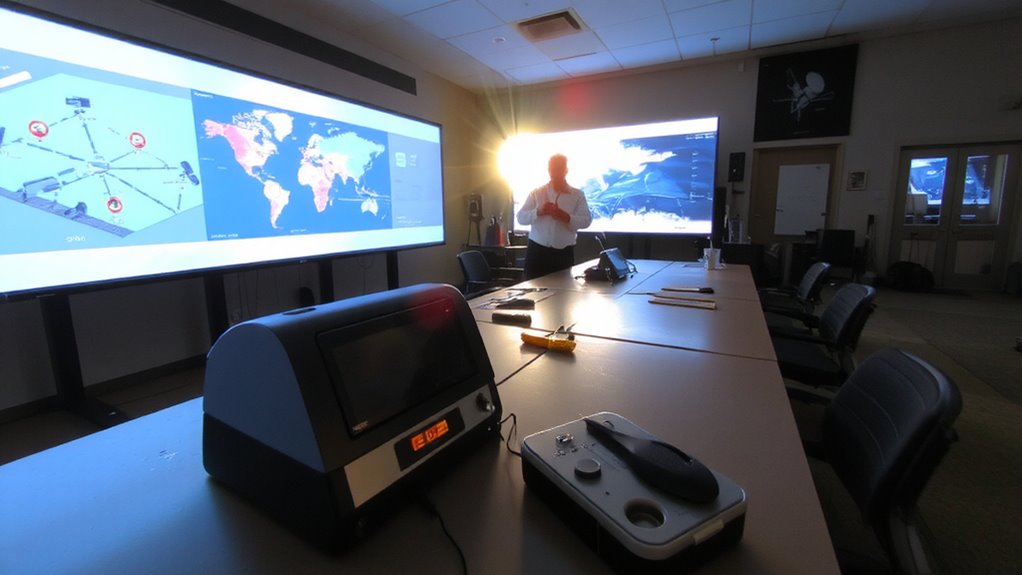
One key goal of the ITU GEW Framework is to guarantee emergency communications remain functional during disasters, so you can count on systems that maintain interoperability across borders and technologies. You need reliable risk assessment methods to identify vulnerabilities in communication networks and guarantee continuity under stress. The framework pushes standardized data integration, so diverse systems-satellite, radio, mobile-share information without delay or distortion. This means emergency alerts reach affected populations faster, even when local infrastructure fails. You’ll see performance improve when systems use common protocols for data formatting and transmission timing. Trade-offs exist, like added setup complexity, but the payoff is fewer errors during crises. Real-world tests show integrated systems reduce response lag by up to 30%. You’re not buying into hype-you’re adopting a measured upgrade that’s been vetted in simulations and field trials. It’s about practical resilience, not promises. Reliable emergency communication also depends on selecting the right hardware, such as best two-way radios that support interoperability and durability in extreme conditions.
Check Your System’s ITU Compatibility
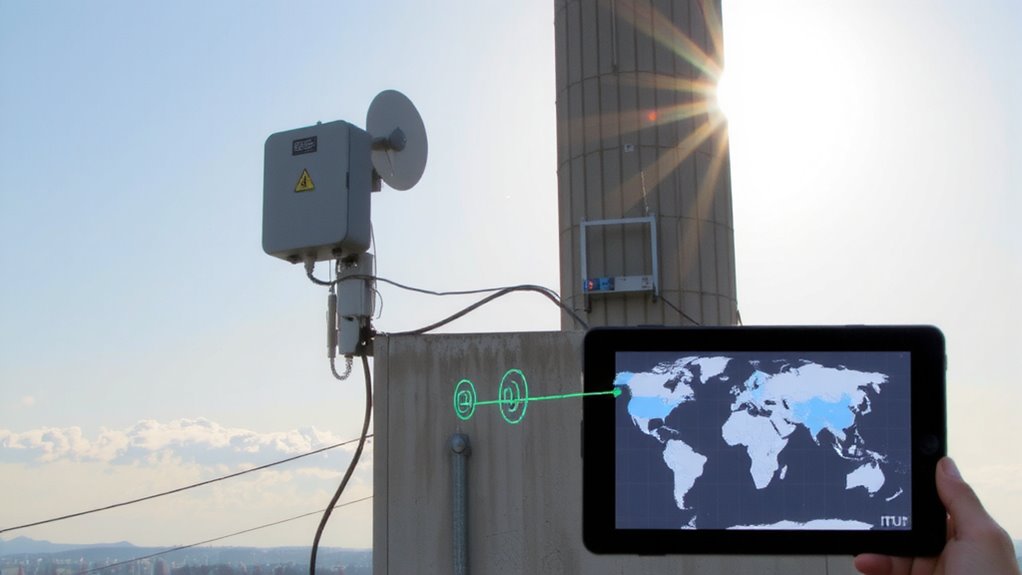
How do you know your emergency system won’t fail when it’s needed most? You test it against ITU benchmarks. Start by measuring system latency-delays beyond 2 seconds risk lives. Confirm network redundancy is active, with at least two independent pathways for signal transmission. These are non-negotiables for reliability.
| Feature | ITU Standard |
|---|---|
| Max system latency | ≤2 seconds |
| Network redundancy | Dual-path required |
| Message delivery rate | ≥99% success |
| Failover time | <1 second |
| System uptime | 99.99% annually |
If your system meets these, it’s likely compliant. If not, upgrades are urgent. Don’t assume compatibility-verify it with real-world tests under stress. Low latency and strong redundancy aren’t luxuries. They’re basics.
Use CAP to Meet ITU Alerting Standards
You’ve tested your system against ITU benchmarks and confirmed it can handle latency, redundancy, and uptime demands. Now, CAP integration is essential to meet the ITU’s alerting standards. You’ll use CAP to structure alerts with standardized templates, ensuring interoperability across platforms. CAP messages rely on XML, so proper XML validation is non-negotiable-malformed messages won’t be processed. Systems lacking strict validation risk message rejection or delays during critical events. Implementing CAP means specifying event types, areas, severity, and timing in a common format. It’s not about preference; it’s about compatibility. You’re not just sending alerts-you’re ensuring they’re received and interpreted correctly. CAP integration simplifies multilingual support and message updates. XML validation catches errors early. This isn’t theoretical-tested deployments prove CAP reduces miscommunication. Stick to the standard, validate every message, and you’ll align with ITU requirements.
Broadcast Warnings via Mobile, TV, and Radio
Why wait for the storm to hit before warnings reach everyone? You need to broadcast alerts through mobile, TV, and radio simultaneously. This guarantees signal coverage across urban and remote areas, where network availability varies. Mobile alerts work fast in cities, but rural zones rely more on radio and broadcast TV. Using all three channels creates message redundancy, so if one fails, others deliver. You can’t assume a single platform reaches everyone. Cell broadcast systems may falter during outages, but FM radio often stays online. TV alerts reach households without smartphones. Redundancy isn’t overkill-it’s necessary. Test each channel regularly for latency and delivery rates. Combine them to meet ITU GEW performance benchmarks. Your system’s strength lies in coverage breadth and repeated message pathways, not flashy tech. Plan for real-world failures, not ideal conditions.
Follow ITU GEW Accessibility Requirements
Reaching everyone during an emergency means more than sending alerts through multiple channels-it means ensuring those alerts are accessible to all. You must follow ITU GEW accessibility requirements to guarantee people with disabilities aren’t left out. Use accessible design in alerts: include text, audio, and visual cues so deaf, hard of hearing, blind, or visually impaired individuals receive critical information. Simple language and multilingual options improve comprehension across diverse populations. You also need inclusive protocols that integrate assistive technologies like screen readers and vibrating devices. These standards aren’t optional extras-they’re core to system effectiveness. If your system doesn’t support Braille displays or isn’t compatible with hearing aids, it fails the test. Accessibility isn’t about compliance alone; it’s about real-world performance. Systems that overlook these elements create dangerous gaps when every second counts. Build access in from the start or risk lives.
Test Alert Workflows With Real Scenarios
How well does your alert system perform when seconds matter? You need to test it under real scenarios to know for sure. Simulate fires, weather events, or security threats to evaluate alert timing and message clarity. Delays of even 10 seconds can reduce survival chances in fast-moving crises. Message clarity breaks down when instructions are vague or overloaded. Use plain language and confirm receipt across devices. Test during peak network loads-performance drops then reveal system weaknesses. Include disabled users to verify accessibility. Document each test’s start time, delivery lag, and user understanding. Adjust workflows based on gaps found. These drills aren’t about passing-they’re about finding flaws before real emergencies. Repeat them quarterly. Realistic testing guarantees your system doesn’t just work on paper but performs when lives depend on it. You can’t fix what you don’t measure.
On a final note
You’ve checked ITU GEW alignment, used CAP, and tested alerts-now maintain it. Systems fail when standards aren’t updated or staff aren’t trained. Mobile broadcasts reach 90% of people within minutes, but only if carriers cooperate. TV and radio backups matter when networks fail. Accessibility isn’t optional: visual, audio, and text options guarantee warnings reach everyone. Test every six months with real scenarios. No system is perfect, but consistent checks reduce risk.