Building a Rock Ring Fire Pit in Windy Plains
Pick a flat, elevated spot at least 10 feet from flammables and clear a 4-foot area down to bare soil. Use dense local stone like granite or basalt-avoid river rocks-they won’t explode and handle wind better. Stack stones 12–16 inches high in tight, level layers to block gusts and hold heat. Keep fires small, under 2 feet wide, and always have water nearby. Monitor wind shifts closely. Smart stone choice and layout mean safer, steady fires when it’s windy. You’ll see how placement and material quality make all the difference.
Notable Insights
- Select dense, wind-resistant stones like granite or basalt to ensure stability in gusty conditions.
- Place the fire pit on level, well-drained ground at least 10 feet from flammable materials.
- Build a 12- to 16-inch stone ring using flat, interlocking stones to block wind while allowing airflow.
- Clear a 4-foot diameter area to bare soil to prevent accidental ignition from sparks or heat.
- Keep fires small (under 2 feet wide) and monitor wind forecasts to maintain safe, controlled burns.
Pick the Best Spot for Your Rock Ring Fire Pit
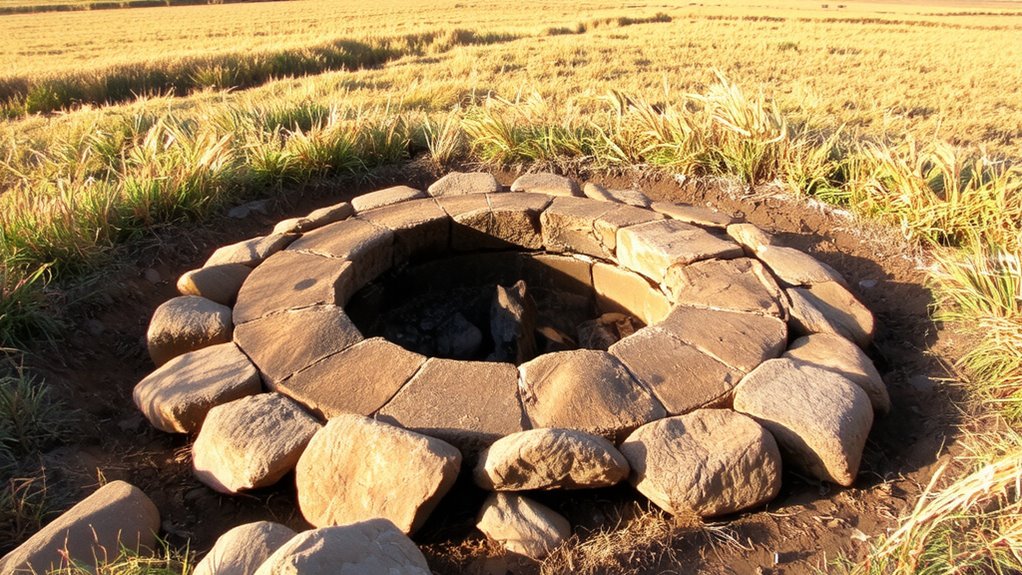
While you might be keen to start stacking stones, choosing the right location for your rock ring fire pit matters more than most realize. You need firm, level ground with good soil drainage to prevent water from pooling under the rocks, which can lead to shifting or cracking when heated. Avoid spots near dry grass, overhanging branches, or structures-each increases fire safety risks. Keep the pit at least 10 feet from any flammable material. Check local fire codes; some require gravel or sand clearances up to 24 inches around the ring. A poorly drained or poorly positioned pit creates avoidable hazards. Wind direction matters, but that’s a separate concern. Your chosen spot should stay clear of runoff and low areas where water gathers after rain. Proper placement reduces long-term maintenance and improves safety. It’s not just about convenience-it’s about predictable, safe performance every time you light a fire.
Choose Wind-Resistant Stones for Prairie Winds
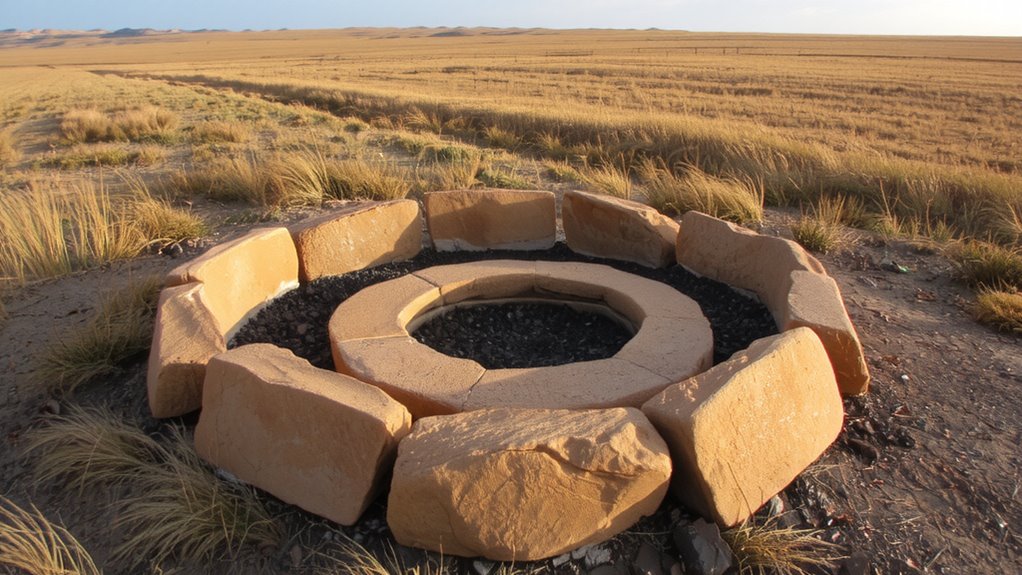
A solid fire pit withstands prairie winds without shifting or toppling, and the right stones make all the difference. Choose stones with high stone durability to stay put and resist cracking under thermal stress. Avoid lightweight or porous rocks-they trap moisture and can explode when heated. Local granite, basalt, or limestone offer proven performance. Your material sourcing matters: nearby stone reduces transport costs and matches regional stability. Below are common choices and their wind and heat resistance.
| Stone Type | Wind Stability | Heat Resistance |
|---|---|---|
| Granite | High | Excellent |
| Basalt | High | Excellent |
| Limestone | Moderate | Good |
| Sandstone | Low | Poor |
Granite and basalt provide the best balance. Limestone works if checked for flaws. Never use river rocks. Stick to dense, tested materials-your safety depends on it.
Build Your Rock Ring Fire Pit Step by Step
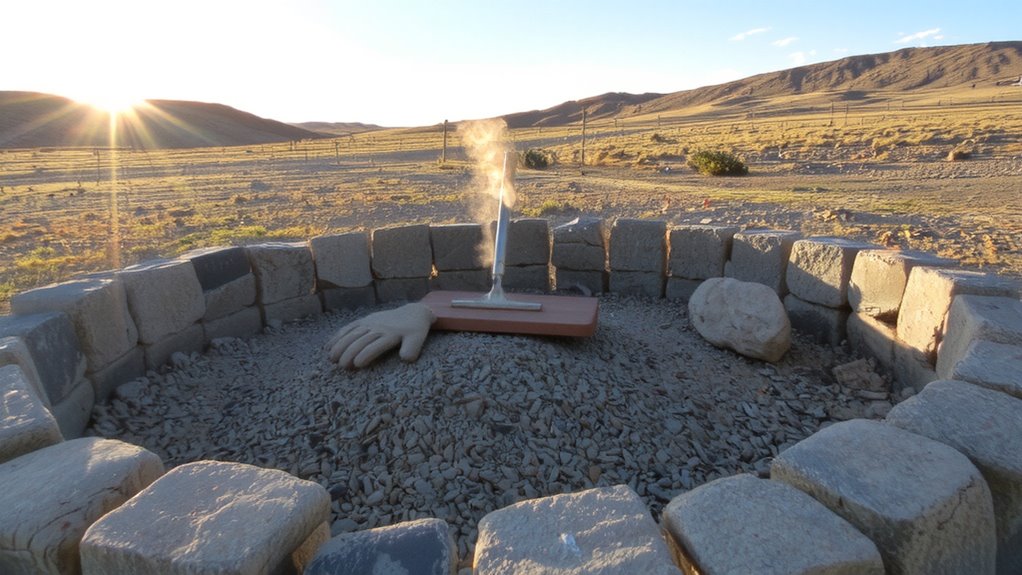
Once you’ve selected durable, heat-resistant stones like granite or basalt, start by clearing a 4-foot diameter area down to bare soil to prevent accidental ignition of grass or roots. Mark the circle with a stake and string, then lay the first ring of stones in contact with one another, ensuring they sit flat and stable. This base ring defines your fireplace design and supports heat distribution. Keep gaps minimal to contain embers. Level each stone as you place it-uneven surfaces compromise stability. If desired, integrate subtle decorative accents, like colored stone inlays or patterned arrangements, but avoid flammable materials. A functional design prioritizes tight seams and mass over aesthetics. The fire pit must withstand prairie winds, so depth and stone thickness matter more than visual flair. Test stone placement by hand pressure before proceeding. Final layout should allow airflow while shielding the fire’s core.
Stack Stones to Block Wind and Contain Flames
Since wind can quickly spread sparks and reduce burn efficiency, stack your second and third stone layers to form a 12- to 16-inch-high barrier that blocks gusts without suffocating the fire. Use flat, interlocking stones with minimal gaps to stabilize flame dynamics and keep heat contained. Tight seams between stones improve heat retention, reducing fuel use over time. Avoid sealing the ring completely-allow small openings for airflow to maintain combustion. Uneven stacking creates weak spots where wind penetrates, so check alignment on all sides. Dense stones like basalt or granite hold and radiate heat better than porous types. A two-layer stack typically weighs enough to resist moderate wind uplift. This height blocks ground-level drafts while letting smoke rise freely. Proper stacking balances protection and function. You’re not eliminating airflow-you’re guiding it. The goal is control, not containment.
Safely Manage Fire in Gusty Conditions
When gusts pick up, your fire needs active management to stay safe and effective-keep the blaze small, under 2 feet across, because larger fires increase spark scatter and heat intensity beyond what even a well-built stone ring can reliably contain. Position yourself upwind to monitor flame behavior and adjust fuel accordingly, adding only small logs that burn quickly and cleanly. Always have a bucket of water or sand nearby for emergencies-fire safety isn’t optional. Check wind forecasts before lighting, and never leave flames unattended in gusty conditions. Real-time weather monitoring improves response time; sudden shifts can turn a controlled fire into a hazard within minutes. Avoid burning lightweight materials like paper or leaves, which can ignite airborne embers. Your stone ring helps, but it’s not foolproof. Stay alert, keep tools close, and prioritize control over comfort. Safe fires aren’t lucky-they’re managed.
On a final note
You’ve built a functional fire pit suited for windy plains. The tight stone ring cuts gusts and keeps flames contained. Dense, flat rocks resist tipping and cracking under heat. It’s not fancy, but it works-fire stays lit without spreading. Maintenance is minimal: clear debris, check for shifting stones. It won’t outperform steel pits in durability, but stone costs less and blends with the landscape. For practical survival use, it balances safety, cost, and effectiveness.