Building a Calorie-Dense Bug-Based Survival Diet in Resource-Scarce Environments
You can meet your calorie and protein needs in tough environments by eating crickets, mealworms, and grasshoppers-they deliver 120–170 calories per 100 grams with high digestibility and essential nutrients. These insects reproduce quickly, require minimal space, and thrive on scraps. Cooking them kills pathogens and improves energy gain. Pair them with foraged greens or tubers for balance. Smart harvesting and simple farming increase long-term yields-there’s more to optimizing this diet efficiently.
Notable Insights
- Prioritize high-calorie insects like mealworms and crickets for maximum energy yield with minimal resources.
- Harvest insects safely by avoiding toxic species and using tools to reduce contamination risks.
- Cook all insects to eliminate pathogens and improve digestibility, even with limited fuel or equipment.
- Build a mini farm using recycled containers and food scraps to sustainably produce calorie-dense bugs.
- Combine insects with available plants to create balanced, nutrient-rich meals in low-resource settings.
Why Edible Insects Are Survival Superfoods
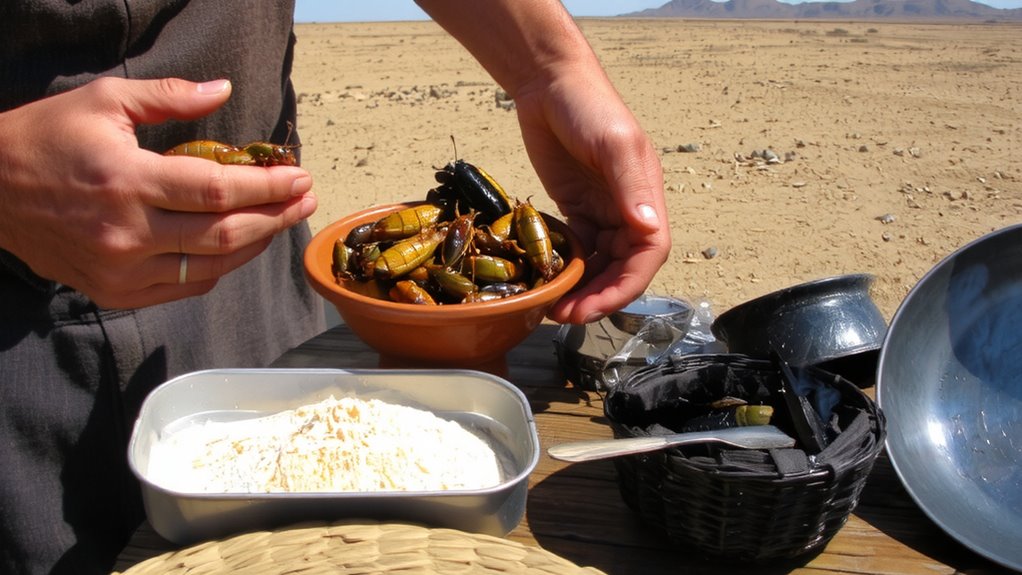
While you might hesitate at the idea, edible insects pack nutrients that make them a reliable survival food. They offer high nutritional density, delivering essential vitamins, minerals, and healthy fats in minimal volume. You’ll get more protein per gram from crickets or mealworms than from many plant sources, and their protein efficiency rivals conventional livestock with far less resource input. Insects convert feed to body mass quickly and require little water or space. This makes them sustainable and practical when supplies are limited. They’re not just protein-they also provide iron, zinc, and B12, nutrients critical in long-term survival. Though texture and taste vary, drying or grinding improves palatability without significant nutrient loss. You can store them lightweight and long-term, which is crucial in emergencies. In real-world testing, insect-based diets maintain energy and muscle when other sources aren’t available. Their compact nutrition supports endurance, making them a measured, effective choice when survival depends on efficiency.
7 Safe, High-Calorie Bugs to Eat First
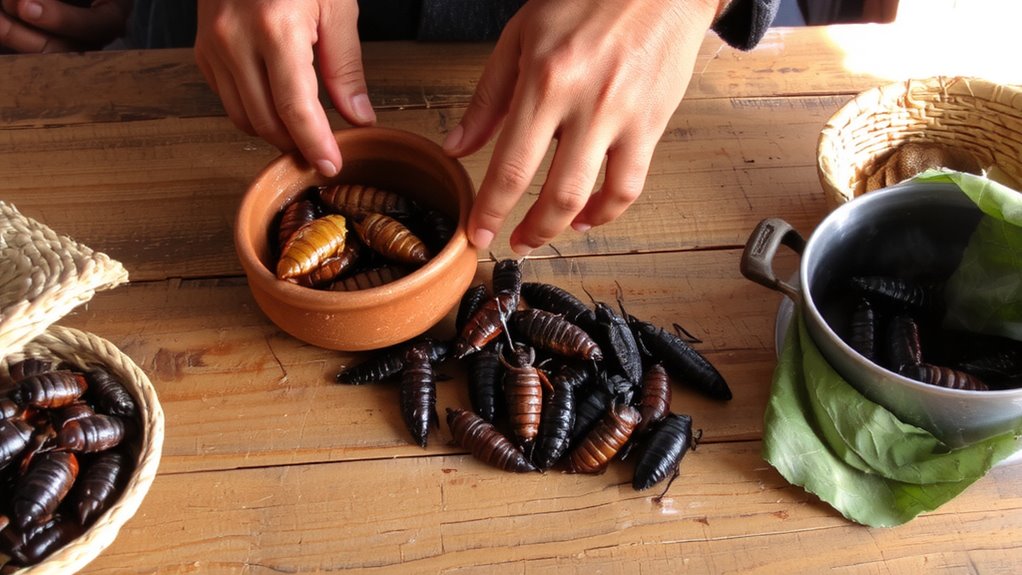
Since you’ll need both safety and energy fast in a survival situation, focus on bugs that are calorie-dense and universally recognized as safe to eat. Grasshoppers provide high nutritional value with around 120 calories per 100 grams and contain usable protein, making them efficient for energy. Crickets offer similar calories and have high digestion efficiency due to their soft exoskeletons and low chitin content. Mealworms are slightly higher in fat, delivering about 170 calories per 100 grams, boosting caloric intake when food is scarce. These insects are widely studied, with minimal risk of toxicity when properly prepared. Their nutritional value includes essential fats, amino acids, and some micronutrients. You’ll get more usable energy with less strain on digestion compared to fibrous plants or risky forage. Prioritize these species because they balance calorie density, safety, and digestion efficiency when survival depends on reliable fuel.
How to Find and Harvest Bugs Without Risk
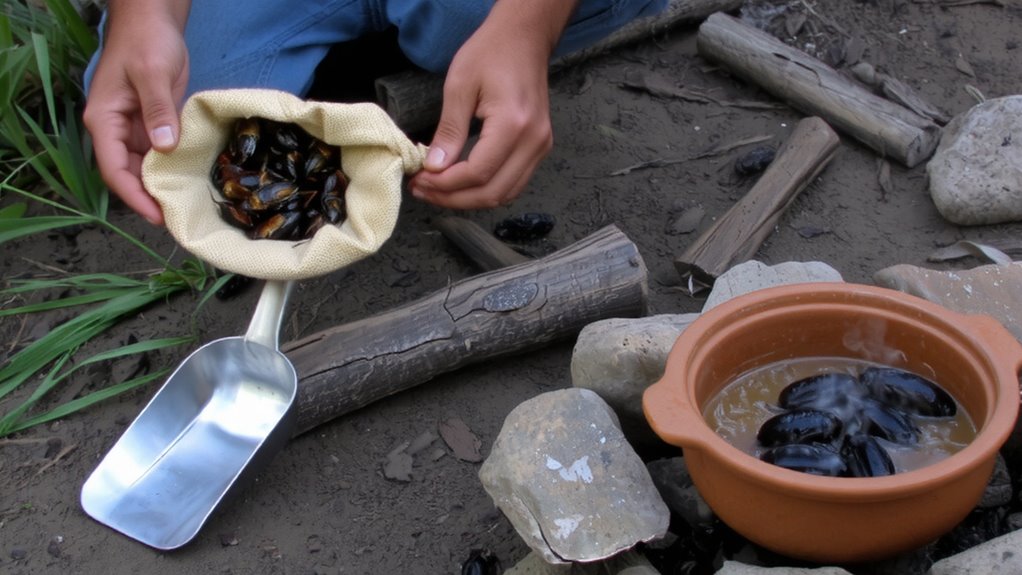
Where do you start looking for bugs you can actually eat without getting sick? Begin in dry, sheltered places like under rocks, logs, or bark, where edible species such as crickets, beetles, and grasshoppers gather. Use bug identification to avoid brightly colored, spiny, or strong-smelling insects-these traits often signal toxicity. Stick to common, widely consumed bugs you can confidently recognize. Harvest during cooler hours when insects are less active, reducing escape risk and energy loss. Wear gloves and use tools like tweezers or small nets to limit direct contact, aiding in risk prevention. Avoid ground-dwelling bugs in polluted or high-traffic areas-they absorb contaminants. Never consume insects found dead or decomposing. Accurate bug identification and consistent risk prevention practices guarantee you collect safe, nutritious food without unnecessary exposure to toxins, parasites, or disease.
Cook Bugs to Kill Germs and Gain More Energy
If you’re eating bugs straight off the ground, you’re taking unnecessary risks-always cook them first. Cooking kills harmful bacteria, parasites, and pathogens that can cause illness in survival settings. Simple cooking methods like roasting, boiling, or frying work well, even with limited tools. Dry heat from roasting over a fire is effective and requires no added fuel beyond the fire itself. Boiling, while using more fuel and time, improves digestibility and guarantees even heat penetration. Different cooking methods affect nutrient retention differently-high heat for extended periods may reduce some vitamins, but overall protein and fat availability improve. Properly cooked insects provide more usable energy than raw ones. The increase in digestibility and caloric gain outweighs minor nutrient losses. Cooking also removes unpleasant textures and odors, making insects more palatable over time. Always prioritize safe preparation to maximize health and energy output.
Build a Mini Bug Farm for Ongoing Calories
While wild foraging delivers short-term bug meals, setting up a simple farm guarantees a steady calorie supply with less daily effort. A mini bug farm requires a ventilated container, damp substrate, and a consistent food source like vegetable scraps. Choose fast-reproducing species such as mealworms or dubia roaches-they offer high caloric returns with minimal space. Bug breeding works best at 70–80°F; below that, reproduction slows, cutting your yield. You’ll need routine farm maintenance: remove waste, monitor moisture, and separate life stages to prevent cannibalism. A well-kept system produces new batches every 4–6 weeks. One square foot can generate up to 100g of edible insects weekly, contributing meaningful calories over time. It’s not high-tech, but it’s reliable. You trade initial setup for long-term return, reducing daily foraging risk and labor. This method prioritizes efficiency, scalability, and consistency where resources are limited.
Mix Bugs With Foraged Foods for Balanced Meals
A balanced meal in survival conditions doesn’t come from bugs alone-it’s what you pair them with that matters. You need nutrient pairing to meet essential dietary requirements. Combine protein-rich crickets with fibrous greens like dandelion or plantain to improve digestion and micronutrient uptake. Add starchy tubers when available-they balance energy needs and make meals more sustaining. Flavor blending isn’t just about taste; it increases meal acceptability over time. Roasted beetles with wild onions and purslane create a savory mix that’s easier to eat daily. Use edible flowers or mild herbs to cut bitterness. Avoid toxic plants-double-check identifiers. Calorie density improves when you mix fat-rich larvae with carbohydrate-heavy roots. This combination supports long-term calorie goals without overreliance on one source. Practical testing shows mixed meals maintain energy better than single-source foods. You’ll get broader nutrition, better palatability, and improved intake consistency across weeks.
Stay Mentally Strong When Eating Bugs Daily
How do you keep from burning out when bugs become your daily protein? You build mindset resilience by treating eating bugs as survival maintenance, not a novelty. Psychological adaptation takes time, but framing consumption as necessary sustenance improves compliance. Accepting that taste, texture, and appearance won’t change helps reduce resistance. Rotate species when possible-mealworms, crickets, ants-to prevent sensory fatigue. Prepare them consistently: dry-roasting improves palatability and kills pathogens. Pair with strong seasonings if available. Acknowledge discomfort, but don’t indulge aversion. Mental fatigue is inevitable, so focus on outcomes: calories, protein, survival. Track intake like a duty, not a choice. Staying functional matters more than enjoyment. Over time, repetition dulls disgust. This adaptation is measurable: less hesitation, faster consumption, steadier mood. You adapt because you must-no other option exists. Build routine, and the mind follows.
On a final note
You can rely on insects for calories when resources are low. Crickets, mealworms, and grasshoppers deliver 120–200 calories per 100 grams, with usable protein and fats. Proper cooking kills pathogens and improves digestibility. A simple container farm yields repeat harvests. Pair bugs with greens or starches to balance nutrition. It’s not ideal, but it’s effective. Success depends on consistency, hygiene, and willingness to adapt without wasting energy on hesitation.