Constructing a Wickiup Shelter From Sagebrush and Willow Poles
You’ll need 8–10 straight, green willow poles, 8–12 feet long and 1–2 inches thick, to build a stable conical frame. Angle them inward, lash the tops tightly, and add cross-poles for rigidity. Cover with 15 dense sagebrush bundles, layered downward and overlapped 6 inches to shed rain and block wind. A second, crosshatched layer boosts durability. Use rawhide or jute for secure binding. Pack tightly-you shouldn’t see poles or light through the walls. Build responsibly, cut cleanly, and restore your site-the details make all the difference.
Notable Insights
- Select straight, flexible green willow poles 8–12 feet long and 1–2 inches in diameter for a sturdy, balanced frame.
- Drive 8–10 willow poles into the ground in a 6–8 foot circle, angling them inward and lashing the top securely.
- Harvest straight sagebrush stalks and bundle them tightly to form uniform layers 8–12 inches thick for insulation.
- Layer sagebrush bundles from the base upward, overlapping by at least 6 inches and slanting downward to shed water.
- Reinforce the shelter with crosshatching, double-layer thatching, and eco-friendly practices to ensure durability and sustainability.
Find Willow Poles for Your Wickiup Frame
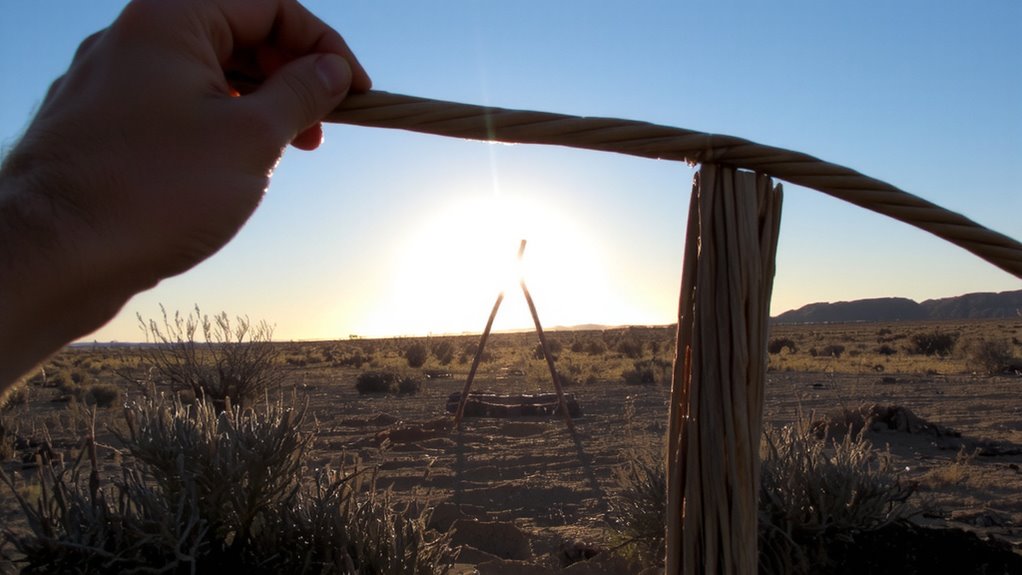
You’ll want to start by looking for straight, flexible willow poles between 8 and 12 feet long-they’re strong enough to support the shelter but pliable enough to bend without breaking. Pole selection is critical; choose poles with consistent diameter-around 1 to 2 inches-to guarantee structural balance. Avoid cracked or twisted poles, as they compromise material durability. Green willow is ideal-it’s more flexible than dried wood and less prone to snapping during assembly. Test each pole by gently bending it; if it splinters, discard it. Longer poles give you more height but require stronger anchoring. Shorter ones are easier to manage but limit interior space. Willow naturally resists moisture and decay, improving long-term stability. You’ll need about 10 to 15 poles for a basic wickiup frame, depending on size. Prioritize straightness and resilience over appearance-function matters most here. Proper pole selection directly impacts the shelter’s strength and weather resistance.
Gather and Bundle Sagebrush for Insulation
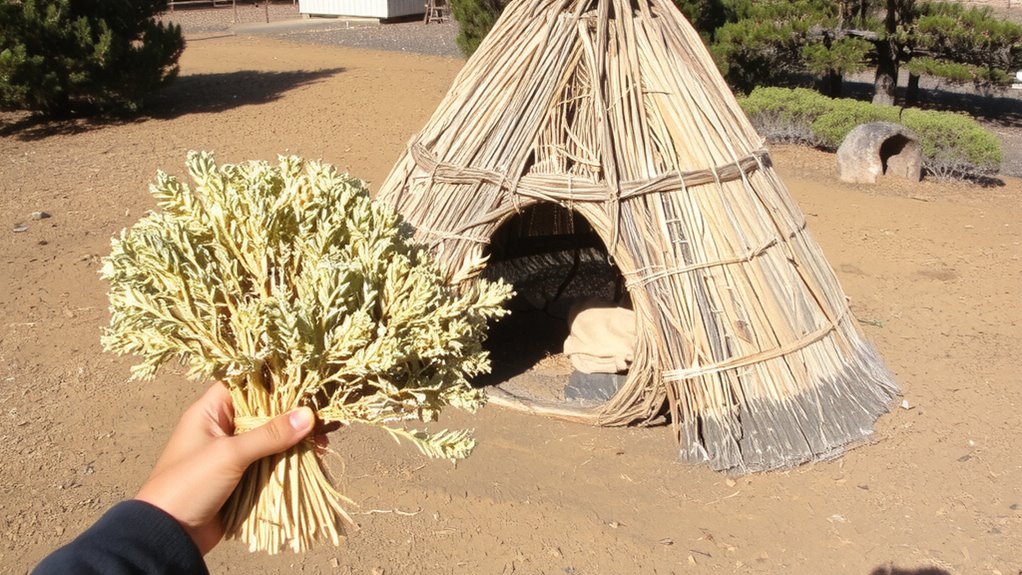
With the frame poles set, focus shifts to insulation that can withstand wind and temperature shifts. You’ll gather sagebrush in dry, open areas where growth is thick and stalks are straight. Strip side branches to form dense, overlapping bundles. Use sagebrush insulation techniques that prioritize thickness-aim for 8–12 inches per layer-to block airflow effectively. Secure each bundle using reliable bundle binding methods: jute twine, rawhide strips, or paracord. Rawhide tightens as it dries, offering long-term hold; paracord lasts longer in wet conditions. Keep bundles manageable-about 1.5 feet in diameter-for easier layering.
| Technique | Effectiveness |
|---|---|
| Overlapping layers | Reduces air gaps |
| Dense packing | Improves thermal retention |
| Top-to-bottom coverage | Prevents moisture pooling |
| Tight bindings | Resists wind uplift |
Build the Wickiup Frame Step by Step
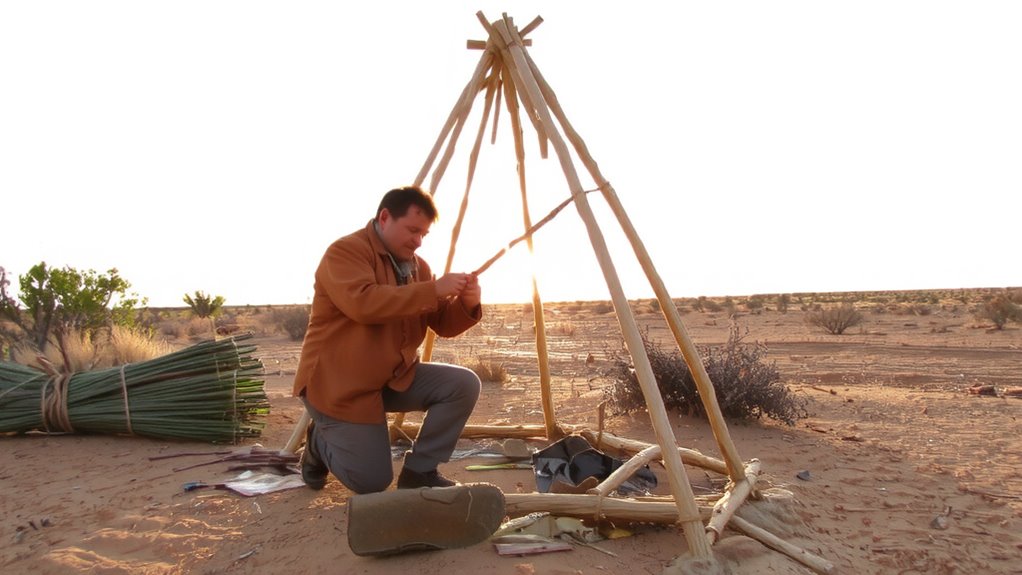
A sturdy frame makes all the difference in a wickiup that holds up to wind and snow load. Start by driving eight to ten willow poles, each 8 to 10 feet long, into the ground in a circular pattern 6 to 8 feet across. Angle the poles inward so they converge at the top. Lash the tips together with cordage to secure the apex-this knot is critical for frame stability. Space poles evenly to maintain structural symmetry, which distributes stress evenly and prevents weak spots. Add a few horizontal cross-poles for bracing, tying them tightly to verticals. Check alignment frequently; asymmetry leads to instability under load. The frame should stand rigid with no wobble before you proceed. A well-built structure handles moderate snow and wind, but depends entirely on precision during this phase. Any weakness here compromises the entire shelter.
Layer Sagebrush for Weatherproof Walls
Now that the frame stands solid and true, it’s time to clad the wickiup with sagebrush to block wind, rain, and cold. Start at the base, tying bundles of sagebrush to the willow poles with sinew or cordage, slanting them downward to shed water. Each new row should overlap the one below by at least 6 inches-this sagebrush overlap prevents rain from seeping through. Work your way up evenly, maintaining consistent wall density across all sides. A denser layer, about 4 to 6 inches thick, offers better insulation and wind resistance. Gaps reduce effectiveness, so fill them with smaller sprigs. Density matters more than thickness alone-moderate overlap with tight packing outperforms sparse, deep layers. Test the coverage by pressing your hand against the inside; if you feel poles or light passes through, add more brush. This method creates a breathable yet effective barrier suited to dry and cold conditions. For added utility in shelter construction and tool versatility, consider carrying a survival axe multi-tool.
Reinforce Against Wind and Rain
If you’re building where storms hit hard, reinforce the sagebrush walls with a second layer of overlapping branches, this time lashed tightly in the opposite direction to seal gaps. This crosshatching improves thatch tension, preventing wind from lifting sections loose. Secure each junction with split willow ties, pulling them snug to maintain structural symmetry-any imbalance risks collapse under load. Angle the outer layer downward so rain runs off cleanly, avoiding soak-through. Add extra poles around the base as wind braces; they’re cheap insurance. Test the build by shoving gently at mid-wall-if it shifts, retie key nodes. A well-tensioned thatch won’t flap or rattle in gusts. Overlap remains critical: at least six inches between layers. No gaps means no leaks. The entire frame should shed water like a pine cone, not sponge it like moss. Done right, it stands tight through evening squalls and cold fronts.
Why Desert Dwellers Used Wickiup Shelters?
While you’re weighing shelter options in arid terrain, the wickiup’s design makes sense-it’s light on resources but strong on function. You’re dealing with resource scarcity, so hauling heavy materials isn’t practical. The wickiup uses what’s available: sagebrush for insulation, willow poles for frame support. Both are common in desert regions and easy to work with using basic tools. Its simple cone shape goes up fast and stands stable in wind. If you’re on a nomadic lifestyle, you need shelters that break down quickly and leave little trace. Wickiups meet that need. They offer reliable protection from sun and light storms without permanent impact. You won’t over-invest time or material, which matters when water and fuel are limited. It’s not a luxury setup-it’s survival-grade. For temporary, repeatable use in harsh conditions, the wickiup balances effort, durability, and efficiency better than most alternatives.
Build Responsibly: Ethical Harvesting and Cleanup
You’ve seen how the wickiup’s design fits desert survival, but building one right means respecting the environment you’re relying on. Harvest sagebrush and willow poles sparingly-take only what you need and avoid damaging roots or surrounding plants. Cut limbs cleanly to prevent dieback and promote regrowth. Work quietly, as noise and movement can disturb nesting birds or nesting reptiles. You’ll minimize impact by choosing already fallen branches when possible. Always respect wildlife by avoiding dense animal corridors or feeding areas. Pack out all cordage, debris, and non-biodegradable materials. Before leaving, scatter any remaining brush to restore natural cover. Leave no trace by returning the site to its original state-no scars, no litter, no signs of your shelter. This isn’t just ethics-it’s practical. Preserving the ecosystem guarantees resources remain viable for future use. Responsible harvesting means the desert stays functional, not depleted.
On a final note
You’ve built a wickiup that sheds rain and blocks wind when layered tight. Sagebrush insulation works-its density traps heat but adds weight. Willow poles bend without breaking, but they scar if harvested wrong. This shelter won’t last a season, but it’s fast and effective for short-term desert use. Trade durability for simplicity. You now know what grows nearby, what works, and how to leave little trace. That’s what matters.