Filtering Water Through a Bamboo Charcoal and Moss Filter
You can filter water through a bamboo charcoal and moss setup to reduce chlorine, improve taste, and trap debris using gravity and natural materials. Crushed bamboo charcoal adsorbs chemicals and odors, while moss catches sediment. It won’t kill bacteria or remove all pathogens, so use it only when safer water isn’t available. Build it in a bottle or bamboo tube with layered materials, and maintain it regularly. Expect modest results-better than nothing, but not foolproof. There’s more to get right if you’re counting on it.
Notable Insights
- Bamboo charcoal adsorbs chlorine, odors, and some heavy metals through its porous structure during filtration.
- Moss acts as a mechanical barrier, trapping sediment and improving water clarity.
- Layer crushed bamboo charcoal and moss in a hollow tube or bottle for gravity-driven filtration.
- This filter improves taste and removes debris but does not kill bacteria or viruses.
- Recharge charcoal monthly by boiling, and replace moss every two months or when slimy.
How Bamboo Charcoal and Moss Filter Water
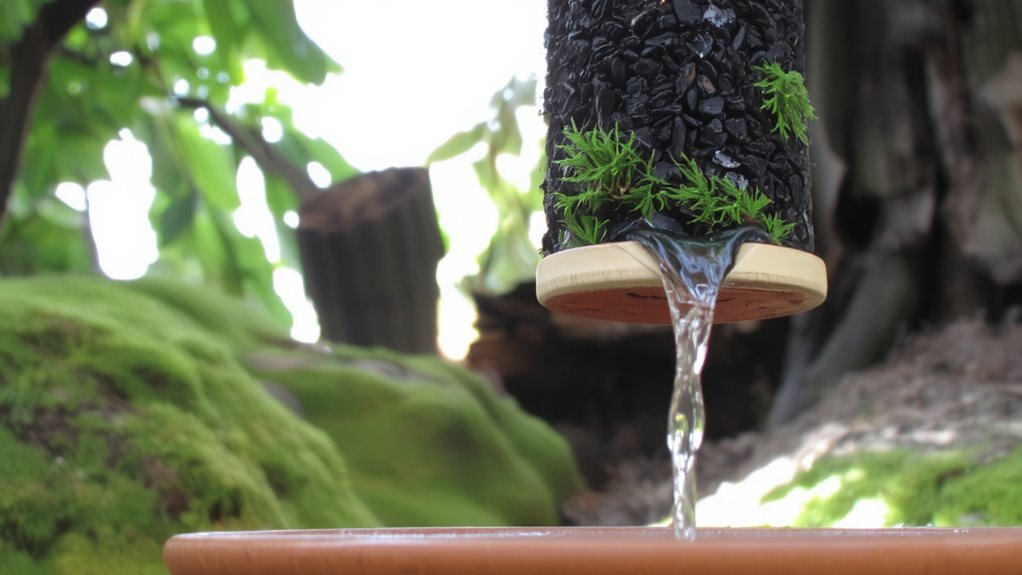
While you might not expect simple natural materials to tackle water contaminants, bamboo charcoal and moss each play a defined role in basic filtration. Bamboo charcoal, with its porous structure, adsorbs chlorine, odors, and some heavy metals, improving taste and clarity. You’ll see measurable reductions in certain impurities, though it won’t remove bacteria or viruses. Moss, when dense, acts as a mechanical barrier, trapping sediment and particulates. Together, they support natural filtration by slowing water flow and increasing contact time with filtering materials. This method isn’t a substitute for thorough water purification but serves well in survival scenarios where minimal processing is better than none. You get modest improvement in water quality without tools or power. Trade-offs include limited pathogen control and variable efficiency based on water turbidity. Use it as a first step when advanced systems aren’t available.
How To Build A DIY Bamboo Charcoal And Moss Filter
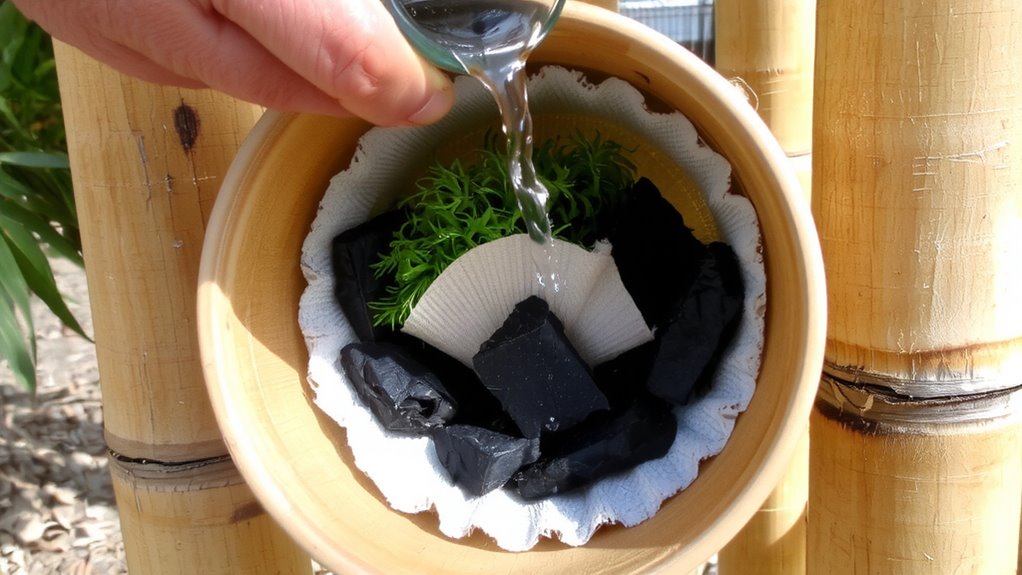
If you’re in a situation where clean water isn’t available, building a simple filter from bamboo charcoal and moss can give you a basic level of purification. Start with filter design: use a hollow bamboo section or a plastic bottle with a small hole at the bottom. Layer it from bottom to top with fine cloth, moss, crushed bamboo charcoal, and more moss. Secure each layer to prevent mixing. For material sourcing, gather moss from damp, shaded areas and guarantee it’s free from visible contaminants. Use natural bamboo charcoal, not store-bought briquettes with additives. Crush it to pea-sized pieces for effective flow and filtration. The design allows gravity to pull water through the layers. You’ll see slower flow with finer charcoal, but it increases contact time. This method doesn’t sterilize water, but it helps reduce debris and some impurities. It’s low-cost and functional when resources are limited.
What This Filter Removes (And Doesn’t)
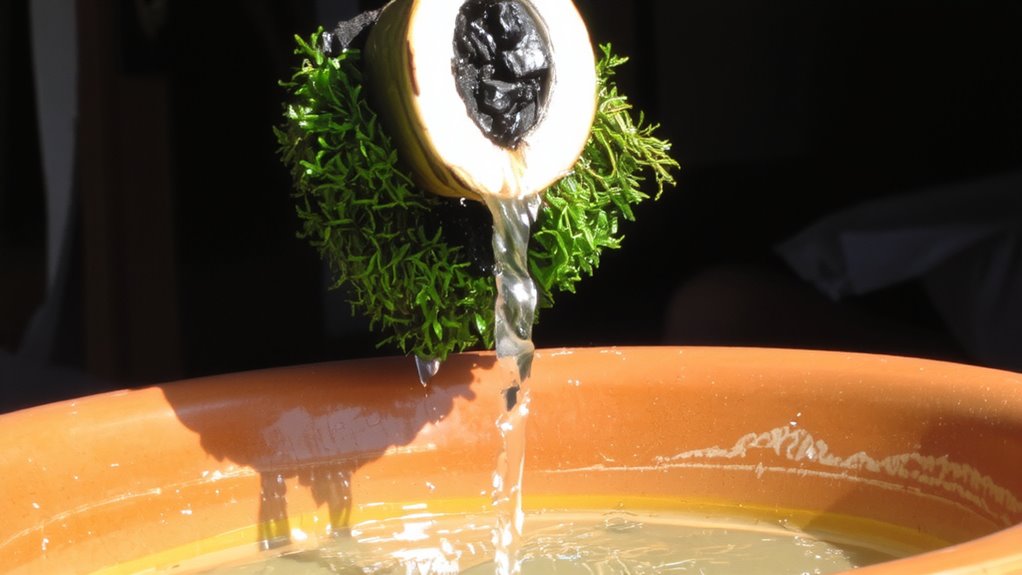
This filter tackles visible debris and some chemical impurities, but don’t expect it to make unsafe water completely drinkable. It helps reduce chlorine, odors, and minor contaminants through activated bamboo charcoal’s porous structure. You’ll see improvement in taste and clarity, but it doesn’t remove all pathogens or dissolved solids. Heavy metals like lead or mercury may be partially absorbed, but not reliably or to safe levels without additional filtration. Microplastics, due to their small size, often pass through unless trapped by dense moss layers-this isn’t guaranteed. It won’t replace a certified water purifier in high-risk environments. Use it for light filtering in relatively clean sources, not contaminated rivers or industrial runoff. There’s value in its simplicity, but know its limits. It’s a field expedient option, not a lab-tested solution. Rely on it for basic improvement, not full protection.
How To Maintain And Recharge Your Filter
You get cleaner, better-tasting water with this bamboo charcoal and moss filter, but only if you keep it in working order. Clean it every two weeks to prevent clogging-just rinse under warm water and scrub lightly with a soft brush. This cleaning frequency guarantees consistent flow and filtration. After boiling the charcoal block for 10 minutes every four weeks, let it dry fully before reuse; this recharges its pores. Moss lasts about two months under regular use, but replace it sooner if it turns dark or slimy. Watch for replacement indicators: slower flow, off-taste, or visible debris buildup. These signs mean efficiency has dropped. Charcoal performs best for three to six months, depending on water quality. Over time, adsorption slows, even with recharging. No part lasts forever. Monitoring these factors keeps your filter effective without guesswork.
5 Uses For Used Bamboo Charcoal And Moss Filter Materials
Most spent bamboo charcoal and moss filter materials can be repurposed effectively rather than tossed. You can use them as a compost additive to balance pH and improve soil structure, or spread them as garden mulch to retain moisture and deter pests. Breaking them down into smaller pieces increases surface area, boosting their effectiveness in soil applications. While they won’t filter water anymore, their natural properties still offer measurable benefits in the garden.
| Use Case | Benefit | Notes |
|---|---|---|
| Garden mulch | Retains soil moisture | Apply 1–2 inch layer around plants |
| Compost additive | Enhances microbial activity | Mix 10–15% by volume |
| Odor neutralizer | Absorbs fridge or shoe odors | Dry thoroughly before reuse |
| Pest deterrent | Discourages slugs and ants | Scatter chunks near vulnerable plants |
| Soil amendment | Improves drainage and aeration | Best for potted plants and garden beds |
On a final note
This filter cuts sediment, improves taste, and reduces chlorine using natural materials, but won’t remove bacteria or viruses. Bamboo charcoal lasts 3–6 months; moss needs replacing every few weeks. Recharge charcoal by boiling or sun exposure. It’s affordable and easy to build, but slower than commercial filters. Best for short-term or emergency use, not full purification. Trade effectiveness for simplicity.