Nighttime Evacuation Plan for Elderly & Disabled Household Members
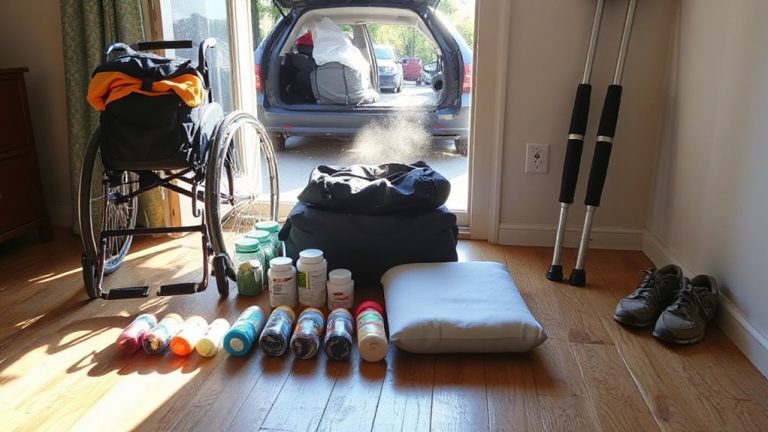
You need a plan that accounts for slower movement and sensory limits at night. Test mobility in darkness and guarantee alarms include strobe lights (110+ candela) and bed shakers for the hearing impaired. Keep escape paths wide (36+ inches), glare-free, and equipped with tactile markers. Assign reliable helpers and back-ups using a buddy system. Run timed drills monthly in total darkness. Success means everyone exits in under 3 minutes-refine roles or tools if not. More details follow on optimizing each step.
Notable Insights
- Assess mobility and sensory needs regularly, especially in low-light conditions, to identify evacuation challenges.
- Design escape routes with wide, glare-free paths, tactile markers, and ramps for wheelchair and low-vision access.
- Install multi-sensory alert systems with strobe lights and bed-shaking vibrations for deaf, blind, or non-ambulatory members.
- Assign reliable buddies and backup helpers to assist individuals with disabilities during nighttime evacuations.
- Conduct monthly night drills in darkness to test routes, equipment, and response times under realistic conditions.
Assess Mobility and Sensory Needs for Night Evacuation
You’ll need to start by evaluating your mobility and sensory abilities under low-light conditions, since most nighttime evacuations happen when visibility is poor and reaction time is limited. Conduct regular mobility assessments to determine how quickly you can move from bed to exit, noting any reliance on canes, walkers, or assistance. Test your ability on stairs, uneven surfaces, and in complete darkness. Pair this with sensory evaluations-check how well you hear alarms, detect smoke, or respond to touch alerts. Hearing aids, glasses, or neuropathy can reduce effectiveness. Use a decibel meter to verify alarm audibility and consider vibration devices if hearing is impaired. Document each test result to identify gaps. These assessments aren’t one-time tasks-they should be repeated every six months or after medical changes. Accurate evaluations mean your plan matches real-world performance, not assumptions. That’s how you guarantee reliability when it counts.
Plan Accessible Escape Routes for Wheelchairs and Low Vision
Once mobility and sensory limits are mapped, designing escape routes that accommodate wheelchairs or low vision becomes the next step in building a reliable evacuation plan. You need wide corridors-minimum 36 inches-to let wheelchairs pass without turns or obstructions. Straight paths reduce delay and confusion during low visibility. If a hallway narrows, consider relocating the escape route or modifying walls. For low vision, install tactile markers along floors near exits and stairways. These raised, textured strips can be felt underfoot or with a cane, guiding movement without relying on sight. Place them consistently so positioning becomes predictable. Avoid glossy finishes that cause glare. Test each route at night with lights off to confirm it’s navigable. Ramps should have a 1:12 slope and non-slip surfaces. Every planned path must lead directly outdoors or to a safe interior area.
Install Alert Systems for Deaf, Blind, or Non-Ambulatory Members
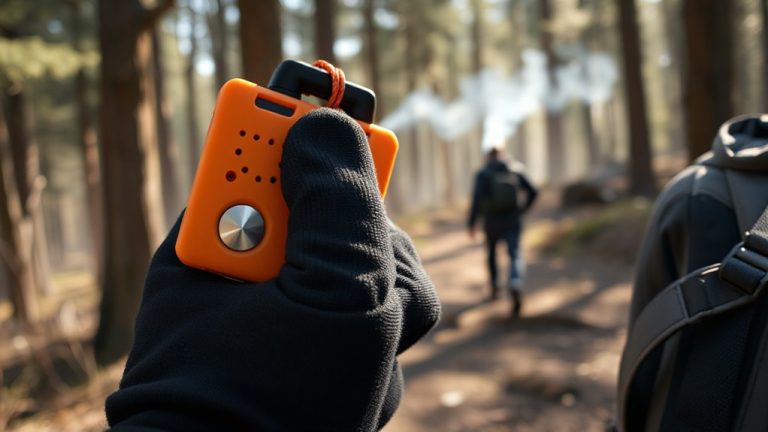
If you’re responsible for someone who’s deaf, blind, or unable to move independently, standard smoke alarms won’t be enough-alert systems need to engage multiple senses and function without relying on sound or mobility. Use alert systems that combine visual alarms, like bright strobe lights, with vibrating pads placed under the mattress or pillow. These systems activate when smoke or carbon monoxide detectors trigger, guaranteeing non-auditory signals reach the person. Visual alarms should meet NFPA standards, with strobes of at least 110 candela for effectiveness in dark or smoky rooms. Auditory signals alone are insufficient for the deaf or hard of hearing, so integrating tactile alerts improves response time. For non-ambulatory users, position alert devices within immediate reach and test them monthly. Systems with wireless synchronization across multiple rooms guarantee consistent notifications. Relying only on sound increases risk-layering visual alarms and physical vibration provides a dependable, multi-sensory warning you can verify during drills.
Assign Who Helps Whom During the Evacuation
After setting up alert systems that deliver warnings through light and vibration, the next step is knowing exactly who assists whom when it’s time to get out. You must assign designated assistance for each person with mobility, sensory, or cognitive limitations. This isn’t optional-it’s a functional requirement for a viable evacuation. Use a buddy system: pair every elderly or disabled member with a capable helper who knows their needs and escape route. The helper guarantees contact, communicates instructions, and provides physical support if needed. Assign backups in case the primary helper is unavailable. Clearly document these roles and keep a printed copy by every bedroom door. Roles should be based on strength, proximity, and reliability-not assumptions. A well-matched buddy system reduces delays and confusion. This level of planning doesn’t guarantee safety, but it markedly improves response effectiveness when seconds count.
Run Realistic Night Evacuation Drills Monthly
You’ll typically need to react faster during nighttime evacuations because disorientation and limited visibility increase risk, especially for elderly or disabled individuals. Running realistic night drills prepares everyone for these conditions. Practice moving through dark hallways using flashlights or motion-sensor lights, testing mobility aids and communication methods. Use your actual emergency routes and timing to identify delays or obstacles. Night drills should simulate real scenarios-no warnings, full darkness, and only the tools you’d have on hand. Conduct them with monthly timing to maintain readiness without overburdening participants. Monthly practice balances retention with practicality, ensuring routines stay sharp but don’t cause fatigue. Adjust roles or tools if delays exceed 3 minutes. Document each drill’s start time, exit time, and issues. Review results to improve coordination and equipment. Realistic monthly night drills increase speed, reduce confusion, and verify your plan works when it matters most. A reliable light source like a best flashlight for power outages ensures visibility and safety during these critical moments.
On a final note
You need a plan that works when it’s dark and stressful. Test your routes monthly-real stairs, real wheelchairs, real sleep-deprived minds. Alerts must wake deep sleepers and reach those who can’t hear or see. Assign helpers, but confirm they can lift or guide without injury. Drills reveal flaws no checklist catches. If a route fails once, it’s not reliable. Speed matters, but safety matters more. Adjust until every exit is clear, known, and doable.