Assessing Risk of Carbon Monoxide Poisoning From Gas Ovens
Your gas oven can produce carbon monoxide if the flame burns inefficiently-often due to poor ventilation, dirty burners, or a blocked flue. A yellow or flickering flame means trouble. Without a working CO detector, like the Kidde Nighthawk with its 85 dB alarm and lab-verified sensor, you’re risking undetected exposure. Symptoms like headaches or nausea can escalate fast, especially in children or the elderly. Install a detector within 10 feet of the oven and maintain it yearly. You’re not safe if you’re unsure about your oven’s combustion or ventilation.
Notable Insights
- Gas ovens produce carbon monoxide if combustion is incomplete due to low oxygen or dirty burners.
- A yellow or flickering flame indicates inefficient burning and potential CO buildup in the kitchen.
- Using a gas oven for heating increases CO risk due to lack of ventilation and safety controls.
- Early CO poisoning symptoms include headaches, dizziness, nausea, and confusion, often mistaken for flu.
- Install a certified CO detector within 10 feet of the oven and maintain it regularly for early warning.
How Gas Ovens Create Carbon Monoxide
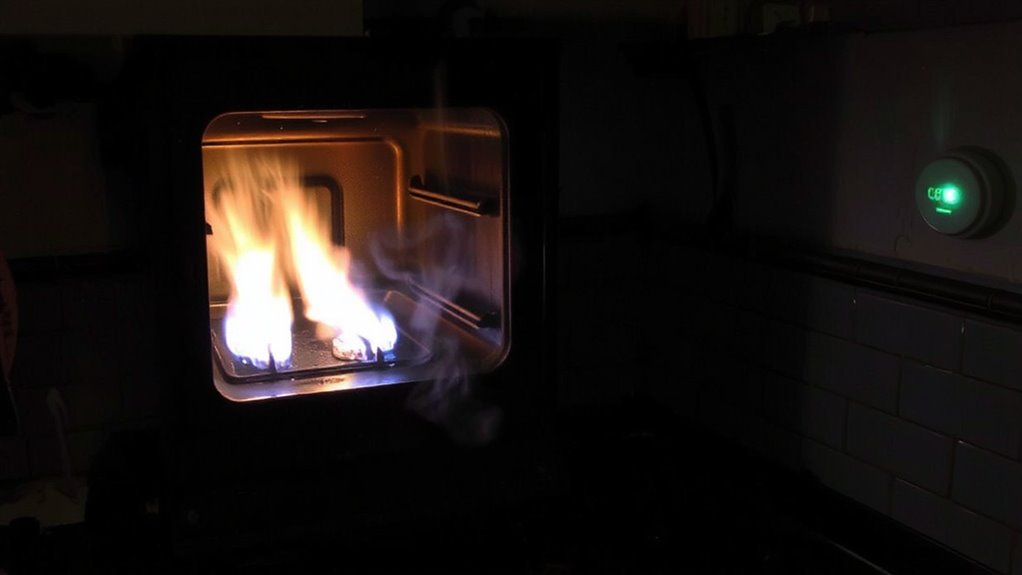
A flame is the starting point, and yours in the gas oven produces carbon monoxide as a byproduct of burning natural gas. You get this gas when combustion isn’t complete-what’s called incomplete combustion. It happens when there’s too little oxygen, dirty burners, or blocked vents. Your oven’s flame should be mostly blue; yellow or flickering means gas flame anomalies. Those are warning signs. Proper airflow and burner maintenance reduce risk. You can’t see or smell carbon monoxide, so relying on flame appearance is practical. Units with oxygen depletion sensors add safety, but most standard ovens don’t have them. Running your oven continuously, especially for heating, increases CO levels. Never use the oven without ventilation. Faulty ignition or misaligned burners worsens incomplete combustion. Inspect regularly. Keep burners clean. A stable blue flame means efficient burning. An unstable one means problems. You need consistency. Small flaws escalate. Watch for soot or popping sounds-direct indicators. Prevention is measurable, not optional.
Symptoms of Carbon Monoxide Poisoning
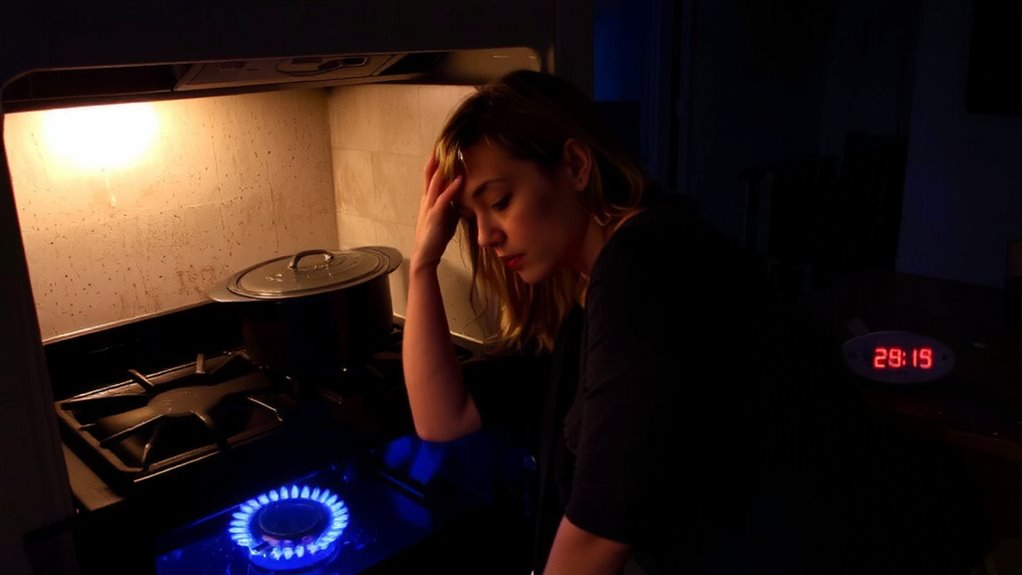
What would you do if your body started warning you without naming the threat? You might feel a headache dizziness creeping in-mild at first, then persistent. It’s not just fatigue; it’s a sign your cells aren’t getting enough oxygen. Nausea vomiting could follow, often mistaken for the flu. You might feel lightheaded when standing or notice confusion during simple tasks. These symptoms worsen steadily without fresh air. Carbon monoxide binds to your blood faster than oxygen, so even low exposure over time is dangerous. The risk increases in enclosed spaces with poor ventilation. You won’t smell or see the gas, so physical reactions are your only clue early on. If multiple people or pets show similar symptoms simultaneously, treat it as an emergency. Immediate action-leaving the area and seeking air-can prevent collapse or worse. Recognition is critical because symptoms progress silently.
Why You Should Never Use a Gas Oven for Heat
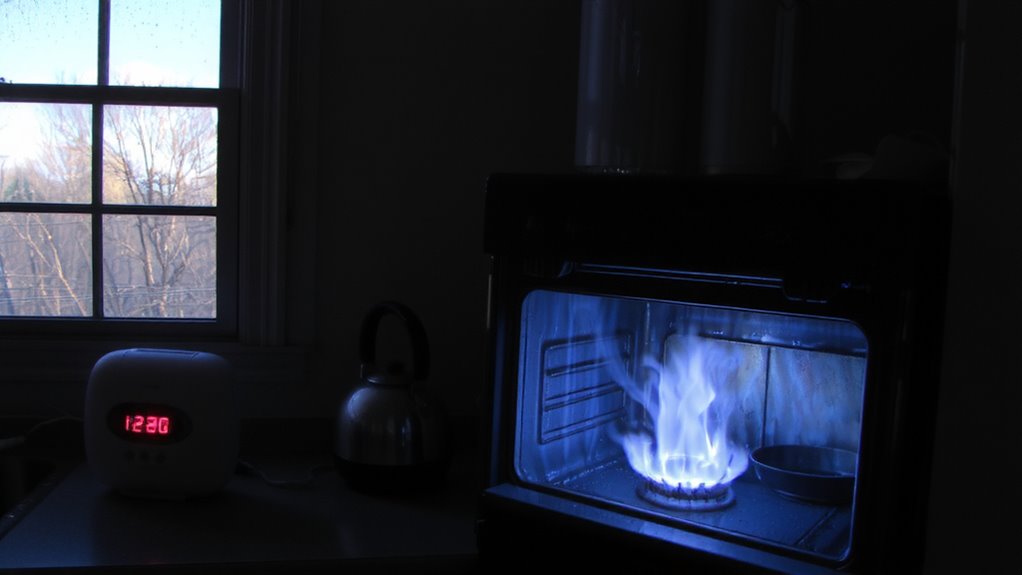
Even though your gas oven produces heat when cooking, it’s not designed to handle continuous operation for space heating, and running it for hours can generate dangerous levels of carbon monoxide. You’re risking serious safety hazards with this improper usage. Gas ovens lack the ventilation and safety controls found in heating systems, so extended use leads to incomplete combustion and CO buildup. You won’t see or smell it, but exposure can cause dizziness, nausea, or even death. Homes with children, elderly individuals, or poor ventilation face higher risks. There’s no safe scenario for using a gas oven as a heater-period. The small amount of heat isn’t worth the potential fatality. Stick to using appliances as intended. Heating systems are built to handle long cycles safely. Improper usage turns a functional kitchen tool into a silent threat. Always prioritize proper equipment to avoid preventable danger.
Best CO Detectors for Kitchen Safety
How do you know if your kitchen is truly safe from carbon monoxide? You rely on a detector built for performance, not promises. Look for models with high sensor accuracy-consistent readings mean fewer false alarms and better protection. Units like the Kidde Nighthawk or First Alert Onelink offer lab-verified sensors that respond reliably to low-level CO over time. Alarm volume matters just as much; choose one with at least 85 decibels so it’s heard over kitchen noise. A delayed alert could be deadly, so prioritize detectors that combine fast response with clear, loud warnings. Install one within 10 feet of your oven but not right next to it to avoid nuisance triggers. These devices aren’t foolproof, but with solid sensor accuracy and sufficient alarm volume, they deliver the early warning you need. Check them monthly and replace every five to seven years.
Ventilate to Prevent CO Buildup
You’ve installed a reliable CO detector with accurate sensing and a loud alarm, but that’s only one part of kitchen safety. Proper ventilation is critical to prevent carbon monoxide buildup when using a gas oven. Without it, even small leaks or incomplete combustion can accumulate hazardous levels over time. Always turn on your range hood during and after use-it’s designed to improve air circulation and remove combustion byproducts. If you don’t have a hood, open nearby windows to create cross-ventilation. Use exhaust fans that vent outdoors, not recirculate indoor air. Effective air circulation reduces exposure risk, especially during long cooking sessions or malfunctioning burners. Testing shows rooms with poor airflow can reach unsafe CO levels in under an hour. You can’t smell or see CO, so relying on detection alone isn’t enough. Combine working detectors with consistent ventilation habits. It’s a practical, measurable way to lower risk where it matters-your kitchen air quality.
When to Call a Pro for Oven Repairs
Why risk a repair that could turn deadly? If you smell gas or hear hissing near your oven, you’ve got gas leaks-shut it off and call a pro immediately. These aren’t DIY fixes; even small leaks raise carbon monoxide risks. If your pilot light won’t stay lit or flickers yellow instead of burning blue, that’s inefficient combustion, a red flag for CO production. You might think relighting it helps, but recurring pilot light issues mean underlying problems a technician can diagnose. Cracked burners, faulty valves, or vent blockages require tools and training you likely don’t have. Professionals use gas detectors and pressure tests to confirm safety. Skipping expert help may save time now but risks long-term exposure. When it comes to gas leaks or persistent pilot light issues, calling a licensed technician isn’t overkill-it’s the bare minimum for staying safe.
On a final note
You need a working CO detector near your kitchen-tested units like the Kidde Nighthawk respond in under 30 seconds to 70 ppm. Gas ovens produce CO during combustion, especially if malfunctioning or misused. Never use them for heating; doing so risks lethal buildup. Ventilate with range hoods or open windows to reduce concentrations. If you smell gas or get headaches, leave and call a pro. Proper maintenance prevents most issues. Safety isn’t optional-it’s measurable.