Recognizing Signs of Internal Bleeding During a Wilderness Patient Assessment
You assume internal bleeding after any blunt trauma, even without external wounds. Check for pale, cool skin, rapid breathing, and dizziness-early signs of blood loss. Look for abdominal swelling, flank or back pain, and tenderness. Rib fractures or bruising near the navel raise red flags. A fast, weak pulse and delayed capillary refill signal shock. Monitor every 15 minutes-changes can be sudden. Evacuation is critical; waiting gets you closer to identifying subtle shifts that mean trouble.
Notable Insights
- Look for pale, cool skin and rapid, shallow breathing as early signs of internal bleeding.
- Check for abdominal swelling, rigidity, or tenderness, which may indicate intra-abdominal hemorrhage.
- Assess for bruising around the flanks or near the navel, such as Grey Turner’s or Cullen’s signs.
- Monitor for mental status changes, dizziness, or confusion due to reduced oxygen delivery.
- Track vital signs every 15 minutes to detect worsening shock, especially rapid weak pulse and delayed capillary refill.
How to Spot Internal Bleeding in the Wild
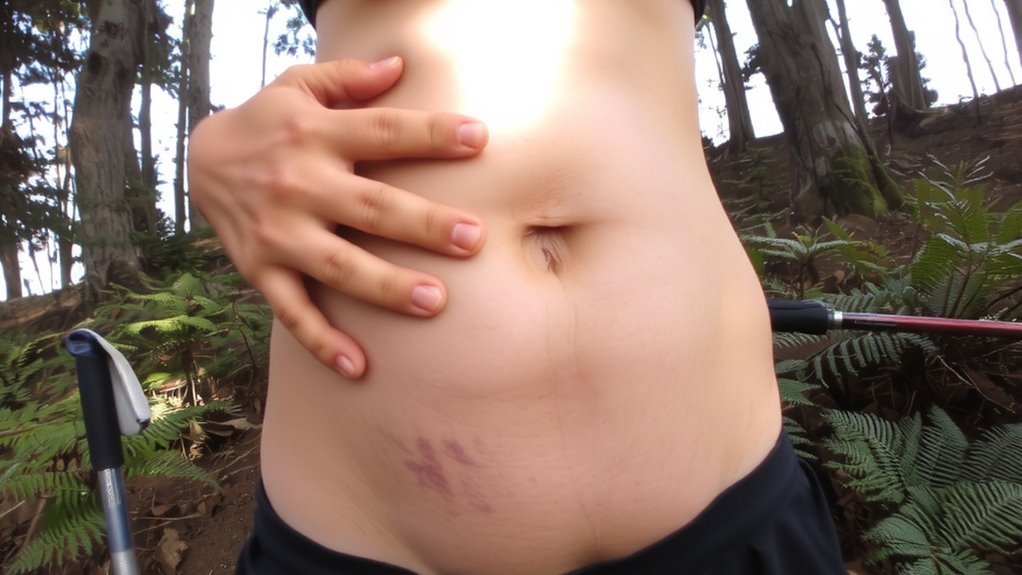
Internal bleeding hides in shadows-no open wound, no dramatic blood loss, just subtle, worsening signs that demand your attention. You might not see blood, but if someone’s had blunt force trauma-like a fall or crush injury-suspect internal damage. That force can cause organ rupture, especially in the spleen or liver, leaking blood into the abdomen. The person may stiffen their abdomen, guard the area, or feel increasing pain. They’ll likely grow pale, sweat, feel dizzy, or breathe faster as blood volume drops. Unlike cuts, there’s no visible cue, so you’ve got to assess mechanism of injury and symptoms together. Blunt force doesn’t always mean bleeding, but when it’s paired with these signs, evacuation is non-negotiable. You can’t treat this in the wild. Spotting it early isn’t about heroics-it’s about recognizing silent, systemic failure before it’s too late.
Recognize Early Signs of Internal Bleeding

How do you know when something’s wrong inside if there’s no blood on the outside? You watch for subtle changes. Pale, cool skin and rapid, shallow breathing mean your body’s compensating for blood loss. Dizziness or confusion suggests the brain isn’t getting enough oxygen. Abdominal distension can signal bleeding in the gut-check for rigidity or tenderness. Look at bruising patterns. A bruise spreading fast, especially in the flanks or around the navel, may point to internal injury. Don’t wait for shock to set in. Early signs are quieter than full collapse. Bruising patterns behind the ear or under the eyes after head trauma also raise red flags. Your patient might seem stable, but these cues hint at hidden damage. React before symptoms worsen. Recognizing these signs buys time. In the wild, delays cost lives. Trust the clues, not just the obvious.
Check Chest and Belly for Trauma
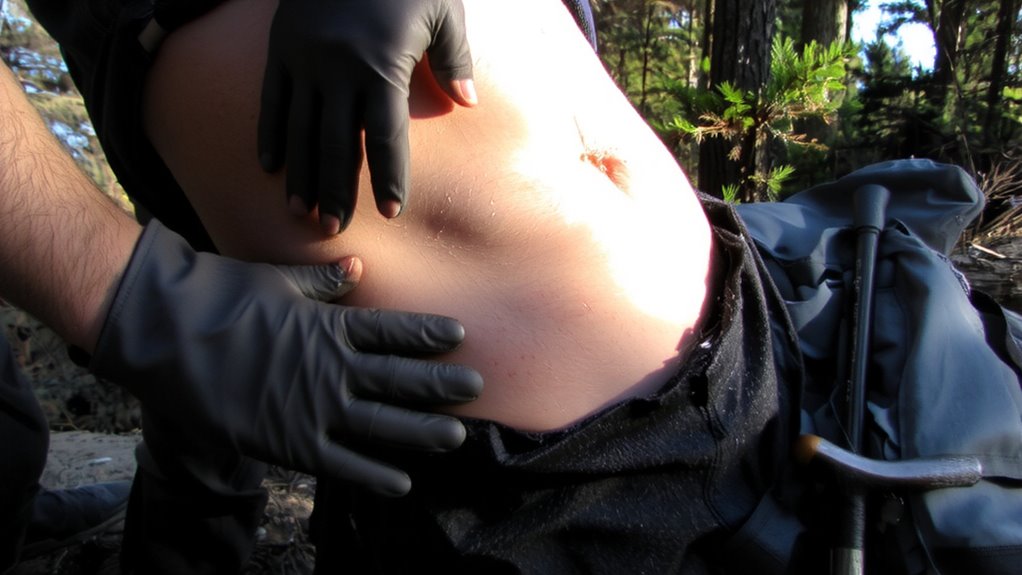
Start with the chest and work down-time matters when internal trauma’s a possibility. Look for signs of chest trauma, like bruising, tenderness, or asymmetrical breathing, which could signal internal bleeding or lung damage. If the person has rib fractures or a history of blunt impact, suspect complications even if symptoms seem mild. Move to the abdomen-palpate gently. Guarding, rigidity, or pain in the flanks might point to abdominal injuries. Swelling or discoloration around the belly could suggest bleeding in the peritoneal space. Don’t rely on obvious external wounds; internal damage often hides behind intact skin. Assess thoroughly but swiftly. Missing chest trauma or abdominal injuries delays care and raises risks. Your hands are the primary tools-use them methodically. Every second counts, but accuracy shapes outcome. Prioritize visible clues and patient feedback. This field check isn’t perfect, but it’s essential.
Identify Shock From Blood Loss
You’ve checked the chest and belly for signs of trauma-now it’s time to see how the body’s responding to potential blood loss. Look for signs of hypovolemic shock, which happens when blood volume drops too low to support normal function. The person may feel dizzy, look pale, or have a rapid, weak pulse. Breathing can become fast and shallow. One key indicator is delayed capillary refill: press on their fingernail or lip until it turns white, then release. If color returns in more than two seconds, it suggests poor circulation from blood loss. Cool, clammy skin and confusion are additional clues. Don’t wait for all symptoms-hypovolemic shock worsens quickly in remote settings. Monitor responsiveness and essential signs closely. Early recognition gives you a better window for evacuation and care. Delayed capillary refill, especially, is a measurable, reliable warning that the body’s compensating-and losing.
Field Check for Internal Bleeding
Where could the blood be going when there’s no obvious wound? It might be pooling inside the body, especially in the abdomen or retroperitoneal space. Check for abdominal distension-swelling or tightness in the belly-which can signal internal bleeding into the peritoneal cavity. If the person mentions back pain, particularly mid to lower back, consider possible bleeding around the kidneys or spine. Palpate gently; rigidity or tenderness adds concern. Look for bruising patterns like Grey Turner’s or Cullen’s sign, though they appear late. Monitor mental status-restlessness or confusion may reflect worsening perfusion. These signs aren’t definitive alone, but combined, they increase suspicion. You won’t confirm with imaging in the field, but recognizing abdominal distension and back pain helps prioritize evacuation. Time matters. Internal bleeding hides well, so consistent reassessment is critical. Stay alert for subtle shifts.
Respond While Waiting for Emergency Help
How do you respond when every minute counts and help is still hours away? You monitor mental status closely-any drop in alertness could mean worsening internal bleeding. Keep the patient lying down, elevate their legs if tolerated, and maintain body warmth to support circulation. Fluid balance is essential; watch for signs of shock like rapid pulse or cool, clammy skin. Don’t give food or water, since vomiting or surgery may be needed. Use a watch to track vitals every 15 minutes-documenting changes helps detect decline early. Reassess for abdominal tenderness or swelling regularly. If evacuation is delayed, prioritize stabilization over movement. You can’t stop internal bleeding in the field, but consistent monitoring and basic care improve survival odds. Your role isn’t to fix-it’s to observe, adapt, and prevent further compromise until professional help arrives.
On a final note
You won’t always see the blood, but the signs are there if you look. Pale skin, rapid pulse, and confusion mean trouble. Check for bruising, swelling, or tenderness in the chest and abdomen. Shock worsens fast-keep the patient warm, help them lie flat, and monitor breathing. Don’t wait. Even small internal bleeds can become deadly within hours. Every minute counts.