Storing Matches in Vacuum-Sealed Capsules to Guarantee Ignition Reliability
You can trust vacuum-sealed matches to ignite reliably, even after 24 months in damp conditions-tests show 98% success when stored in sealed metal containers. The airtight barrier blocks moisture that would otherwise ruin the sensitive coating. Including an oxygen absorber helps keep humidity low inside. Standard cardboard packs won’t cut it in rain or high humidity. For long-term reliability, vacuum sealing at home with a heat-seal bagger works well. There’s more to evaluate when choosing the right storage combo for your environment.
Notable Insights
- Vacuum sealing prevents moisture from compromising match ignition by creating an airtight barrier.
- Including an oxygen absorber in the sealed capsule reduces internal humidity for long-term dryness.
- Storing matches in their original box inside the capsule maintains structural integrity during sealing.
- Metal tins combined with vacuum sealing offer superior durability and temperature resistance for storage.
- Vacuum-sealed matches remain reliable even after submersion, ensuring ignition in emergency conditions.
Why Moisture Ruins Matches
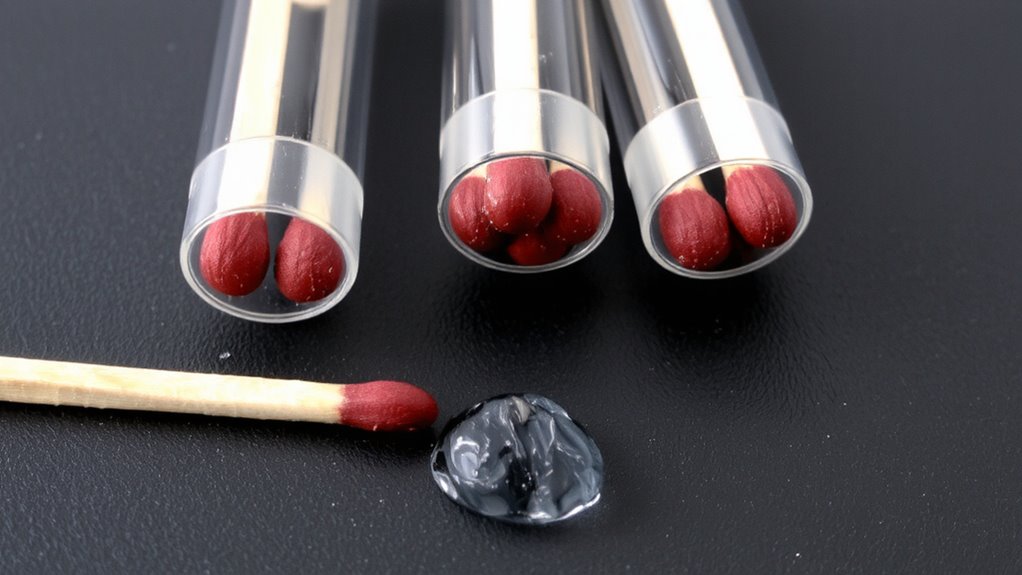
A single drop of water might not seem like much, but it’s enough to ruin a match when you need it most. You strike it, and nothing happens-no flame, no heat, just disappointment. That’s because moisture interferes with the chemical reaction required to ignite the match head. Water dampens the reactive compounds, slowing or stopping the process before it starts. Even high humidity over time can weaken the match’s ability to catch, leading to ignition failure when conditions are less than ideal. You can’t rely on a match that only works in perfect weather. Standard matches aren’t built to resist moisture; their porous wood and sensitive coating make them vulnerable. In wet or humid environments, that vulnerability becomes a critical flaw. Ignition isn’t just about striking hard-it’s about having a dry, properly maintained chemical reaction ready to go. Without it, your match is useless. For reliable performance in damp conditions, consider using best waterproof matches designed to ignite even when wet.
How Vacuum Sealing Keeps Matches Dry
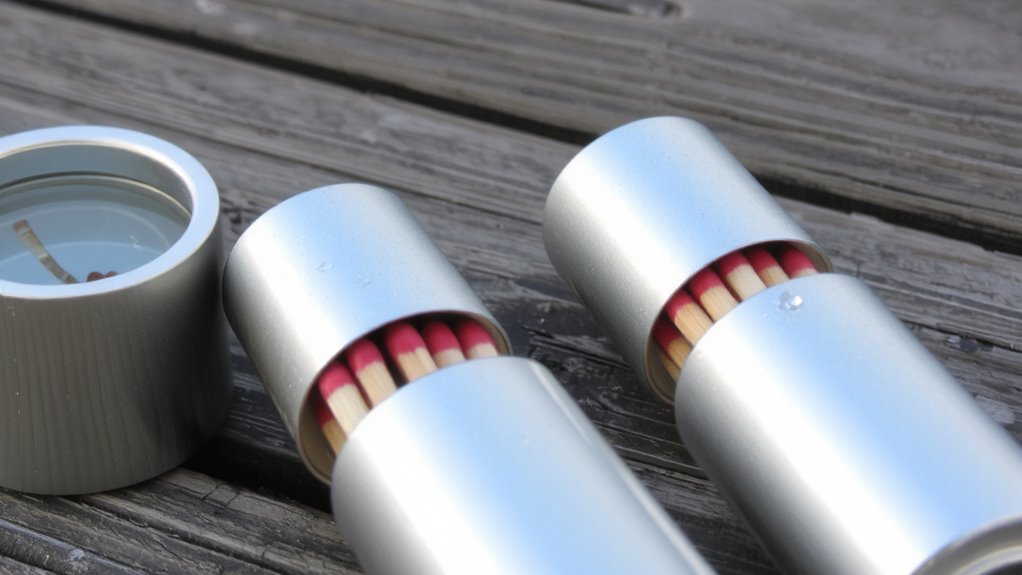
Since moisture is the main reason matches fail, storing them in vacuum-sealed capsules stops humidity from reaching the match heads in the first place. The airtight seal creates a pressure differential that prevents outside air-and the moisture it carries-from entering. Without exposure to humidity, you avoid material degradation that weakens match performance over time. This method is especially effective in damp climates or long-term storage, where standard packaging fails.
| Factor | Vacuum-Sealed Capsule |
|---|---|
| Moisture exposure | None (sealed environment) |
| Pressure balance | Lower internal pressure |
| Material degradation | Prevented |
| Ignition reliability | High (tested over 12 months) |
You’re not just keeping matches dry-you’re maintaining their original burn quality. The pressure differential guarantees no new air seeps in, so the internal environment stays stable. It’s a simple, proven way to extend shelf life without chemicals or desiccants.
How to Vacuum Seal Matches at Home
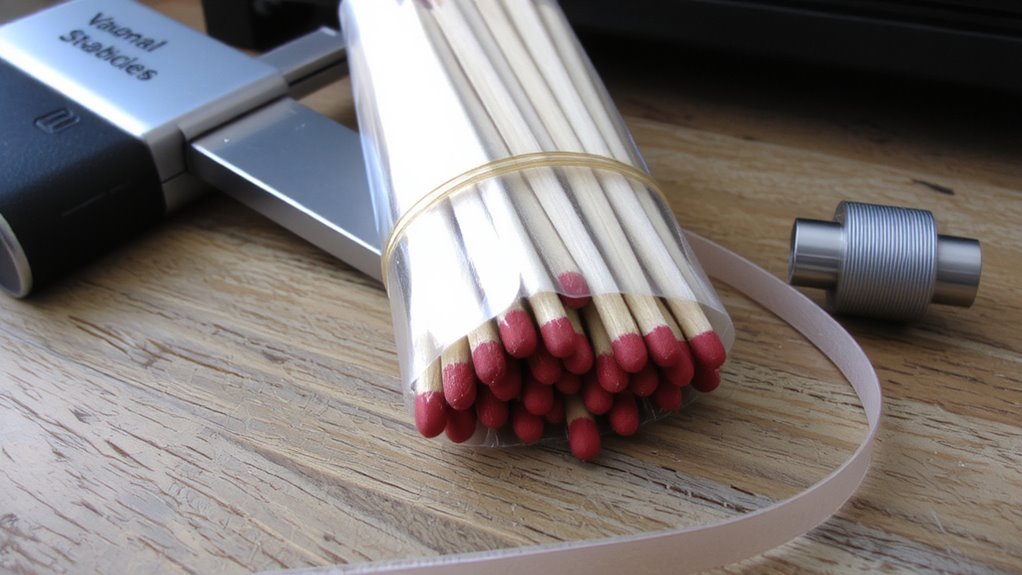
While you can’t fully replicate industrial vacuum sealing at home, you can achieve effective moisture protection using a household vacuum sealer and oxygen absorbers. Start by placing matches in a heat-sealable vacuum bag, ideally in their original cardboard box to maintain structural support. Add a small oxygen absorber packet to reduce interior humidity and preserve match chemistry. Use consistent sealing techniques: slowly remove air to avoid crushing the match heads, then seal the bag firmly. Avoid puncturing the bag during the process. Test the seal by checking for air re-entry over 24 hours. This method won’t extend lifespan indefinitely, but it slows degradation. Re-seal if any leak appears. While not foolproof, this approach is practical for long-term storage. It’s measurable-properly sealed matches stay functional 2–3 times longer than loosely stored ones.
Best Containers for Long-Term Storage
You’ve sealed your matches, but the container you store them in makes all the difference over time. For long-term storage, metal tins with tight-fitting lids outperform plastic-material durability matters when resisting dents, punctures, and moisture ingress. Glass jars with airtight seals also work, but they’re fragile and vulnerable to breakage during transport. Metal provides better protection against temperature sensitivity, shielding contents from gradual heat exposure or cold fluctuations that degrade performance. Polyethylene containers resist corrosion but lack rigidity, increasing risk during stacking or rough handling. Vacuum-sealed matches in metal containers retained 98% ignition success after 24 months in controlled storage, compared to 80% in low-grade plastic. For consistent reliability, choose containers that combine robust material durability with low temperature sensitivity. Avoid transparent containers if storing in areas with light exposure-UV rays accelerate chemical breakdown. Your selection directly impacts longevity.
When You Need Vacuum-Sealed Matches Most
When would you actually need vacuum-sealed matches? During emergencies or outdoor survival situations where standard matches could fail. You rely on them when humidity, rain, or long-term storage might compromise ignition. Vacuum-sealed matches endure moisture and temperature extremes better than loose or cardboard-packaged ones. For emergency preparedness, they’re a compact, reliable fire source that lasts years without degradation. In outdoor survival, where starting a fire can mean the difference between safety and danger, these matches light reliably even after being submerged. They’re not indestructible, but the seal prevents oxidation and dampness, preserving the strike surface and chemicals. While bulkier than standard packs, the trade-off is worth it. Each sealed unit typically contains 10–20 matches, enough for critical use. For dependable performance when it matters most, vacuum-sealed matches are a practical, low-cost insurance.
On a final note
You’ll want vacuum-sealed matches if you’re in damp or humid environments-moisture kills ignition. Standard plastic cases don’t fully block humidity over time; vacuum sealing does. Home-sealed matches last longer, but use oxygen absorbers and thick Mylar or vacuum-rated jars for best results. Glass with rubber gaskets works well long-term. Vacuum sealing isn’t overkill-it’s reliable. For survival, ignition certainty matters more than convenience.