Tropical Rainforest Challenges: Unique Dangers and Strategies for Success
Wear ankle-high, puncture-resistant boots-they cut snake bite risk by up to 90%. Use a walking stick to probe ahead; most snakes retreat if warned. Apply 20–50% DEET and sleep under permethrin-treated mosquito nets with 156 holes per square inch. Purify water with 0.2-micron filters or chlorine dioxide tablets, which work in cold water after 30 minutes. Carry a baseplate compass and paper map-GPS often fails. A lightweight tarp, 20L dry bag, and full-tang machete are field-tested essentials. There’s a smarter way to stay safe when you know which gear actually performs.
Notable Insights
- Wear puncture-resistant boots and avoid dense underbrush to drastically reduce venomous snake bite risks.
- Use DEET repellent and permethrin-treated clothing to prevent mosquito-borne diseases like malaria and dengue.
- Purify water with 0.2-micron filters or chlorine dioxide tablets to eliminate dangerous waterborne pathogens.
- Set up low, anchored shelters and avoid high ground or dry riverbeds during sudden rainforest storms.
- Navigate with a map, compass, and landmarks, as jungle trails disappear and GPS often fails.
How to Avoid Deadly Rainforest Animals
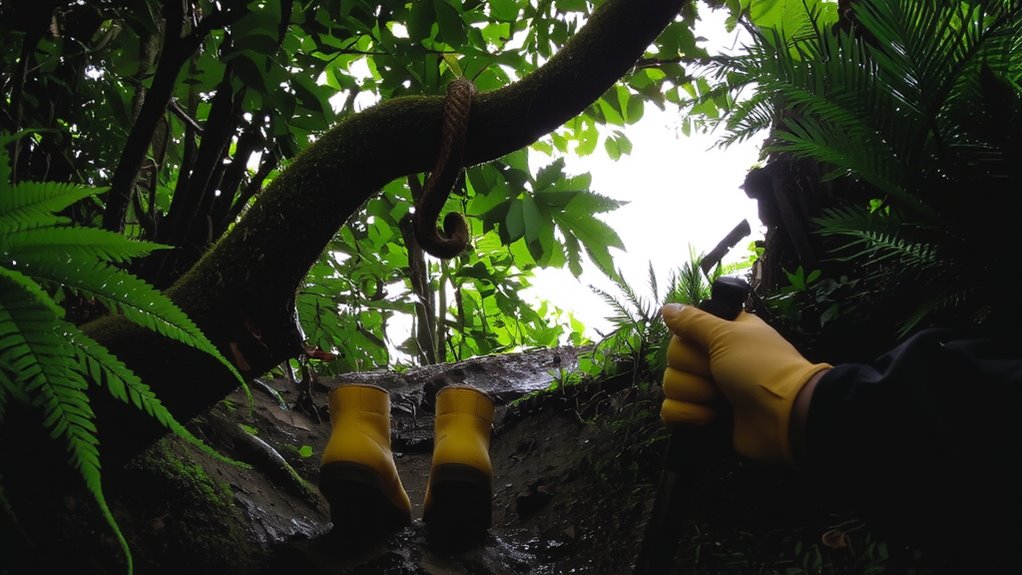
While staying alert can help reduce risks, you’ll need more than vigilance to avoid deadly rainforest animals-practical knowledge and preparation matter most. You should wear ankle-high, puncture-resistant boots; they reduce bite injury risk from venomous snakes by up to 90% compared to standard hiking shoes. Avoid dense underbrush where venomous snakes like bushmasters thermoregulate and strike from cover. Use a walking stick to probe ahead-most snakes retreat if alerted. Predatory cats such as jaguars avoid open areas but track quietly; making noise while moving reduces ambush chances. Travel in groups when possible-predatory cats rarely confront more than two people. Store food securely and downwind of sleeping areas to avoid attracting predators. Night movement increases encounter rates, so limit travel after dusk. Clear a dry, elevated sleeping platform-this minimizes contact with hidden snakes and improves situational awareness.
Stop Mosquitoes and Prevent Jungle Diseases
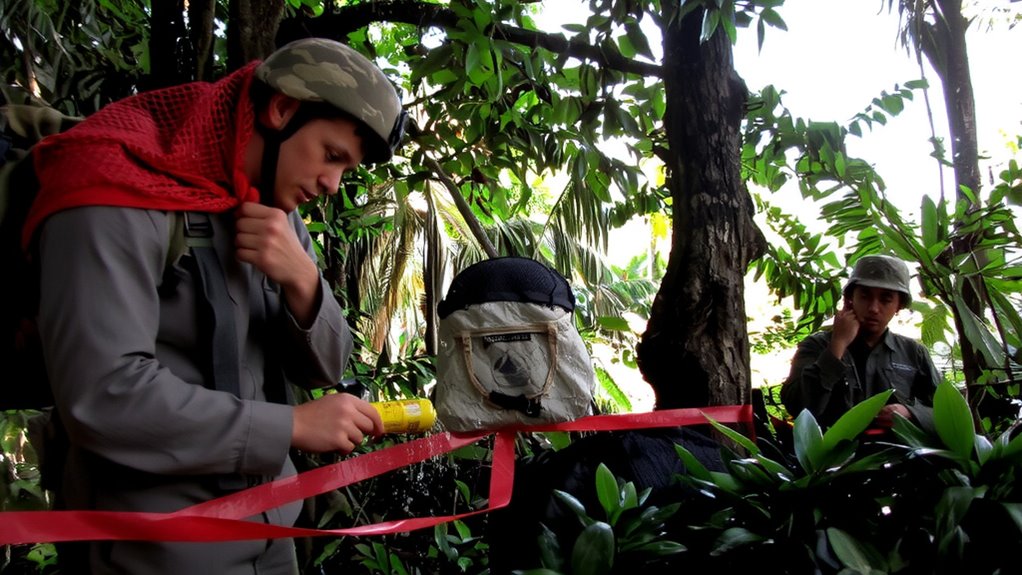
Why do some travelers survive mosquito-heavy rainforests with no issues while others get knocked out by fever in days? It comes down to consistent disease prevention. You need reliable insect repellent with 20–50% DEET-it’s proven to block malaria and dengue carriers. Combine it with permethrin-treated clothing for longer coverage. Mosquito nets with 156 holes per square inch stop bites at night. But disease isn’t only airborne; contaminated water spreads illness too. Use water purification: filters with 0.2-micron pores or chemical tablets like chlorine dioxide. They kill parasites standard boiling might miss. Below are key tools tested in real rainforest conditions:
based on expert-tested options available on Amazon, the best mosquito repellents provide long-lasting protection in high-exposure environments.
| Product | Effectiveness | Notes |
|---|---|---|
| DEET 50% spray | High | Lasts 8 hours, greasy feel |
| Permethrin clothing | Very High | Re-treat after 5 washes |
| 0.2-micron filter | High | Fast, no wait time |
| Chlorine dioxide | High | Works in cold water, 30-min wait |
Stay Safe in Sudden Rainforest Storms
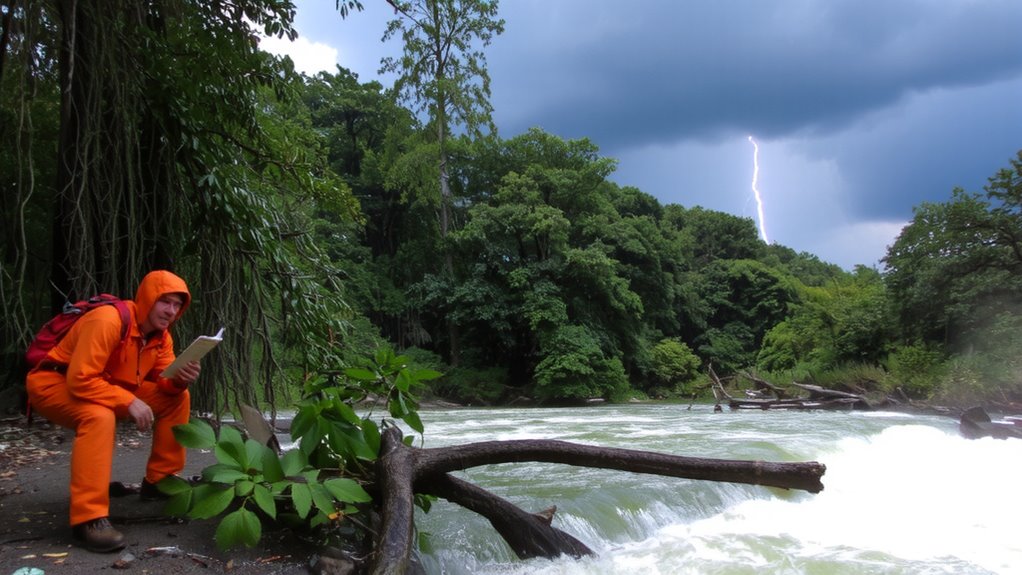
When storms roll in fast, which they often do, having the right shelter and gear makes the difference between staying safe and facing real danger. You can’t rely on forecasts alone-rainforest weather patterns shift quickly, with heavy downpours and lightning appearing with little warning. Lightweight, waterproof tarps or bivvy sacks work well as emergency shelters, especially when anchored low to avoid wind. A poncho liner adds insulation if you’re stuck waiting. Tents with fine mesh and waterproof floors perform reliably but take longer to set up. Avoid ridge lines and dry riverbeds, where runoff or lightning strikes are more likely. Watch for cloud buildups and sudden wind shifts-they’re early signs of approaching storms. Knowing typical weather patterns helps you anticipate risks. Carry a compact emergency shelter rated for rain and wind; models with reinforced corners and guy lines hold up better. Practice setting it up fast-when the rain hits, you won’t have time to figure it out.
How Not to Get Lost in the Jungle
How do you stay found when the green canopy closes in and every tree looks the same? You rely on basic navigation techniques and sharp landmark identification. Trusting your instincts won’t cut it-jungle terrain shifts fast, and trails vanish. Use natural cues: follow rivers downstream, note the sun’s position in clearings, or study moss patterns on tree trunks. These methods work, but they’re only reliable when combined with consistent checks of your position. Look for unique rock formations, fallen logs, or unusual tree shapes-memorable features act as anchors. Mark your path sparingly with non-permanent signals like stacked stones or snapped branches. Over-marking confuses and degrades the environment. GPS devices fail without signal, so don’t depend on them alone. Paper maps and compasses are lighter and always functional. Success isn’t about gear-it’s about awareness, repetition, and verifying your location before you’re unsure. A reliable baseplate compass ensures accurate bearings even in dense foliage.
Must-Have Survival Gear and Jungle Skills
If you’re venturing into the jungle, carrying a lightweight tarp (minimum 8.5 x 5.5 ft, 70-denier nylon or higher) beats a bulky tent-it sheds rain, resists tears, and packs down to the size of a water bottle. Pair it with a 20L dry bag to keep gear dry. For water purification, a ceramic-filter pump (like Sawyer 4.0) removes 99.9999% of bacteria and protozoa; chemical drops are lighter but slower. Tool selection matters-a full-tang machete (18-inch, 450g) clears brush faster than folding knives, though a backup folding saw helps with deadwood. Learn basic knots, shelter framing, and fire-starting with wet tinder. Avoid cotton; wear quick-dry synthetic blends (minimum 150gsm). Navigation relies on a topographic map and Suunto compass-GPS fails when wet or low on battery. Each item balances weight, durability, and utility. Train with gear before relying on it in remote zones where help isn’t reachable. A durable, well-designed bushcraft tarp provides superior shelter and multipurpose utility in harsh jungle conditions.
On a final note
You’ll survive the rainforest by staying alert and prepared. A compass and waterproof GPS work better than phones, which often fail. Your lightweight tarp sheds rain faster than heavier shelters. Insect repellent with 20% DEET cuts mosquito bites by half. Clean water comes from filtered systems, not boiling-pumps save fuel. You move safely by checking terrain ahead. Each tool earns its place by performance, not promises.