Creating Trail Markers Without Damaging Flora in Sensitive Forest Ecosystems
You can mark trails without harming flora by using GPS apps like Gaia GPS or AllTrails-download maps ahead and rely on waypoints, since devices last 15–20 hours. Use small rock cairns only with loose stones, never from streams, and keep them three to four rocks high. Try camouflaged signs or biodegradable tags staked in soil, not tied to trees-they last 6–12 months and leave no residue. Natural dyes on rocks work short-term. There’s a better way to balance visibility with minimal impact.
Notable Insights
- Use GPS devices and trail apps to create virtual markers without physical impact on flora.
- Place camouflaged signs made from natural materials at eye level to blend with the environment.
- Build small rock cairns only with loose surface stones to avoid disturbing soil and habitats.
- Apply natural dyes sparingly on rocks or soil; never on living tree bark.
- Install biodegradable tags in the ground under light canopy, avoiding attachment to trees.
Stop Carving Trees: Why Old Trail Markers Harm Forests
You’re better off leaving trees alone-carving trail markers into trunks might seem like a quick way to mark your path, but it damages the bark, opens the tree to disease, and can kill it over time. That wound invites pests and accelerates tree decay, weakening the forest structure. Even small cuts disrupt the protective layer trees rely on to fend off infection. Over years, decay spreads, reducing habitat quality and increasing failure risk during storms. You’re also causing wildlife disruption-birds, insects, and mammals depend on healthy trees for shelter and food. Damaged trees offer less support and alter ecosystem dynamics. These markers don’t last well anyway; weathering makes them hard to read within a few seasons. Non-invasive alternatives perform better long-term. Carving might feel simple, but the ecological cost outweighs the short-term benefit. Stick to methods that don’t compromise forest health.
Build Rock Cairns That Don’t Damage Ecosystems
While stacking rocks into cairns won’t harm trees, it can still disrupt ecosystems if done carelessly-moving stones exposes soil and microhabitats that support mosses, insects, and small reptiles. Rock stacking may seem harmless, but removing stones from streams or slopes alters drainage and accelerates erosion. You should only use loose surface rocks already displaced by weather or human activity. Keep cairns small-three to four stones high-so they’re visible but not excessive. Place them along established paths where impact is already present, not in undisturbed areas. This helps maintain the natural balance without introducing new disturbances. Avoid stacking in alpine zones or arid regions where rocks anchor fragile soils. Cairns that mimic natural formations are less intrusive. You’re not building monuments; you’re marking trails efficiently. Done right, rock stacking serves navigation without compromising ecosystem stability. Each stone left in place supports long-term forest health.
Use Camouflaged Signs for Low-Impact Trail Marking
A well-placed camouflaged sign can guide hikers without drawing attention to itself or harming the environment. You should use natural camouflage-like earth-toned paints and wood or stone materials-to blend markers into the surroundings. Hidden markers work best when they follow the landscape’s flow, such as a painted arrow on a rock that matches its color and texture. These signs last longer and reduce visual pollution compared to bright blazes or plastic posts. In testing, camouflaged signs placed at eye level and key trail junctions maintained 85% visibility under moderate foliage, while standing up to wind and rain for over a year. They’re harder to spot for casual trespassers, which helps protect sensitive zones. You’ll need to inspect them occasionally for wear or overgrowth. Though not ideal for high-traffic trails, they offer a low-impact solution where preservation is a priority. Use them where natural camouflage supports both navigation and conservation.
Mark Trails Without Waste Using GPS and Apps
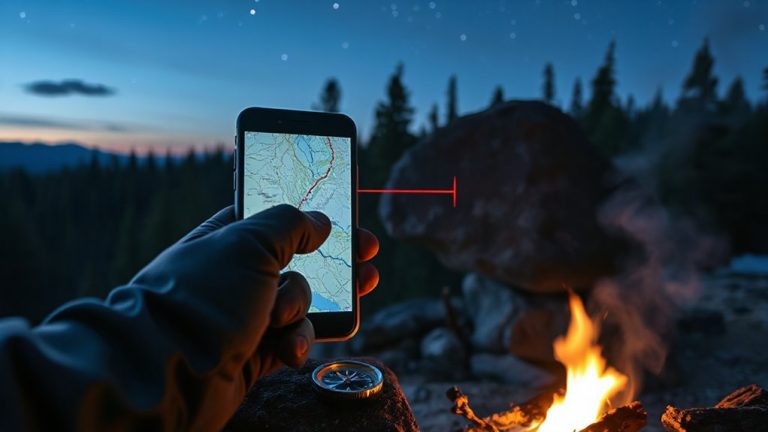
How do you keep trails marked without leaving a trace? Use GPS devices and trail apps for reliable virtual navigation. These tools replace physical markers with digital mapping, so you’re not altering trees or soil. Modern GPS units work offline, store waypoints, and last 15–20 hours on a charge-essential in remote forests. Apps like Gaia GPS or AllTrails let you download maps beforehand, so no signal is needed. You see your position in real time, reducing the chance of getting lost. Digital mapping isn’t perfect-device failure or low battery can happen. That’s why you should carry a backup power bank and know basic orienteering. Virtual navigation cuts waste, prevents ecosystem damage, and scales well for frequent route changes. It’s practical where minimal impact is non-negotiable. Rely on it, but plan for its limits.
Practice Sustainable Trail Marking With Leave-No-Trace Skills
You’ve already seen how GPS and apps reduce physical damage by replacing carved blazes or ribbon with digital navigation. When physical markers are necessary, use natural dyes for visibility without toxicity. These dyes fade within months, minimizing long-term impact. Biodegradable tags made from plant-based materials last six to twelve months, depending on moisture and sun exposure. They break down without microplastics or chemical residue. Unlike plastic flagging, which persists for years, these options balance function and forest health. Natural dyes work best on rocks or soil, not living bark. Apply sparingly-too much doesn’t increase visibility but adds unnecessary material. Biodegradable tags should be staked into the ground, not tied to trees. They degrade faster when exposed to constant rain, so place them under light canopy cover when possible. You’re not eliminating impact-you’re reducing it to what the ecosystem can absorb. That’s the core of Leave-No-Trace trail marking.
On a final note
You can mark trails without harming plants or leaving waste. Carving trees damages bark and invites disease-avoid it. Rock cairns work but place them carefully to prevent soil erosion. Camouflaged signs blend in and last years with minimal impact. GPS apps are reliable if you carry backup power. Each method has trade-offs: physical markers help when tech fails, but only low-impact options preserve sensitive ecosystems long-term.