Communication Blackouts During Disasters: Finding Ways to Transmit Critical Information When Infrastructure Fails
When cell towers fail, two-way radios give you 1–5 miles of range, depending on terrain and power. Mesh networks let nearby devices relay texts without infrastructure, though battery use is moderate. Satellite messengers like Garmin inReach send SOS signals globally but need a subscription. For family coordination, pick meetup spots and use simple check-in templates. Each tool has trade-offs in range, power, and setup-knowing which one fits your risks makes all the difference. You’ll find the right mix just ahead.
Notable Insights
- Two-way radios enable direct voice communication without cell towers, ideal for short-range coordination during network outages.
- Mesh networks use peer-to-peer links to relay texts and location data, expanding range as more users join the network.
- Satellite messengers connect to orbiting satellites, allowing global SOS alerts and messaging when all other systems fail.
- Power failures quickly disable backup systems, making sustained communication difficult without reliable energy sources.
- Families should plan designated roles, meetup points, and use pre-written messages to stay coordinated during communication blackouts.
Why Communication Fails in Disasters
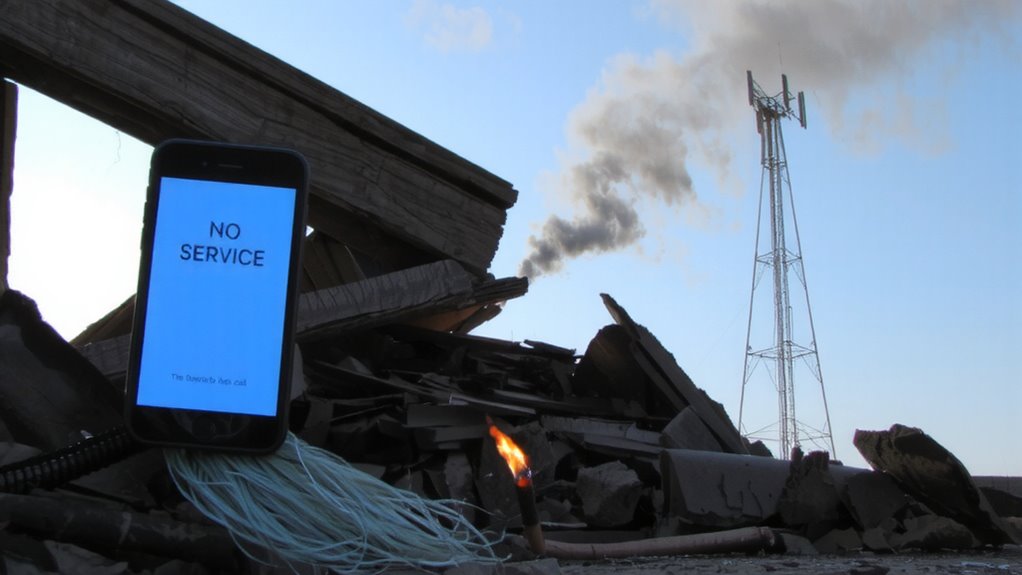
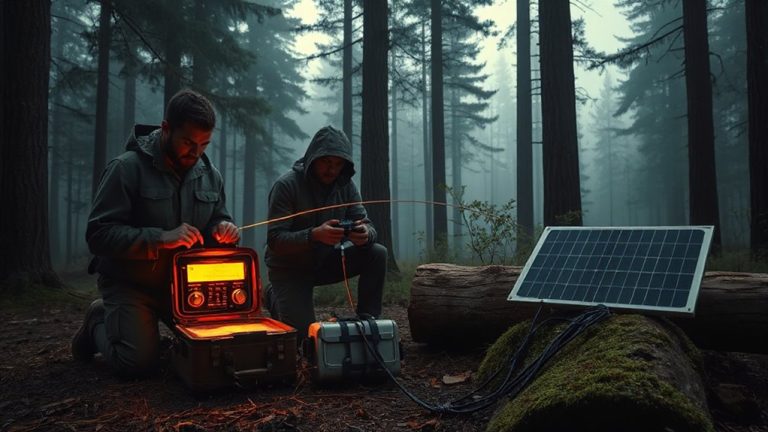
A lot of emergency communication systems fail when disasters strike because they rely on infrastructure that’s vulnerable to damage. You’re depending on cell towers, landlines, and internet networks that collapse under stress. Power outages knock out equipment fast-you’ve seen it happen when storms take down grids. Without electricity, even backup systems fail within hours. Signal interference from damaged equipment, weather, or terrain disrupts transmission, rendering devices useless when you need them most. Radios and phones might have range on paper, but real-world conditions block signals. Urban areas suffer from reflection and absorption; rural zones deal with distance and topography. Systems marketed as “reliable” often don’t account for these flaws. You can’t assume connectivity when critical. Test your gear under outage conditions and interference loads. Assume failure-plan accordingly. Relying solely on grid-dependent tech leaves you unprepared. A reliable alternative is to use emergency radios, many of which are powered by hand-cranking or solar energy, ensuring operation even during prolonged outages, and models that include NOAA weather alerts and multiple channels are considered among the best emergency radios.
How Two-Way Radios Work in Emergencies
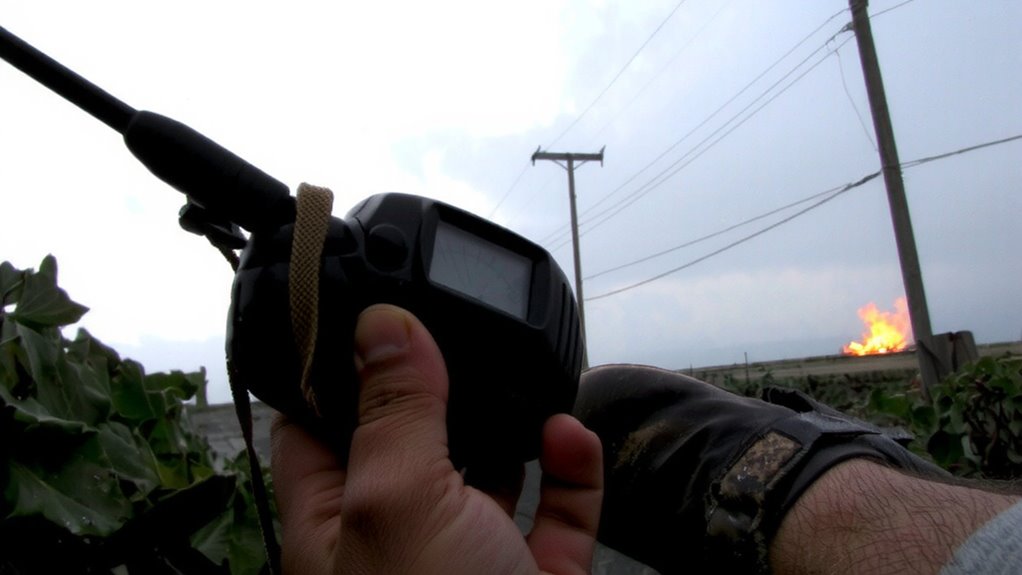
When the power’s out and cell networks are down, two-way radios remain one of the few reliable ways to communicate because they don’t depend on cellular infrastructure or internet connections. You transmit voice directly over radio waves, letting teams coordinate even when systems fail. Your signal range typically reaches 1 to 5 miles, though terrain and buildings can reduce it. Higher wattage models extend range but drain batteries faster. You’ll need to manually select channels, and if others use the same frequency, channel interference can block your message. Scanning helps avoid crowded channels. Radios with weather bands keep you informed without extra devices. They’re simple, durable, and work immediately-no setup. You trade clarity over distance for reliability when everything else fails. Proper use means checking batteries, planning frequencies ahead, and understanding your environment’s impact on signal range and channel interference. For reliable performance in crisis scenarios, consider choosing from the best 2-way radios for emergencies.
How Mesh Networks Keep You Connected Offline
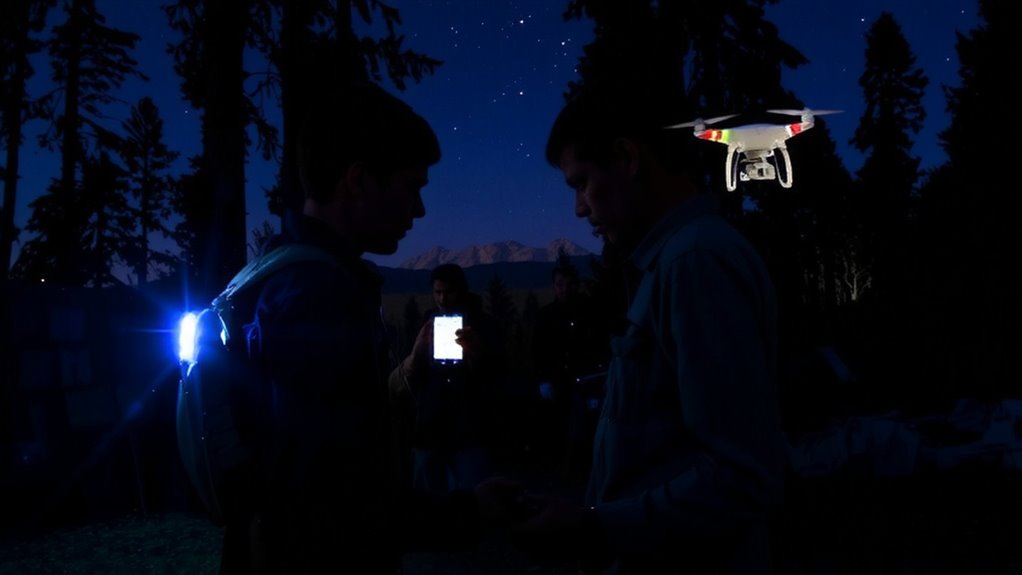
Think two-way radios are your only option when networks fail? You’ve got another choice: mesh networks. They offer decentralized connectivity, meaning no single point of failure. If one node drops, others reroute. Your device connects directly to nearby devices using peer to peer signaling, skipping cell towers entirely. Devices like goTenna and Beartooth enable text and location sharing over short distances-typically 0.5 to 2 miles, depending on terrain. Range improves as more users join, forming a chain. Unlike radios, mesh apps often include encryption and basic data support. But they need multiple participants nearby to work well. Battery draw is moderate, but range and message reliability drop in dense urban or forested areas. They don’t replace radios but add flexibility. Test one in your area before relying on it. Not magic-just practical, limited tech that helps when nothing else is online.
When to Use Satellite Messengers for Help
How do you call for help when there’s no cell signal and a mesh network won’t reach? That’s when satellite messengers become essential. Unlike phones, they rely on orbiting satellites, giving you signal reliability even in remote mountains or dense forests. Devices like Garmin inReach or ZOLEO link to global networks, letting you send texts and trigger SOS alerts anywhere. They work when traditional infrastructure fails, fitting directly into emergency protocols. Most models last 3–7 days on a single charge, weigh under 7 ounces, and withstand harsh conditions. You’ll pay more upfront and need a subscription, but the trade-off is proven, life-saving connectivity. They don’t replace phones or mesh networks-they back them up when those fail. Use them the moment you’re stranded, injured, or facing threats with no other way out. When every minute counts, a satellite messenger isn’t luxury-it’s necessity.
Create a No-Internet Family Contact Plan
What if your family gets scattered when the network goes down? You’ll need a no-internet contact plan that assigns clear family roles so everyone knows their responsibility. Designate one person to initiate contact, another to relay messages, and a third to track locations. Use simple message templates-like “I’m safe at X location” or “Meeting at shelter Y”-to reduce confusion. These templates save time and avoid miscommunication. Pick a physical meetup spot and a backup location in case roads are blocked. Test the plan quarterly. Written copies should be kept in wallets and emergency kits. Without relying on signals or apps, this method works when cell towers fail. It’s not foolproof, but it improves coordination. Family roles guarantee accountability. Message templates standardize communication. Both are cost-free, require minimal training, and integrate easily with other low-tech tools.
Match Tools to Your Most Likely Disasters
A solid family contact plan works when the network’s down, but it won’t help much if you’re facing a flood, wildfire, or prolonged power outage without the right tools on hand. For hurricanes or floods, a waterproof two-way VHF radio with NOAA weather channels gives reliable emergency signaling over short distances. If wildfires are your concern, a solar-powered satellite messenger works when cell towers fail-though it’s slower and requires subscription fees. Power outages demand battery-powered or hand-crank radios with USB charging ports; models lasting 72+ hours in testing are ideal. Practice using these during disaster drills so everyone knows how to activate emergency signaling under stress. Don’t assume gear works until you test it. Prioritize tools that balance reliability, ease of use, and real-world performance over features you won’t need. Your location and likely disasters should guide every choice.
On a final note
You need reliable communication when disasters hit and networks fail. Two-way radios work fast but have limited range. Mesh networks let devices talk directly, no towers needed, but depend on users staying close. Satellite messengers reach anywhere, but cost more and need clear skies. Pick tools based on your likely risks-earthquakes, storms, or blackouts-and test them. A solid plan with the right gear keeps you connected when it matters most.