Using Mental Status to Guide Evacuation Decisions in Remote Areas
If you’re confused, hallucinating, or agitated in the backcountry, get out immediately-these signs point to severe altitude sickness, hypothermia, or infection, not just exhaustion. Check alertness by asking name, location, and date; poor recall or slurred speech means evacuation. Mental changes often mean systemic failure, which is more urgent than many injuries. Clear thinking? You can likely monitor and delay evacuation. Track mental status every few hours-subtle decline can warn before physical symptoms. More signs to watch follow.
Notable Insights
- Altered mental status, including confusion or agitation, requires immediate evacuation in remote settings.
- Assess orientation by asking name, location, and date; disorientation indicates urgent concern.
- Use delayed three-word recall to evaluate short-term memory and detect cognitive impairment.
- Mental status changes often signal systemic illness and take priority over many physical injuries.
- Stable cognition with intact awareness may allow monitoring instead of evacuation despite severe injuries.
When Mental Changes Mean Immediate Evacuation

Why wait when confusion sets in during a high-altitude trek or deep backcountry trip? You’re not dealing with minor fatigue-you’re seeing hallucinations, confusion, paranoia, agitation. These aren’t quirks; they’re red flags. Sudden mental changes like these often signal severe altitude sickness, hypothermia, or neurological issues. There’s no field test reliable enough to rule out life-threatening causes once symptoms appear. Delaying evacuation risks rapid deterioration. You can’t stabilize someone properly in the wild when their brain isn’t functioning correctly. Walking it off isn’t an option. Even if they seem okay between confused episodes, the risk of erratic behavior-wandering off, removing clothing, refusing help-makes every minute critical. Immediate evacuation isn’t cautious; it’s necessary. Helicopter or carry-out, you initiate now. No wait-and-see. Their condition is already a full alert. You act because outcomes hinge on speed, not speculation. A well-prepared responder will have a wilderness first aid kit appropriate for extended evacuation scenarios.
How to Check Alertness, Memory, and Behavior

How do you know if someone’s mental state is slipping when you’re hours from help? Start with basic cognitive screening: ask their name, location, and the date-delays or errors signal trouble. Check alertness by noting eye contact and response speed; confusion or drowsiness isn’t normal. For memory, have them repeat three words after five minutes; failure suggests impairment. Observe behavior closely-sudden irritability, withdrawal, or inappropriate laughter can reveal declining emotional stability. Compare their current state to baseline behavior. Slurred speech or trouble following simple commands adds concern. Don’t ignore subtle changes. These signs don’t require tools, just attention. Early findings guide decisions. You won’t have scans or labs, so rely on consistent observation. Repeat assessments hourly if needed. Real-world use shows this method catches changes before severe decline. It’s practical, repeatable, and effective in remote settings where every decision counts.
Why Mental Status Trumps Injuries in Remote Emergencies
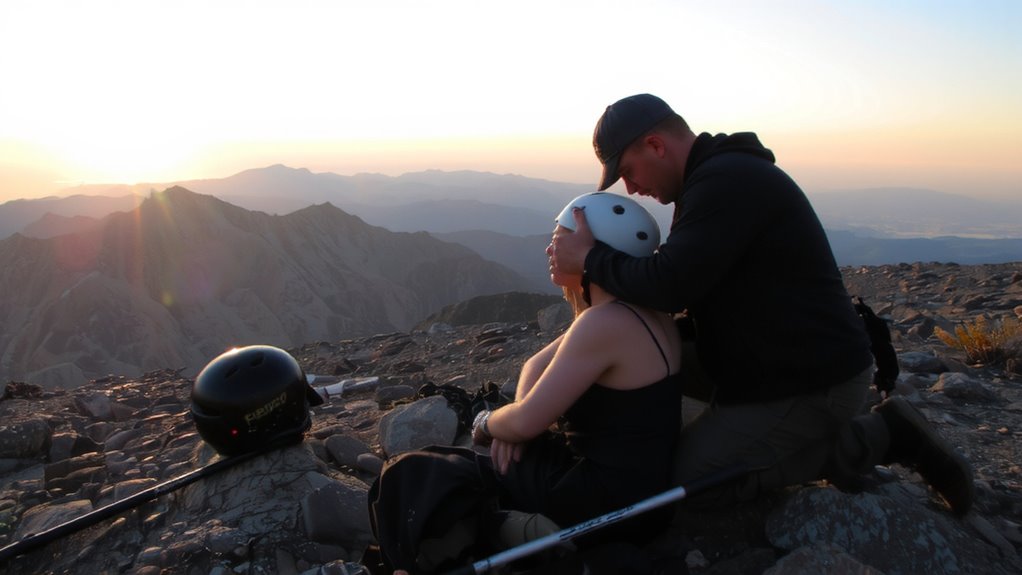
You’ve checked for confusion, tested memory, and noted changes in behavior-those basic assessments give you real-time insight into mental status, and in remote settings, that information carries more weight than the visible severity of an injury. A clean fracture may seem worse than mild disorientation, but altered mental status often signals systemic threats like infection risk or environmental stress. These underlying conditions can deteriorate rapidly when help is hours or days away.
| Factor | Injury Severity | Mental Status Change |
|---|---|---|
| Immediate threat level | Moderate | High |
| Evacuation urgency | Often delayed | Usually required |
| Underlying cause | Localized | Systemic (e.g., infection risk, environmental stress) |
Mental changes suggest the body’s core systems are compromised. Infection risk can escalate silently, and environmental stress impairs judgment before obvious physical symptoms appear. That’s why you treat mental status as the leading indicator-not just a side note.
When Clear Thinking Means No Evacuation Needed
Is it really necessary to evacuate every injury just because it looks bad? Not if the person has cognitive clarity and intact situational awareness. You can have a deep laceration or a swollen joint and still pose no immediate risk if you’re thinking clearly. Cognitive clarity means you know who you are, where you are, and what happened. Situational awareness shows you can assess risks, follow instructions, and contribute to decisions. If both are present, evacuation may be unnecessary. You don’t need to rush out just to address an injury that’s not affecting brain function. Monitor closely, yes, but prioritize based on mental status, not appearance. Many minor injuries look worse than they are. The real danger signs are confusion, disorientation, or slowed responses. If those aren’t present, staying put often makes sense. It conserves resources and reduces risk.
How to Monitor Mental Status Over Time in the Field
While appearance and essential signs matter, mental status is the most sensitive indicator of deterioration in remote settings, so check it regularly. Use baseline comparison to catch subtle changes-ask the same questions over time. Look for cognitive drift, like slowed responses or confusion, even if crucial signs seem stable. Reassess every few hours in evolving cases.
| Time | Mental Status Note |
|---|---|
| 08:00 | Alert, answers correctly |
| 12:00 | Slight delay in response |
| 16:00 | Forgets yesterday’s events |
| 20:00 | Disoriented to location |
Document each check clearly. Cognitive drift may precede physical decline, signaling the need for evacuation before crisis. Comparing notes across team members improves accuracy. Don’t wait for obvious symptoms-early detection saves time and lives. Reliable monitoring means sticking to routine checks, even when the patient seems fine. Consistency beats guesswork.
On a final note
You can’t rely on gut feelings-track mental status with clear checks every hour. Alertness lapses or memory gaps mean evacuation, even if injuries seem minor. A confused person in the backcountry is a critical risk, not a judgment call. Stable cognition, though, often means you’re safe to hold position. Use simple tests: name, date, recall a phrase. No tools needed, just consistency. It’s the cheapest, most effective triage tool you’ve got.