Using Binoculars to Scout Fruit-Bearing Trees From a Distance Safely
You can safely scout fruit-bearing trees up to 300 yards away using 8×42 binoculars, which offer a clear view without adding excess weight. Coated lenses maintain clarity in fog or rain, while waterproofing handles damp woods. Scan at dawn or dusk when low light boosts contrast, making ripe, colorful fruit stand out. Use a grid pattern to check trees methodically and spot hazards like drop-offs or nests early. Confirm fruit identity through steady magnification to avoid toxic lookalikes-there’s more to contemplate before moving in.
Notable Insights
- Use 8×42 binoculars to safely scan fruit-bearing trees from up to 300 yards away, minimizing terrain risks.
- Scan during dawn or dusk when low-angle light enhances fruit visibility and contrast against foliage.
- Identify ripe fruit by consistent deep red, purple, or golden hues, avoiding patchy or greenish tones.
- Employ systematic grid scanning from crown to base to thoroughly inspect trees while spotting hazards remotely.
- Choose waterproof, fog-resistant binoculars with coated lenses to maintain clarity in damp, shaded woodland conditions.
Stay Safe Scouting Fruit Trees From Afar
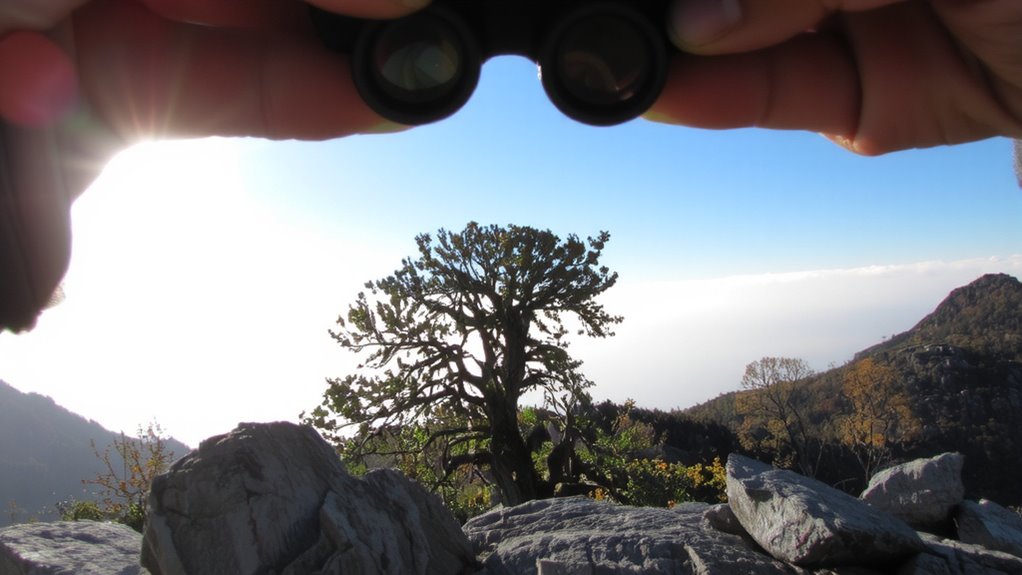
A good pair of binoculars can keep you out of risky terrain while scouting fruit-bearing trees, letting you spot clusters from a distance without climbing or wandering into unstable ground. You avoid sudden slips on loose soil or hidden drop-offs common near ravines. Weather conditions like rain or fog reduce visibility; quality optics with coated lenses maintain clarity, giving you usable sight up to 300 yards. This range lets you monitor slope stability before moving closer. Animal encounters drop markedly when you stay back-bears, snakes, or nesting animals are less likely to react if you’re not intruding. Mid-range 8×42 models offer the best balance: enough magnification to scan tree canopies, with wide enough field view to track movement. They weigh under 24 ounces, minimizing fatigue during extended use. Avoid high-magnification models-they amplify hand shake and narrow your situational awareness, increasing risk. For those seeking more power without excessive weight, 12×50 binoculars for hunting provide excellent long-range clarity and light-gathering capability.
Identify Fruit Type and Ripeness With Binoculars
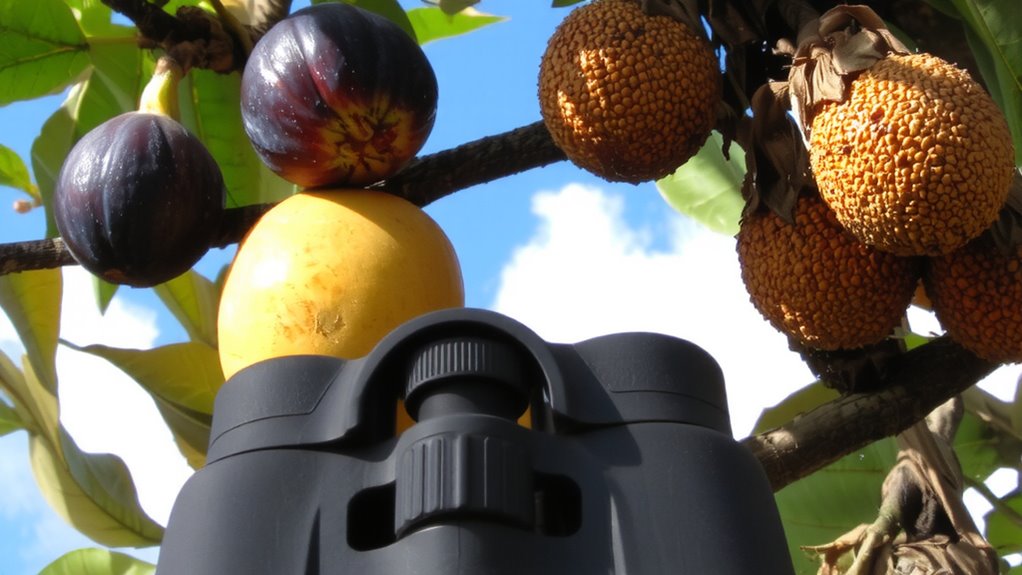
You’ve kept your distance and stayed safe using binoculars to avoid unstable terrain and surprise animal encounters-now use them to gather actionable details about what you’re seeing. Focus on fruit color to judge ripeness: greenish fruits usually aren’t ready, while deep red, purple, or golden hues signal maturity. Color consistency across the cluster matters-patchy tones suggest uneven ripening. Next, assess cluster density. Tight, abundant clusters often mean higher yields and a healthy tree, while sparse groupings may indicate poor pollination or stress. Dense clusters on visible branches give you a reliable estimate of harvest potential without moving closer. Use magnification steadily to avoid misjudging color in shaded or angled light. These two indicators-fruit color and cluster density-let you decide whether a tree is worth approaching. They’re observable at range and give clear, real-time insight into edibility and abundance.
Pick Binoculars That Work in Wooded Areas
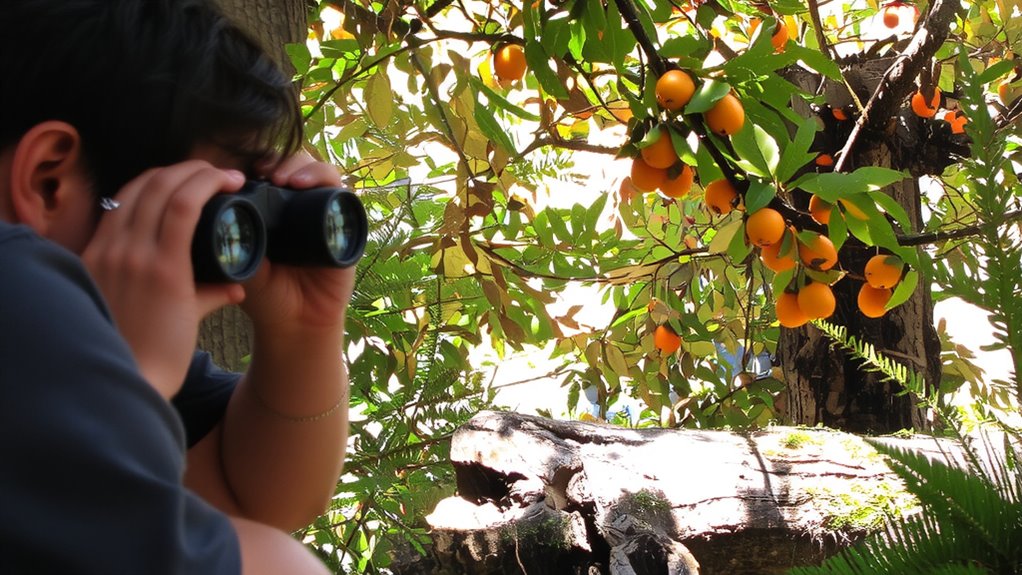
While dense canopy and dappled light can degrade image quality, you’ll want binoculars with at least 8x magnification and a 42mm objective lens to gather enough light for clear views under forest cover. The right magnification power balances field of view and detail, letting you spot fruit clusters without excessive hand shake. A 42mm lens diameter performs well in low light, outperforming smaller 30mm models in shaded woods. Larger diameters, like 50mm, gather more light but add weight and reduce maneuverability in tight spaces. Fully coated optics improve clarity without driving up cost. Choose a close focus distance under 8 feet to examine trees just ahead. Waterproofing and fog resistance are practical for damp woodland air. Binoculars in the 8×42 or 10×42 range offer the best compromise between brightness, magnification power, and lens diameter for consistent performance in wooded terrain. Including a 72-hour emergency kit ensures you’re prepared if scouting leads to unexpected delays. This kit should contain essentials like water, food, and first aid supplies, with best 72-hour kits providing reliable options for outdoor safety.
Scan Trees at Dawn or Dusk for Best Visibility
Don’t wait for midday sun to spot fruit-laden branches-light angles at dawn and dusk reveal what flat daylight hides. The low sun creates strong light contrast, making ripe fruit stand out against leaves and bark. Shadows deepen, highlighting textures you’d miss under even illumination. This contrast also helps detect subtle animal movement, like birds or squirrels feeding, giving away productive trees before you’re close enough to see fruit directly. Wildlife activity peaks in these low-light windows, so observing animal movement improves your odds of locating food sources efficiently. Binoculars with good low-light transmission increase detection range without noise or effort. You trade some warmth for earlier starts or later finishes, but the visual payoff justifies it. Scanning during these hours reduces glare and increases detail, letting you assess tree yield from a distance safely. It’s a reliable method backed by timing, not guesswork.
Use Grid Patterns to Spot Fruit Faster
A methodical scan beats random looking every time. Divide the tree or grove into imaginary grid sections-left to right, top to bottom-and examine each quadrant slowly through your binoculars. This systematic scanning reduces missed spots and speeds up fruit detection. You’ll cover more area without backtracking, improving pattern efficiency. Start at the crown, move down in straight lines, pausing briefly at each interval. Use fixed reference points like branches or terrain to track progress. This approach works best with 8×42 binoculars, offering a balance of magnification and field of view. Test it across different tree densities: in open areas, wider sweeps suffice; in thick clusters, tighter grids help. You won’t spot every fruit, but you’ll maximize visibility with minimal effort. With practice, grid scanning becomes automatic, saving time and energy during scouting. For higher magnification needs, consider models like the 12×50 binoculars which provide enhanced detail at greater distances.
Avoid Hazards Without Getting Close
If you’re scanning from a distance, you’re not just saving time-you’re staying safe. Binoculars let you perform terrain assessment before stepping a foot off the trail. You can spot downed trees, unstable slopes, or standing water that might slow your progress or put you at risk. Predators, nesting wasps, or even trespassers near fruit trees become visible without exposing yourself. A stealth approach keeps you out of sight while gathering intel. You avoid startling wildlife or entering hazardous zones blindly. Clear visibility through quality optics means you can judge ground conditions accurately-muddy banks, loose rocks, or thick underbrush that complicate access. You weigh risks objectively: is the fruit worth a potential ankle twist or worse? Binoculars with at least 8x magnification give enough detail for informed decisions. Distance scouting isn’t guesswork-it’s strategy. You minimize exposure and maximize safety with simple, effective terrain assessment and a quiet, stealth approach.
Confirm Fruit Before You Approach
How can you be sure it’s ripe fruit you’re after and not a lookalike-or worse, a toxic imposter? Use your binoculars for fruit verification before taking a single step closer. Magnification lets you check color, shape, and cluster patterns that distinguish safe fruit from dangerous mimics. Remote confirmation reduces risk and saves time. Look for signs of ripeness-consistent hue, plumpness, and absence of pests. Avoid trees with shriveled or discolored fruit, which may indicate spoilage. Some toxic species closely resemble edible ones, so verify every detail. If you can’t clearly identify the fruit through your optics, don’t approach. Field guides or plant apps can support your assessment when used alongside visual checks. Reliable fruit verification depends on clarity and distance. A 10×42 binocular offers enough resolution for most remote confirmation tasks. Accuracy matters more than speed when foraging.
On a final note
You’ll spot more fruit with binoculars that have at least 8x magnification and a wide field of view. Early morning or late evening light cuts glare and improves contrast in dense woods. Scan in slow, overlapping grid lines to avoid missing clusters. Avoid unstable terrain or wildlife by staying at a distance. Confirm color and shape before approaching-some fruits mimic others. Practical use beats gear specs every time.