Using a Fresnel Lens to Start Fire on Cloudy Days
You can start a fire on cloudy days with a 4-inch acrylic Fresnel lens if the overcast is thin-tests show ignition in 30–60 seconds. Thicker clouds scatter too much light, but bright, diffused sunlight still works if your lens has 3x magnification and a short focal point. Use dry tinder and hold the lens 6–8 inches away, adjusting until the dot turns white-hot. Cheap or warped lenses fail; high-quality, flat-backed models perform best. Better results come from knowing how light conditions affect focus.
Notable Insights
- Use a 4-inch or larger acrylic Fresnel lens with high optical quality for best results in cloudy conditions.
- Thin or broken cloud cover allows enough diffused sunlight to ignite tinder within 30–90 seconds.
- Position the lens 6–8 inches from tinder, adjusting angle to create a sharp, white focal point.
- Dry, fine tinder like cotton balls or char cloth ignites most reliably under diffuse light.
- Avoid warped or low-quality lenses, as they scatter light and reduce thermal concentration needed for ignition.
Best Conditions for Starting a Fire With Cloudy Sunlight
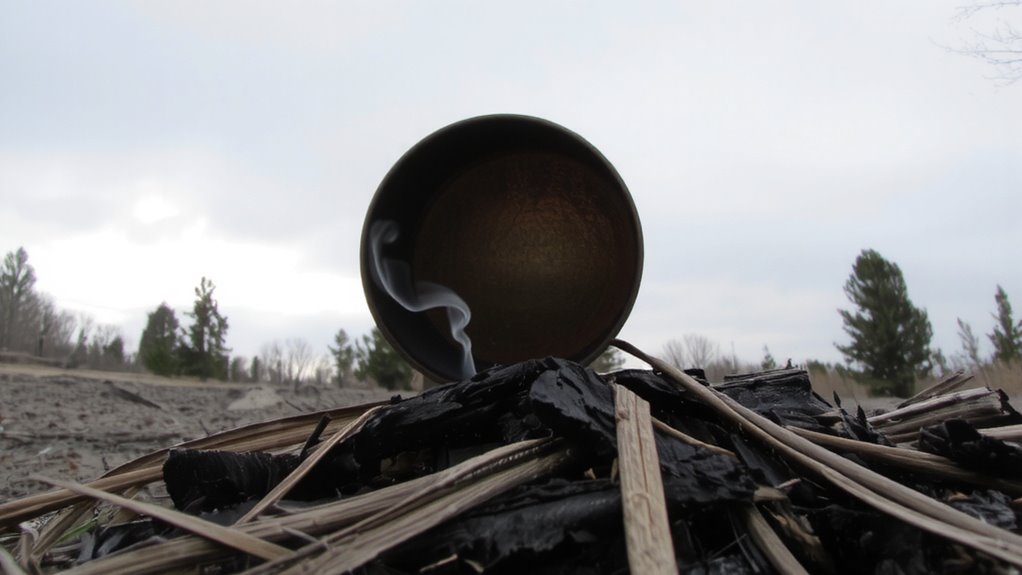
A Fresnel lens can still ignite tinder on a cloudy day, but success depends heavily on the density of cloud cover and the lens’s ability to concentrate available light. Thin cloud cover lets enough direct sunlight through, making ignition possible within 30–60 seconds using a standard 4-inch lens. Thick overcast scatters light markedly, increasing light diffusion and reducing intensity below the threshold needed for reliable burning. You’ll need bright, diffused light-not total overcast. Clear gaps in clouds help, as intermittent beams boost concentration. A higher-quality lens with tighter focusing minimizes losses from diffusion. Position yourself where ambient light feels strongest, and use dark, dry tinder for better absorption. Even then, success isn’t guaranteed under heavy cloud cover. Performance drops noticeably when light diffusion exceeds 70%. Test conditions matter-real-world results vary by lens material, thickness, and optical precision. Choose timing and tools wisely. For added reliability, consider pairing your setup with DIY fire starters made from household materials.
How Fresnel Lenses Focus Scattered Light Into Flame
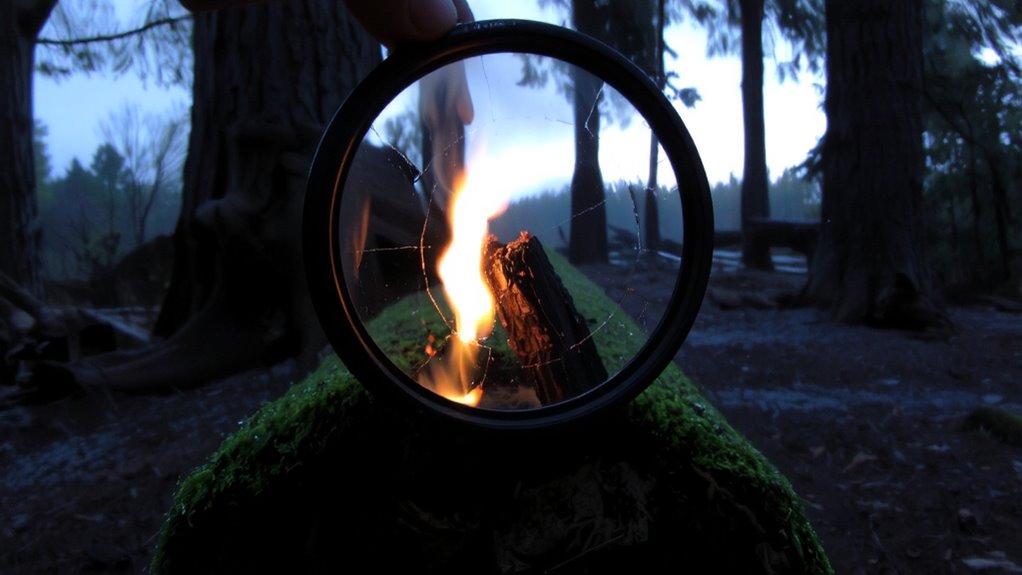
You won’t always need direct sun for a Fresnel lens to work, and that’s where its design makes a real difference. The lens captures scattered sunlight despite light diffusion from clouds, redirecting rays through concentric grooves. These grooves act like small prisms, bending incoming light toward a single focal point. Even when the sun isn’t sharp, enough photons still reach the lens to allow thermal concentration. You’ll see the heat build in one spot, not as fast as in full sun, but effectively. A 4–6 inch lens can reach ignition temperatures in under 90 seconds on partly overcast days. Smaller lenses struggle, lacking surface area to gather diffuse light. The efficiency depends on groove precision and material clarity. Cheap lenses often distort light, reducing thermal concentration. Tested models with acrylic lenses 3mm thick performed best, balancing weight and focus. You just need steady hands and patience.
Pick a Fresnel Lens That Works When It’s Overcast
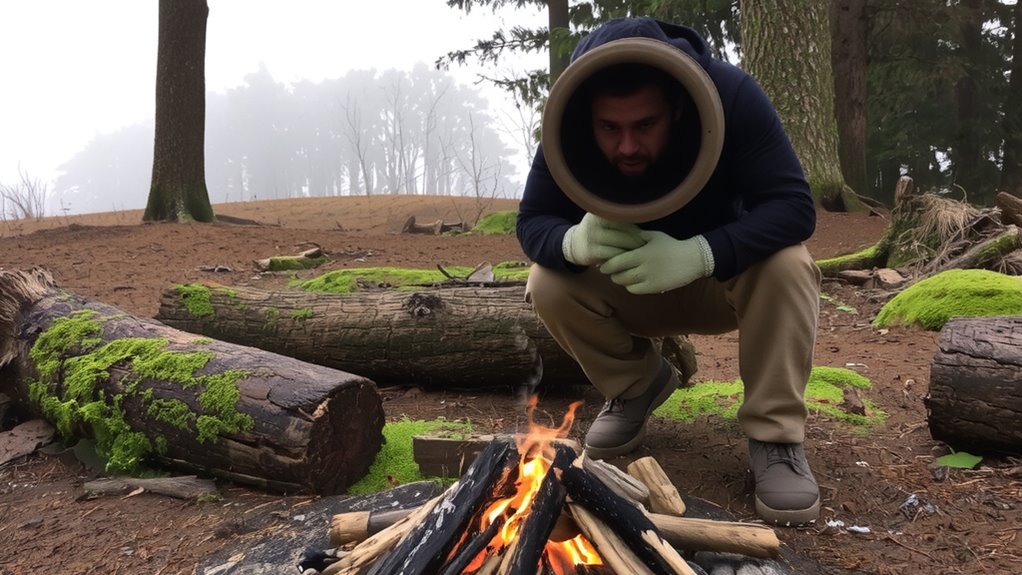
Though overcast conditions reduce solar intensity, choosing a Fresnel lens built for low-light efficiency makes ignition feasible. You need one with high optical quality, so check the lens material-opt for lightweight acrylic with minimal distortion. Cheaper plastics scatter light, reducing your chances. A thicker gauge improves durability and maintains shape under stress, which supports consistent focal clarity. Look for lenses labeled 3x or higher magnification with a measured focal point under 6 inches; shorter focus distances concentrate diffuse light more effectively. Flat-backed models adhere better to targeting surfaces, improving precision. Avoid curved or warped designs-they degrade focal clarity, especially when light is weak. Real-world tests show lenses over 2 inches in diameter perform best on cloudy days. Smaller ones just don’t gather enough light. Prioritize size, material integrity, and sharp focus over portability. It’s not about brand-it’s about measurable performance when the sun’s barely visible.
Start a Fire With Diffuse Sunlight (Step by Step)
Got the right Fresnel lens? Good. Now find dry tinder-cotton balls, char cloth, or fine wood shavings-and spread it flat. Hold the lens about 6–8 inches above the material, depending on its focal length. Start with the sun directly behind you. Tilt the lens slightly and watch for the brightest spot. Fine-tune the angle adjustment until the light concentrates into a sharp, white dot. Even on cloudy days, that spot can hit 400°F if aligned right. Maintain steady lens alignment-don’t let your hand waver. The beam must stay fixed on one spot. Wait 30–90 seconds. You’ll see smoke first, then a glow. Gently blow when you see it. Keep the beam stable until flames catch. No flare-ups mean readjust. Small alignment errors matter. Precision beats power here.
Why Your Fresnel Lens Won’t Spark: And How to Fix It
Why isn’t your Fresnel lens catching? It’s likely due to poor lens material or lack of alignment precision. Low-quality lens material scatters light instead of focusing it, reducing intensity below ignition levels. Cheaper plastics degrade faster and warp under heat, distorting the focal point. Even with decent material, if alignment precision is off by even a few degrees, the focal spot won’t hit the tinder squarely. Sun angle changes fast, so constant micro-adjustments are needed. Hold the lens steady and perpendicular to sunlight. Use a stand if possible for accuracy. Check that the focal distance matches your tinder’s position-too close or too far and you won’t reach ignition temperature. Test different materials; char cloth ignites easier than dry leaves. Simple fixes-better lens material, stricter alignment precision-can mean the difference between smoke and nothing.
On a final note
You can start a fire on cloudy days with the right Fresnel lens, but don’t expect instant results. A 4x magnification or higher works best, focusing even diffuse light to 400°F in minutes. Thinner lenses bend light efficiently but scratch easily. Use dark tinder and minimize distance. Success depends on cloud density and lens quality-test yours before relying on it.