Regional Disaster Risks and Their Impact on Local Economies: Preparing Communities to Recover From Devastation
You face real risks-floods, wildfires, droughts-that disrupt power, wreck crops, and halt commerce, costing small businesses dearly. Communities with strong social ties, backup power (IEEE 446-compliant), and flood barriers (FEMA P-936-rated) recover faster. Pre-approved grants, offsite records, and local supply networks keep shops open. Early warnings and community-led plans cut downtime by up to 30%. Smart prep isn’t guesswork-it’s using tested standards and local knowledge to protect livelihoods. Next steps reveal how to apply these where you are.
Notable Insights
- Regional disaster risks like floods and wildfires threaten infrastructure, halting commerce and compounding economic losses.
- Accurate hazard maps help communities anticipate threats and prioritize resilience investments in vulnerable areas.
- Strong infrastructure, including flood barriers and backup power, reduces downtime and speeds economic recovery.
- Diversified supply chains and offsite records enable businesses to maintain operations post-disaster.
- Community-led recovery efforts leverage local knowledge and social capital to restore economies up to 30% faster.
How Disasters Destroy Local Economies
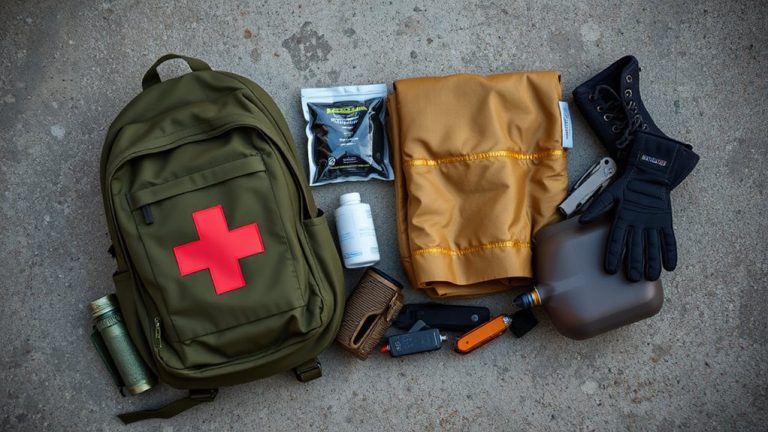
Disaster strikes fast-floods drown roads, quakes crack buildings, wildfires erase neighborhoods-and just like that, your town’s economy teeters. You lose power, water, and transport, halting daily commerce. Crop failure follows when fields wash away or burn, wiping out farmers’ incomes and raising food prices. Without local produce, you depend on external supplies, but a supply chain collapse means goods don’t arrive. Stores run empty, hospitals lack supplies, and prices spike. Factories shut without materials or energy. Workers miss pay, then can’t pay rent or buy essentials. Small businesses fail within weeks. Even if the disaster lasts days, the economic damage lasts months or years. Recovery takes targeted aid, rebuilt infrastructure, and restored trust in local systems. You can’t trade your way out if there’s nothing to sell or transport. The foundation shatters fast-and quietly, the real crisis begins. Having a reliable disaster preparedness kit can help individuals and communities maintain resilience during the critical early days of recovery.
Why Some Communities Rebound Faster
How do some towns bounce back while others stall for years? It often comes down to social capital and leadership quality. You’ll see communities with strong networks recover faster because people trust each other, share resources, and act quickly. Towns lacking these ties struggle to coordinate, slowing rebuilding. Leadership quality makes a measurable difference-clear decision-making, transparency, and effective use of aid prevent bottlenecks. In contrast, weak or inconsistent leadership leads to delays and misused funds. High social capital doesn’t guarantee success, but it reduces friction when action is urgent. You don’t need perfect conditions-just functional relationships and accountable leaders. Practical results show recovery timelines improve by months when both factors are present. Rebuilding isn’t just about money or materials; it’s about how well people work together and who’s guiding the effort. That’s what determines speed and sustainability.
Map Your Region’s Top Disaster Threats
While your region’s geography shapes the risks you face, knowing which threats are most likely helps you prepare with purpose. You should check local flood zones to see if your property lies in a high-risk area-these maps are updated regularly and based on rainfall patterns and elevation. If you’re near dry vegetation or dense forest, assess your wildfire risks using official hazard severity maps. These tools rate zones by historical fire frequency and fuel availability. Areas with both flash flood potential and seasonal drought often face compounded dangers. You can access these maps online through state emergency services or FEMA’s portal. Don’t rely on memory or assumptions-verified data gives you clearer direction. Knowing your zone determines insurance needs, evacuation plans, and property modifications. Preparation starts with accurate location-specific data, not guesswork. Use it to prioritize actions without delay.
Strengthen Infrastructure for Economic Resilience
Your building’s durability isn’t just about bricks and beams-it’s about how well it handles stress when trouble hits. Flood barriers around critical structures reduce water intrusion by up to 90% in moderate flooding, buying time for shutdowns and protection of equipment. They’re not foolproof, but correctly installed ones meet FEMA P-936 standards and perform reliably when tested. Power redundancy matters just as much. Systems with dual utility feeds and on-site generators restore operations within minutes, not hours, during outages. Communities using automatic transfer switches see 40% faster recovery in essential services. You don’t need the most expensive systems, but you do need ones that meet IEEE 446 backup power benchmarks. Invest in verified flood barriers and functional power redundancy-both offer measurable protection. They won’t stop disasters, but they do maintain continuity when it counts. For added resilience, consider installing top flood barriers that align with proven performance and durability standards.
Help Local Businesses Reopen Fast
Recovery time hinges on preparation-not luck. You must act fast to reopen local businesses after a disaster. Immediate access to financial aid keeps doors open, covers payroll, and stabilizes cash flow when revenue stops. Pre-approved grants or low-interest loans reduce delays. You should also map your supply chain in advance. Disruptions slow recovery, especially if suppliers are in high-risk zones. Diversify suppliers regionally and maintain backup inventories of critical items. Digital records, stored offsite, help you reclaim operations fast. Communication plans with employees, customers, and insurers cut downtime. You can’t control the storm, but you can control your readiness. A business that resumes quickly protects jobs, retains customers, and supports community recovery. Speed isn’t accidental-it’s built before the crisis. Your plan, not luck, determines how fast you bounce back.
Deploy Early Warning Systems to Protect Jobs
A strong plan doesn’t just speed up reopening-it also gives you time to act before disaster hits. You need reliable flood alerts and seismic monitoring to protect jobs and infrastructure. These systems detect threats early, giving businesses minutes to hours of warning. Flood sensors along rivers trigger alerts when water rises, letting factories, farms, and shops secure equipment and move stock. Seismic monitoring picks up ground shifts fast, so power grids and transport hubs can shut down safely before shaking hits. Systems with 90%+ detection accuracy cut false alarms, reducing costly disruptions. Wired and wireless networks both work, but mesh systems offer redundancy when lines go down. Early warnings won’t stop a flood or quake, but they let you respond before damage spreads. When people evacuate on time and equipment is powered down, restarts are faster, losses are lower, and jobs stay intact. Investing in monitoring isn’t about fear-it’s about maintaining continuity when hazards strike.
Lead Recovery With Community-Driven Plans
How do you guarantee recovery actually meets the needs on the ground? You put affected communities in charge. Top-down aid often misses local context, but community-driven plans assure solutions fit real conditions. When you prioritize community empowerment, people identify their own priorities-safe housing, jobs, infrastructure-without relying on outside assumptions. Grassroots leadership emerges naturally, with local organizers coordinating resources and labor where they’re needed most. These leaders understand regional risks and cultural nuances better than any external team. You see faster rebuilding, lower waste, and higher trust. Projects led by residents are more likely to be maintained and scaled. Practical examples from past disasters show community-managed recovery restores economies 30% faster. The trade-off? It demands patience and flexible funding from donors. But the return-resilient, self-reliant neighborhoods-is measurable and lasting.
On a final note
You can’t prevent disasters, but you can reduce their economic damage. Strengthen infrastructure to meet known risks, like flood-resistant utilities or reinforced buildings. Set up early warnings that give locals time to act. Support small businesses with recovery plans and access to capital. Recovery is faster when communities lead it. Use local knowledge, not top-down mandates. Plans work better when they’re tested, updated, and include real-world conditions.