Adapting Your Survival Strategies to Tropical Monsoon Conditions
You need a tarp rated for at least 50 mph winds with reinforced grommets-standard tarps fail under prolonged monsoon downpours, increasing mold risk. Use a low-profile A-frame, staked at 45 degrees, to shed water and resist uplift. Filter rain-contaminated water through cloth first, then use ceramic filters followed by boiling. Avoid flood zones; move early, before afternoon storms hit. Stay dry with elevated sleep setups and quick-dry clothing. Store food in sealed, elevated containers with moisture control. Time travel between downpours, and you’ll stay safer when conditions turn. There’s a better way to handle the next 48 hours.
Notable Insights
- Build a low-profile A-frame shelter with a tarp rated for 50 mph winds and secure it at 45-degree angles for storm resistance.
- Pre-strain rain-contaminated water through cloth, filter with ceramic or hollow fiber, then boil one minute to ensure safe drinking water.
- Avoid flood-prone areas, test water depth with a stick, and cross only if flowing water is less than 6 inches deep.
- Stay dry and ventilated with elevated sleeping gear, mesh airflow, and quick-dry clothing to prevent mold and heat-related illnesses.
- Store food in elevated, sealed containers with moisture absorbers, and travel during dry morning hours to avoid monsoon downpours.
Build a Storm-Proof Shelter Fast
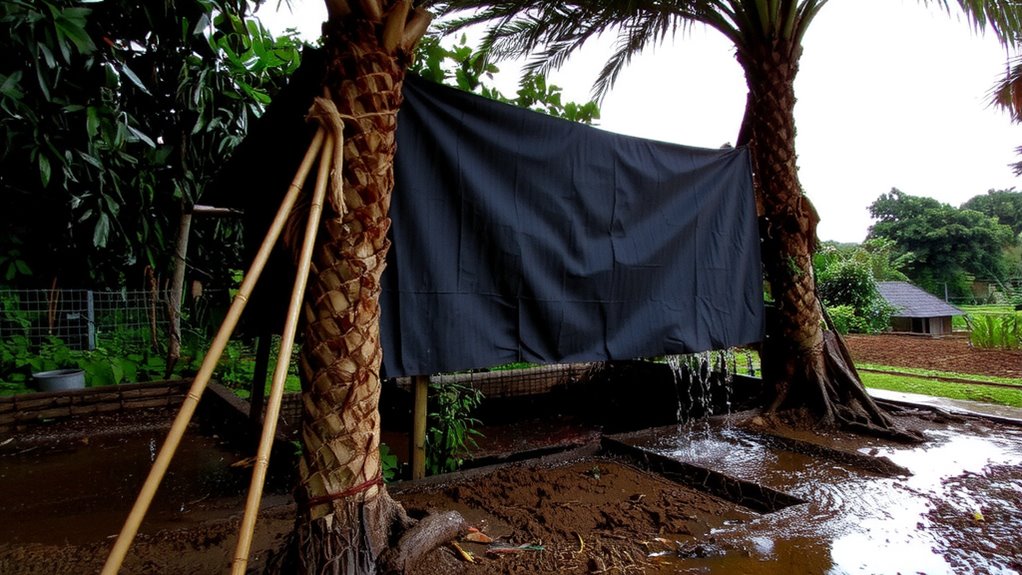
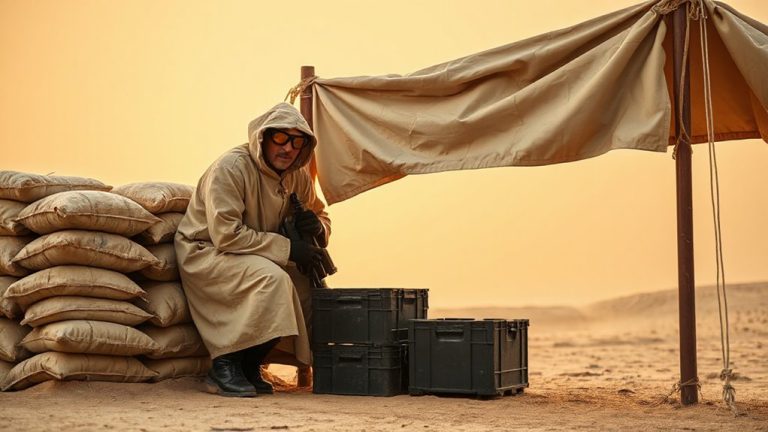
While time is critical when storms approach, you can still build a functional shelter in under an hour with the right materials and method. Use a tarp rated for at least 50 mph wind strength and secure it with paracord and durable stakes at a 45-degree angle. A low-profile A-frame design reduces drag and withstands gusts better than vertical structures. Overhead coverage must extend beyond sleeping areas to manage heavy runoff. Reinforce edges with sandbags or logs to prevent flapping, which increases wear and noise during extended storm duration. Natural windbreaks like dense trees or ridgelines improve stability but avoid dead branches. The shelter remains practical only if setup takes under 60 minutes with one person. Simplicity matters-fewer parts mean fewer failure points. Tested models show that 8×10 ft tarps with reinforced grommets perform reliably under tropical monsoon conditions, provided pitch angles are maintained. Some of the best camping canopies offer integrated storm-resistant features ideal for rapid deployment in monsoon environments.
Filter Water That Heavy Rain Has Contaminated
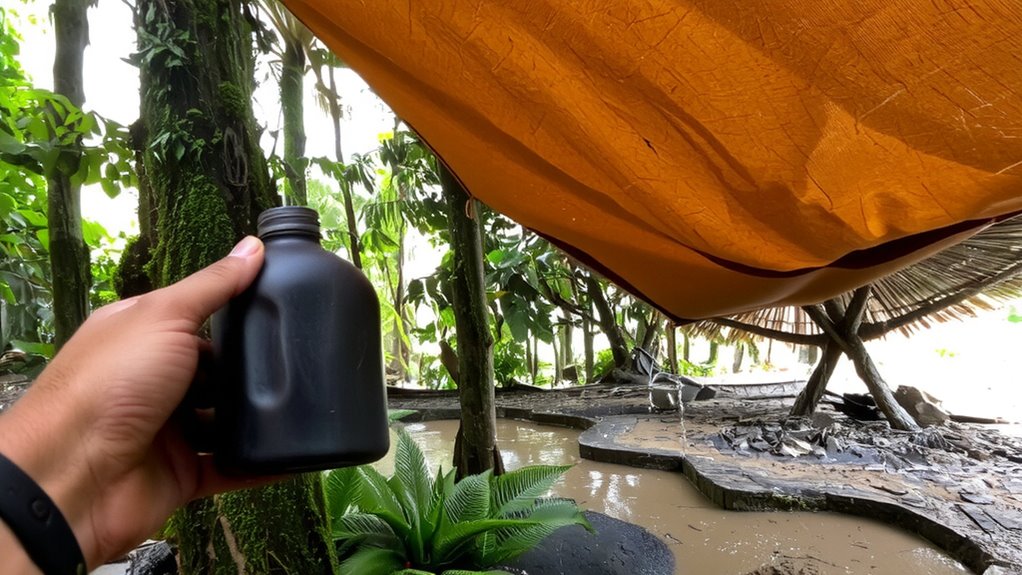
How do you make runoff safe when downpours turn every stream into slurry? You can’t drink it straight-sediment and pathogens make it dangerous. Your best move is using filters designed for turbid water; ceramic or hollow fiber models remove bacteria and protozoa, but they clog faster in muddy conditions, so pre-strain through cloth. Even after filtering, boiling water for one full minute kills viruses filters miss, especially if you’re unsure of the source. Chemical drops work, but they’re slower and less effective in cloudy water. A two-step process-filtering first, then boiling-is reliable and reduces fuel use. Pump filters offer high flow rates but need maintenance. Gravity systems handle larger volumes with less effort. Whichever you choose, regularly backflush or clean the element. No single method is perfect, but combining filtration with boiling covers more threats with minimal gear. For reliable options, consider checking out the best water filters based on performance in challenging conditions.
Navigate Flood Zones Without Getting Trapped
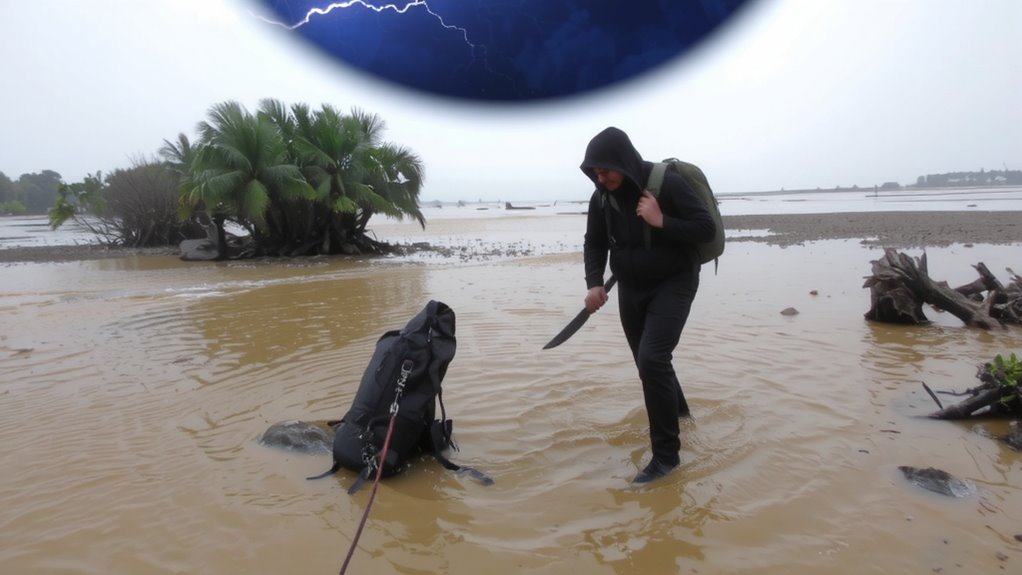
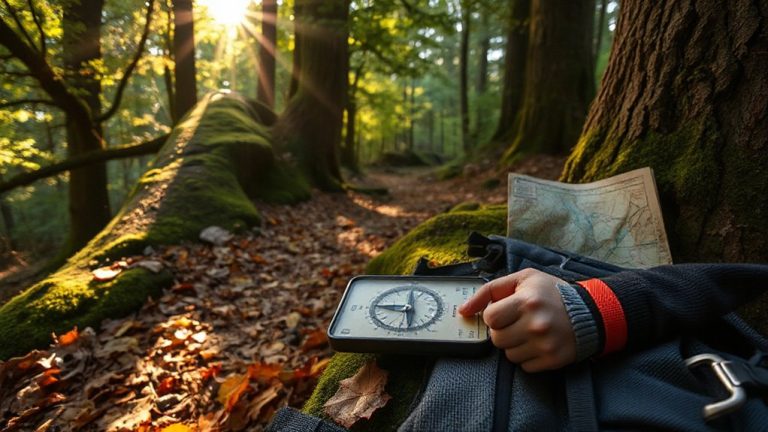
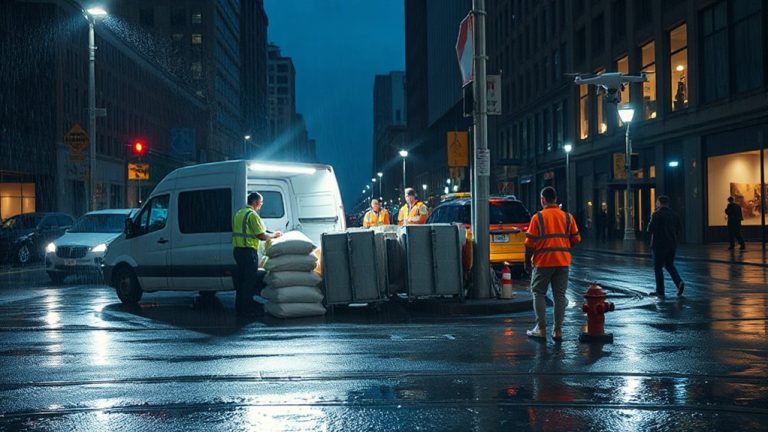
If you’re moving through flooded areas, relying solely on a trail map or GPS with satellite imagery won’t keep you safe-rising water changes terrain faster than any device can update. Flash flooding can turn dry gullies into torrents in minutes, so you need real-time awareness. Check local weather reports and observe water levels before moving. Stick to higher ground and avoid low-lying areas known for pooling. Identify multiple evacuation routes ahead of time-don’t depend on just one path out. Water deeper than 6 inches can knock you off balance, and 12 inches can carry away most vehicles. Use a walking stick to test footing and flow strength. Move slowly, facing upstream, shuffling sideways if needed. Even if your GPS shows a clear path, visible debris patterns or fast-moving water mean danger. Adapt quickly-conditions shift faster than maps reflect. Consider deploying temporary flood barriers around shelter areas to redirect rising water and reduce indoor flooding risks.
Stop Mold, Dehydration, and Disease in Humid Heat
What good is shelter if it traps moisture and breeds mold within hours? In humid heat, poor ventilation turns cover into hazard, raising risks of fungal infections and heat exhaustion. You need airflow without exposure. Choose materials that resist moisture absorption and allow drying. Drink water regularly-dehydration sneaks up fast when you’re sweating nonstop. Check skin folds daily; fungal infections thrive where sweat lingers. Wear loose, breathable fabrics, and air out gear each day.
| Strategy | Benefit | Trade-off |
|---|---|---|
| Elevated sleeping | Reduces damp contact | Requires sturdy anchoring |
| Mesh ventilation | Increases airflow | Less rain protection |
| Hydration discipline | Prevents heat exhaustion | Needs reliable water source |
| Quick-dry clothing | Inhibits mold growth | Less durability |
| Sun breaks | Lowers heat exhaustion risk | Limits travel time |
Keep Food From Rotting in Constant Damp
You’ve already protected yourself from mold and dehydration, but your food faces the same threats in constant damp. Moisture control is critical-without it, spoilage accelerates within hours. Elevate food off the ground using sealed containers with tight lids; even a 6-inch gap reduces exposure to ground humidity. Use silica gel packs or dried rice in storage bins to absorb residual moisture. Smoke, dry, or salt foods when possible-these traditional methods remain effective for food preservation without refrigeration. Cooked meals should be consumed within two hours unless properly covered and elevated. Avoid plastic bags; they trap moisture and encourage mold. Waterproof wax-coated wraps or metal containers with gaskets perform better in testing. Balance weight and protection: heavy containers shield better but limit mobility. Regularly rotate supplies to prevent waste. In humid field tests, moisture control increased food shelf life by 40–60%. Simple, consistent practices make the difference.
Time Your Movement Between Monsoon Downpours
How do you stay dry when rain falls two inches per hour for six hours straight? You don’t-so you move smart. You time your movement between monsoon downpours by studying rain patterns. These storms often hit in predictable bursts, usually late afternoon to evening. Travel starts early, finishes well before the next wall of rain. You avoid wet terrain when possible because saturated ground worsens trail erosion. Muddy, washed-out paths slow travel and increase injury risk. Hard-packed trails at dawn offer safer passage. You rely on local forecasts and sky observation, not gadgets alone. Overestimating speed in degraded conditions leads to exposure. You adjust pace to terrain stability, not schedule. Waiting two hours can save a day of recovery. Rain won’t stop, but poor timing makes it deadly. Move between, not during-survival’s timing, not toughness.
Why Monsoon Survival Requires Different Rules
When the monsoon hits, staying alive means ditching what you know about dry-season survival-because the rules shift fast. Monsoon unpredictability means storms hit without warning, turning calm trails into flash flood zones in minutes. You can’t rely on weather patterns or clear skies to guide your decisions. Terrain saturation changes everything-soil becomes unstable, increasing landslide risks and making movement dangerous. Standard shelters fail when ground absorption exceeds capacity, so elevated setups are essential. Water sources look safe but often carry contaminants from flooded areas. Your gear must handle constant moisture; cotton loses insulation when wet, so synthetic layers are better. Navigation gets harder-landmarks vanish under water, and trails erode. You need waterproof maps and reliable GPS with backups. Fire-making drops in success rate due to humidity, so carry stormproof igniters. Relying on dry-season tactics here reduces survivability. Adapt or face avoidable risks.
On a final note
You’ll need a raised, sloped shelter to shed rain and avoid flood pools. Use a proven filter-like a Sawyer Squeeze-to handle murky water after downpours. Move between storms in short windows; humidity rots food fast, so seal rations in vacuum packs. Prevent mold with airflow and dehydration with regular electrolyte intake. Monsoon survival isn’t about toughness-it’s about adapting gear and timing to relentless wet heat.