How to Identify Disaster Risks for Urban Gardeners
You’re facing real risks like urban heat, drought, and flooding-especially if your garden’s near pavement or on a slope. Check for cracked soil, wilting despite watering, or stunted growth; these signal trouble. Watch bee activity drops and mold in shady spots. Map high-risk areas and keep a stocked, labeled response kit. Test your plan regularly. Small signs now can prevent total crop loss-knowing what to do next makes all the difference.
Notable Insights
- Assess microclimates in paved or sloped areas where heat buildup and erosion increase disaster risks.
- Identify waterlogging in low-lying zones by foul soil smell and persistent standing water after rain.
- Monitor plants near walls or footpaths for heat stress, stunted growth, and compacted soil indicators.
- Watch for cracked soil and pavement, which signal poor moisture retention and erosion vulnerability.
- Track sudden drops in pollinator activity or signs of pests, like chewed leaves, to anticipate outbreaks.
Assess Climate Threats in Your City
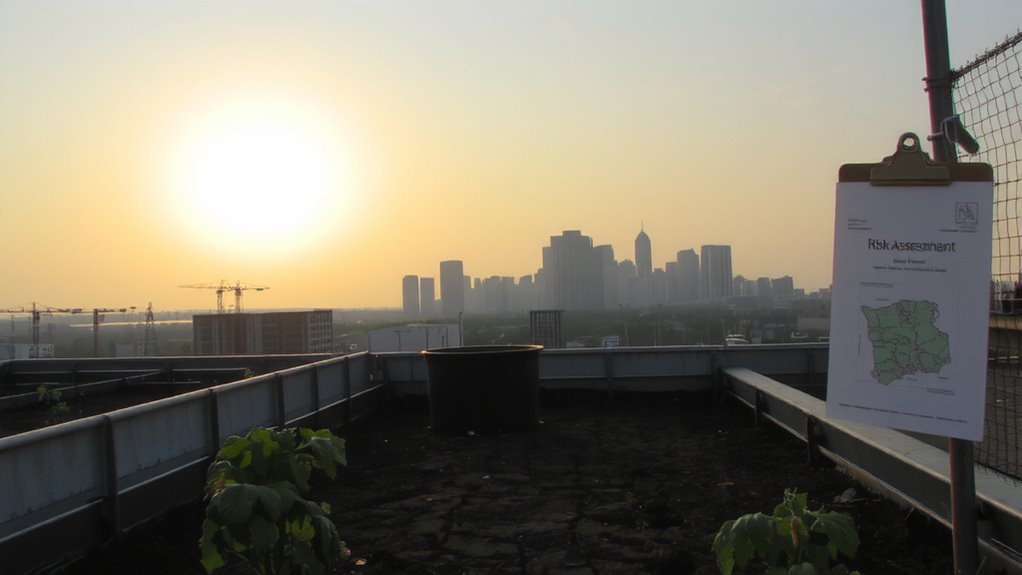
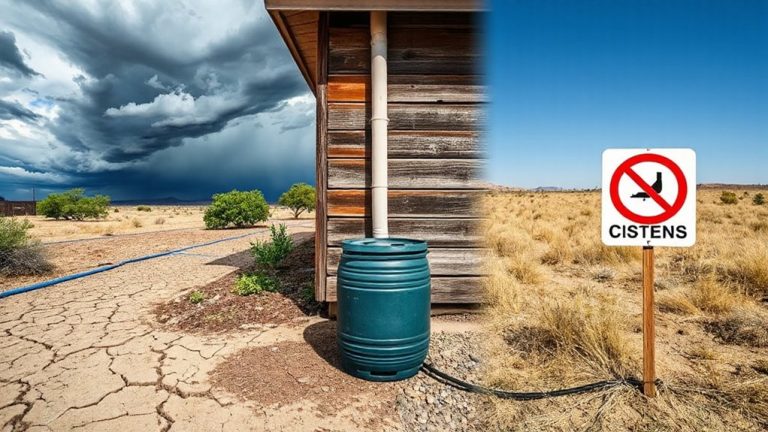
Why does your city’s climate matter for your garden? Because urban heat alters growing seasons and stresses plants. You face higher nighttime temperatures and longer summer peaks, especially in paved areas. This heat accelerates evaporation, increasing water demand. Combined with seasonal drought, which many cities now experience annually, your soil dries faster and nutrients degrade. These conditions favor heat-tolerant species but challenge cool-season crops. You’ll see reduced germination rates and wilted foliage without intervention. Rainfall isn’t reliable, so irrigation systems become essential, though water restrictions may limit use. Microclimates within your garden vary, but city-wide trends show rising average temps and more frequent dry spells. You must choose plants that survive these pressures. Ignoring urban heat and seasonal drought leads to crop failure. Adapting means selecting resilient varieties, mulching to retain moisture, and timing planting to match shifting seasons. Your success depends on aligning with local climate reality.
Find High-Risk Spots in Your Garden
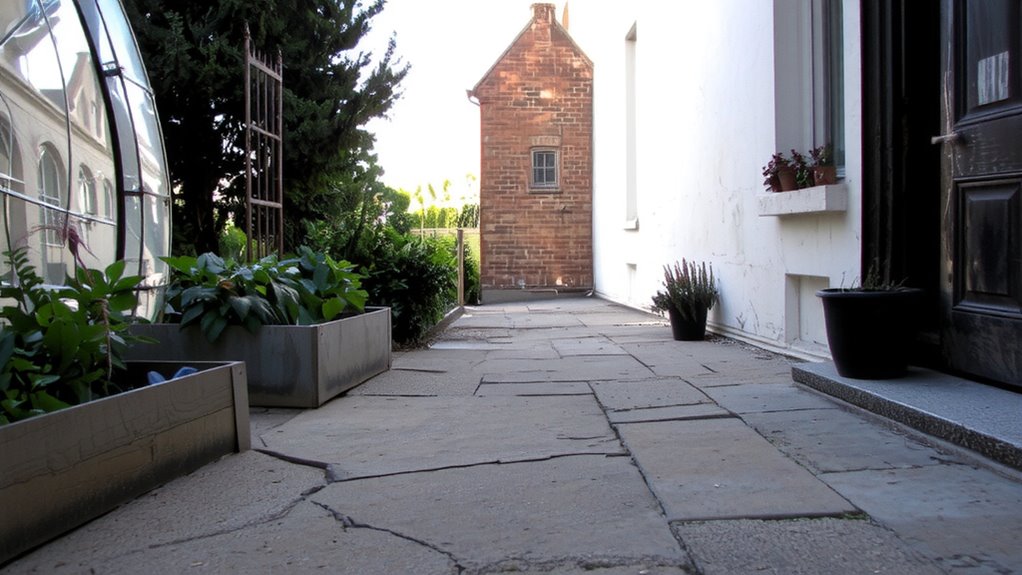
Where do your plants struggle most? Those spots often hide risks like soil erosion or plant disease. Check for bare patches, pooling water, or weak growth-signs something’s off. Look closely at microzones where conditions differ from the rest of your garden.
| Location | Risk Type | Indicator |
|---|---|---|
| Sloped areas | Soil erosion | Exposed roots, loose soil |
| Low-lying zones | Waterlogging | Wilting, foul-smelling soil |
| Shady corners | Plant disease | Mold, yellowing leaves |
| Near walls | Heat buildup | Crisped edges, stunted growth |
| Foot traffic paths | Compacted soil | Hard surface, poor germination |
These areas demand attention. Erosion washes away nutrients. Disease spreads fast in damp, shaded spots. Compacted soil limits root growth. You can’t prevent every issue, but spotting trouble early helps you act before it’s too late.
Watch for Environmental Warning Signs
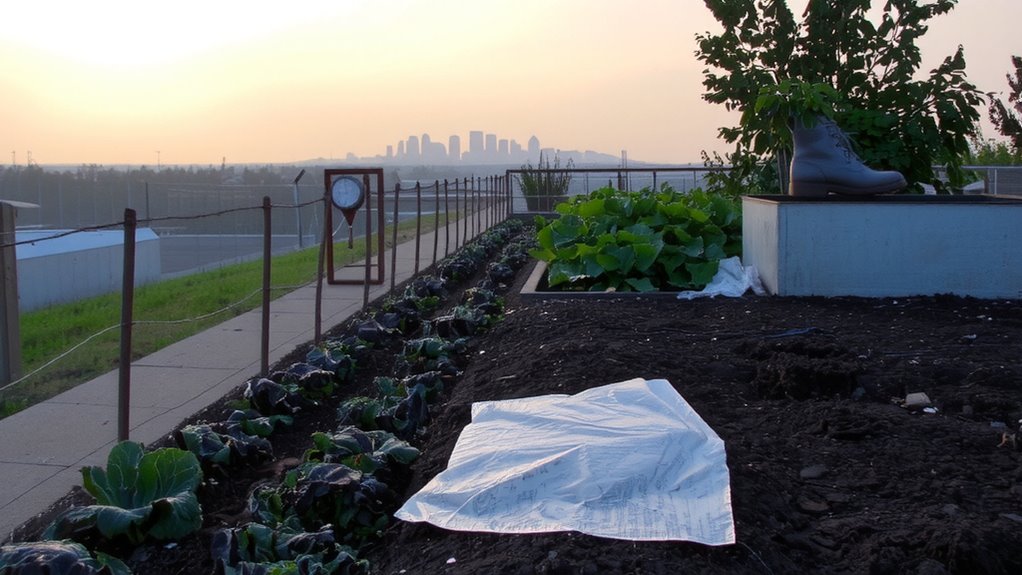
What do cracked pavement, wilting leaves at noon, or a sudden drop in bee visits tell you? They’re signs your garden’s environment is under stress. Cracked soil often points to soil erosion, especially after heavy rain or poor ground cover, weakening root support and nutrient retention. If leaves wilt in midday heat despite watering, it may signal poor moisture holding capacity from degraded soil. A sharp decline in pollinators can precede pest outbreaks, as imbalanced ecosystems favor invaders like aphids or mites. Stunted growth, chewed foliage, or sticky residues are early evidence. Yellowing plants along slopes or near paved areas often mark erosion zones. You don’t need sensors-just daily observation. Act fast: reinforce soil with mulch, introduce beneficial insects, and monitor changes weekly. These cues won’t predict disasters but will show where your garden is vulnerable now.
Plan for City-Scale Disasters That Hit Gardens
While you can’t control a hurricane, flood, or heatwave, you can reduce its impact on your urban garden by planning ahead. Start with emergency drills that simulate power outages, water loss, or extreme weather-practice helps you respond quickly. Include neighbors to strengthen community-wide resilience. Resource stockpiling is equally critical: store enough water, seeds, and soil amendments to last two weeks post-disaster. Use durable containers rated for long-term storage. Prioritize non-perishable supplies like hand tools, shade cloth, and waterproof tarps. Test storage conditions every three months. Cities often restore services unevenly-your garden may wait. Planning guarantees you maintain access to food and materials when systems strain. These steps don’t prevent disasters but improve survival odds. Measure success by functionality, not convenience. A prepared urban garden recovers faster, feeds more people, and reduces pressure during city-wide crises. Consider using waterproof storage containers to protect critical supplies from moisture and environmental damage.
Build a Rapid Response Plan for Garden Emergencies
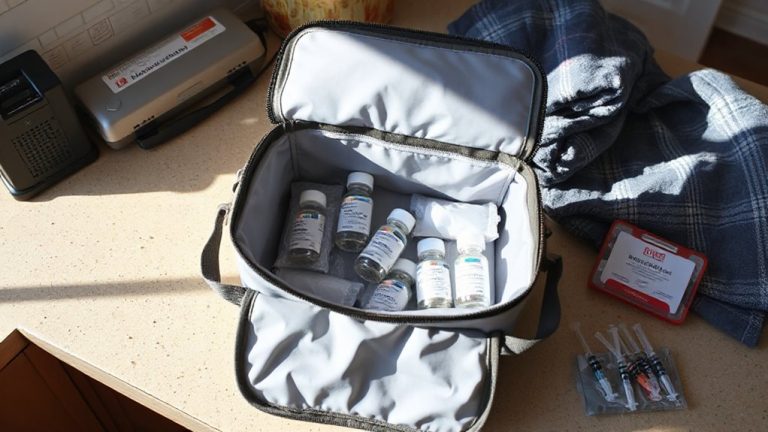
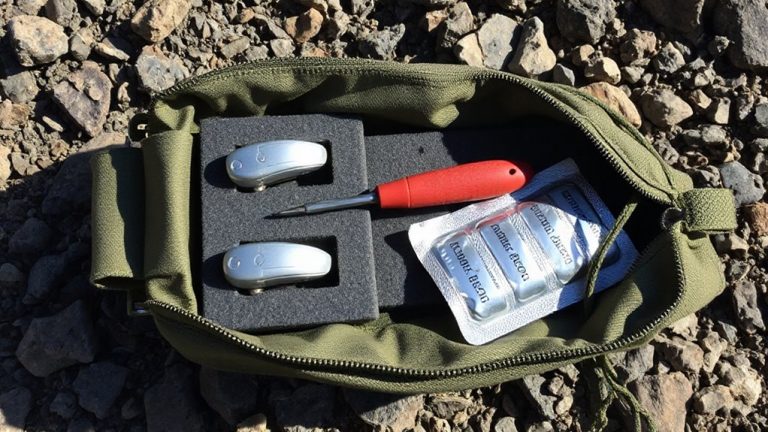
How quickly can you act when disaster strikes your garden? You need a rapid response plan that’s clear and actionable. Start by mapping out every potential threat-floods, fires, pest outbreaks-and assign specific steps for each. Run emergency drills every season to test your speed and coordination. These drills reveal gaps in communication, access, or tools. Keep a supply kit stocked with gloves, pruners, biodegradable disinfectant, row covers, and water purification tablets. Store it in a labeled, weatherproof container near the garden entrance. Include contact numbers for local urban farming networks and pest control support. Practice retrieving and using kit contents in under three minutes. A solid plan reduces crop loss by up to 60% during critical windows. Your response time matters more than the tools you own. Prepare. Test. Adapt.
On a final note
You face real risks, from floods to heatwaves, so know your climate and site. Check drainage, sun exposure, and soil quality-they dictate resilience. Watch weather patterns and city alerts-they’re your early warning. Plan for power outages and water access-they affect irrigation. Keep tools ready and crops diverse-they improve recovery odds. No garden survives everything, but preparation cuts losses. Simple steps now reduce damage later.