Maximizing Heat Retention in Cold Climates Without Overheating Indoors
Seal gaps around windows and doors with foam tape or V-strip weatherstripping to block 800+ cubic feet of cold air per hour from entering through a 1/8-inch gap. Insulate your attic to R-38, walls to R-13–R-15, and floors to R-25–R-30 to cut heat loss. Use thermal curtains with sealed edges and run ceiling fans clockwise on low to push warm air down. A heat recovery ventilator exchanges air efficiently while retaining up to 80% of heat. There’s more to optimizing your home’s performance where details matter most.
Notable Insights
- Seal gaps around windows and doors with durable weatherstripping and caulk to block cold air infiltration without raising indoor temperatures.
- Insulate attics, walls, and floors to recommended R-values, reducing heat loss while maintaining consistent, comfortable indoor temperatures.
- Install thermal curtains with sealed edges to minimize radiant heat loss through windows, especially in rooms with single-pane glass.
- Use ceiling fans in reverse clockwise mode on low to circulate warm air downward, enhancing comfort without increasing thermostat settings.
- Employ heat recovery ventilators to maintain air quality and reduce moisture, reclaiming up to 80% of heat during air exchange.
Seal Windows and Doors to Retain Heat
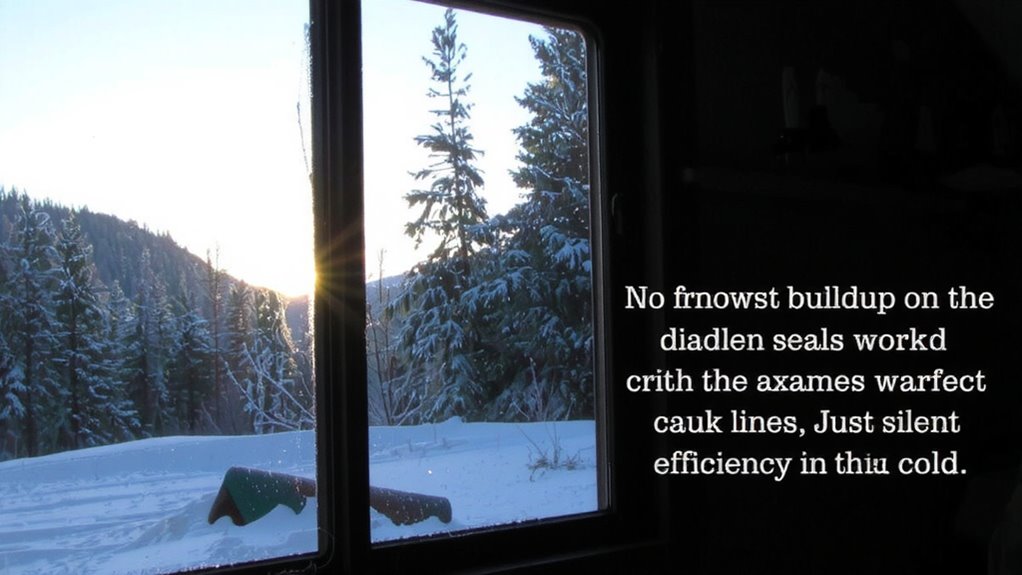
While some gaps around windows and doors might seem too small to matter, even a 1/8-inch gap can let in over 800 cubic feet of cold air per hour under typical winter conditions, so sealing them is critical for maintaining indoor heat. You’ll want to start by inspecting all movable joints and fixed seams. Use weatherstripping gaps in places where doors and operable windows meet the frame-foam tape and V-strip last longer than felt and provide tighter seals. Apply latex or silicone caulk to stationary caulking cracks, such as where the window sash meets the wall. Silicone holds up better over time but is harder to remove; acrylic is paintable and sufficient for interior use. Replacing worn weatherstripping typically costs under $20 and cuts draftiness within days. These materials aren’t permanent fixes-expect 3 to 5 years of service in most climates-but they deliver consistent reductions in air infiltration when applied correctly.
Insulate Attics, Walls, and Floors
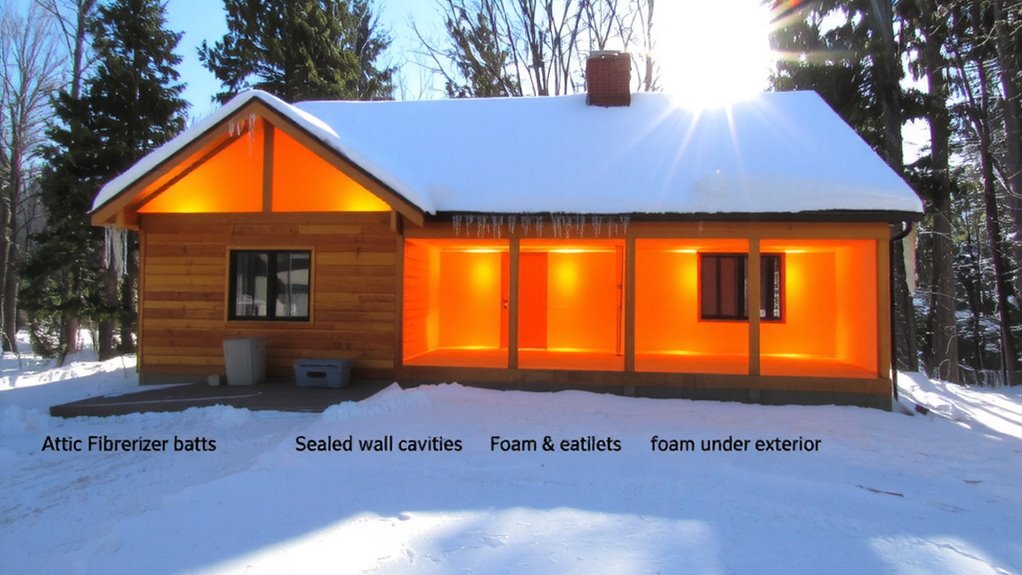
You’ve sealed the leaks around windows and doors, but without proper insulation in place, a significant amount of heat still escapes through the building envelope. Attic insulation is critical-heat rises, and an uninsulated attic can account for up to 25% of heat loss. Aim for an R-value of at least 38 in cold climates, typically achieved with 12 to 15 inches of fiberglass or cellulose. Wall insulation is harder to retrofit but equally important; uninsulated walls can lose 35% more heat than insulated ones. Opt for R-13 to R-15 in standard 2×4 walls. Spray foam offers higher R-values per inch but costs more; fiberglass batts are cheaper but require precise installation. Floors over unheated spaces need R-25 to R-30. Poorly insulated floors feel cold and increase heat demand. Proper insulation in these areas stabilizes indoor temps without overworking heating systems.
Use Thermal Curtains to Trap Warmth
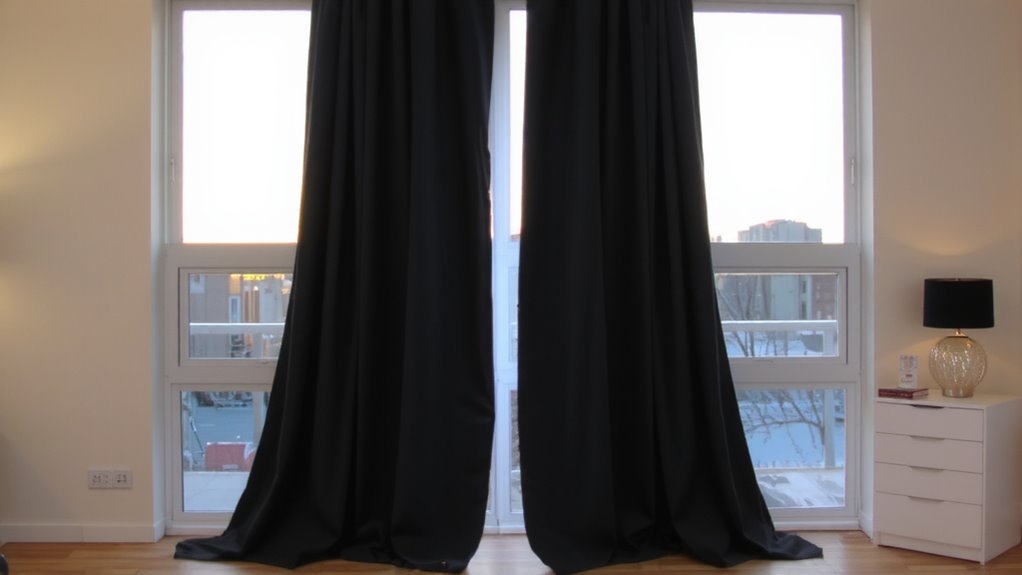
If you’re looking to reduce nighttime heat loss through windows, thermal curtains are a cost-effective layer that can cut radiant heat transfer by up to 25%. They work by adding a dense, insulated barrier between the room and cold glass, slowing conduction and convection. Most models use a foam or felt core backed with vapor-resistant material, which improves performance in damp climates. Seal the edges with Velcro or magnets to prevent air leakage-this small step boosts efficiency by up to 10%. You’ll notice better room comfort, especially in older homes with single-pane windows. While not as effective as storm windows, thermal curtains cost less and install in minutes. They don’t eliminate heat loss but reduce it enough to lower thermostat demands. Heavy fabrics may require reinforced rods, so check hardware specs. Use them in bedrooms and living areas where evening warmth matters most.
Keep Air Fresh Without Losing Heat
Since maintaining indoor air quality matters just as much as keeping heat in, balancing ventilation with thermal efficiency requires a strategic approach. You need fresh air, but opening windows wastes heat. That’s where controlled ventilation strategies help. Installing a heat recovery ventilator (HRV) or energy recovery ventilator (ERV) lets you exchange stale indoor air for fresh outdoor air while retaining up to 80% of conditioned heat. These air exchange systems run continuously at low speeds, using minimal power-typically 10–30 watts-yet move 50–100 cubic feet per minute. Filters remove dust and allergens, improving air quality without drafts. In very cold conditions, they reduce moisture buildup that leads to mold. Units with automatic frost prevention avoid icing issues. They’re not cheap upfront-expect $800–$2,000 installed-but in tightly sealed homes, they’re the most effective way to keep air fresh without losing heat.
Add Thermal Mass to Stabilize Temperatures
Thermal mass works quietly in the background to smooth out temperature swings, unlike ventilation systems that actively move air. You absorb heat when it’s abundant and release it slowly as temperatures drop, preventing sharp indoor fluctuations. Dense materials like concrete, brick, or stone do this well, but newer options like phase change materials (PCMs) store and release even more heat per unit volume by changing state at specific temperatures-useful where space is limited. A Trombe wall design, for example, pairs a thick masonry wall with glazing to capture solar heat during the day and radiate it at night. It’s effective but needs precise orientation and spacing to avoid overheating. PCMs integrate into walls or ceilings but can degrade over cycles. Both add stability, though they require thoughtful placement to match your climate and heating patterns. They work best when combined with passive solar strategies and good insulation.
Circulate Warm Air Efficiently
While heat might collect in one area, it won’t do you much good if it stays there, so moving it where it’s needed makes a real difference in comfort and efficiency. You can use ceiling fans set to rotate clockwise on low to push warm air down from the ceiling, reducing stratification without creating drafts. This simple adjustment improves perceived warmth by 2–4°F, letting you lower the thermostat. At the same time, check your HVAC system’s duct sealing-leaks can waste 20–30% of heated air, especially in unconditioned spaces like attics or crawlspaces. Sealing joints with mastic or metal tape, not standard tape, reduces energy loss and balances room temperatures. Don’t overlook duct insulation in cold zones; it maintains air temperature during transit. Together, ceiling fans and proper duct sealing guarantee warm air reaches where you need it, without overworking your system or overheating occupied rooms.
On a final note
You’ll keep interiors warm without overheating by sealing leaks, adding insulation, and using thermal curtains-each cuts heat loss by 10–20%. Thermal mass like concrete floors stabilizes temps but responds slowly. Circulate air with ceiling fans on low to push warm air down. Ventilate briefly to refresh air without significant heat loss. These steps work together efficiently, reducing energy use 15–30% in cold climates while maintaining comfort.