Risk Management and Threat Awareness: Developing Acute Sensitivity to Potential Dangers in Your Environment
You stay safer by training yourself to notice small changes in behavior and surroundings, like someone avoiding eye contact or a sudden silence in a crowded area. These cues help you spot threats early, giving you time to react. Your brain often misses them due to mental shortcuts, but regular scanning every 30 to 60 seconds builds reliable awareness. Practical habits-like noting exits and recognizing suspicious clothing-improve your response without guesswork. There’s more to fine-tune in your favor.
Notable Insights
- Recognize deviations from normal behavior and environmental patterns to detect potential threats early.
- Scan your surroundings every 30 to 60 seconds to establish a baseline and identify anomalies.
- Overcome cognitive biases like normalcy bias that prevent accurate threat recognition in everyday settings.
- Identify suspicious cues such as mismatched clothing, avoidance of eye contact, or nervous body language.
- Develop and practice a personal safety plan with clear exits, communication protocols, and emergency supplies.
What Is Threat Awareness, and Why Does It Matter?
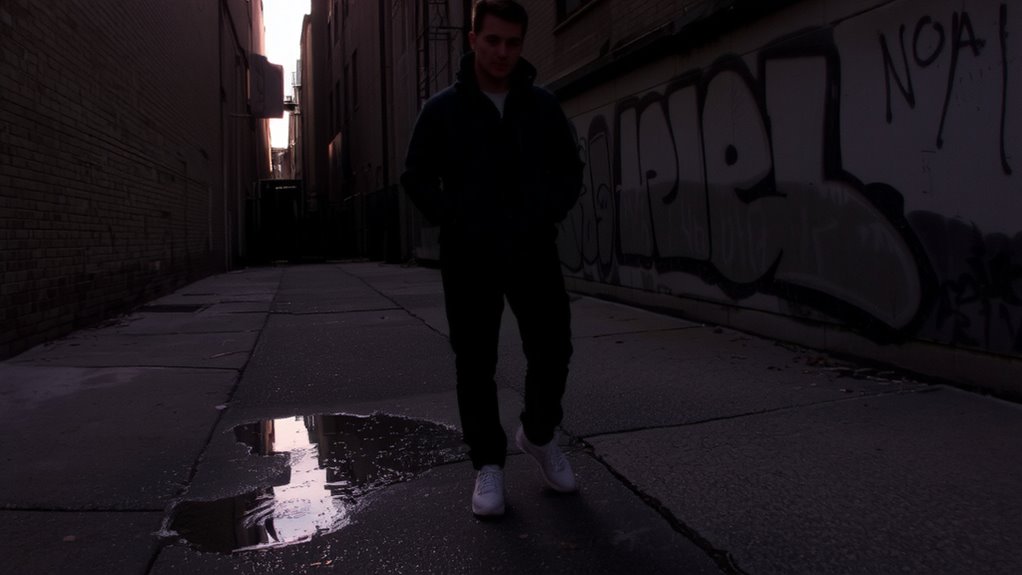
Why do some people spot danger before it happens while others don’t? You do it by recognizing situational context and reading environmental cues. Threat awareness means staying alert to changes around you-like a sudden quiet on a busy street or someone’s unusual behavior. It’s not about fear; it’s about paying attention. You assess what’s normal so deviations stand out. Situational context gives you a baseline-knowing the environment helps you detect risks early. Environmental cues, like blocked exits or mismatched clothing, offer subtle warnings. You can’t prevent threats if you don’t see them coming. This skill isn’t innate; it’s learned. Practice improves your reaction time and decision quality. Awareness doesn’t guarantee safety, but it increases your odds. You trade minimal daily effort for meaningful risk reduction. It’s effective, measurable, and practical-just like sound risk management.
Spot Threats in Public Spaces

How do you know when something’s off in a crowded mall or quiet park? You rely on situational awareness-scanning your environment, noting exits, and tracking people’s movements. Trust your instincts when something feels wrong. Most threats show behavioral cues before escalating. Watch for signs like erratic movements, overly tight grips on objects, nervous glancing, or clothing unsuited to the weather-like wearing a heavy coat in summer. Someone avoiding eye contact while edging toward crowds may be a risk. These aren’t assumptions; they’re observations grounded in real-world patterns. Situational awareness isn’t about fear-it’s focus. You don’t need special tools, just attention. It works in any public space because it’s based on human behavior, not location. Recognizing these cues early gives you time to act. You won’t catch every threat, but you increase your odds. That’s the goal-measurable, practical advantage through consistent observation.
Stay Aware in Any Environment

Wherever you are, can you detect subtle changes in your surroundings before they become a problem? Staying aware in any environment relies on consistent situational alertness and disciplined environmental scanning. You don’t need special tools-just the habit of observing inputs: sounds, exits, lighting, and people’s behavior. In a parking garage, notice if lights flicker or footsteps echo unexpectedly. In a café, track how many people enter and where they sit. These aren’t guesses-they’re measurable cues. Situational alertness means processing those inputs without reaction, just awareness. Environmental scanning works best when done every 30 to 60 seconds, creating a baseline. Deviations stand out faster. You trade minor effort for significant early warning. It’s not about fear-it’s about data. Over time, pattern recognition improves. The real test isn’t speed-it’s consistency under routine conditions. That’s where threats are missed. Stay aware by making scanning routine, not reactive.
Why Your Brain Misses Red Flags
What makes your brain overlook the flicker of movement in your periphery or the slight change in someone’s tone? Your mind relies on pattern recognition to process threats quickly, filtering stimuli based on familiar cues. But this efficiency comes at a cost. Cognitive bias skews perception, causing you to dismiss subtle anomalies that don’t match expected scenarios. You assume normalcy until confronted with obvious danger, mistaking absence of immediate threat for safety. This mental shortcut works most of the time but fails when threats are novel or camouflaged. Your brain prioritizes speed over accuracy, misreading tense silence as calm or ignoring micro-expressions. Real-world situations prove this-people often miss staged threats in tests because they’re not looking for deviations. Relying only on automatic pattern recognition reduces sensitivity. You need deliberate scanning to counteract cognitive bias and detect red flags before they escalate. Awareness isn’t passive. It requires active revision of assumptions.
Test Your Threat Detection Skills
Can you spot the threat before it moves? Right now, you’re scanning a crowded sidewalk-notice who stands too still, who avoids eye contact, or crowds near exits. These are behavioral cues worth tracking. Threat detection isn’t instinct; it’s trained observation. Run a situational analysis: assess lighting, escape routes, and group dynamics. A person shifting weight repeatedly or scanning faces may signal intent. You don’t need drama-just data. Practice in malls, transit hubs, or parking lots. Note how often you catch anomalies versus missing them. Accuracy improves with repetition. Misreads happen, but false positives are safer than blind spots. You’re not predicting crime-you’re measuring consistency in environmental patterns. Build this like any skill: test, record, compare. Your margin of error shrinks with deliberate practice. Stay neutral, stay alert, stay precise.
Build Your Personal Safety Plan
How do you respond when seconds count? You need a personal safety plan grounded in emergency preparedness and clear personal boundaries. Start by identifying safe routes out of your home, workplace, and frequent locations-map two exits minimum. Set communication protocols with trusted contacts; use coded phrases if necessary. Define your personal boundaries firmly-know when to disengage or relocate. Carry a charged phone and a small emergency kit with essentials like a whistle, flashlight, and first aid items. Practice drills monthly. Avoid predictable routines. Assess risks realistically: urban areas demand situational awareness; rural zones require self-reliance. Balance visibility and concealment based on environment. A good plan isn’t rigid-it adapts. Test it annually. Adjust based on experience. Your plan only works if you train for it. Preparedness isn’t fear-it’s precision. Boundaries aren’t limits-they’re controls. Build yours now. A well-stocked first aid kit can make a critical difference in treating injuries promptly and effectively.
On a final note
You stay safer when you practice alertness daily. It’s not about fear-it’s about noticing exits, crowds, and behavior shifts. Your awareness improves with routine scans and environmental checks. Devices help, but they fail; rely on your senses first. Training beats technology. A flashlight, sturdy phone, and situational drills deliver measurable advantages. Balance vigilance with calm. Overpreparing wastes time. Underpreparing risks more. Adjust habits based on real threats, not guesses.