Understanding the Importance of Water Quality Testing in Outdoor Environments
You can’t judge water safety by how it looks-clear streams may hide bacteria, nitrates, or microplastics from runoff and pollution. Testing outdoors with portable kits gives you immediate data on pH, contaminants, and oxygen levels, helping you avoid illness. Tools like test strips and digital meters are reliable if calibrated and used right. False readings risk your health, so follow procedures and check expiration dates. Results guide treatment choices-filters won’t remove chemicals, and UV doesn’t fix heavy metals. Knowing what’s in your water keeps you safe and informed.
Notable Insights
- Clear water can still contain dangerous contaminants like bacteria, chemicals, and microplastics, making testing essential for safety.
- Climate changes alter water flow and pollution levels, increasing the risk of exposure to unsafe water in outdoor environments.
- Agricultural runoff introduces harmful nitrates and pathogens into natural water sources, often undetectable without proper testing.
- Portable test kits enable quick, on-site detection of pH, dissolved oxygen, and contaminants, supporting informed decisions in remote areas.
- Many contaminants, such as heavy metals and pesticides, cannot be removed by standard filters and require accurate testing to avoid health risks.
Why Test Water Quality Outdoors?
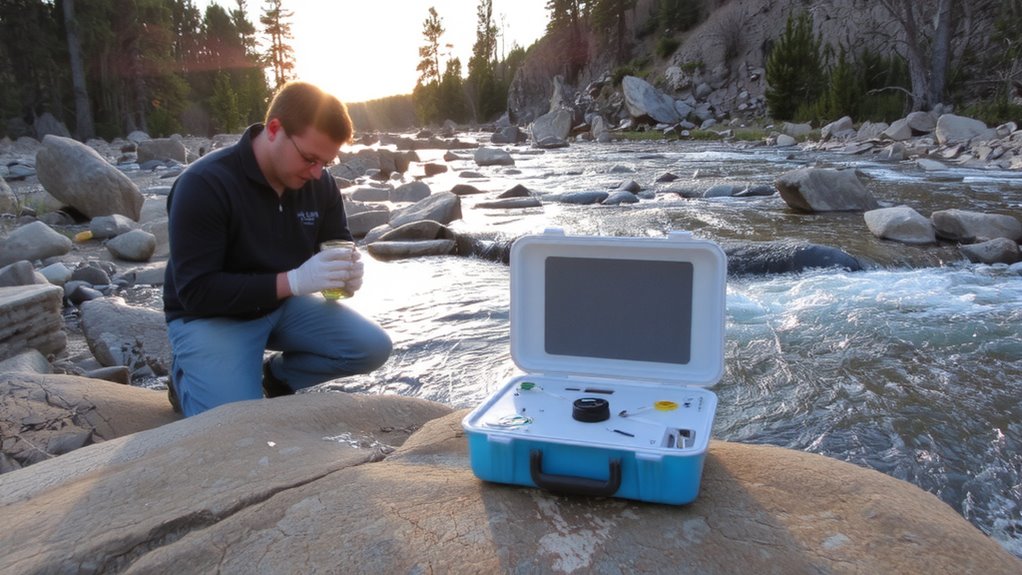
Ever wonder why you should bother testing water quality when you’re miles from the nearest town? Because unseen issues don’t stay far away for long. Even remote sources face climate impact-droughts, floods, and shifting rainfall alter flow and concentration of pollutants. You might find clear water, but that doesn’t guarantee safety. Testing gives you real data, not guesses. In areas experiencing water scarcity, demand outweighs supply, increasing the chance of consuming compromised water. Contamination risks rise when fewer sources are viable. Portable test kits deliver quick pH, turbidity, and dissolved oxygen readings-metrics that signal usability. Relying on appearance or tradition leads to avoidable risks. Climate impact worsens existing vulnerabilities, making regular testing necessary, not optional. You can’t manage what you don’t measure. Testing guarantees you know the water’s condition before you depend on it-critical when help is hours or days away. A reliable water filter for survival can remove pathogens, but only if you first understand the contamination risks through proper testing.
Common Contaminants in Natural Water
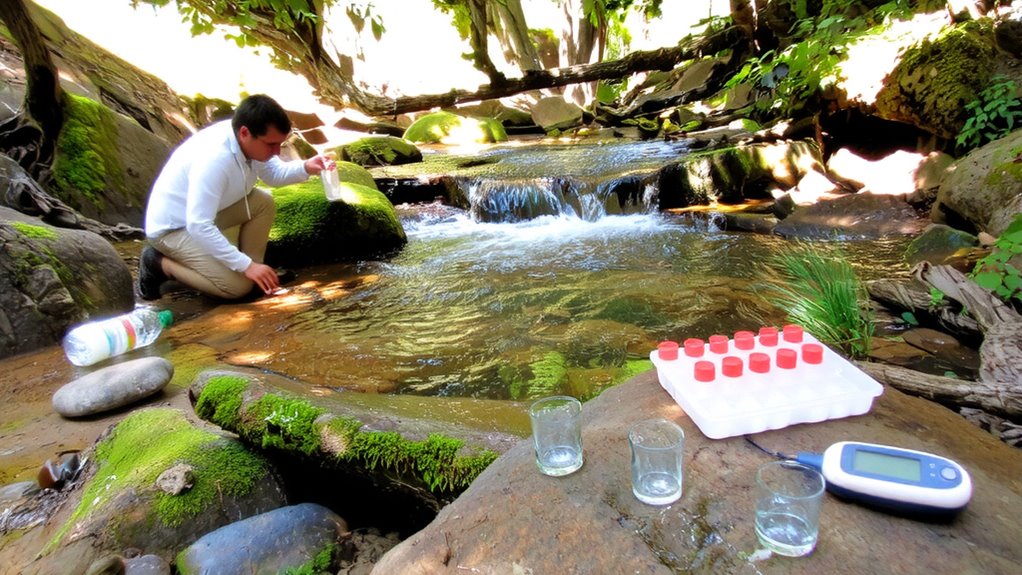
What’s actually in that clear mountain stream? More than you might think. You’re likely exposed to microplastic pollution, even in remote areas-tiny plastic particles from synthetic clothing and degraded waste make their way into waterways and don’t break down. They’re pervasive and can carry harmful chemicals. Agricultural runoff is another major concern. When it rains, fertilizers, pesticides, and animal waste wash from farms into rivers and lakes, introducing nitrates, pathogens, and algal bloom triggers. These contaminants aren’t always visible, but they pose real health risks. You can’t rely on clarity or taste to judge safety. Microplastics accumulate over time, and runoff spikes after storms. Both issues stem from widespread human activity and travel far beyond their sources. Testing helps identify these hidden threats, letting you make informed decisions about water use in the wild. A reliable water filtration system can significantly reduce exposure to these contaminants when treating natural water sources.
Best Portable Tools for Field Water Testing
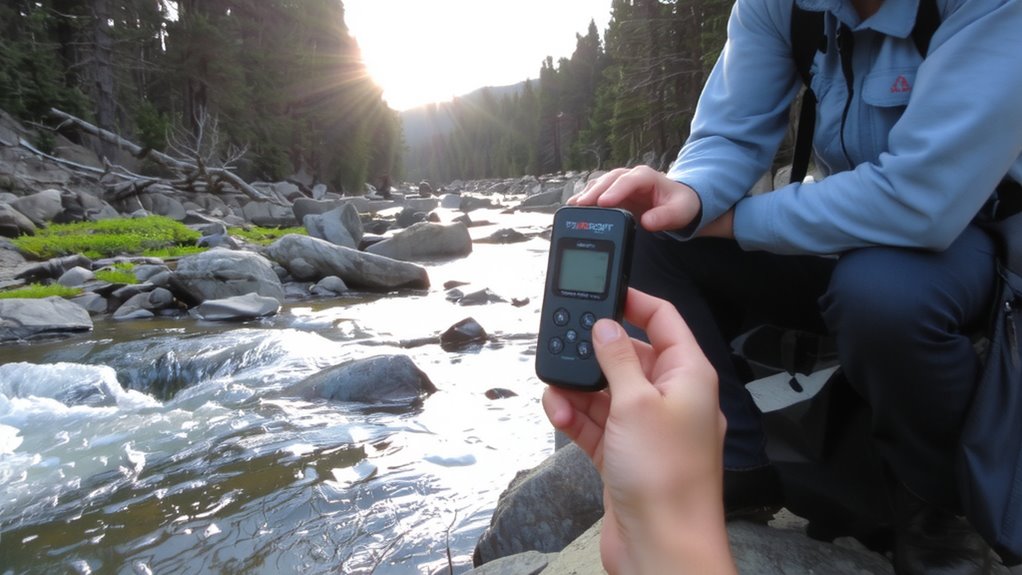
You’ll want a reliable toolkit that balances accuracy, durability, and ease of use when testing water in the field. Test strips offer portable accuracy for pH, chlorine, nitrates, and hardness, delivering rapid analysis in under a minute-ideal when speed matters. Digital meters, like portable pH and TDS testers, provide more precise readings but require calibration and careful handling. Colorimetric kits, using reagents and comparators, are dependable for detecting contaminants such as iron or bacteria, though they take longer. Choose tools with rugged casings and minimal moving parts to survive outdoor conditions. Battery life and spare supplies matter on extended trips. You’ll trade lab-grade precision for mobility, but with proper use, these tools deliver actionable data. Always check manufacturer specs for detection ranges and field validation. Reliable portable accuracy means knowing what’s in your water without needing a lab. For emergency situations, consider pairing your testing kit with a survival water purifier to ensure safe drinking water when contamination is detected.
How to Use Test Kits Safely and Accurately
How do you guarantee your test kit delivers results you can trust in the field? Start with proper test kit calibration before each use-follow the manufacturer’s instructions carefully to guarantee readings are accurate. Incorrect calibration leads to false data, which could put your health at risk. Always take safety precautions: wear gloves, avoid skin contact with reagents, and don’t test near food or drinking supplies. Read the kit’s manual thoroughly-you’re only as reliable as your preparation. Use clean containers and avoid cross-contamination. Check expiration dates; expired strips or chemicals reduce accuracy. Environmental conditions like extreme temperatures can affect results, so store and use the kit within recommended ranges. You’re relying on this data for safety, so skip shortcuts. Precision matters more than speed when evaluating water. A well-handled, calibrated kit used with proper safety precautions gives you dependable, actionable results in remote conditions.
When and Where to Sample During Adventures
Sampling at the right moment and in the right spot makes a difference in whether your results reflect real risks. Choose the best sampling times-early morning or after stable weather-when contaminants aren’t diluted or stirred unpredictably. Avoid sampling right after heavy rain or during peak human activity. In remote location challenges, access and delays matter; pack portable kits and prioritize flowing, accessible water sources. Test before consumption, not after. Use the table below to guide location and timing decisions:
| When to Sample | Where to Sample |
|---|---|
| Early morning | Midstream, waist-depth |
| After 24h dry weather | Upstream from campsites |
| Before using water | Away from animal trails |
| During stable flow | Flowing sections, not pools |
| At consistent intervals | Below surface, no debris |
These choices improve accuracy without extra tools.
How to Interpret Results and Avoid Health Risks
What good is a test if you can’t act on it? You need to read your results like a map-ignoring them risks real harm. High bacteria counts mean waterborne pathogens are present; don’t drink, cook, or even brush your teeth with it. Filters or chemical treatments can help, but only if used correctly and consistently. Check for nitrates, heavy metals, or pesticide levels-these indicate chemical exposure risks that most field filters won’t remove. If levels exceed safety standards, find another source. UV treatment kills microbes but does nothing for toxins. Test kits vary in accuracy; lab-grade strips and digital meters give clearer data than basic kits. Know your gear’s limits. A positive result isn’t a suggestion-it’s a warning. Treat contaminated water as off-limits, every time.
How Your Testing Helps Protect Ecosystems
Every drop you test adds a data point to the bigger picture-your readings don’t just keep you safe, they help track the health of entire waterways. When you monitor pH, dissolved oxygen, and contaminants, you’re checking the chemical balance that supports life. Consistent data reveals pollution trends before they collapse habitats. Your efforts directly support biological diversity by identifying threats to fish, insects, and plants.
This isn’t just fieldwork-it’s frontline protection.
| What You Measure | Why It Matters |
|---|---|
| pH levels | Affects toxicity of pollutants |
| Nitrate content | High levels kill oxygen-producing plants |
| Water temperature | Influences species survival and breeding |
| Dissolved oxygen | Critical for aquatic life respiration |
| Turbidity | Impacts light penetration and plant growth |
Over time, your tests detect imbalances early, allowing intervention. You’re not just collecting numbers-you’re helping maintain ecosystems others depend on.
On a final note
You need to test water quality because clear doesn’t mean safe. Portable kits detect unseen contaminants like E. coli or heavy metals that can make you sick. Test upstream, midstream, and after rain for accurate results. Most field kits give reliable readings in under 10 minutes but require proper storage and calibration. Your data helps spot pollution early, protecting both your health and local ecosystems-practical, measurable, and essential for any serious outdoor plan.