A Detailed Guide to Constructing a Simple Solar Distillation Unit for Clean Water
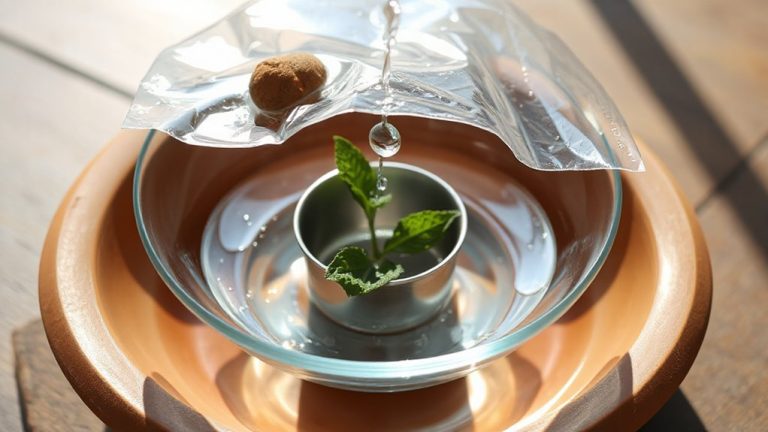
Dig a hole and place a clean container in the center. Pour impure water around it, not inside. Cover the hole with clear plastic, seal it with rocks or soil, and let the sun heat the basin. Evaporation collects on the plastic and drips into the container. You’ll get 0.5 to 1.5 liters per square meter daily, depending on sunlight. Use dark, durable materials and keep the cover sloped. Small leaks cut output fast-fix them with tape or sealant. Better seals and preheated water boost yield. Optimize positioning and slope for more.
Notable Insights
- Select a sunny, stable site and dig a hole to hold a dark, non-toxic container for efficient solar heating.
- Pour impure water around the container, not inside, to allow evaporation while contaminants remain behind.
- Seal a clear plastic or glass cover over the hole with rocks or soil to trap and direct water vapor.
- Angle the cover to channel condensed droplets into a clean collection container placed at the lowest point.
- Maintain the unit by sealing leaks, clearing debris, and cleaning the cover to ensure optimal daily output.
Build a Solar Still Step by Step
If you’re short on clean water and need a reliable way to purify contaminated or salty water, building a basic solar still is one of the most practical options, especially when resources are limited. You’ll start by selecting a location with direct sunlight and stable ground for effective still placement-this affects efficiency more than most realize. Dig a hole just large enough to hold your container, then place it in the center for water collection. Pour the impure water around the container, not inside it. Cover the hole with a clear plastic sheet, sealed tightly with rocks or soil. Place a small weight in the center so the plastic dips directly over the container. As the sun heats the ground, moisture evaporates, condenses on the plastic, and drips into the container. This method delivers a slow but steady output, typically 0.5 to 1 liter per day, depending on sunlight and humidity.
What You Need to Make a Solar Still
While you can improvise a solar still with minimal gear, having the right materials improves output and reliability. For the basin, use a dark, non-toxic container-black PVC or food-grade rubber works well because it boosts heat absorption. The cover should be clear glass or UV-stable plastic; glass retains heat better, but polycarbonate is lighter and less prone to breakage. You’ll need a small collection cup-lightweight and narrow to reduce evaporation loss. Use a rubber seal or adhesive to prevent vapor leaks. Material selection directly affects efficiency: metal conducts heat too quickly, while thick plastic insulates but warps under sustained sun. A 20-gallon basin with 1/4-inch glass cover yields about 0.8 liters per day in direct sunlight. Nylon ropes and stainless clamps secure the setup without degrading. Avoid cardboard or thin film-they absorb moisture and reduce condensation. Proper materials balance durability, thermal response, and vapor capture.
How Solar Stills Purify Water
When sunlight hits the dark basin of your solar still, it heats the contaminated water inside, causing evaporation that leaves behind pathogens, heavy metals, and salts. This evaporation process separates pure water molecules from impurities, since only vapor rises. The vapor then moves upward and contacts the cooler glass or plastic cover. There, it undergoes condensation collection, turning back into liquid on the underside of the sloped surface. Gravity pulls the condensed droplets along the surface into a collection trough or tube, delivering relatively pure water. Most solar stills achieve about 30–50% removal of total dissolved solids under clear conditions. Output varies-typically 0.5 to 1.5 liters per square meter per day-depending on sun intensity, ambient temperature, and still design. Efficiency improves with darker basins, better seals, and ideal tilt. There’s no filter to replace, and maintenance is low, but speed is a limitation.
Fix Common Solar Still Problems
You’ve seen how solar stills turn dirty water into drinkable supply using sunlight and condensation, but real-world use often brings hiccups that cut output or stop production altogether. Leaks are a top cause-warm vapor escapes through cracks, leading to vapor loss and reduced yield. You can fix this with waterproof tape or silicone sealant on seams and joints. Check the cover seal: if it’s loose, condensation won’t channel into the collection trough. Use a tight-fitting, transparent lid and press edges into damp soil or sealant for leak prevention. Make sure the plastic sheet slopes sharply so droplets run down efficiently. Dust, debris, or cloud cover lower performance, but vapor loss from poor sealing cuts output faster than most factors. Monitor for fogging inside, which signals trapped moisture. A small vent can help, but close it during peak sun. Repair fast, seal fully, and keep your system airtight to maintain steady function.
How to Get More Water From Your Still
If you want to increase your solar still’s output, start by maximizing sunlight exposure-position the unit where it receives full, direct sun from morning to mid-afternoon, since water production scales directly with solar intensity. You can boost evaporation efficiency by painting the inner basin black to absorb more heat, or using a dark, non-toxic liner. A smaller gap between the water surface and the cover raises evaporation rates, but make certain the plastic doesn’t touch the liquid. Tilt the condensation cover to direct more droplets into the water collection channel. Using preheated or warm input water increases hourly yield. A larger surface area promotes faster evaporation, but requires more materials. You’ll get roughly 0.5 to 1.5 liters per square meter daily, depending on conditions. Simple tweaks improve performance without added cost. Focus on consistent solar gain and efficient vapor condensation to maximize output.
When to Use and Maintain Your Solar Still
A solar still works best during periods of high sunlight and low humidity, typically from late spring to early fall in temperate climates or year-round in arid regions. You should run it when the sun’s intensity peaks, usually between 10 a.m. and 4 p.m., to maximize output. Check your unit daily for leaks, condensation patterns, and debris. Replace the inner surface if buildup appears. For algae prevention, use clean source water and empty the basin when not in use. Stagnant, nutrient-rich water encourages growth, which reduces efficiency. Perform water testing before drinking each batch, even if the still removes most contaminants. Simple test strips can detect nitrates, bacteria, or chemical residues. Maintenance takes minutes but guarantees reliability. Clean the cover with a damp cloth to maintain transparency. Inspect seals weekly to prevent vapor loss. Regular checks keep production steady and water safe. For added purification, consider pairing your solar still output with a best water filters system to ensure the highest quality drinking water.
On a final note
You’ve built a functional solar still that turns dirty or salt water into drinkable water using sunlight. It won’t produce gallons, but 0.5 to 1 liter per day in good conditions is realistic. Output depends on sun exposure, ambient temperature, and setup size. It’s slow but reliable when filters or fuel aren’t available. Use it when other purification methods fail. Maintain it by keeping materials clean and seals tight.