How to Implement a Water Storage Plan for Underground Survival Habitats
You’ll need one gallon of water per person daily-split between drinking and sanitation-so stock at least two weeks’ worth to stay safe while setting up backups. Use labeled, food-grade HDPE containers for long-term storage, or collapsible types if space is tight. Store in the dark, away from chemicals, and rotate every six months to keep quality. Test every three months, and pair carbon filters with UV purifiers like a SteriPEN for emergencies. A solid setup cuts risk and works when every drop counts.
Notable Insights
- Store at least two weeks’ worth of water per person, accounting for one gallon daily with hydration monitoring to prevent dehydration.
- Use HDPE or collapsible food-grade containers for durable, space-efficient water storage in underground environments.
- Keep water sealed and stored away from chemicals, in cool, dark locations to minimize contamination risk.
- Test stored water quarterly for bacteria and chemical residues, treating immediately if contamination is detected.
- Rotate water supplies every six months, reusing old water for non-potable tasks and refreshing storage with labeled dates.
How Much Water Do You Need Underground?
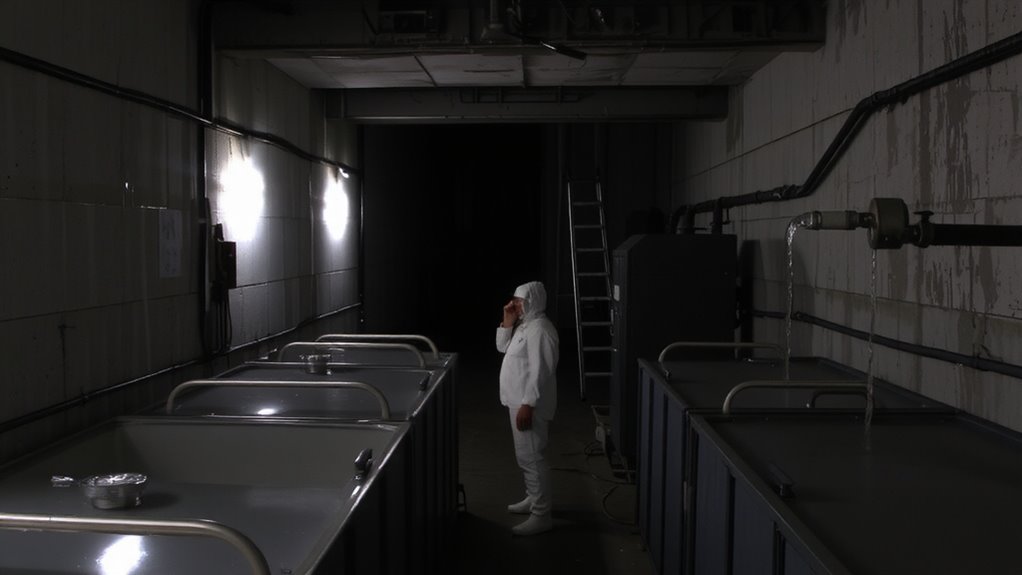
You’ll need at least one gallon of water per person per day for basic survival-half for drinking and half for sanitation. In an underground habitat, space and weight matter, so accurate planning is critical. Water rationing becomes necessary if supplies are limited or resupply uncertain. You’ll have to balance consumption with available storage, especially over extended periods. Hydration monitoring helps prevent both dehydration and overuse. Dark urine or infrequent urination are reliable signs you’re not drinking enough. Active individuals or those in warm environments may need more than a gallon, but exceeding that regularly strains storage capacity. Relying on estimates without tracking intake risks miscalculation. Use simple logs or checklists for hydration monitoring to maintain consistency. Water rationing isn’t about deprivation-it’s about sustainable use. Plan for at least two weeks of water per person to allow time for backup systems or purification methods. Consider using durable, food-grade water storage containers designed for long-term use to maintain water safety and structural integrity.
Best Containers for Long-Term Water Storage
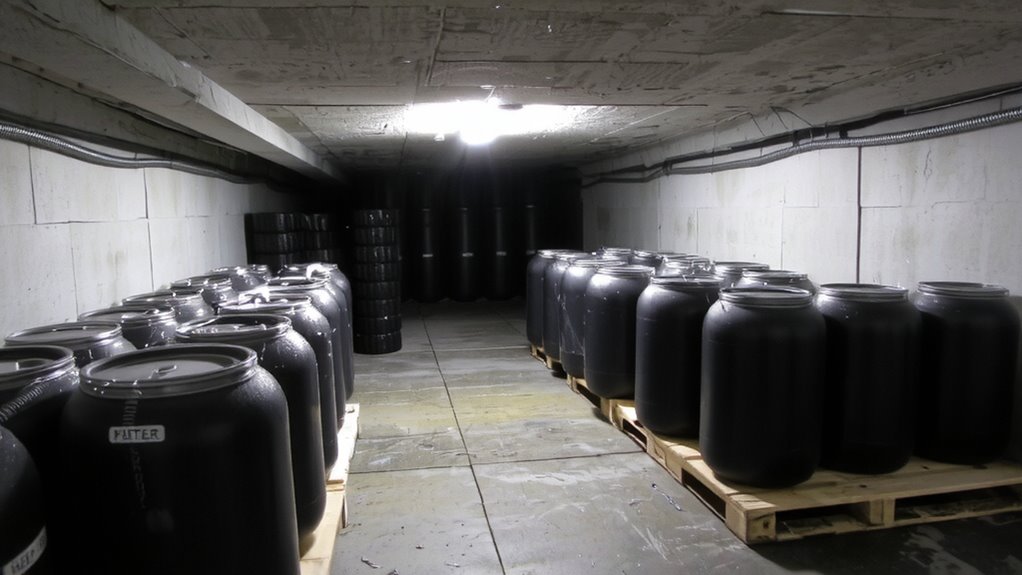
Storing enough water underground starts with choosing the right container, not just filling any available vessel and hoping it lasts. You need durable container materials and reliable sealing techniques to prevent leaks and degradation over time. Food-grade polyethylene (HDPE) is your best bet-it resists corrosion, doesn’t leach chemicals, and handles long-term pressure. Avoid containers made from recycled plastics unless explicitly labeled for water storage. Metal tanks may rust, and standard plastics can crack in constant humidity. A reliable option for portable and flexible storage is collapsible water containers, which are ideal for limited underground spaces. Here’s a quick comparison:
| Material | Lifespan | Sealing Technique |
|---|---|---|
| HDPE Plastic | 10+ yrs | Threaded, gasket-sealed |
| Stainless Steel | 5–8 yrs | Welded, O-ring seals |
| Glass | Indefinite | Rubber gaskets |
| PET Plastic | 1–2 yrs | Screw-top, weak seals |
Stick with HDPE and factory-sealed lids-you’ll get proven durability and minimal maintenance.
How to Keep Water Safe From Contamination
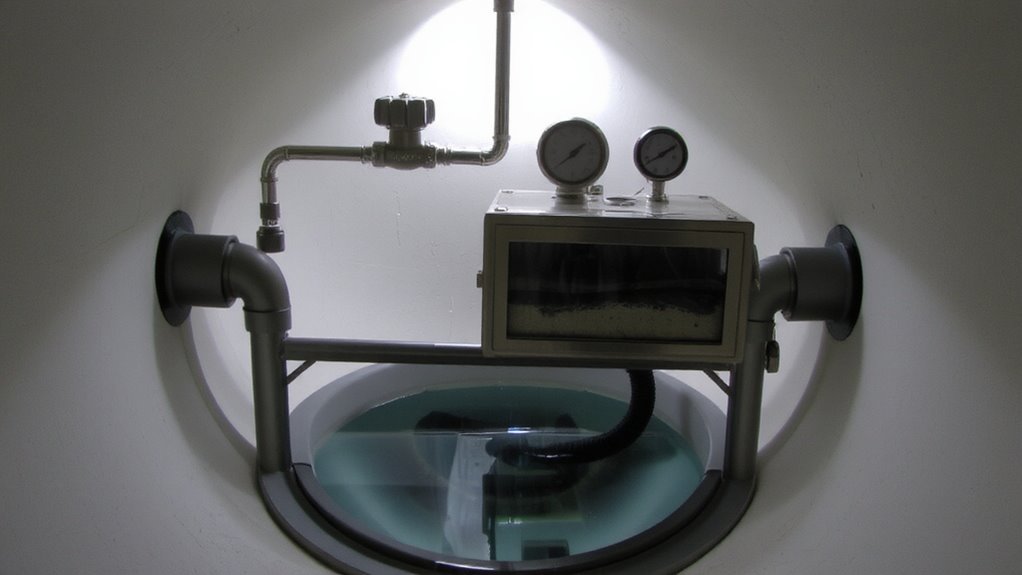
Even if you’ve chosen the right container, water can still become unsafe without proper protection from biological and chemical contaminants. You need to control contamination sources like dirty hands, unclean tools, or nearby waste storage. Always seal water tightly and store it away from chemicals, fuels, or cleaning supplies. Use food-grade, UV-resistant containers and keep them in a cool, dark space to minimize bacterial growth. Regular water testing-every 3 months-helps detect issues early. Test kits that check for coliform bacteria and chemical residues give reliable results. If testing reveals contamination, treat water immediately with chlorine dioxide or UV purification. You can’t rely on taste or appearance-contaminants are often invisible. Prevention is cheaper and more effective than treatment. Consistent testing and strict handling cut risks markedly. Your survival depends on staying ahead of unseen threats. For long-term reliability, choose best water containers that meet safety and durability standards.
Replace Stored Water Every 6 Months
While properly sealed and stored water doesn’t technically expire, it’s still smart to replace your supply every six months to maintain quality and safety. Over time, even in sealed containers, conditions can shift, increasing the risk of microbial growth, especially if storage temperatures fluctuate. You can’t always detect contamination by sight or smell, so regular water testing every few months helps catch issues early. If testing reveals changes in pH or microbial presence, it’s a clear sign to rotate your supply. Replacing water semiannually also guarantees that treatment methods, like chlorine levels, remain effective. Use the old water for non-potable tasks like cleaning or irrigation. Label each container with the storage date so rotation stays on schedule. This routine isn’t about fear-it’s about reliability. Consistent replacement reduces long-term risk and keeps your underground habitat’s water supply dependable when you need it most.
Add Water Filters for Emergency Use
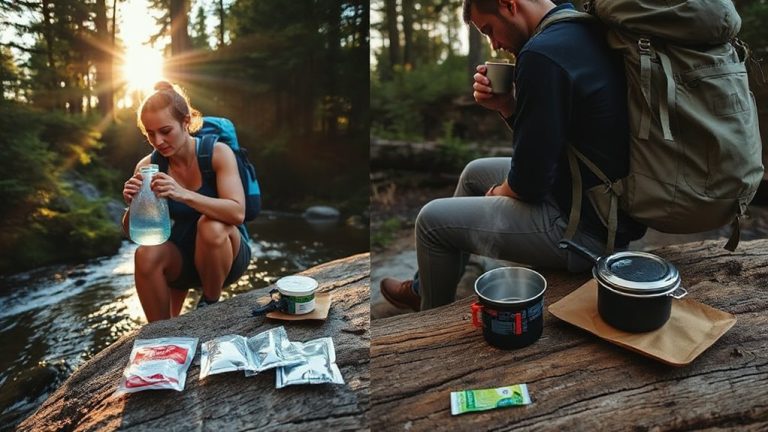
If you ever lose access to your stored water due to contamination or supply damage, having a reliable filter on hand could keep you hydrated when it matters most. Choose a filter with carbon filtration to remove chemicals, pesticides, and bad tastes-standard in models like the Sawyer Select. It won’t eliminate all pathogens, so pair it with UV purification for complete protection. A SteriPEN, for example, kills 99.9% of bacteria, viruses, and protozoa in 90 seconds but requires batteries. Manual pumps with built-in UV, like the LifeSaver Liberty, combine both technologies but cost more and add weight. Filters work well for sediment-heavy sources, while UV units depend on clear water to be effective. You’ll need both in rotation depending on conditions. Always carry spare batteries or a solar charger. Test your setup quarterly to guarantee it functions under stress.
Space-Saving Layouts for Small Shelters
A single square meter of floor space can make or break your comfort in a small shelter, so every piece of gear has to pull its weight. Use modular shelving to stack water containers vertically-this cuts footprint by up to 60% without sacrificing access. Foldable racks let you store extra containers flat against walls when not in use, freeing floor space for movement or other essentials. Both systems install in under 15 minutes and support up to 40 kg per shelf when anchored properly. Maximize efficiency by aligning storage with ceiling height and entry clearance.
| Feature | Emotional Impact |
|---|---|
| Lost space | Claustrophobia increases stress |
| Poor access | Delays slow emergency response |
| Heavy lifting | Fatigue impairs survival decisions |
| Cluttered floor | Tripping risks in low light |
| Wasted storage | Supplies feel insufficient fast |
On a final note
You need at least one gallon per person per day for drinking and hygiene. Use food-grade, BPA-free containers rated for 5–10 years of storage. Rotate water every six months to prevent microbial growth. Pair long-term storage with a proven filter, like a gravity system filtering 99.99% of bacteria. Compact, stackable designs save space in tight shelters. No single solution covers all needs; combine storage and filtration for reliable, long-term water security underground.