How to Identify Disaster Risks for Renters in High-Rise Buildings
You’re at risk from fast-spreading fires, power outages, elevator failures, structural hazards in older buildings, and severe weather above the 10th floor. Check your stairs now-they’re your only reliable exit. Know the evacuation route, test smoke detectors monthly, and keep a fire extinguisher handy. Confirm your building runs regular fire drills and has working alert systems. A compact emergency kit with water, food, and a radio is essential. Your safety depends on preparation you can verify today-next steps reveal how to act when alarms sound.
Notable Insights
- Check for fire hazards like faulty wiring and unattended cooking, especially in older high-rise units.
- Assess structural integrity by inquiring about building age and recent safety upgrades or inspections.
- Identify risks of power outages that can disable elevators, lighting, and emergency communication systems.
- Evaluate elevator reliability during emergencies, as they often shut down during fires or seismic events.
- Consider severe weather exposure, particularly on upper floors where wind and water damage risks are higher.
Identify the Top 5 High-Rise Disaster Risks
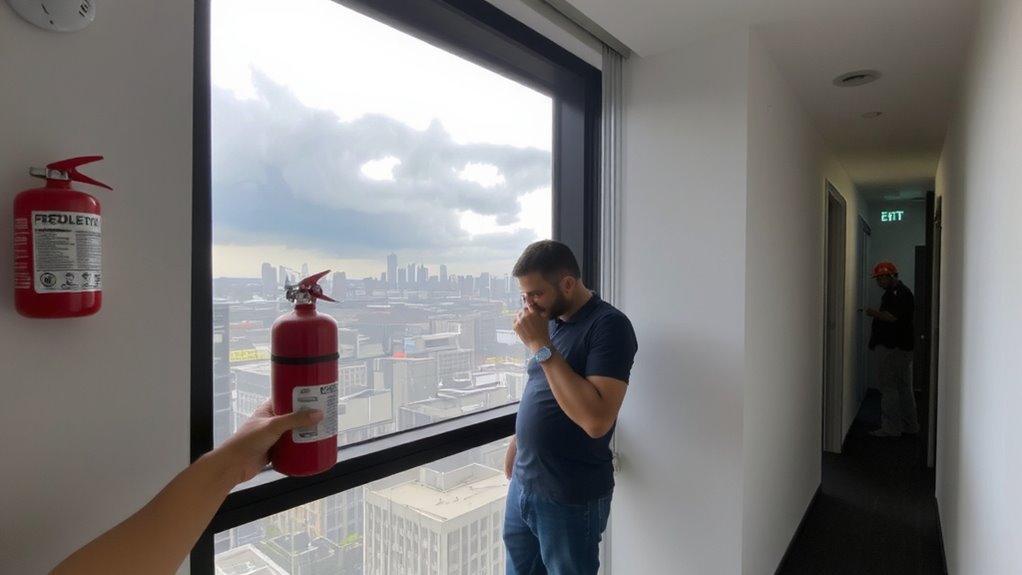
Fire, structural failure, power outages, elevator malfunctions, and severe weather top the list of high-rise disaster risks you should take seriously. Fire hazards are common and spread quickly in tall buildings, often due to electrical faults or cooking accidents, so smoke detectors and fire-rated doors matter. You can’t rely on elevators during emergencies-they’ll likely fail when power drops. Structural integrity determines whether a building withstands quakes or strong winds; older high-rises may lack modern reinforcement standards. Power outages disable lighting, communication, and cooling systems, increasing danger during extended incidents. Severe weather like hurricanes stresses building seals and windows, especially above the 10th floor. These risks are measurable and recurring, not theoretical. You’re safer knowing them now. Assess your unit’s proximity to stairwells, emergency lighting condition, and fire stair access-simple features that affect survival odds. Ignoring these factors increases vulnerability when seconds count.
Plan Your High-Rise Evacuation Route
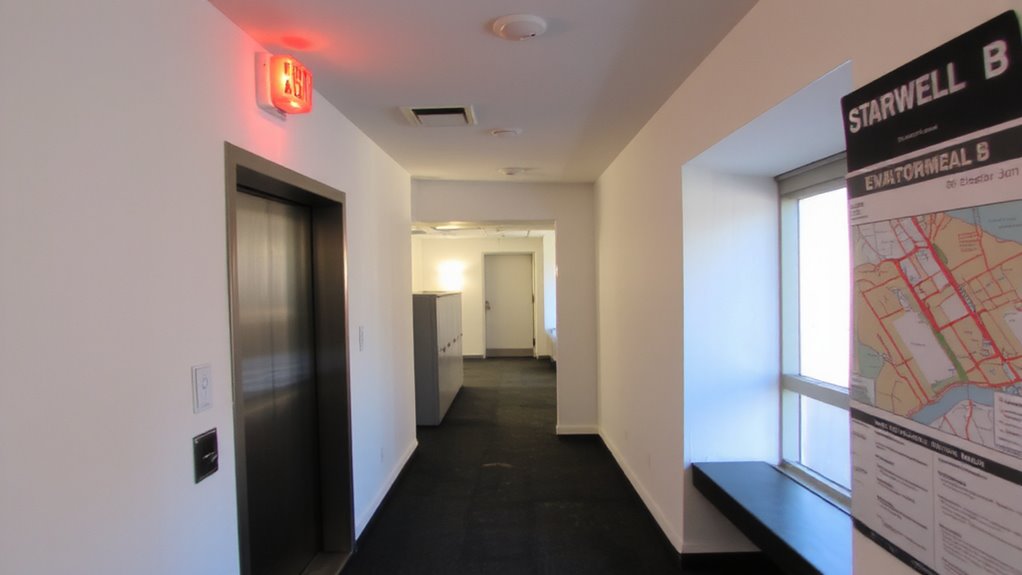
How quickly can you get out if the power fails and smoke fills the hallways? Your vertical exit-almost always the stairwell-is your only reliable path during high-rise emergencies. You must map it now. Locate the nearest stairwell and identify a secondary route in case the first is blocked. Test the walk during daylight to gauge time and effort; on average, descending 10 floors takes 2–3 minutes at a steady pace. Stairwell safety depends on unobstructed access and intact fire-rated doors-check them monthly. Never assume elevators will work; they’re often disabled during fires or quakes. Memorize floor indicators inside the stairwell to stay oriented in low light. If smoke enters, stay low and close doors behind you to slow its spread. Your exit plan only works if practiced. Time yourself at least twice a year. Speed matters, but control matters more.
Review Your Building’s Emergency Procedures
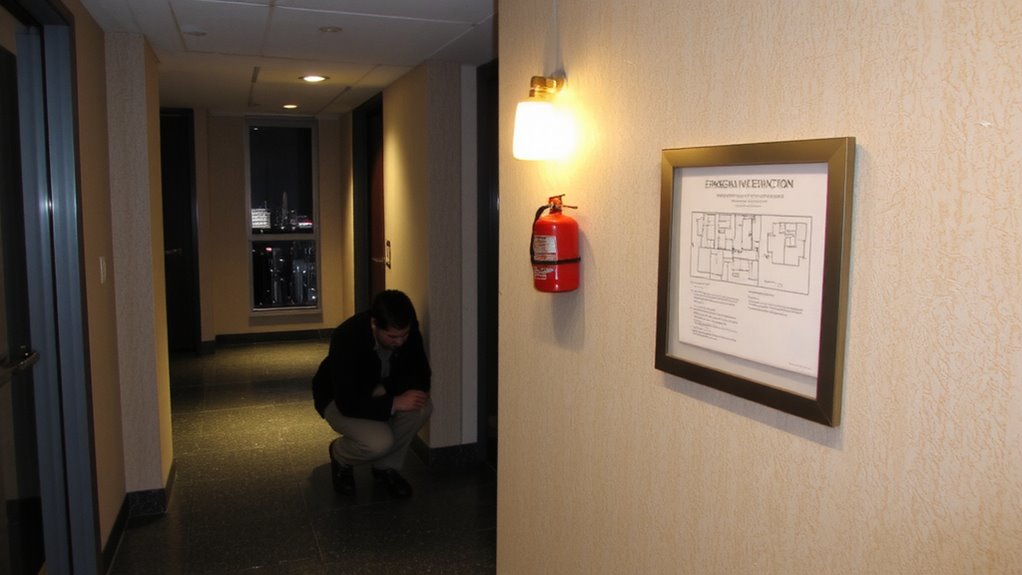
While your evacuation route matters, knowing your building’s official emergency procedures is just as critical. You should have access to a written copy of these protocols-review them thoroughly. Pay attention to how fire drills are conducted; they’re mandatory for a reason. Regular fire drills test both resident response and building systems, revealing flaws before real emergencies. Note how often they occur-most high-rises run them quarterly-and whether participation is enforced. Emergency alerts are another key component. Confirm how the building delivers them: intercom, text, app, or email. Test alerts should be routine. Check if systems have backup power and redundancy. Understand the chain of command during an event. Are staff trained? Is there 24/7 on-site management? Procedures only work if they’re clear, practiced, and reliably communicated. Relying on improvisation risks delay and confusion when seconds count.
Pack a Space-Smart Emergency Kit
You’ve reviewed the building’s emergency plan, but knowing what to do means little if you don’t have the supplies to follow through. In a high-rise, you may be trapped for hours or days, so pack a space-smart emergency kit. Prioritize compact storage-use vacuum bags or under-bed bins to save room. Choose lightweight, durable containers that fit in closets or under furniture. Include water (one gallon per person per day for three days), non-perishable food, and a manual can opener. A flashlight with extra batteries, a hand-crank radio, and a first-aid kit are essential. Opt for multi-use tools like a Swiss Army knife or a combination fire extinguisher/hammer. These reduce clutter and increase function. Avoid bulky items. Every piece must serve a clear, tested purpose. Replace expired supplies annually. Store the kit where you can grab it quickly. For reliable options, consider pre-assembled best emergency kits that meet federal preparedness guidelines.
Secure Your Apartment Against Common Hazards
If your apartment isn’t physically secured, even the best emergency plan can fail when seconds count. Prioritize fire safety and flood prevention to reduce risk. Install smoke alarms near kitchens and bedrooms, and test them monthly. Use a fire extinguisher rated for home use-check the pressure gauge annually. For flood prevention, seal window perimeters and know your building’s drainage system. Avoid placing valuables near sinks or washing machines.
| Hazard | Action | Effectiveness |
|---|---|---|
| Fire | Install smoke detector | High |
| Fire | Keep extinguisher accessible | Moderate |
| Flooding | Elevate electronics | Moderate |
| Water leak | Shut-off valve knowledge | High |
| Electrical | Avoid overloaded outlets | High |
These steps provide measurable protection without overcomplication.
On a final note
You know the risks in high-rise buildings-fire, power loss, smoke, structural issues, and slow evacuation. Your best move is planning: check exits, follow building protocols, and keep a compact emergency kit ready. Secure loose items to reduce hazards. Elevators won’t work during emergencies, so stairs are your only way out. Time matters. A clear, practiced plan cuts panic and improves survival odds when seconds count.