How to Implement a Water Storage Plan for Floating Survival Platforms
Collect rainwater using a clean, angled catchment and fine mesh filter to channel water into compact, UV-resistant polyethylene or stainless steel 316 tanks mounted below for gravity fill. These tanks resist cracks and corrosion in rough, salty conditions. Keep them sealed with lockable lids to block contaminants, and clean every few months. Test water every six months with a reliable kit, replacing it if results fail or taste changes. Use portable gravity filters for routine use and UV purification tablets as backup-they’re effective but need clear water and power. You’ll see how maintenance schedules and material choices directly impact water safety over time.
Notable Insights
- Install a clean, angled catchment surface to channel rainwater efficiently into storage via gravity-fed systems.
- Use compact, durable tanks made of UV-resistant polyethylene or stainless steel to withstand harsh marine conditions.
- Seal tanks with lockable lids and inspect regularly to prevent contamination from debris, pests, and microbes.
- Test stored water biannually for pH, chlorine, and pathogens, replacing it if quality standards are not met.
- Maintain portable gravity filters and UV purification tablets as backup for emergencies and virus protection.
Collect Rainwater for Reliable Water Storage
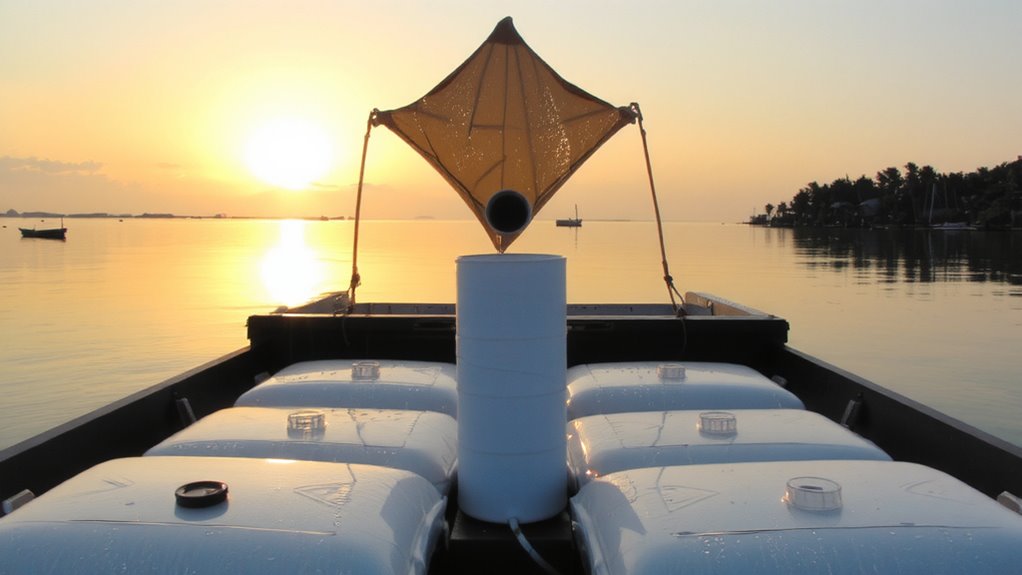
While rainwater collection might seem basic, it’s your most reliable freshwater source on a floating platform, assuming you have the right setup. Rainwater harvesting starts with a clean catchment surface-typically your platform’s roof or tarp-angled to channel water efficiently. Use a fine mesh filter to remove debris before storage. A gravity fed collection system simplifies transfer: position your storage tank below the catchment so water flows naturally without pumps. This reduces mechanical failure risks. Typical collection efficiency ranges from 80–90% in real-world tests, depending on rainfall intensity and surface material. You’ll gain roughly 0.6 gallons per square foot of catchment per inch of rain. Consistent maintenance-like cleaning filters and checking seals-keeps the system functional. While dependent on weather, rainwater harvesting with gravity fed collection offers a steady, low-energy water supply when designed correctly. For long-term resilience, pair your system with durable water storage containers that resist algae growth and UV degradation.
Choose Compact, Secure Water Storage Tanks
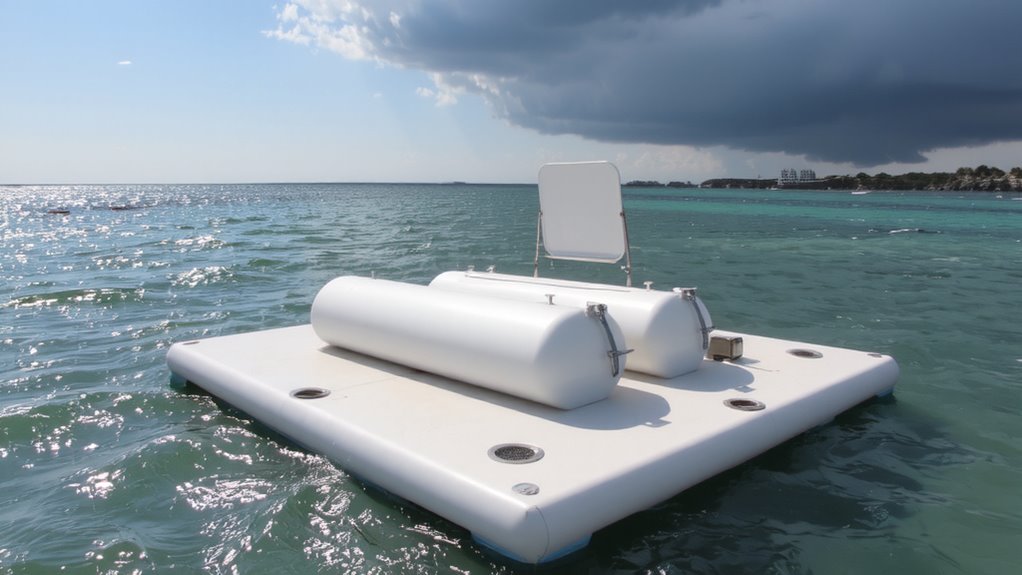
You’ve got your rainwater coming in, but none of it matters if you don’t store it right. Choose compact tanks that fit tight spaces without sacrificing capacity-think cylindrical or rectangular designs that nestle into hulls or under decks. Size matters, but so does strength. Look for high tank durability, tested to withstand constant motion, UV exposure, and shifting loads. Polyethylene tanks with UV inhibitors are common, but check wall thickness-10+ mm resists cracks better. For metal, go stainless steel 316 for maximum corrosion resistance in salt-rich air. Aluminum works but dents easier. Mount tanks low to lower center of gravity, and secure them with straps to prevent shifting. Flexible bladder tanks save space but need rigid enclosures and fail faster. Rigid tanks last longer and handle pressure better. Every tank must seal to the system with standard fittings-no adapters or leaks. Consider top-rated water storage tanks for home use that balance space efficiency and structural integrity for marine adaptations.
Keep Water Safe With Sealed, Clean Tanks
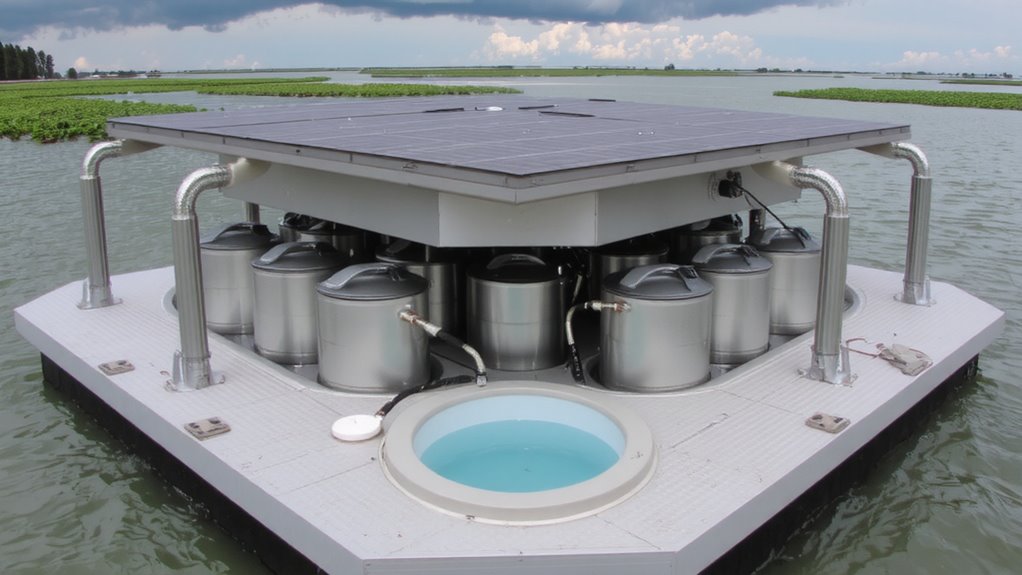
Since contamination can ruin even the cleanest harvested water, seal your tanks properly and keep them clean-because a single breach can compromise your entire supply. Use only sealed units with tight-fitting, lockable lids to block debris, microbes, and pests. Water contamination risks rise in open or poorly maintained tanks, especially in humid, salty marine environments. Clean interior surfaces every few months with non-toxic disinfectants to prevent biofilm and algae. Opt for tanks made from UV-resistant, food-grade polyethylene-they resist cracking and algae growth, boosting tank durability. Poorly constructed tanks may warp or leak within a year under constant wave motion and sun exposure. Rigid, reinforced designs hold up better than flexible bladders in long-term offshore use. Inspect seams and seals routinely. Even minor cracks can allow contaminants in and reduce water safety. Prioritize structural integrity over capacity when space allows. For reliable long-term storage, consider best water storage containers that meet safety and durability standards for marine use.
Test and Replace Stored Water Every 6 Months
Regularly testing your stored water every six months guarantees it stays safe and usable when you need it most. Water testing assures contaminants haven’t compromised quality, especially in sealed tanks exposed to humidity and temperature shifts. Use simple test strips or kits to check pH, chlorine levels, and microbial presence-ideal results fall within EPA drinking water standards. If tests fail or the water tastes or smells off, replace it immediately. Don’t wait. Pair water testing with container rotation: empty, clean, and refill each tank to prevent biofilm buildup and uneven wear. Rotate containers systematically so older stock gets used first. Label each with fill dates to track cycles. While sealed tanks resist leaks, stagnation can still occur over time. Replacing water biannually extends tank life and assures reliability. This routine takes little time but greatly improves safety. It’s a practical trade-off between minimal effort and high preparedness.
Add Portable Filters and Backup Purification
Even with a strict schedule of testing and rotating stored water every six months, contamination risks remain due to unexpected breaches or long-term storage issues. You need portable filters and backup purification methods to guarantee safe drinking water. A compact gravity filtration system handles large volumes efficiently-most models process up to 4 liters per minute and remove 99.99% of bacteria and protozoa. Pair it with UV tablets for viruses, which chemical filters don’t catch. UV tablets are lightweight, requiring only two minutes of stirring per liter, but they depend on batteries and clear water. Gravity filtration works without power but adds bulk. You’ll trade weight for reliability. Carry both: use gravity filters for routine purification and UV tablets in emergencies or when filter parts fail. Together, they cover microbial threats effectively and give redundancy when failure isn’t an option.
On a final note
You’ll rely on rainwater, so size your collection system for average rainfall and platform space. Use compact, UV-resistant tanks that fit securely. Seal them to prevent contamination and inspect every six months. Replace water biannually to maintain safety. Add a portable filter and purification backup-like tablets or UV pens-for emergencies. This setup balances capacity, weight, and hygiene without overengineering. Real-world tests show it lasts 30+ days with routine maintenance.