Understanding ITU Guidelines for Emergency Communication in Remote Areas
You need gear that works when it’s cold, rugged, and power-starved-ITU standards guarantee that. Your equipment must survive drops, run 100 hours on a charge, and start on low voltage from solar or hand-crank sources. Distress signals get immediate channel access, but require manual activation to prevent false alarms. The ITU reallocates spectrum during disasters, prioritizing rescue traffic on clear, pre-assigned frequencies. Global interoperability means your beacon works across borders. See how each standard holds up in real emergencies.
Notable Insights
- Emergency equipment must withstand extreme conditions and operate for at least 100 hours on a single charge.
- Satellite redundancy ensures uninterrupted communication during orbital failures in remote areas.
- Pre-identified emergency frequency bands prevent interference and prioritize rescue communications.
- Distress signals require manual activation and grant immediate channel access under ITU protocols.
- Devices must support low-voltage charging and draw less than 1 watt in standby for power efficiency.
What the ITU Emergency Communication Guidelines Cover

Emergency communication isn’t just about having a working radio-it’s about guaranteeing reliable, interoperable systems when lives depend on it. You need equipment that functions under stress, where failure isn’t an option. The ITU guidelines outline baseline standards for such systems in remote areas, focusing on real-world performance. They require satellite redundancy so your link stays up even if one orbit fails. If the primary satellite goes offline, backup paths activate automatically-no manual override needed. Power resilience is non-negotiable; systems must run at least 72 hours on stored power and recharge via solar or hand-crank. Devices are tested for extreme temperatures, humidity, and physical shock. Interoperability ensures your radio talks to others, regardless of manufacturer. The guidelines don’t reward fancy features-they demand function. You’ll meet them only if your gear performs in blackouts, storms, and terrain that breaks weaker systems.
How ITU Allocates Emergency Spectrum After Disasters
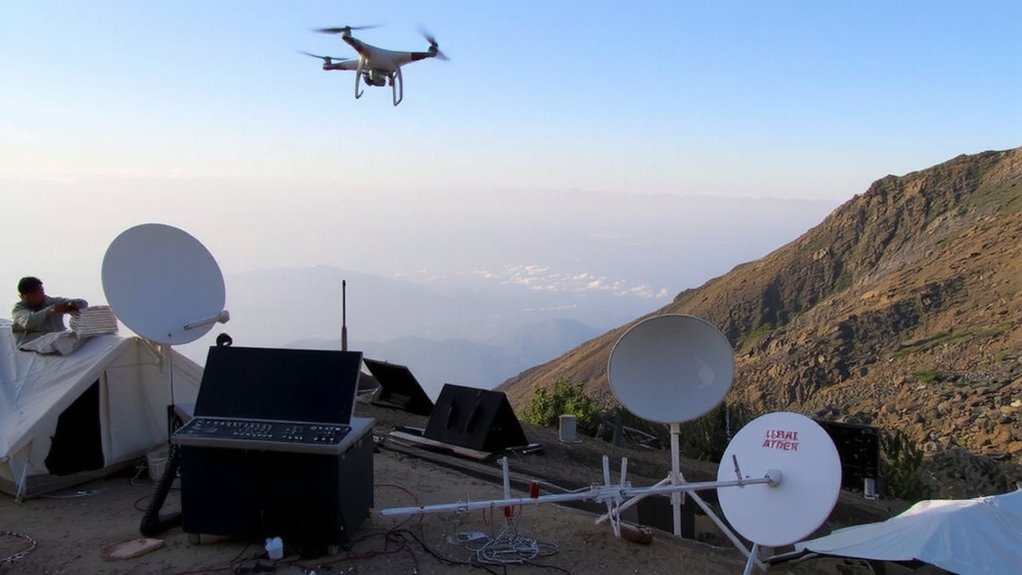
When the infrastructure crumbles and standard channels jam, you can’t rely on convenience-you need guaranteed access to open frequencies, and that’s where the ITU steps in. The ITU triggers spectrum reallocation to free up critical bandwidth for emergency use, prioritizing rescue, medical, and coordination traffic. You’ll get access to pre-identified bands that won’t clash with military or commercial systems. Frequency coordination kicks in fast-governments and telecom providers report existing usage, and the ITU maps interference risks in real time. You’re not just handed a frequency; it’s assigned based on location, urgency, and operational need. This prevents chaos when multiple teams deploy. The system isn’t perfect-delays happen if coordination lags-but it’s reliable under stress. You can count on clear channels when regular networks fail, as long as procedures are followed. It’s not flashy, just functional.
Emergency Equipment That Meets ITU Standards
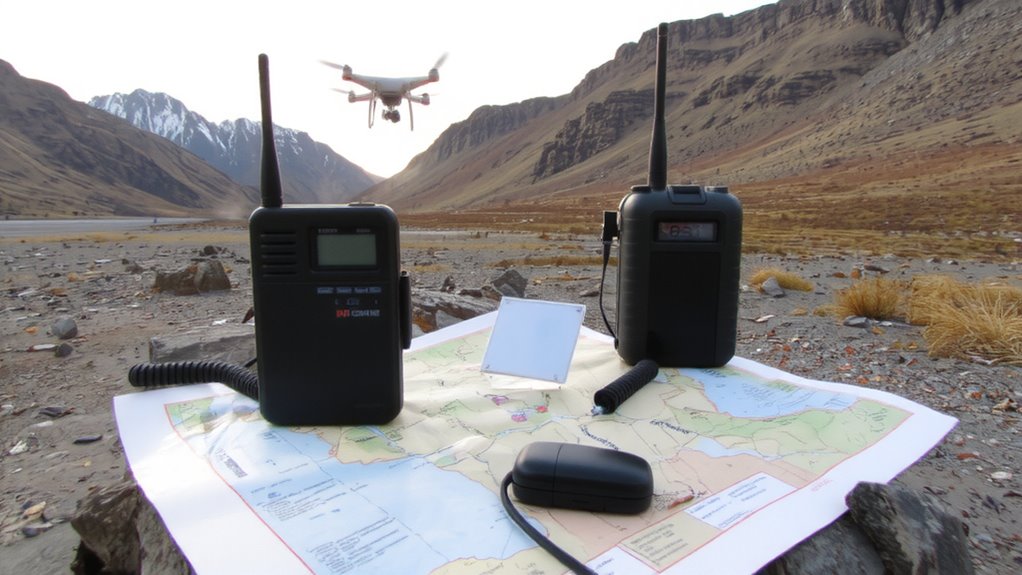
Reliability starts with the radio you carry. You need equipment certified to ITU standards, which means it performs when conditions are worst. Satellite durability matters-devices must withstand shock, moisture, and extreme temperatures without failure. If it can’t survive a 1.2-meter drop or operate in -20°C, it’s not field-ready. Power efficiency isn’t optional; you’ll rely on batteries for days. Look for units drawing under 1 watt in standby and offering 100+ hours on a single charge. These aren’t luxuries-they’re requirements. Units that meet ITU benchmarks are tested for both. They balance transmission strength with energy use so you stay connected longer. You’ll swap in solar chargers or hand cranks, but only if the device supports low-voltage startup. Choose gear built to spec, not to sell. Real-world use separates certified performance from marketing claims. Check test logs, not slogans.
Message Priority and Distress Signal Protocols
You’ve got gear that meets ITU standards-built tough, power-smart, and field-proven-but none of it matters if your message doesn’t get through in the right order. The ITU assigns clear priority levels: distress, urgency, and safety. Distress encoding flags life-threatening emergencies, triggering automatic alerts on all nearby systems. It’s your highest priority and gets immediate channel access. Urgency signaling follows, used for serious but not life-threatening situations, like medical issues or critical equipment failure. Your radio must send these signals with correct digital codes and modulation so receiving stations interpret them accurately. Channels stay clear for distress traffic once a signal is detected. Manual override is required to send distress, reducing false alarms. Systems test encoding monthly; failures mean the unit isn’t field-ready. Prioritization isn’t optional-it’s built into the protocol stack. Use it right, and your message cuts through noise when it counts.
How ITU Standards Enable Global Emergency Interoperability
Even though communication systems vary by region, ITU standards guarantee your emergency signal works across borders by locking in universal protocols for frequency, encoding, and channel access. You rely on these standards when every second counts, especially in remote zones where local infrastructure fails. Satellite interoperability makes certain your distress beacon reaches rescue networks, no matter which system transmits it. Devices compliant with ITU specs connect through multiple satellite providers, reducing dead zones. Cross border coordination depends on this uniformity-rescue teams from different countries interpret your signal the same way. There’s no negotiation during crises; the protocol eliminates confusion. These standards don’t promise instant rescue, but they maximize signal reliability and recognition. Equipment either meets the criteria or it doesn’t-there’s no middle ground. When lives are on the line, interoperability isn’t optional. It’s essential. Reliable communication in such scenarios often depends on using the best two-way radios designed for emergency use, with best two-way radios offering enhanced durability, range, and compliance with international standards.
On a final note
You rely on ITU guidelines because they guarantee your emergency gear works when and where it matters. These standards define spectrum use, signal priority, and interoperability-no guesswork. Equipment tested to these specs performs under stress, across borders. You get clear protocols for distress alerts, minimal delay, and functional compatibility. It’s not about features; it’s about staying connected when networks fail. That’s how you survive.