Building a Water Storage System That Integrates With Fog Harvesting Nets
You’ll need a fine mesh net angled into prevailing winds to catch fog droplets, which coalesce and flow into gutters. With typical yields of 1–5 liters per square meter daily, size your tank for at least five days of average output-like 100 liters for 20L daily lows. Use opaque, UV-resistant polyethylene, fiberglass, or stainless steel tanks to keep water clean and algae-free. Gravity feeds water through sealed, insulated pipes, minimizing pumps. Continue on, and you’ll find how climate, material trade-offs, and system layout affect long-term reliability.
Notable Insights
- Size storage tanks for at least five days of minimum daily fog yield to ensure supply during low-fog periods.
- Use food-grade, UV-resistant polyethylene, fiberglass, or stainless steel tanks to maintain water quality and longevity.
- Position fog nets perpendicular to prevailing winds to maximize droplet capture and system efficiency.
- Channel collected water via gravity-fed, insulated, buried pipes to reduce contamination and freezing risks.
- Design conveyance with fine pre-filters and short, straight pipe runs to minimize maintenance and pressure loss.
How Fog Nets Harvest Water
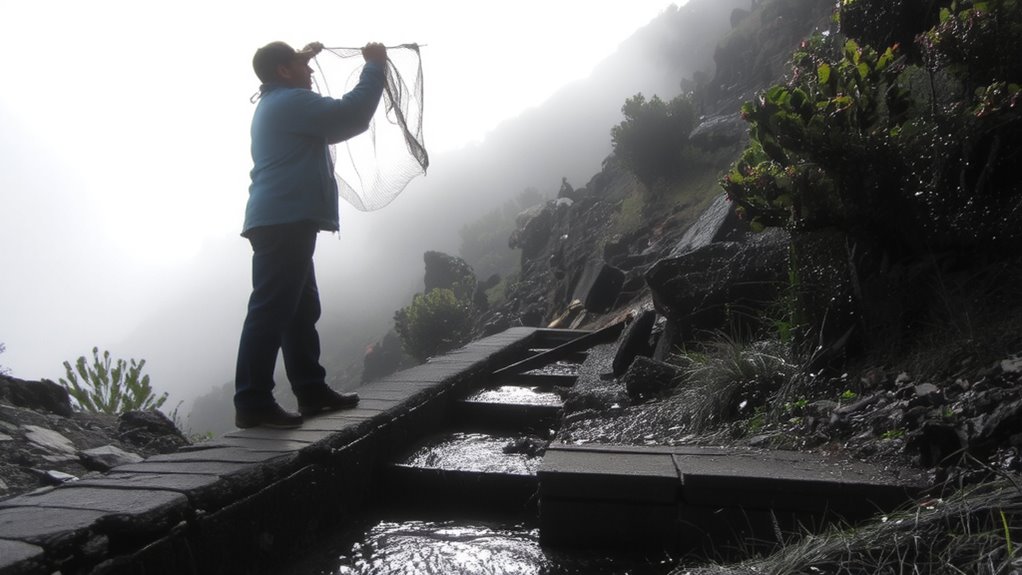
How does water appear from seemingly thin air? It doesn’t-you’re just capturing tiny droplets suspended in fog using a fine mesh net. When wind speed is sufficient, fog gets pushed through the mesh, where droplets cling and coalesce. The design relies on consistent fog density; low density means fewer droplets, reducing output. Wind speed matters just as much-too slow, and fog won’t hit the net hard enough; too fast, and droplets blow through without sticking. Most effective systems work best with wind speeds between 3–8 m/s and moderate to high fog density. Nets angled into prevailing winds improve collection. The water drips down into a gutter and flows to storage. Durability depends on mesh quality-polypropylene lasts longer but costs more. You won’t harvest gallons each day everywhere-it depends on local conditions, not hype. Proper camping water storage solutions ensure collected water is safely stored and readily available for use.
Estimate Daily Fog Water Yield
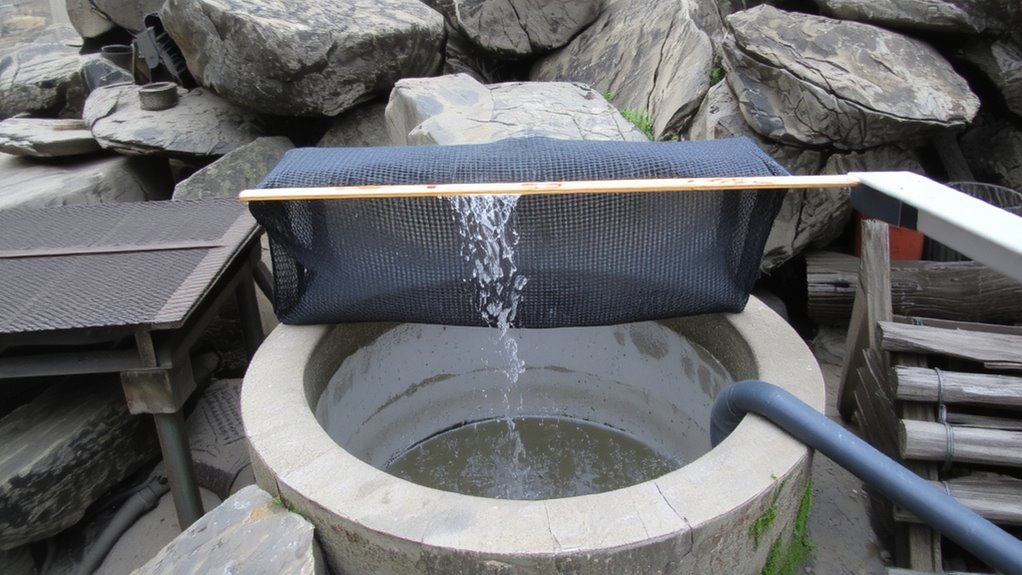
A typical fog net in good conditions yields 1–5 liters per square meter per day, but your actual output depends on local fog frequency, wind speed, and mesh efficiency. You’ll get more water when fog density is high and winds blow steadily through the mesh. Poor airflow or thin fog cuts yields fast. Climate variability also plays a role-dry seasons or shifting weather patterns can reduce collection for weeks. In coastal or mountainous areas, you might see consistent fog, but inland sites often face unreliable conditions. Monitor your site for at least a month to track daily averages. Use data, not estimates. Mount nets where exposure is unblocked, and adjust angles if needed. Real-world results vary, so design around your lowest consistent yield, not peak days. That way, you won’t overestimate what your system can deliver when water matters most.
Size Your Tank for Fog Yield and Need
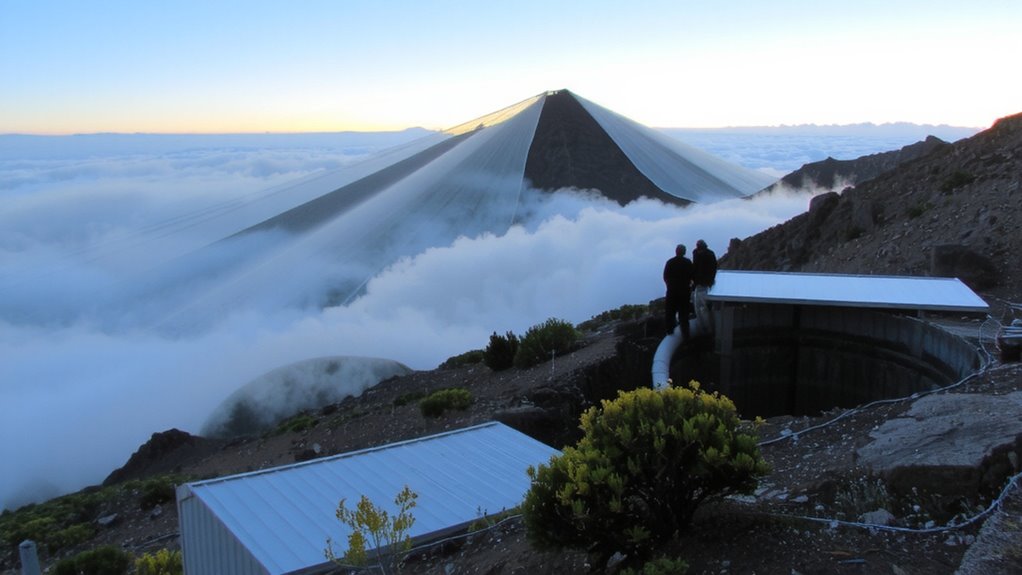
Most of your storage kinet should match the minimum daily yield you recorded during site monitoring, not the highs. Relying on peak fog events leads to underfilled tanks during dry spells, leaving you short. Your tank capacity must align with both fog consistency and actual demand. If your nets yield 50 liters on average but drop to 20 in low periods, design for at least five days of storage-so 100 liters minimum-to cover dips. Fog consistency varies seasonally, so undersizing risks shortages. Oversizing isn’t ideal either-it raises material and space needs without benefit if inflow can’t keep up. Match tank capacity to sustained output, not outliers. A stable supply matters more than maximum potential. Use your yield data to balance need and reliability. That way, you guarantee water availability even when fog thins out. For long-term reliability, choose best water containers that resist algae growth and UV damage.
Best Materials for Clean Water Tanks
You sized your tank based on reliable yield and daily needs, so now it’s time to pick the right material to keep that water clean and safe. Tank durability and resistance to material corrosion are critical for long-term performance.
| Material | Lifespan (years) | Corrosion Resistance |
|---|---|---|
| Polyethylene | 20+ | Excellent |
| Fiberglass | 25+ | Very Good |
| Stainless Steel | 30+ | Good (susceptible to chlorides) |
Polyethylene tanks are affordable and resist corrosion well, ideal for most setups. Fiberglass offers solid tank durability and won’t degrade in sunlight. Stainless steel lasts longest but is prone to material corrosion if water is high in chlorides. All three keep water clean when sealed properly. Choose based on your environment, water chemistry, and budget. Each has trade-offs, but all perform reliably under real-world conditions.
How Water Gets From Nets to Tank
How does water actually move from the fog nets to your storage tank? Gravity does most of the work. Collected droplets run down the mesh into collection gutters, then flow through channels into your conveyance pipes. You don’t always need a pump-many systems rely on a slope from net to tank for passive delivery. But if elevation limits gravity feed, your pump selection becomes critical. Choose a corrosion-resistant, low-flow pump rated for continuous duty; oversizing wastes power and wears components faster. Use rigid, UV-stabilized piping buried below the frost line. Pipe insulation prevents freezing in cold climates and reduces algae risk by minimizing temperature swings. Insulated pipes also maintain flow efficiency in extreme heat. Keep pipe runs as short and straight as possible to reduce friction loss. A simple filter at the tank inlet stops debris. This setup guarantees reliable transfer without overcomplicating maintenance or driving up costs.
Keep Fog Water Safe in Storage
Clean water degrades when exposed to light, heat, or contaminants, so storage conditions matter as much as collection. You need opaque, UV-resistant tanks to limit algae growth and keep temperatures stable. Seal all openings tightly to support contamination prevention and block insects, dust, or animals. Use fine pre-filters before water enters the tank to reduce organic load. Even clean fog water can carry microbes or particles, so integrate a reliable water purification method-such as chlorination, UV sterilization, or ceramic filtration-before storage or use. Regularly inspect and clean tanks; biofilm builds up over time, undermining water quality. Avoid metal containers unless lined, as corrosion risks contamination. Polyethylene tanks rated for potable water perform well and last over 10 years under proper conditions. For long-term reliability, choose best water storage containers that meet food-grade safety standards. You’re not just storing water-you’re preserving safety and usability.
Use Gravity to Distribute Fog Water
Once water’s safely stored, getting it where it’s needed becomes the next practical challenge. You can rely on gravity flow to move fog water from elevated tanks to taps, gardens, or livestock areas-no pumps required. Position your storage tank above the point of use, and let elevation create natural pressure. But don’t overlook pressure regulation; too much head height can burst low-pressure drip lines or damage fixtures. Use inline pressure regulators to maintain safe, consistent output, especially in systems feeding irrigation or household plumbing. A 10-meter elevation, for example, generates about 1 bar of pressure-enough for most gravity-fed setups. Balance elevation with pipe durability and end-use needs. Gravity flow reduces energy costs and maintenance, but only if pressure regulation keeps components within operating limits. It’s a simple, proven method-as long as elevation and hardware are matched to demand.
On a final note
You’ll get 1–4 liters per square meter of net daily, depending on fog frequency. Size your tank to hold at least a week’s yield and meet demand during dry stretches. Use UV-resistant, food-grade polyethylene tanks-they block light and prevent algae. Connect nets via guttering to a first-flush diverter before storage. Elevate the tank so gravity feeds drip lines or spigots; it’s reliable and needs no pump.