Identifying Edible Mushrooms: A Comprehensive Guide to Foraging Safely
You can’t rely on color or shape alone to identify edible mushrooms-look for key traits like spore print color, gill attachment, and habitat. Avoid deadly look-alikes like death caps and false morels, which can be fatal even when cooked. Confirm each find using multiple methods: take a spore print, check the soil pH, and verify growth conditions. Even experienced foragers make mistakes, so always cross-reference with trusted guides-your next step could reveal critical details you might otherwise overlook.
Notable Insights
- Always confirm mushroom identity using multiple traits, as color alone is unreliable due to environmental and age-related changes.
- Use spore prints and gill attachment type to distinguish edible species from toxic look-alikes like the death cap.
- Forage in appropriate seasons and habitats, such as morels in burned areas in spring and chanterelles in coniferous forests.
- Avoid deadly look-alikes by learning key differences, such as false morels containing toxic gyromitrin not eliminated by cooking.
- Verify safety through spore prints, habitat, and soil pH, never relying solely on visual ID or foraging apps.
Know These Deadly Look-Alikes in Wild Mushroom Foraging
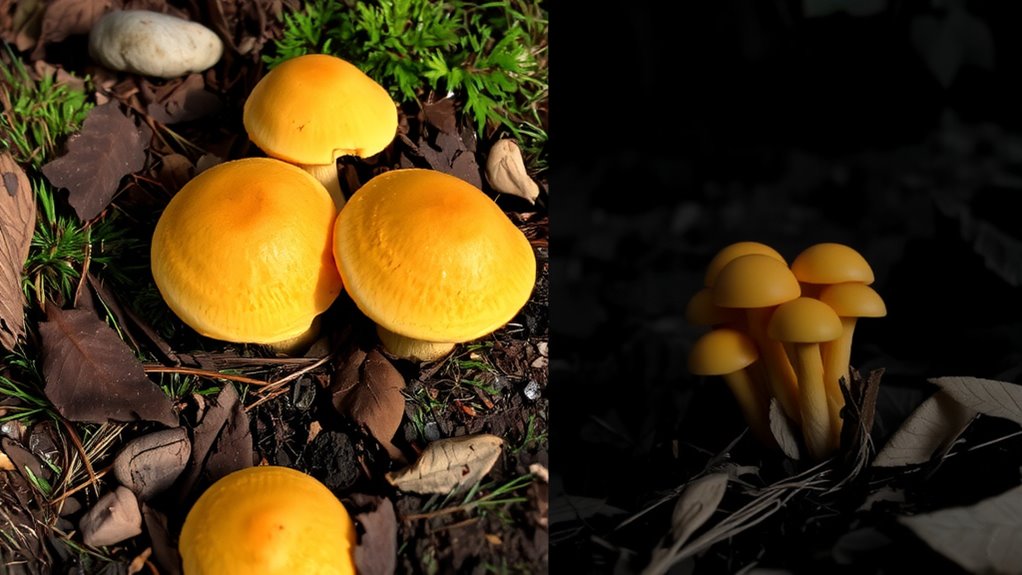
Why risk it when a simple mistake could be fatal? You’re foraging, but confusion between species can kill. The death cap looks harmless, but one cap holds enough toxin to destroy your liver. It’s often mistaken for edible varieties like puffballs or button mushrooms, especially by beginners. Don’t rely on smell or color-those change. Then there’s the false morel, often confused with the edible morel. It contains gyromitrin, a poison that can cause seizures, organ damage, or death. Cooking doesn’t fully eliminate the risk. You might think you’re getting a gourmet find, but you’re gambling with neurotoxins. These mushrooms aren’t rare-they’re common in the same woods where edibles grow. If you can’t 100% confirm the ID, leave it. No meal is worth your life. Mistakes aren’t reversible.
Spot the Key Traits of Edible Wild Mushrooms
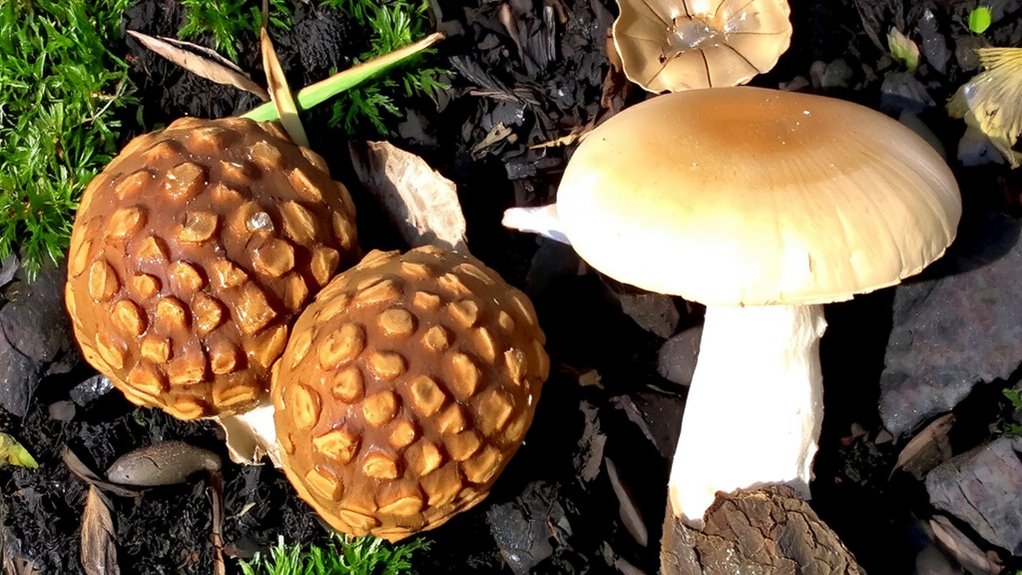
While some edible wild mushrooms share features with deadly species, knowing the right markers cuts your risk. You need to check mushroom coloration, but don’t rely on it alone-many change hue with age or environment. A spore print gives you concrete data; place the cap on dark and light paper, wait 12 hours, and note the color, which helps confirm species. Gill attachment matters: free, attached, or decurrent gills appear consistently in certain families and rule out dangerous look-alikes. Cap shape is another steady trait-convex, flat, or umbonate forms stay relatively stable within species. Use all four traits together. One feature alone isn’t enough. Cross-reference each to build a clear ID. Missteps happen when foragers ignore inconsistencies. Stay precise. Double-check. Your safety depends on accuracy, not guesswork.
Find Wild Mushrooms in These Habitats and Seasons
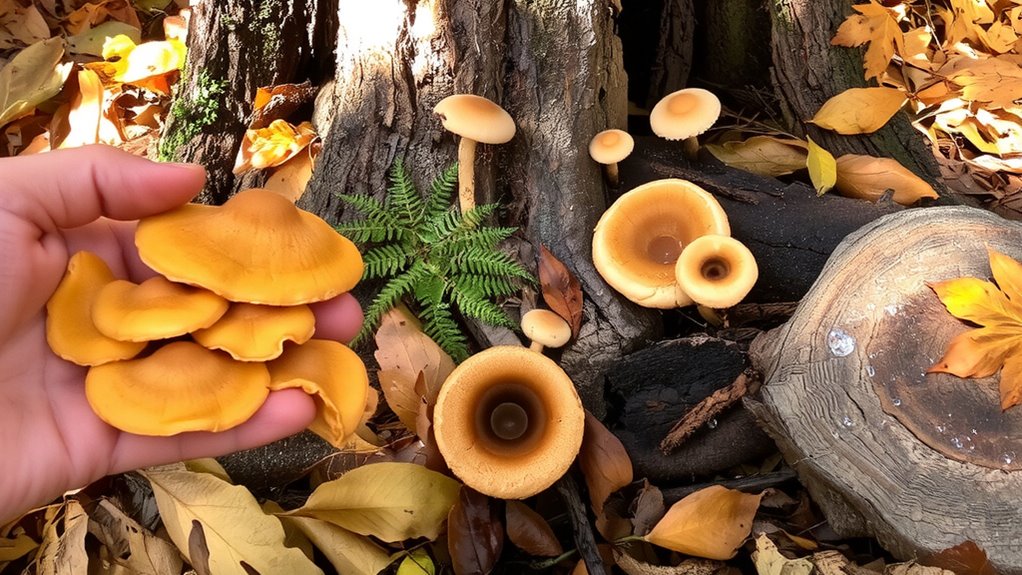
Where do you actually find edible mushrooms in the wild? You’ll need to match species with the right forest types and fruiting periods. Mushrooms grow where conditions support them-specific trees, moisture levels, and seasons matter. Knowing when and where to look saves time and increases your chances.
| Habitat | Best Fruiting Period |
|---|---|
| Coniferous forests | Late fall to winter |
| Deciduous woodlands | Spring to early fall |
| Mixed forests | Mid-spring and fall |
| Burned areas | Summer after fires |
Different forest types host distinct species. For example, morels favor disturbed or burned soils in spring, while chanterelles appear in coniferous or mixed forests during cooler months. Fruiting periods vary by region and weather, but timing your search around these general windows improves accuracy. You won’t find mushrooms year-round in one spot-move locations with the seasons.
Try These 5 Easy-to-Identify Wild Mushrooms
Start with these five mushrooms because they’re easier to identify and pose fewer risks for beginners. Morel mushrooms appear in spring, have a distinctive honeycomb cap, and lack gills, reducing confusion with toxic species. Chanterelles are bright yellow, grow in forests, and have blunt ridges instead of sharp gills. Chicken of the woods grows on trees, is vivid orange-yellow, and has a shelf-like structure. Puffballs are round, white inside when cut, and lack stems or caps. Oyster mushrooms grow in clusters on decaying wood and have soft, broad caps. These species are widely recognized in mushroom folklore and valued in culinary traditions worldwide. Their clear features reduce misidentification, but you must still inspect each specimen closely. Relying on shape, color, and habitat helps distinguish them from look-alikes. Each has a long history of safe consumption when correctly identified. Stick to these for early forays-they offer reliable starting points.
Confirm a Wild Mushroom Is Safe to Eat
You’ve picked a mushroom that looks like one of the beginner-friendly species, but that’s only the first step. Visual ID isn’t enough-confirmation requires additional tests. Perform mushroom spore analysis by placing the cap on white paper overnight; the spore print color helps confirm species. Compare results with verified guides, as similar-looking mushrooms can have different spore colors. Conduct soil pH testing where the mushroom was growing, since some species prefer acidic or alkaline conditions. Chanterelles, for example, often grow in mildly acidic soils. Cross-reference spore and pH data with known habitat preferences. No single test confirms edibility, but combining spore analysis and soil pH testing improves accuracy. Never rely solely on apps or photos. These methods reduce risk by adding measurable, repeatable data to your evaluation. When in doubt, discard the specimen. Safety depends on consistent verification, not assumptions.
Avoid These Common Wild Mushroom Foraging Mistakes
How often do foragers misidentify mushrooms simply because they skipped a single step? Too often. You might assume color or smell is enough, but that’s where mushroom myths lead to dangerous errors. Never rely on folklore-some say insects avoid poisonous mushrooms, but that’s false. Always use multiple identification markers: gill attachment, spore print, habitat, and season. Skipping even one reduces accuracy. Harvesting without proper tools, like a knife and mesh bag, damages specimens and limits spore dispersal, violating basic foraging etiquette. Take only what you need, leave fragile habitats undisturbed, and never strip a patch bare. Misidentifying a lookalike can mean the difference between a meal and hospitalization. You can’t afford assumptions. Verify every feature, cross-reference with trusted guides, and when in doubt, throw it out. Your safety depends on consistency, not guesswork.
On a final note
You’ve got the tools to forage mushrooms safely, but success depends on consistent, careful ID. Mistakes can be fatal, so always verify key traits and eliminate look-alikes. Stick to easy species you can confidently identify, and never eat anything uncertain. Habitat, season, and detailed features matter more than any single clue. Your discipline with these steps directly determines your safety-there’s no room for guesswork.