How to Evaluate Your Home’s Vulnerability to Wildfire Crown Fire
Keep trees at least 10 feet from your home to cut flame and heat exposure, especially if they’re flammable types like pines or eucalyptus. Trim lower branches and space crowns 4–6 feet apart to stop fire from spreading through canopies. Clear overhanging limbs above the roof line to block falling embers and debris. Maintain defensible space by removing dry vegetation within 30–100 feet. You’ll find more key steps to lower your home’s crown fire risk just ahead.
Notable Insights
- Maintain at least 10 feet between trees and your home to reduce flame contact risk.
- Identify and remove highly flammable trees like pines or eucalyptus near the structure.
- Space tree crowns 4–6 feet apart to prevent fire from spreading through canopy contact.
- Trim branches to ensure 10 feet of vertical clearance above the roofline.
- Clear dead limbs, dry debris, and dense undergrowth within 30–100 feet of your home.
Keep Trees Away From Your Home
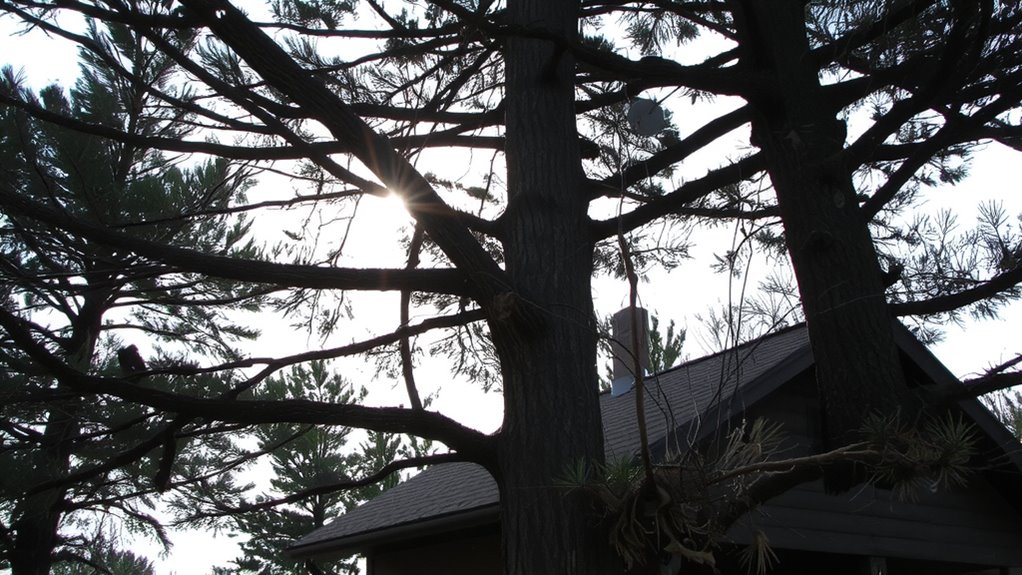
A well-placed tree can shade your home, but too close and it becomes a wildfire hazard. You need at least 10 feet between trees and your house to reduce flame contact risk. Dense tree species like pines or junipers ignite easier due to resin-rich foliage-replace them with less flammable types if possible. The spacing between trees matters just as much as distance from the house; keep canopy gaps wide to stop fire from jumping. Shallow root systems can destabilize near foundations, especially in dry, fire-prone soil, making removal safer than pruning. Deep-rooted species may survive fire but still carry flames if too close. You’re not landscaping for beauty here-you’re creating defensible space. Measure clearance zones, assess tree species, and evaluate root systems. Simple, consistent rules reduce risk. Stay outside the 5-foot ember zone, and you improve survival odds.
Spot Fire-Prone Trees Near Your House
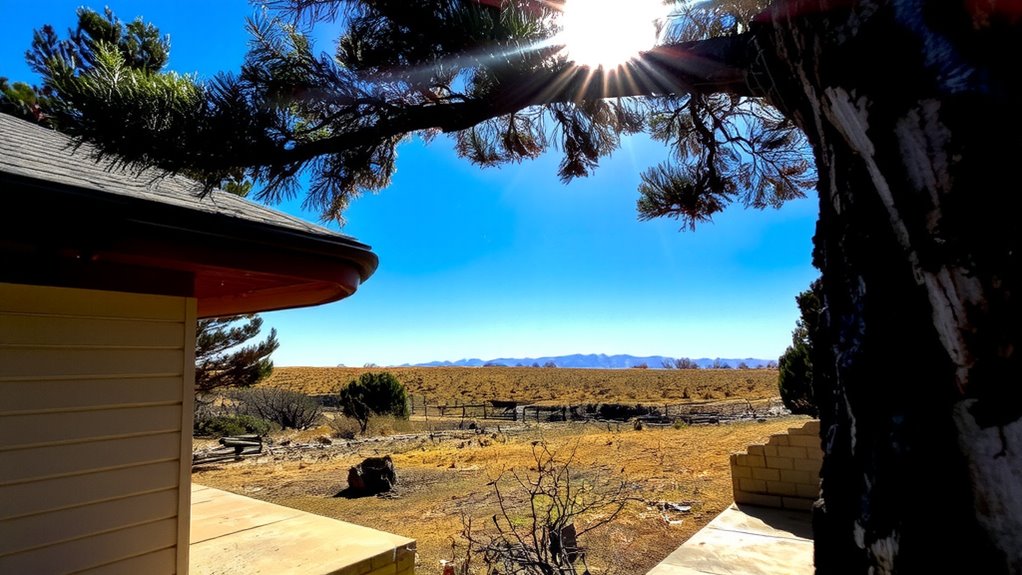
You’ve cleared space around your home and assessed tree placement-now it’s time to identify which trees pose the highest fire risk. Focus on species that ignite easily, like pines and eucalyptus, especially if they’re close to the house. High tree density increases flame spread, so clustered trees create fuel pathways for fire. Thin them out to reduce continuity. Check for dead limbs, dry bark, and resin buildup-these boost flammability. Also, assess root health; weakened roots from drought or disease make trees more likely to drop branches, adding ground fuel. Unhealthy roots also increase fall risk during fires, potentially bringing flames closer to your home. Prioritize removing trees with poor root health and high oil or sap content. Replace them with low-flammability species if needed. Spotting and acting on these risks early improves your home’s odds without overhauling the entire landscape. Prevention starts with smart, specific choices.
Trim and Space Branches to Stop Crown Fires
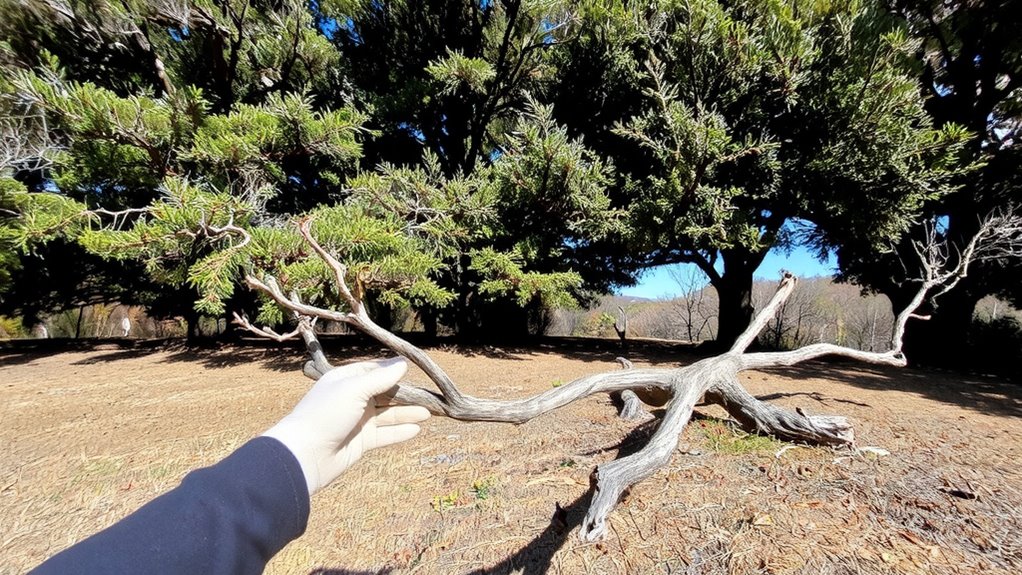
Three key steps keep tree crowns from becoming fire highways: raise lower branches, increase spacing between crowns, and reduce canopy density. These actions disrupt the fuel ladder and prevent flames from climbing into the canopy. Trimming branches from the ground up removes low fuel sources, while spacing trees 4–6 feet apart stops fire from jumping easily. Reducing crown density improves airflow and decreases burn intensity.
| Tree Spacing | Risk Level |
|---|---|
| < 4 ft | High – crown fire spreads fast |
| 4–6 ft | Moderate – limits flame contact |
| > 6 ft | Low – breaks fuel ladder effectively |
You don’t need perfect clearance, but measured reductions in crown density and vertical spacing cut risk. Avoid overcrowded crowns-they trap heat and embers. Space and trim consistently to disrupt upward fire movement.
Clear Overhanging Limbs Above Your Roof
Since tree limbs hanging over your roof can channel fire straight onto the structure during a wildfire, it’s critical to cut back any branches within 10 feet of your home’s edge. This reduces roof exposure and eliminates a direct path for flames. Overhanging limbs also drop embers, leaves, and debris into gutters and onto shingles, increasing ignition risk. You should inspect tree health regularly-dead or dying branches ignite more easily and compromise safety. Remove weak, dry, or low-hanging limbs promptly to limit fuel sources. Maintain at least 10 feet of vertical clearance between your roof and the nearest foliage to disrupt fire transmission. Healthy trees with proper spacing still pose risks if limbs extend over the house. Clearing overhanging branches is a measurable, low-cost step that greatly reduces vulnerability. It’s not about removing trees entirely but managing their placement and condition to protect your home directly.
Build Defensible Space to Block Flame Spread
While fire can move fast through dense vegetation, creating defensible space around your home gives firefighters a better chance to intervene and reduces the likelihood of direct flame contact. You should create buffer zones by clearing flammable materials within 30 feet of your home; this includes shrubs, dry grass, and debris. In high-risk areas, extend this zone to 100 feet. Replace combustible landscaping with low-flame-spread ground covers or gravel. You can further reduce risk by installing barriers such as non-flammable fencing or rock walls that disrupt flame paths. These barriers work best when combined with spaced, fire-resistant plants. Regular maintenance guarantees effectiveness. While no measure guarantees protection, these steps increase survivability during wildfires. A well-designed defensible space improves access for emergency crews and reduces radiant heat exposure.
On a final note
You reduce crown fire risk by managing tree placement and structure. Keep trees trimmed and spaced so flames can’t jump from canopy to canopy. Remove overhanging limbs above your roof-embers ignite homes fast. Defensible space slows fire spread and gives firefighters room to act. Fire-prone trees near the house increase danger. Simple, consistent maintenance improves safety more than any single product. Your actions matter most in wildfire survival.