Wild Edible Mushrooms With the Highest Caloric Density for Survival Use
You need mushrooms that deliver real energy when survival’s on the line. Morels, chanterelles, and boletes offer 30–40 kcal per 100g, with solid protein and carbs to sustain endurance. Chicken of the woods and puffballs provide bulk and calories, especially when dried. Spore prints and habitat checks prevent deadly mistakes-never rely on color alone. Cook them lightly to preserve nutrients and guarantee safety. There’s more to using these foods effectively in the wild.
Notable Insights
- Morels are among the most calorie-dense wild mushrooms, providing substantial energy from carbohydrates and protein in survival scenarios.
- Chicken of the woods offers high caloric content and grows abundantly on hardwoods in late summer, making it a reliable survival food source.
- Young puffballs provide large biomass per specimen and can be dried for storage, enhancing long-term caloric availability in the wild.
- Boletes, such as porcini, deliver 30–40 kcal per 100g with valuable protein, thriving in coniferous and mixed forests during late summer to fall.
- Chanterelles supply steady energy with moderate caloric density and appear predictably in moist forests after rains, supporting sustained foraging efforts.
Why Calories Save Lives in Survival Foraging
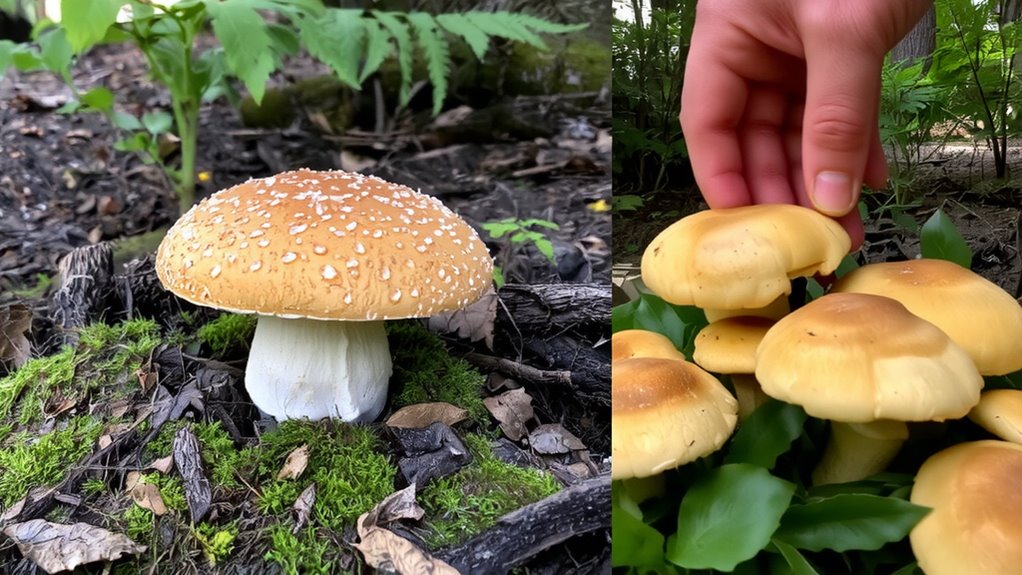
Calories-the bottom line in survival. When you’re foraging, every bite must count, and mushrooms with high caloric density directly support your need for sustained energy. Without enough calories, your body can’t maintain core functions, let alone fuel movement or recovery. You need metabolic efficiency-your body’s ability to convert food into usable energy-and calorie-rich mushrooms help optimize that process. Low-calorie forage won’t offset the energy you burn searching and processing food, undermining energy conservation. In prolonged survival scenarios, even small deficits accumulate, weakening performance and resilience. High-calorie wild mushrooms reduce that deficit, improving endurance and cognitive function. They aren’t a luxury-they’re a strategic resource. Prioritizing caloric intake guarantees your metabolism stays functional without excess strain. Choose food sources that support energy conservation, not just volume or taste. Survival isn’t about abundance; it’s about effective fuel.
How to Safely Identify High-Calorie Wild Mushrooms
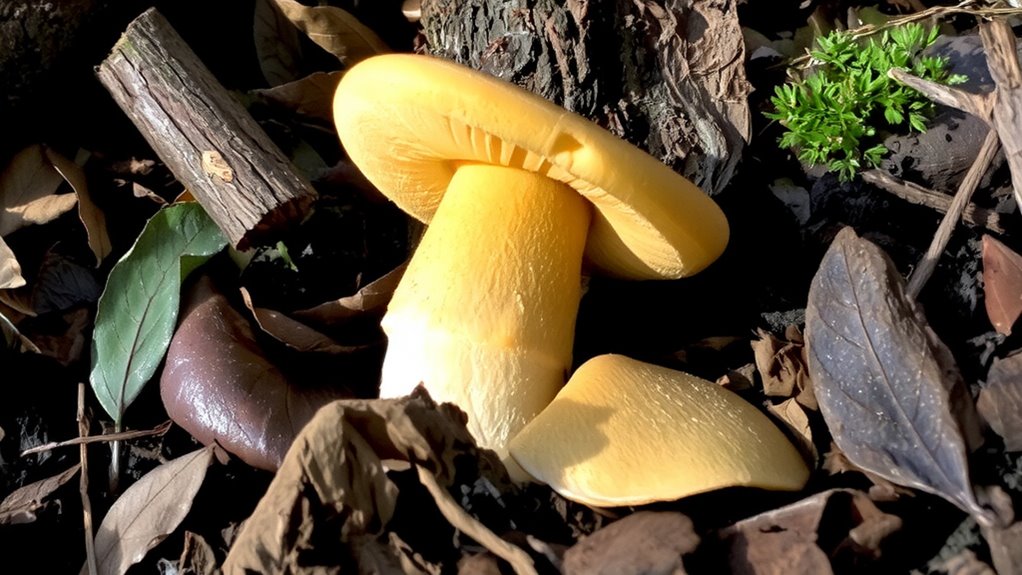
While some wild mushrooms offer substantial calories, mistaking toxic species for edible ones can be fatal, so accurate identification isn’t optional-it’s essential. You must rely on consistent features, not guesses. Mushroom coloration patterns can help, but they vary with age and environment, making them unreliable alone. Never eat a mushroom based solely on cap color or gill shape. Instead, confirm identity with spore print analysis-a simple, effective method. Place the cap on white paper overnight; the spore color provides critical data for accurate classification. Cross-reference habitat, season, and microscopic traits when possible. Use multiple field guides, not just photos. Misidentification risks outweigh potential caloric benefits. When in doubt, discard it. Safety isn’t negotiable in survival. There’s no room for assumption-only verification.
Top 5 Calorie-Rich Wild Mushrooms to Forage
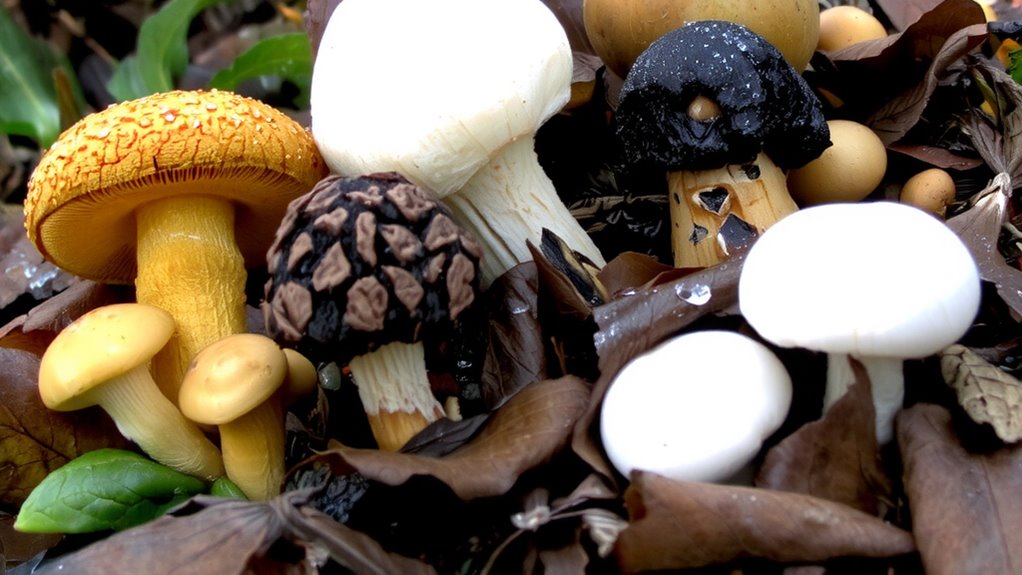
When you’re counting every calorie in the wild, knowing which mushrooms deliver real energy matters. The top five high-calorie wild mushrooms to forage include morels, chanterelles, boletes, chicken of the woods, and puffballs. Morels offer dense carbohydrates and protein, especially in spring. Chanterelles provide steady energy and are identifiable by their golden hue. Boletes are protein-rich and abundant in summer and fall. Chicken of the woods is high in calories and grows on hardwoods. Puffballs, when young, offer substantial biomass per pound. Each aligns with seasonal foraging patterns, so timing your search boosts yield. Use mushroom preservation techniques like drying or smoking to store calories long-term. Fresh specimens lose energy value quickly. Weigh moisture content and shelf life when selecting which to prioritize. These species balance caloric return with foraging effort, giving practical advantage in survival scenarios.
Where and When to Find Energy-Packed Mushrooms
You’ve got the list of high-calorie mushrooms-now it’s time to find them. Timing and location matter. You’ll need to track seasonal patterns closely; most energy-dense species, like chanterelles and porcini, appear in late summer to early fall after steady rains. Spring brings morels in temperate zones, but the window is narrow-miss it and you wait a year. Geographic hotspots increase your odds. Look in Pacific Northwest forests for chanterelles, Rocky Mountain slopes for morels, and pine-oak woodlands in the Southwest for porcini. Deciduous and coniferous forests with moist, shaded understories are ideal. Elevation, tree type, and humidity levels all influence growth. You won’t find these mushrooms in dry, open fields. Stick to proven regions and time your forays with local climate cycles. Matching seasonal patterns to geographic hotspots gives you the best shot at a productive harvest.
The Nutrition That Powers Survival: Fats, Protein, Carbs
Survival hinges on fuel, and wild edible mushrooms deliver a mix of fats, protein, and carbohydrates that can sustain energy when other food sources are scarce. You need energy balance to match your metabolic demand, and mushrooms like *Boletus edulis* offer 30–40 kcal per 100g, with 2–3g protein and 5–7g carbs-modest but usable. Fats are low, usually under 1g per serving, so they won’t meet long-term fat needs alone. Still, combined with other foraged foods, they help maintain output during high-exertion scenarios. Protein supports tissue repair, while carbohydrates provide quick-releasing energy. No single mushroom covers all needs, but including several species improves nutritional spread. You’ll stay functional longer when you balance mushroom intake with available fats and carbs from nuts, insects, or animals. Adjust portions based on activity-rest less when food is limited, and monitor how your body responds to maintain steady energy.
Cooking Wild Mushrooms Without Losing Calories or Safety
Though raw mushrooms may seem like a quick option, cooking them properly guarantees both safety and better nutrient availability without significant caloric loss. You should sauté or simmer them gently to preserve energy content while breaking down chitin, improving digestibility. Using minimal water prevents leaching of nutrients, and oil preservation helps retain both calories and fat-soluble vitamins. Cooking in oil also boosts heat retention, ensuring even internal temperatures that destroy potential pathogens. Avoid charring, as excessive heat degrades nutrients. Boiling reduces caloric yield more than frying or steaming. For storage, oil preservation extends shelf life and maintains energy density without refrigeration. You’ll lose little caloric value if you cook at moderate heat and avoid draining liquids. Always make sure mushrooms are fully cooked-this isn’t about flavor, it’s about safety and efficiency. In survival, every calorie counts, and proper preparation keeps them available to you.
Deadly Doubles: Avoiding Toxic Look-Alikes in Calorie-Rich Species
How can you be sure that the mushroom you just picked won’t kill you? Mistaking a toxic double for a calorie-rich edible is a fatal error. Relying on Mushroom coloration myths-like “bright means poisonous”-gets foragers killed; many deadly species are pale and unassuming. Instead, use spore print variations and structural traits to confirm identity. Always verify species with multiple characteristics, never just one.
| Feature | Use in ID |
|---|---|
| Spore print variations | Distinguish Amanita phalloides (white) from edible Agaricus (brown) |
| Gill attachment | Separate Galerina (deadly, rusty spores) from calorie-rich Hen-of-the-Woods |
Spore prints take minutes but prevent disaster. Calorie density means nothing if you’re too sick to move. When survival’s on the line, accuracy beats hunger every time.
On a final note
You need calories fast in survival, and these mushrooms deliver. Puffballs, morels, and chanterelles offer the highest caloric density per ounce when dry. They’re reliable when correctly ID’d, but mistakes are fatal. Always cook them-raw equals risk. Fat and protein content helps, but don’t ignore carbs for quick energy. Weigh yield, safety, and seasonality. One wrong pick cancels all gains. Know your terrain, timing, and toxic twins-every time.