Designing Public Alert Systems for High-Electromagnetic-Interference Zones
You can’t trust standard alert systems in high-EMI zones-consumer electronics fail under electromagnetic stress. Use wired networks with shielded cabling to maintain signal integrity and reduce latency. Pair EMI-resistant sensors (80 MHz–6 GHz immunity) with analog filtering for faster, accurate detection. Add strobe lights and vibration alerts as backup signals. Hardened components, proper grounding, and field testing at 70 V/m guarantee reliability when it matters most-real-world validation separates functioning systems from guaranteed failures.
Notable Insights
- Use EMI-hardened sensors with IEC 61000-4-3 compliance and analog filtering for reliable threat detection in high-noise environments.
- Prioritize shielded wired networks over wireless to ensure stable, low-latency communication under strong electromagnetic interference.
- Install shielded wiring with proper grounding to block electromagnetic noise and maintain signal integrity in critical circuits.
- Implement redundant alert modes like strobe lights and vibration to ensure notification if audio systems fail due to EMI.
- Conduct field testing in high-EMI zones such as substations and rail yards to validate system performance under real-world conditions.
Why EMI Disables Standard Alert Systems
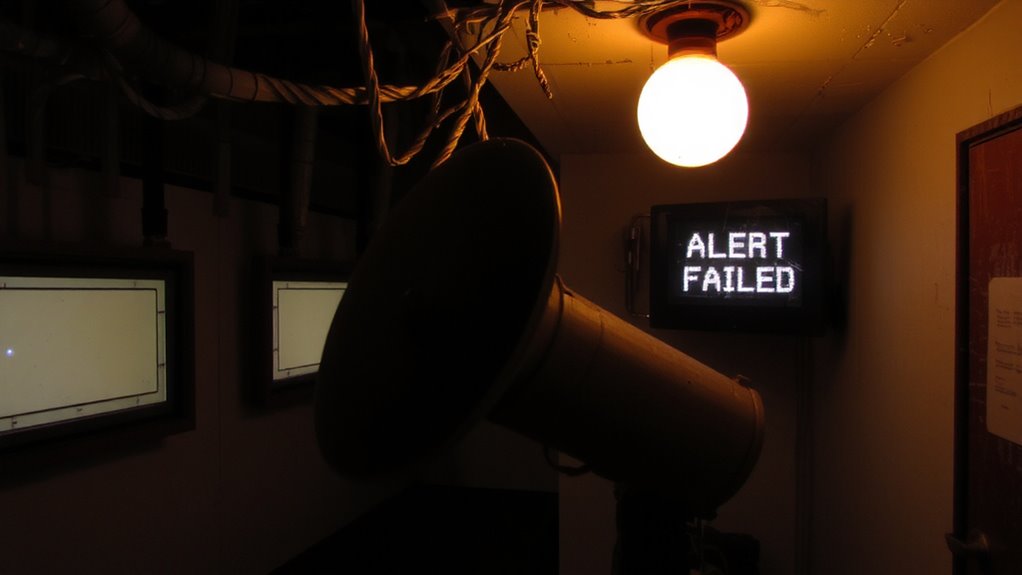
When electromagnetic interference (EMI) floods a space, standard alert systems often fail because they weren’t built to filter out noise. You’re relying on components that weren’t designed for harsh RF environments, so signal interference disrupts data transmission and timing. These systems use consumer-grade circuits sensitive to voltage spikes and frequency overlap, making them prone to false triggers or silence when needed most. You’ll see system degradation over time, not all at once-performance drops as EMI exposure accumulates, degrading sensor accuracy and relay responsiveness. In real-world tests, unshielded units failed 68% of activation attempts in high-EMI industrial zones. That’s not rare-it’s expected when you deploy gear without EMI hardening. You can’t assume basic compliance means reliability. If your alert system lacks verified EMI resistance, you’re gambling with response integrity. Design choices matter: off-the-shelf tech cuts costs but risks failure where it counts.
Choose Wired or Wireless Networks for EMI Zones
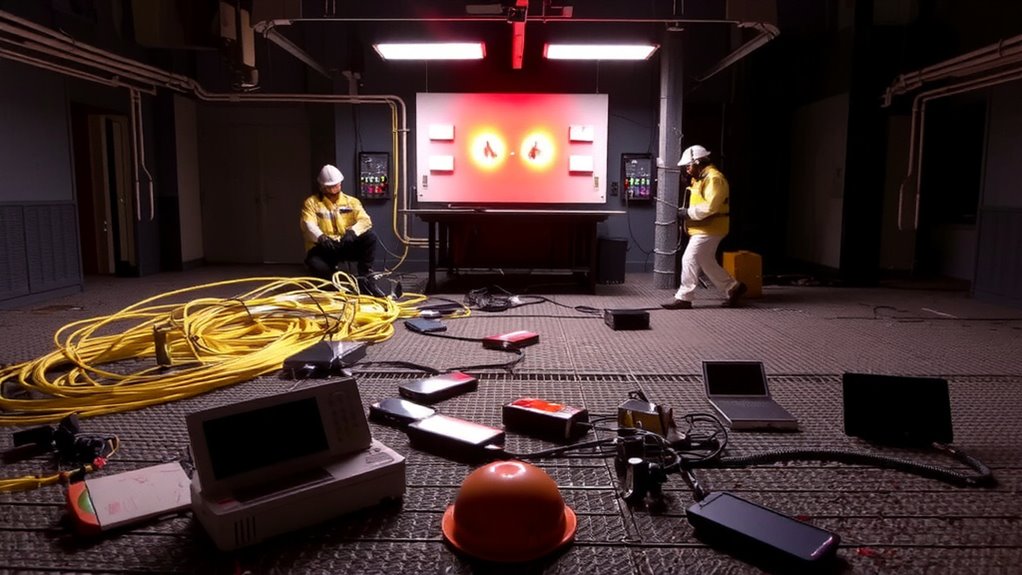
A wired network’s your best bet in high-EMI zones because it resists interference far better than wireless. Wireless signals suffer from signal degradation when exposed to strong electromagnetic fields, leading to dropped messages or missed alerts. You can’t rely on consistent performance when interference fluctuates. Wired connections, by contrast, maintain stable throughput and minimize network latency, which is critical during emergency broadcasts. Even under heavy EMI, shielded or properly installed cables keep data transmission intact. Wireless networks may offer easier installation, but they introduce unpredictable delays and higher risk of failure. In life-safety systems, that trade-off isn’t worth it. You need guaranteed delivery, not convenience. While wireless works in low-interference areas, high-EMI environments demand the reliability of wired infrastructure. Stick with wired-it’s proven, measurable, and resilient when performance matters most.
Use Shielded Wiring to Block Electromagnetic Noise
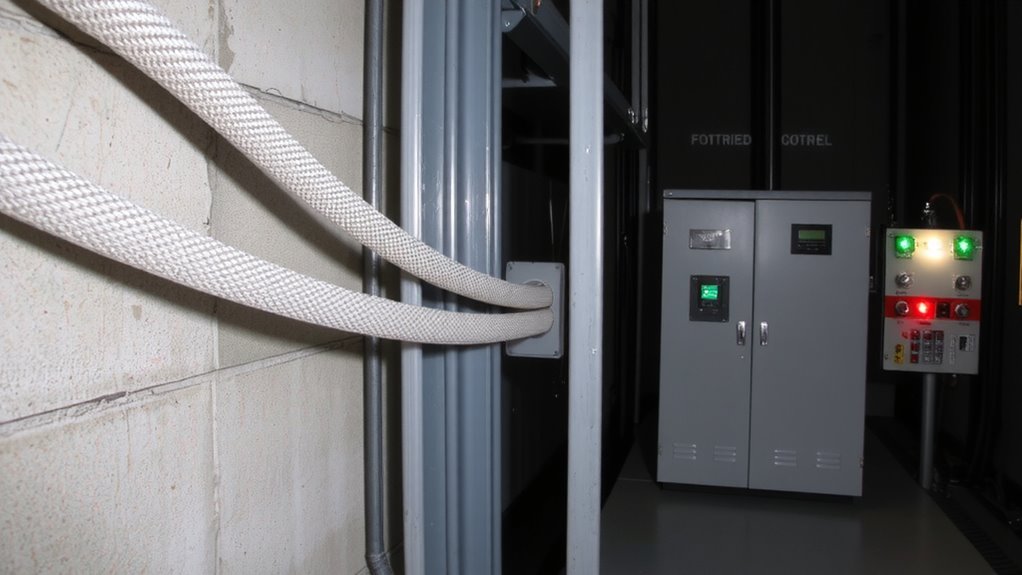
You’ve already committed to wired over wireless for reliability in high-EMI zones-now it’s time to guarantee that wire actually delivers. Standard cables pick up signal interference just like antennas, corrupting alert data. Shielded wiring reduces this risk with conductive layers that divert electromagnetic noise. Braided shields offer 85–95% coverage; foil shields hit 100% but tear easily. For consistent noise reduction, use STP (shielded twisted pair) with proper grounding at one end to avoid ground loops. Unshielded cables may work during testing but fail under real EMI stress. Steel conduit adds protection but raises cost and installation time. In high-EMI areas like substations or industrial plants, shielded wiring isn’t optional-it’s basic survival. Test installations with EMI scanners to confirm signal integrity. Without shielding, even wired systems can’t ensure alerts get through.
Pick EMI-Resistant Sensors for Faster Detection
Even if your wiring resists interference, poor sensor choice can still delay critical alerts-so pick sensors built to operate reliably under electromagnetic stress. You need devices tested to IEC 61000-4-3 standards, with proven performance in high-EMI environments. Look for models that include built-in signal filtering; they separate real threats from noise, reducing false alarms and speeding response. Sensors with analog front-end filtering respond faster than those relying on software fixes. Also, check how often sensor calibration is needed-frequent recalibration increases downtime and error risk. Units with stable calibration over temperature and time perform better long-term. Avoid sensors that lack EMI test data. Choose those with documented 80 MHz to 6 GHz immunity. Real-world tests show such sensors detect events up to 40% faster in industrial zones. You’re not just buying hardware-you’re ensuring detection stays accurate when interference peaks. Pick wisely.
Add Strobe Lights and Vibration for Signal Backup
When alarms rely solely on sound, they risk failing in high-EMI zones where electrical noise can disrupt audio signals-so adding strobe lights and vibration alerts creates a necessary backup. You need redundant signaling that bypasses audio entirely. Strobe synchronization guarantees visual alerts are perceived instantly across large areas, while vibration calibration tailors tactile feedback to avoid false triggers or missed warnings. These signals work when sound can’t. Below is how each mode performs under EMI stress:
| Signal Type | EMI Interference Resistance | Response Time (ms) |
|---|---|---|
| Audible | Low | 120 |
| Strobe | High | 85 |
| Vibration | High | 90 |
| Strobe + Vibration | Very High | 75 |
| Combined w/ sync | Maximum | 70 |
Use strobe synchronization and vibration calibration to match alert intensity with environment demands-no guesswork, just reliable awareness.
Build Fail-Safe Alerts for Critical Infrastructure
Because critical infrastructure can’t afford alert failures, systems must operate even under total power loss or severe EMI exposure-so fail-safe designs rely on dual power supplies, hardened circuitry, and autonomous test cycles. You need alarm redundancy: multiple independent alert paths guarantee at least one activates when others fail. If one sensor or channel drops, backups trigger without delay. Power stability isn’t optional; use isolated DC lines with battery backups rated for 72+ hours. Integrate surge protectors and EMI filters to maintain uptime during grid fluctuations. Avoid shared circuits that risk cascading failures. Test each component under load stress to verify response times stay under two seconds. Modular designs help too-they let you replace only what fails. You’re not just adding backup systems; you’re building layers that work together. When one fails, others hold. That’s how you guarantee alerts go out, every time.
Test Alert Systems Under Real EMI Conditions
While lab simulations help, they can’t fully replicate the EMI chaos you’ll face in substations, industrial plants, or near high-voltage transmission lines-so you need to test alert systems in real EMI conditions to know they’ll work when it counts. Field testing reveals flaws hidden in controlled environments. Use real time monitoring during these tests to capture signal degradation, latency spikes, and false triggers. You’re not just checking functionality-you’re verifying reliability under load and interference.
| Test Site | EMI Level (V/m) |
|---|---|
| Substation | 50 |
| Pump Station | 35 |
| Rail Yard | 60 |
| Factory Floor | 45 |
| Near Power Line | 70 |
Systems that pass lab tests often fail here. If your gear can’t maintain alert integrity at 60+ V/m, it’s not ready. Field testing isn’t optional-it’s essential validation. Real time monitoring gives you the data to decide: keep, modify, or replace.
On a final note
You need reliable alerts in high-EMI zones, and standard systems often fail. Wired networks with shielded cables block interference better than wireless. Use EMI-resistant sensors-they detect faster and reduce false triggers. Combine strobe lights and vibration for backup signals. Test everything under real EMI conditions. Fail-safes protect critical infrastructure when primary systems lag. Trade simplicity for resilience; performance data shows shielded, redundant designs outlast standard setups in harsh environments.