Pandemic Preparedness 101: Creating an Emergency Plan for Isolation During Outbreaks
Set up a dedicated isolation room with a closable door and, if possible, a separate bathroom to reduce transmission risk. Use a HEPA purifier with at least 200 CADR for four air changes per hour. Keep an isolation kit with N95 masks, gloves, sanitizer, and a thermometer. Stock two weeks of non-perishable food and one gallon of water per person daily. Sleep seven to nine hours, stay hydrated, and disinfect surfaces every 48 hours. Communicate via encrypted apps like Signal and list three outside emergency contacts. You’ll find more actionable steps to refine your plan.
Notable Insights
- Designate an isolation room with a closable door and, if possible, a separate bathroom.
- Equip the isolation area with a HEPA air purifier or window fan for adequate ventilation.
- Prepare a two-week supply of non-perishable food, water, and essential hygiene items.
- Maintain strict hygiene by disinfecting surfaces every 48 hours and washing hands frequently.
- Establish encrypted communication check-ins and list emergency contacts for reliable support.
Set Up a Home Isolation Room
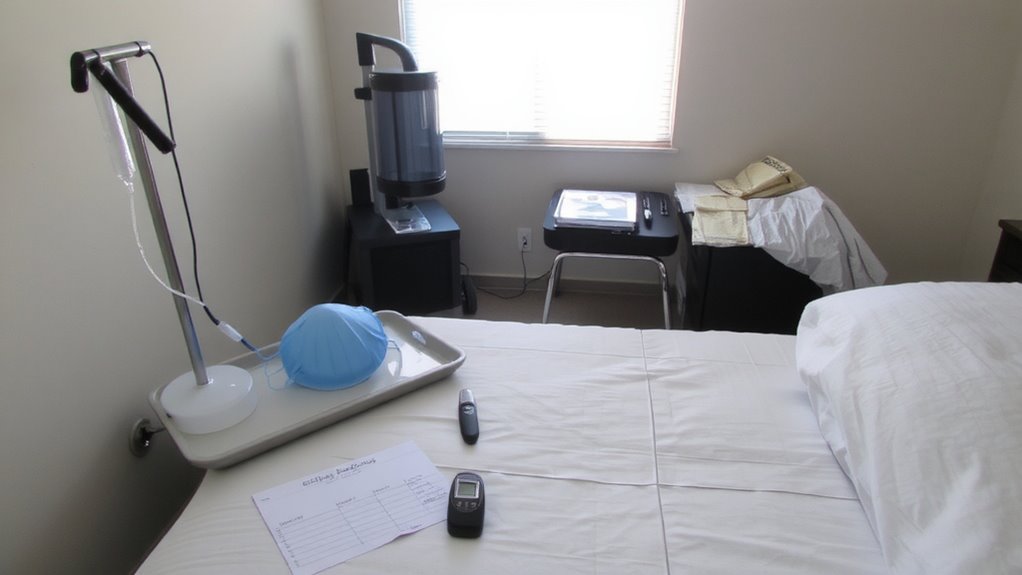
If you’re preparing for a pandemic, setting up a dedicated isolation room at home could limit transmission when someone gets sick. Choose a room with a closable door and, ideally, a separate bathroom to maintain effective isolation protocols. Good room ventilation is essential-use a window fan or portable HEPA air purifier with a CADR rating of at least 200 to reduce airborne pathogens. Aim for at least four air changes per hour. Position the bed away from others, if possible, and avoid shared spaces. Seal gaps under the door to contain airflow. Monitor temperature and symptoms daily. This setup isn’t hospital-grade but reduces household risk when professional care isn’t available. Strict adherence to isolation protocols increases effectiveness. Room ventilation performance depends on filter quality and room size, so match equipment accordingly. A basement or spare bedroom often works best.
Build Your Home Isolation Kit
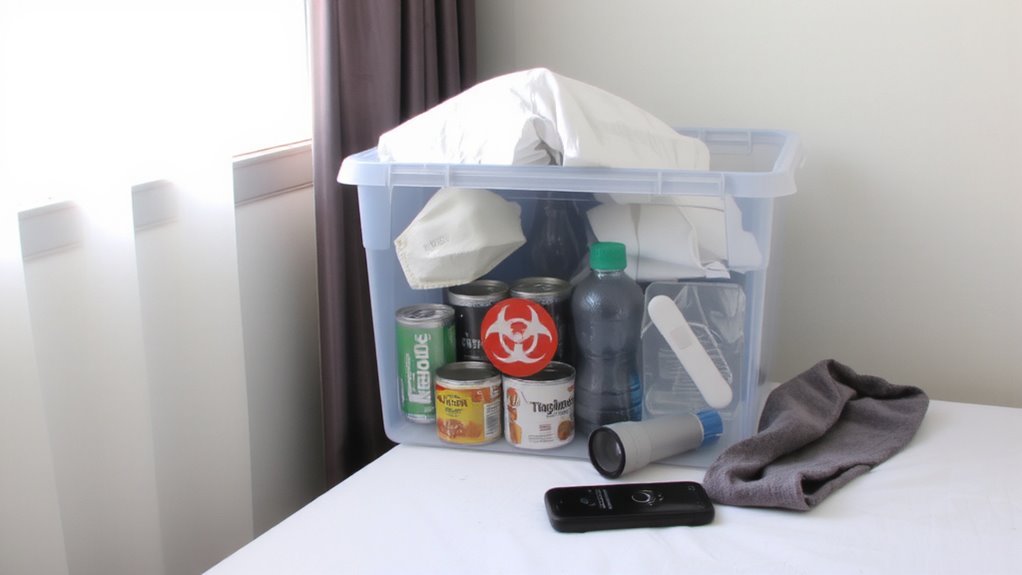
While you’re setting up your isolation space, you’ll want to stock a dedicated kit with essentials that can handle basic medical and hygiene needs without requiring outside help. Keep a clear medication inventory updated weekly-include dosages, frequency, and expiration dates. Pair this with hygiene essentials that last at least two weeks to avoid shortages. Use sealed, labeled containers for quick access and contamination control. A well-curated emergency kit can make a critical difference during prolonged isolation, so consider selecting one of the best emergency kits for comprehensive preparedness.
| Item | Purpose |
|---|---|
| Digital thermometer | Accurate temp readings; records trends |
| Disposable masks (N95/KN95) | Source control; limits transmission |
| Hand sanitizer (60%+ alcohol) | Reduces germs when washing isn’t possible |
| Latex/nitrile gloves | Prevents cross-contamination during care |
These items are non-negotiable. They’re compact, have proven effectiveness, and require minimal storage. Update your medication inventory monthly and replace expired hygiene essentials immediately.
Stock Up on Food and Essential Supplies
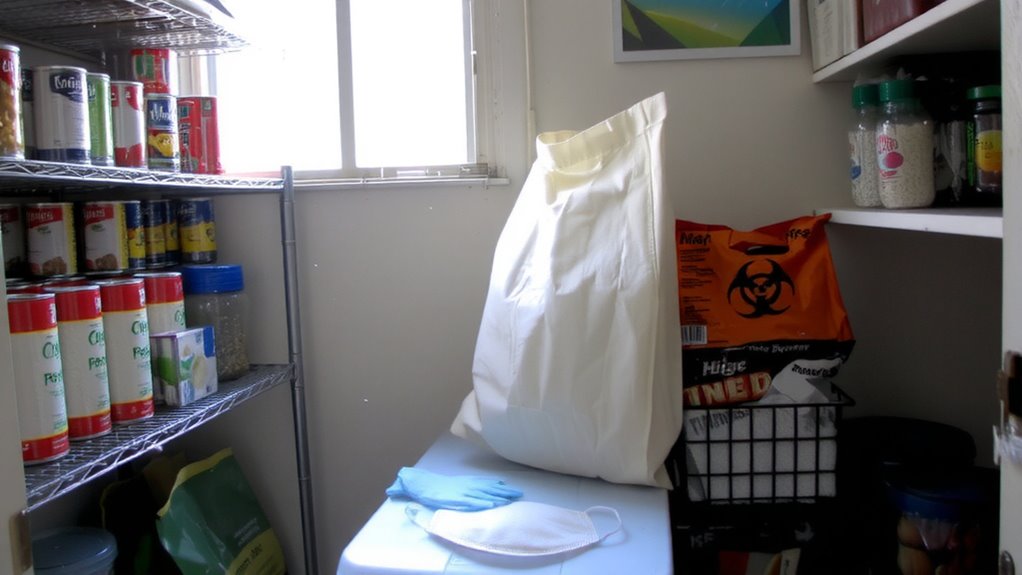
A two-week supply of non-perishable food and essential household items is the baseline for reliable pandemic preparedness, and you’ll want to choose products with long shelf lives, minimal preparation needs, and documented storage stability. You should stock at least 2,000 calories per day per person using non perishable goods like canned beans, ready-to-eat meats, grains, and shelf-stable dairy. Opt for items requiring no refrigeration, cooking, or complex cleanup. Include at least one gallon of water per person per day for drinking and sanitation. Hygiene essentials are just as critical-accumulate soap, toothpaste, toilet paper, feminine products, and disinfecting wipes. Rotate supplies every six months to prevent spoilage. Choose generic brands when viable; they perform similarly to name brands but cost less. Avoid overly bulky or heavy items unless storage and access are secure. Plan portion sizes realistically and account for dietary restrictions. This isn’t about luxury-it’s functional readiness. For reliable long-term nutrition, consider the best canned foods for survival based on shelf life, nutrient density, and ease of use.
Stay Healthy While Isolating at Home
Since keeping your immune system functioning well is critical during prolonged isolation, you’ll need to maintain consistent nutrition, hydration, and sleep-three factors that directly influence resilience to infection. Eat balanced meals with protein, fiber, and essential vitamins; drink at least eight glasses of water daily; aim for seven to nine hours of sleep each night. Prioritize mental wellness by establishing a daily routine-structure reduces anxiety and improves focus. Limit screen time if it increases stress, and take short walks if space allows. Practice effective hygiene practices: wash hands frequently with soap and water for 20 seconds, disinfect high-touch surfaces every 48 hours, and use separate towels if sharing a home. Avoid touching your face, especially after handling deliveries. These steps are measurable, repeatable, and proven to reduce transmission risk. Consistency matters more than intensity-small, sustained actions provide real protection.
Stay Connected Safely at Home
If you’re cut off from in-person contact, staying connected doesn’t mean compromising safety-video calls via encrypted platforms like Signal or Zoom let you see loved ones without exposing yourself to physical risk. Schedule regular virtual check ins to maintain routine and monitor emotional well-being. These brief, structured interactions help track symptoms or stress levels over time. Use secure, low-bandwidth options when internet speeds are limited-Signal requires less than 1 Mbps for HD video. Online support groups offer practical advice from people in similar situations, with many hosted on platforms requiring only email registration. Avoid unencrypted messaging apps to protect privacy. Stick to tools with end-to-end encryption and regular security updates. Consistent digital contact reduces isolation without increasing health risks. Prioritize reliable connections and data safety over convenience. Virtual check ins and online support are measurable, effective tools for staying grounded when isolated.
Make a Family Communication Plan
What happens when cell service drops during a storm or evacuation? You’ll need a backup plan to reach your family. Start by listing emergency contacts-include at least three people not in your household, such as relatives or close friends in different locations. Distribute this list to every family member and store copies in wallets and phones. Set up a communication schedule everyone can follow, like checking in every 24 hours using texts, calls, or email, depending on network availability. Use offline methods if needed-two-way radios with long-range capabilities work when phones fail. Consider powering your devices with a solar charger to maintain communication during extended outages. Test your plan monthly; adjust based on signal strength, battery life, or travel patterns. A reliable communication schedule reduces confusion. It doesn’t require expensive tools-just clear protocols. When networks are unreliable, consistency matters more than technology.
Know the Basics of Pandemic Preparedness
When a pandemic hits, having a clear understanding of the basics can make a real difference in how well you and your family manage the situation. You need to stay informed but not overwhelmed. Start with vaccination awareness-know which vaccines are available, their effectiveness, and when boosters are due. They reduce severe illness and slow spread. Pair that with daily symptom monitoring. Check temperatures, track respiratory changes, and note fatigue or loss of taste. Early detection improves outcomes and limits exposure. Keep a log for everyone in the household. Use reliable sources, not rumors, to guide decisions. Stock basic medical supplies like thermometers and pulse oximeters-they offer measurable data when evaluating illness severity. Combine these steps with isolation plans and communication strategies. These actions aren’t foolproof, but they improve resilience. You’re not preparing to win-it’s about reducing risk with clear, repeatable habits.
On a final note
You need a clear plan to stay safe during a pandemic outbreak. Set up a dedicated isolation room, stock a 14-day supply of food and meds, and prepare a communication list. Use gloves, masks, and disinfectants correctly. Check symptoms daily. Stay in touch via phone or video. These steps reduce risk and keep others protected. They work when followed consistently.